Tag Archives: animals

Why I Don’t Eat Beef: A Deeper Look into Tradition and Symbolism

Recently, one of my readers asked an interesting question: “If eating beef is considered sinful because of the relationship between the cow as a mother and her milk, then why do Hindus, especially Nepalese Hindus, happily eat buffalo meat? Isn’t buffalo milk more nutritious, making buffalo a better mother?”

It got me thinking, and I did some digging to explore this further. Here’s what I found and why I don’t eat beef.

First, it’s important to recognise that in Hinduism, the cow holds a unique and sacred place, and this reverence goes beyond mere practicality or nutrition. The cow is symbolically and spiritually connected to Hindu beliefs and culture, which is why I, like many other Hindus, refrain from eating beef.

The Spiritual Connection with Cows

The cow has been revered in Hinduism for thousands of years. In the Vedas and ancient scriptures, the cow is referred to as “Gau Mata” or “Mother Cow,” symbolising motherhood, nurturing, and selfless giving. This connection comes not just from the milk the cow provides but from its association with key deities. For instance:

  • Lord Krishna, one of the most beloved Hindu deities, was raised as a cowherd, and his playful interaction with cows is often depicted in religious art. Cows are also tied to Lord Krishna’s teachings on compassion and non-violence.
  • Goddess Earth (Prithvi) is sometimes personified as a cow, highlighting the belief that cows are life-sustaining and nurturing like the Earth itself.

In this context, cows are considered symbols of life, fertility, and the provider of sustenance, much like a mother to her children. Eating beef, therefore, is seen as equivalent to committing harm to a mother, which is why it is considered a sin in many Hindu communities.

But Why is Buffalo Meat Accepted?

In Nepal, and particularly among groups like the Newars, buffalo meat is widely consumed despite the taboo on beef. This difference arises because buffaloes do not share the same religious or cultural symbolism as cows. While buffalo milk is indeed more nutritious than cow milk—higher in fat, protein, and other nutrients—the spiritual reverence for cows stems from deeper historical, cultural, and religious roots.

Here are a few reasons why buffalo meat is accepted in certain Hindu communities:

  1. Lack of Spiritual Connection: Buffaloes, unlike cows, are not venerated in Hindu scriptures. While buffaloes are important for milk and meat, they do not have the same symbolic and religious significance as cows. The spiritual bond with cows goes beyond their utility, making them sacred, while buffaloes are seen as utilitarian animals.
  2. Cultural and Ethnic Traditions: In Nepal, different ethnic groups have their own dietary practices. For example, Newar Hindus include buffalo meat (locally called “buff”) as a staple in their cuisine. The acceptance of buffalo meat comes from cultural practices that predate modern Hindu dietary restrictions. Buffaloes are raised for both milk and meat, and the consumption of buffalo meat has become culturally normalised.
  3. Practicality: In regions where cows may be harder to raise due to climate or geography, buffaloes are more common because they are hardy animals that can thrive in harsher conditions. This practicality makes buffaloes valuable for both their milk and meat, especially in Nepal.

The Sacredness of Cows Goes Beyond Nutrition

Even though buffalo milk is more nutritious, the sacredness of cows in Hinduism is not tied to nutritional value. Instead, it is based on symbolism. Cows are gentle creatures, embodying the principles of non-violence (ahimsa), purity, and selfless service. They provide milk, dung (used as fuel or fertiliser), and serve as companions in farming, making them deeply integrated into traditional agrarian life.

For Hindus, the reverence for cows is not just about their physical benefits; it’s about what they represent in terms of compassion, nurturing, and life-giving energy. This is why cow slaughter is prohibited in many parts of India and Nepal, and why I choose not to eat beef.

Please follow me on Instagram! and Please follow me on TikTok to stay updated on my adventures.

Take care,

M from Nepaliaustralian
XOXO

Chhori’s visit to the Zoo in Nepal

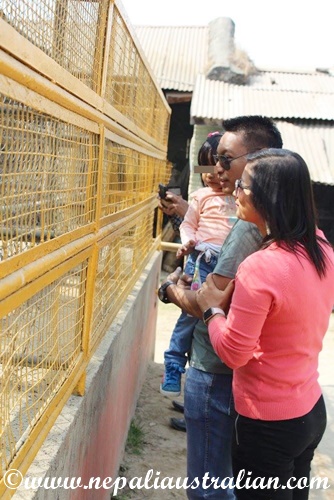
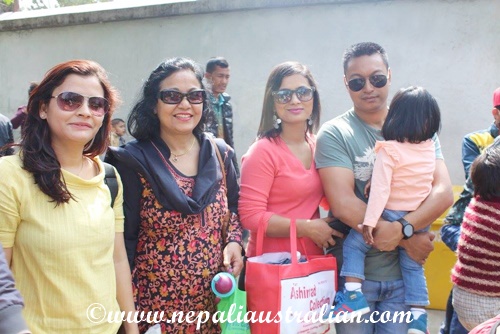
The last time we went to zoo was when we went to Nepal with my then 6 months nephew. This time we wanted to take the little girls, Chhori and our niece, there.

The zoo is located a few kilometres away from the city centre, Kathmandu. It is the only zoo in Nepal but there has been about talk about opening another zoo somewhere else as well.

We went there with AS’s mum, his two brothers, sister in law and niece. We really wanted the girls to have a good time. As it was Saturday afternoon, as expected the zoo was busy with many families coming for an afternoon out. It was a warm sunny day which was great.

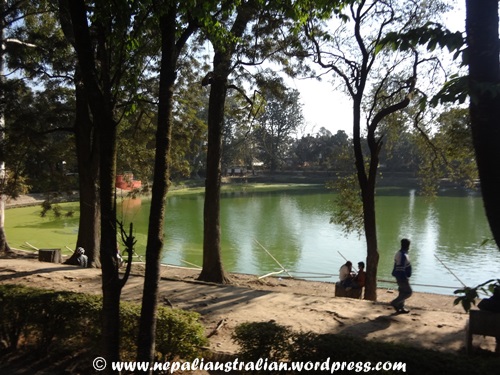
The zoo is arranged according to taxonomy, with mammals, birds, reptiles and fishes all occupying different parts of the zoo. There are also playground rides, picnic lawns and boat rides on the lake.

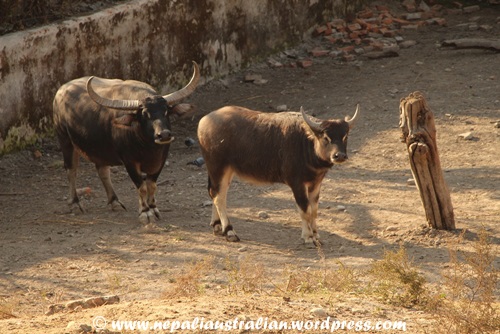
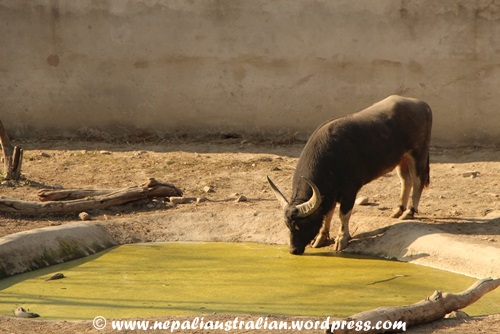
The zoo houses some 780 species including the critically endangered white-rumped vulture and Chinese alligator and six endangered species: Asian elephant, royal Bengal tiger, one horned rhino, wild buffalo, gharial and yellow headed turtle.

Along with these animals, there was a hippo that was lazily sunbathing, a hyena, a giant deer, peacocks, white-napped crane, two big rhinos, monkeys, water buffalo, chimpanzees, leopards, bear, tigers, lions as well as golden pheasants, silver pheasants, chukar, kalij, parrots, owls. They also had a small reptile collection which featured a common cobra, an Indian rock python, snakes and a turtle.

As we walked from one enclosure to another, I could see the girls’ excitement. They would make noises of the animals that we saw or count the birds.

Chhori loves to look at real animals as she can hear them make noises and she gets really excited. I am so glad that she got time to spend with our families in Nepal and the girls did bond well despite fighting from time to time.

After the whole tour of the zoo, we were all tired so decided to go to a nearby restaurant for our favorite momo and Nepali food.

I have mentioned before that Chhori loves momo and she was over the moon in Nepal getting to eat so many times. In one occasion, she surprised us all by eating 8 momos in one sitting.  I guess she is showing us her Nepali side.  🙂

I hope everyone is having a great week. Take care till next time.

from nepaliaustralian

XOXO

Zoo visit in Nepal

I hadn’t been to the zoo in Kathmandu for more than a decade but this time we were lucky that we had time enough to visit the zoo. The zoo is located a few kilometres away from the city centre, Kathmandu. It is the only zoo in Nepal, a country with a population of 30 million, and hence fulfils an important role.

We hadn’t planned to there. We were out for lunch with my parents, my brother, SIL and little nephew. As we were close to the zoo, my dad suggested that we should go and visit it so that my little nephew could have some fun and all of us agreed to it.

Kathmandu zoo (14)

I remember around 3 years ago, me and AS wanted to go to the zoo. We were outside the gate and we saw so many people that it put us off from going inside. But I am glad we went this time.

As we walked inside, I realised nothing much had changed in the last decade, which is very sad.

The animal enclosures are arranged around the perimeter of a large boating lake which takes up a large proportion of the zoo’s area.

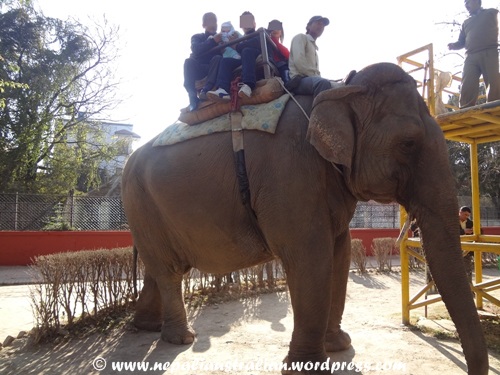
As we started of tour, we saw an elephant riding area. My dad wanted my nephew to have his first elephant ride so we went and asked the guys there for more information. They said there are a few groups already booked for the tour so asked us to buy the ticket and come back in an hour.

Kathmandu zoo (1)

The elephant ride cost us RS 100 each for around 15 minutes ride. So after buying the tickets we continued our tour.

Kathmandu zoo (13)

Kathmandu zoo (10)

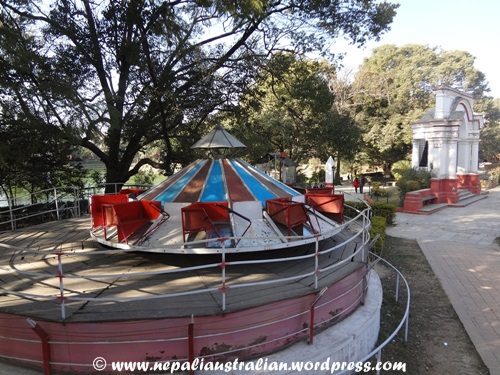
The zoo is arranged according to taxonomy, with mammals, birds, reptiles and fishes all occupying different parts of the zoo. There are also playground rides, picnic lawns and boat rides on the lake. As we started walking around the zoo, I realised that there were lots of families with small kids enjoying their picnic as well as many lovebirds in corner benches enjoying their time together away from prying eyes.

Kathmandu zoo (8) Kathmandu zoo (3) Kathmandu zoo (4)

The zoo houses some 780 species including the critically endangers white-rumped vulture and Chinese alligator and six endangered species: Asian elephant, royal bengal tiger, one horned rhino, wild buffalo, gharial and yellow headed turtle.

Kathmandu zoo (12) Kathmandu zoo (11)

Along with these animals, there were hippos that was lazily sunbathing, a hyena, a giant deer, peacocks, white-napped crane, two big rhinos, monkeys, water buffalo, chimpanzees, leopards, beer, tigers, lions as well as golden pheasant, silver pheasant, chukar, kalij, parrots, owls. They also have small reptile collection featured a common cobra, an Indian rock python, snakes and a turtle.

Kathmandu zoo (5) Kathmandu zoo (2) Kathmandu zoo (9)

By the time we had a look around; it was almost our turn to ride the elephant so we went back to the riding area. We waited for 10 minutes and it was our turn.

Kathmandu zoo (7) Kathmandu zoo (6)

The guy told us it is OK for all of us to ride at the same time (poor elephant) so me, AS, my dad, my brother, SIL and my nephew got on the top of this elephant. I was glad that my nephew enjoyed the ride.

Kathmandu zoo zoo

Initially, the elephant was not listening to its handler and I was a bit scared as he was not moving according to the pre-planned route but after a while he relented and followed the route. While talking to the handler, he told us that the elephant is round 70 years old and does 8-10 trips every day. I felt sorry for the poor animal as he is so old and has to do this every day.

We were taken half way around the lake and then back to the same spot where we got on it. For some reason my nephew started to cry, poor baby. We were all glad when we get off as we were worried if something might have happened to him. But he was fine, just restless as he had to sit in one place too long. By this time it was getting cold and windy so we decided to go home.

I had a really nice time with my family and was happy to see my nephew have his first elephant ride.

Even though the zoo in Nepal is small but it is well maintained I am sure it is a great place for kids to visit to learn more about different animals. Construction was going on everywhere so it looks like it is in the process of a face lift with new paths and enclosures so I think in a few years it will be quite lovely.