The last few days have been a whirlwind of fun, family, and festivities as we’ve been busy celebrating Dashain, one of the most cherished festivals in our culture. It’s always a time of togetherness, where we come together with friends and family to share joy, laughter, and of course, delicious food!
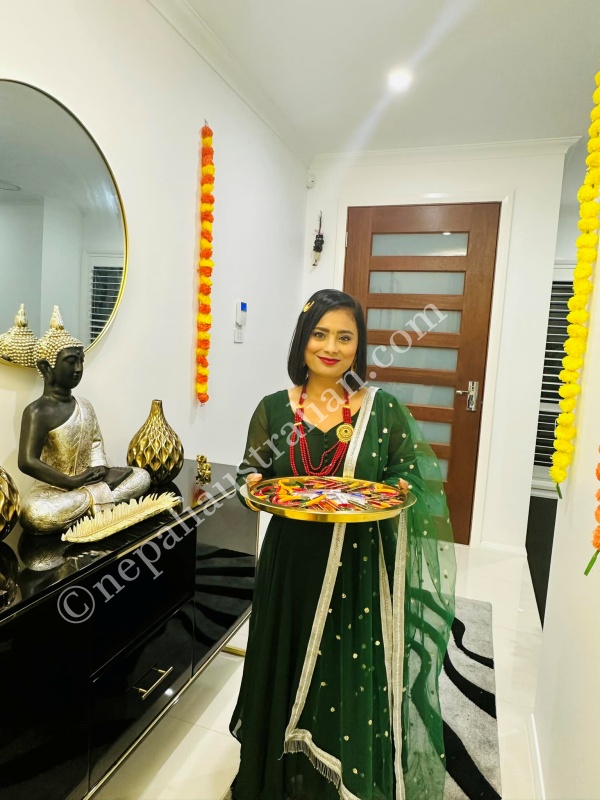
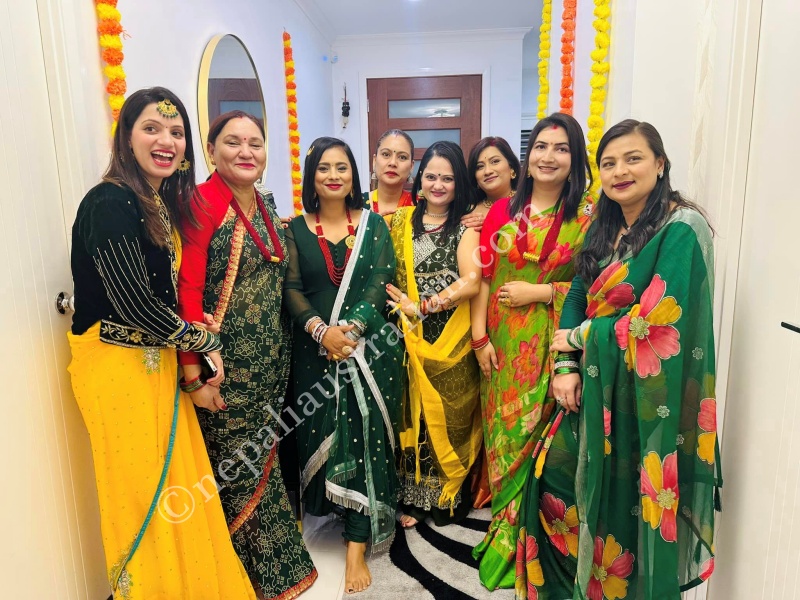
From Tika and Jamara to playing cards and eating delicious food, the spirit of Dashain has been in full swing. We’ve enjoyed the beautiful rituals, reconnected with family, and created unforgettable memories. Here are some glimpses of our celebrations – filled with love, blessings, and happiness.
Dashain is here! The air is filled with excitement, nostalgia, and the promise of family gatherings, food, and festivities. Yesterday marked Ghatasthapana, the first day of Dashain, which sets the tone for the next 15 days of celebration. In households across Nepal—and for Nepali communities around the globe—this day is sacred. It’s the day we plant Jamara, those sprouting yellow-green shoots that symbolize prosperity and blessings.
But what makes Dashain so special?
For starters, it’s not just any festival. Dashain is Nepal’s biggest and longest Hindu festival, celebrated for 15 glorious days of tradition, reunions, and cultural pride. From Ghatasthapana to the grand finale on Vijaya Dashami, it’s a time when families gather, share meals, exchange blessings, and honour the victory of good over evil.
So, if you’re new to Dashain or just looking to rekindle that festive spirit, here’s a peek into why we cherish this time of year!
The Legends Behind Dashain: Why It’s More Than Just a Festival
Dashain is steeped in legends and Hindu mythology. According to one tale, it’s the story of Ram—the hero who defeated the demon king Ravana after nine days of prayer and worshipping Goddess Durga. The tenth day, Dashami, marks Ram’s victory, symbolizing the triumph of good over evil.
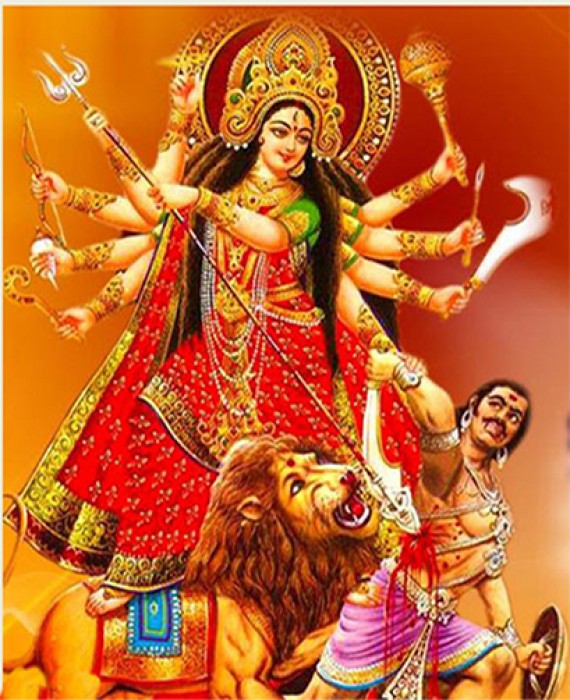
Another tale revolves around Mahishasura, the fearsome demon who terrorized both Earth and Heaven. The gods created Durga, the powerful goddess who battled Mahishasura for nine long days. On the tenth day, Durga slew the demon, marking the day of victory—Vijaya Dashami.
These stories remind us that no matter how challenging life gets, good will always prevail. And that’s why we place tika (a red vermilion paste mixed with rice and yogurt) on our foreheads during Dashain—it’s a blessing for victory, strength, and resilience in the coming year.
Day 1: Ghatasthapana – Planting Jamara, Growing Prosperity
Ghatasthapana (literally meaning “pot establishment”) marks the official start of Dashain. This is the day we plant Jamara—the sacred barley seeds that we lovingly water and nurture for the next ten days. These delicate sprouts will grow to represent blessings, and we use them on Vijaya Dashami for the tika ceremony.
I planted my Jamara yesterday. It’s always a special moment for me—preparing the soil, sowing the seeds, and knowing that in 10 days, those golden-green shoots will be ready for the most important ritual of Dashain. I can’t wait to see how well they grow this year!
Dashain Activities: Where Tradition Meets Fun
What makes Dashain feel so magical is the blend of deep-rooted traditions with simple pleasures. Here are some of the most exciting things we look forward to every Dashain:
1. Kite Flying
As soon as Dashain kicks off, the skies in Nepal fill with colorful kites—each one carrying the message that the monsoon season is over. I have fond memories of rooftop kite battles with my brothers, shouting “Changa Chet!” (which means “kite cut!”) every time we managed to down someone else’s kite. It’s a playful battle that I miss every year.
2. Family Card Games
I can’t talk about Dashain without mentioning the card games! Even though gambling is technically illegal in Nepal, Dashain is an exception. Families gather around with cards, placing small bets (or just playing for fun!). I used to love sneaking into the grown-ups’ game as a kid, hoping to win a few coins.
3. Shopping for New Clothes
Dashain is the time for new clothes! For many families, this is the only time of the year when they can afford new outfits. Shops across Nepal offer crazy discounts, and it’s a rush of excitement as everyone prepares for the festival. I treated myself to a new dress this weekend—because who doesn’t love a reason to shop, right?
4. Bamboo Swings (Ping)
In the countryside, you’ll find bamboo swings constructed just before Dashain. These aren’t your average playground swings either—they’re towering structures that often go 20 feet high! Swinging on a ping is a thrill, and for many, it’s a must-do every year.
The Sweet Chaos: Fairs, Concerts, and Food!
Dashain isn’t just about rituals; it’s also about fun and celebration! Throughout Nepal, you’ll find fairs, concerts, and dashain melas (markets) popping up in towns and cities. These events bring people together for a bit of light-hearted fun—think Ferris wheels, local snacks, and live performances.
And then there’s the food! The streets fill with the smell of fried treats, freshly made sel roti (a traditional rice doughnut), and crispy chatpate (Nepal’s beloved street food). It’s the time to indulge, because Dashain only comes once a year!
Happy Dashain, everyone!
Here are the posts I have written regarding Dashian over the years .
Shrawan, the fourth month in the Nepali Hindu calendar, is steeped in religious and cultural significance. This month is considered the holiest for Hindus, with rituals and traditions that embody devotion, purification, and the deep connection between the divine and human realms.
The word “Sankranti” in the context of Shrawan Sankranti refers to the Sun’s transition from one Rashi (zodiac sign in Nepali astrology) to another, signaling the beginning of a new Nepali month. Specifically, Shrawan Sankranti marks the Sun’s southward journey, an event that is both astronomically and spiritually important.
From the very first day of Shrawan (which fell on July 17 this year), social media and public spaces alike are vibrant with images of women adorned in mehendi (henna) and green and yellow chura (bangles). These colors are not just for beauty; they symbolise fertility, prosperity, and the health of their families. The entire month is dedicated to these rituals, with Mondays, or Shrawan Somvars, being particularly significant. Each Shrawan Somvar, devotees flock to Shiva temples, fasting and offering prayers to Lord Shiva, the god of destruction and transformation.
Shrawan’s importance is deeply rooted in Hindu mythology. It is said that Sati Devi, in her previous birth, vowed to have Mahadev (Lord Shiva) as her husband in every lifetime. After her death, she was reborn as Parvati, who fasted and prayed throughout the month of Shrawan, eventually winning Shiva’s heart and becoming his consort. This story is why Shrawan is so sacred and why women, especially, dedicate this month to worshiping Lord Shiva, seeking his blessings for marital bliss and familial prosperity.
Throughout Shrawan, married women wear red attire complemented by green and yellow glass bangles, along with green pote (glass beads) around their necks. These adornments are more than just accessories; they are symbols of devotion and prayers for the long life and well-being of their husbands. For unmarried girls, wearing these bangles during Shrawan is a hopeful gesture, symbolising their wish for a good husband and a happy marriage.
The spiritual fervour of Shrawan is also evident in the Bol Bam pilgrimage. Devotees undertake this challenging journey, walking or running barefoot, often covering great distances to reach the Pashupatinath Temple and other Shiva temples. Along the way, they chant ‘Bol Bam,’ which means “Say Shiva,” as a form of devotion and penance. The pilgrimage is believed to bring blessings, good health, wealth, and happiness to the devotees and their families.
In addition to these rituals, Shrawan is also a time for various religious festivals and fasts. One of the most celebrated festivals during this month is Nag Panchami, where snakes are worshiped as protectors and symbols of fertility. Devotees offer milk, rice, and flowers to snake idols or real snakes, seeking their protection and blessings.
The month is also associated with the practice of fasting, especially by women. Mondays are often observed with strict fasting, where women consume only water or fruits and spend the day in prayer, reciting mantras dedicated to Lord Shiva. These fasts are believed to purify the body and soul, bringing spiritual merit and the fulfillment of desires.
Shrawan is a time when the monsoon season is at its peak in Nepal. The heavy rains are seen as blessings from the gods, nourishing the earth and bringing fertility to the land. This natural abundance is mirrored in the cultural practices of the month, where green, representing life and growth, becomes a dominant color in clothing and decorations.
The vibrancy of Shrawan is not just limited to religious practices but extends to social and familial gatherings. Communities come together to celebrate, share meals, and participate in collective prayers. The month fosters a sense of unity and continuity, as age-old traditions are passed down and kept alive by the younger generations.
Shrawan is a beautiful blend of devotion, tradition, and nature, encapsulating the spiritual essence of Hindu culture. The month is not just about rituals but about reconnecting with one’s roots, honoring the divine, and celebrating the eternal cycle of life.
I am fortunate enough to celebrate this beautiful tradition with my friends here in Australia. Being able to partake in the customs and rituals of Shrawan, even far from home, is a blessing that fills me with joy and a deep sense of connection to my culture. The laughter, the shared stories, and the collective prayers made the experience truly special. It was so much fun to immerse myself in this vibrant tradition, and it’s heartwarming to see our cultural practices thriving across the world. Celebrating Shrawan here reminds me that no matter where we are, our traditions keep us connected to our roots and to each other.
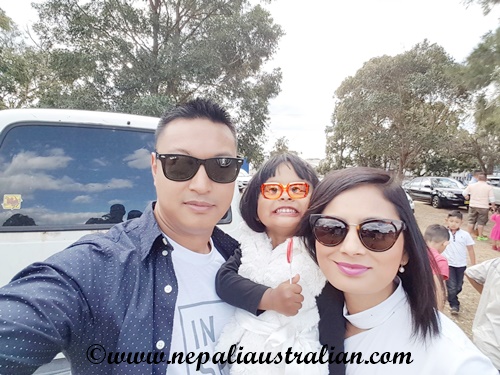
Today, 21st September is Ghatasthapana, the first day of Dashain and in Sydney the celebration has already started. Last Saturday, like every year, Guthi Australia organised a free event to celebrate the Dashain in the Rockdale Bicentenary Park.
They have been organising this event for the last few years and I really like it as it is a perfect place to catch up with friends and family. They try to bring the Dashain vibe to Sydney as much as possible by organising lots of cultural and traditional programs during this auspicious time of the year.
We went there around lunch time and headed straight to food stalls. We had momos and Sel roti.
As we sat to eat, we started encountering many friends and family. After the quick bite, we went and tried out our hand at flying a kite.
My attempt was unsuccessful with my nephew as it didn’t go very high but there were some pro kite flyers who were doing a really good job.
The main highlights of the event for me were the Rath (Charito), Kumari, Lakhe dance, Pulu kisi and colourful kites in the sky.
There was a little girl dresses up as Kumari, the only living Goddess in the world worshipped by Hindus and Buddhists in Nepal.
We also enjoyed the Lakhe dance and the Pulu kisi (elephant) dance.
Lakhe is a demon in Nepalese folklore with a ferocious face with protruding fangs and mane of red or black hair, who protects the people.
Pulu Kisi is believed to be the carrier of Indra himself. People view the masked creature with a roar of excitement and laughter. From time to time it does naughty and mischievous things by running through the street knocking anyone that comes in its path and swinging its tail.
Chhori had a great time as well running around, playing on the swing in the park and enjoying the food. We had a great time mingling with friends and family .
Wishing you all a very Happy Dashain!!!
Here are the posts I have written regarding Dashian over the years .
As I mentioned in my previous post, we celebrated Dashain from 1st October-15 October. Like every year I was super busy performing rituals at home and going for tika at different relatives places. But I have to admit that I am really tired this year compared to the last few years, looks like my age is catching up on me 🙂
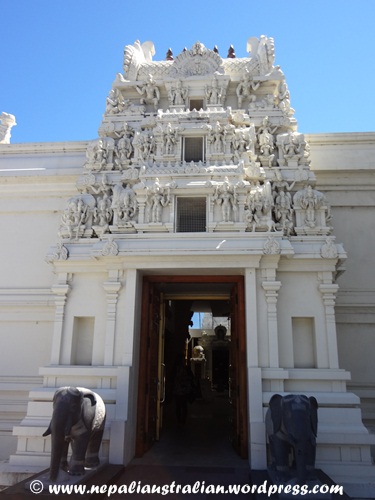
On Asthami, my parents, my brother’s family and a few of my friends’ family went to the Helensburg temple. The temple had a great vibe going with lots of people praying and special chanting going on for the occasion of Dashain.
Of course after the ritual, we went to their canteen for breakfast and I had my favourite Masala Dosa 🙂
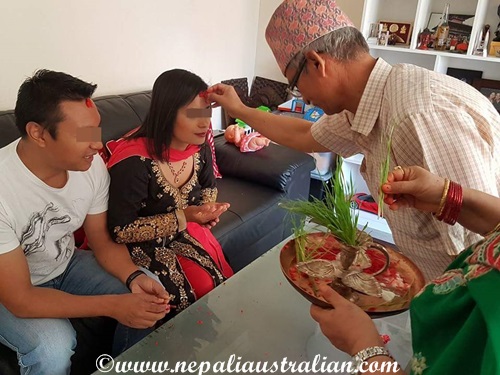
Dashami or Tika day was really busy for us. First of all, in the morning we need to do puja at home using Jamara and then Chhori had her first tika of her life from me and AS.
Then we went to my parents’ place so they can give us blessings (and money :)). It was a great feeling to have my parents here. It has been more than a decade that I got to be together with my parents during Dashain so it was extra special.
There we put tika for my brother, SIL and nephew and they put tika for Chhori. We had lunch there and went to visit other relatives. We went to few places before coming back to my parents’ place. By the time, we came back home that evening it was past 10 pm and all of us were really tired.
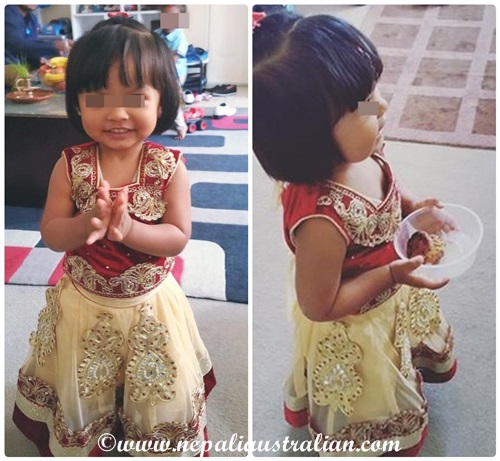
Chhori had a great time for sure and she was wearing Lengha for the first time in her life. It was a gift given to her from my friend’s mum and she looked super cute.
The next day we were again invited to another friend’s place. I had to work that day so after work we went to their place. There I managed to play some cards as AS was minding Chhori.
It must have been a lucky day for me as I won some money, only $50 but we had so much fun.
On Saturday, the last day of Dashain we invited our friends and family for tika and bhoj. I was cooking for around 30 people so was in kitchen for almost the whole day. But the evening was wonderful with family and relatives.
Chhori definitely had a great time and was spoiled with blessings and gifts.
Overall, we had a great week of celebration and eating lots of yummy food. I am sure I have put on a couple of kilos 🙂
Hope all of you celebrating Dashain had a great one as well.





























 nepaliaustralian