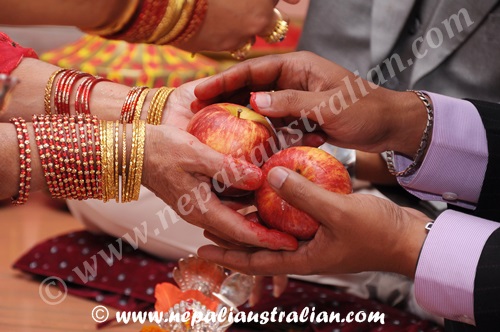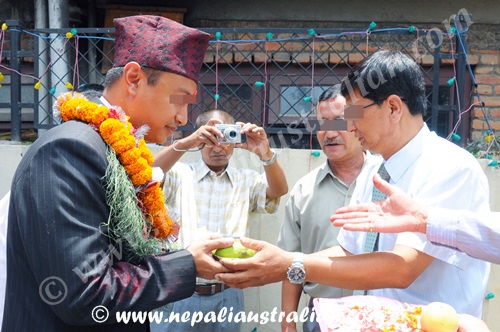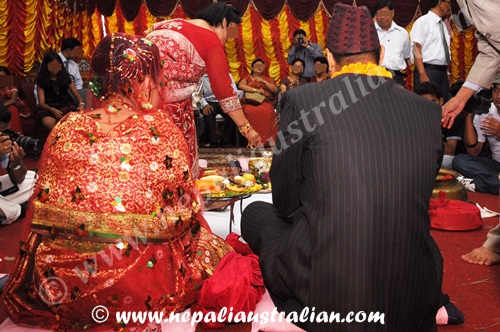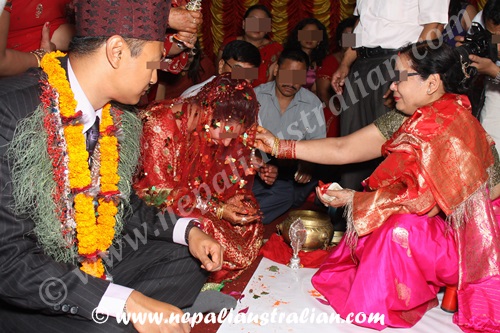
Tag Archives: Sindoor

Our Story : “Janti” ceremony- Part 43

This is a continuation of my previous posts. Please read the previous posts here.

The morning of the Janti was the most emotional and chaotic day that I think I will ever face. The day was filled with tears, panic and more tears.

Janti is the groom’s wedding procession which goes form his house to the bride’s to bring the bride to the his house. The Janti consisting of the groom’s family members, relatives and friends, sets out for the bride’s home. The Janti is accompanied by a musical band, indulges in dance and merrymaking all along the way. This ceremony is a very joyous event for the groom’s family while it is a bit sad for the bride’s family as she will be leaving her house to start a new life with her husband.

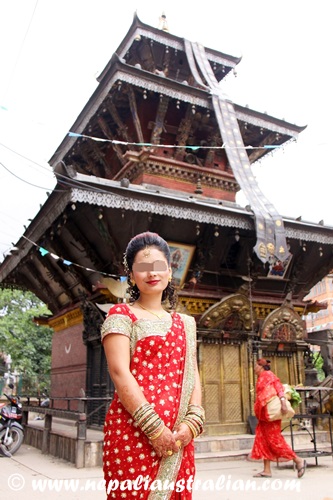
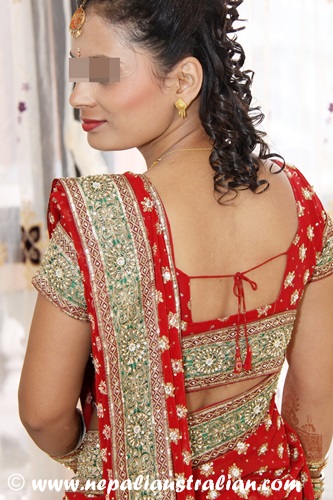
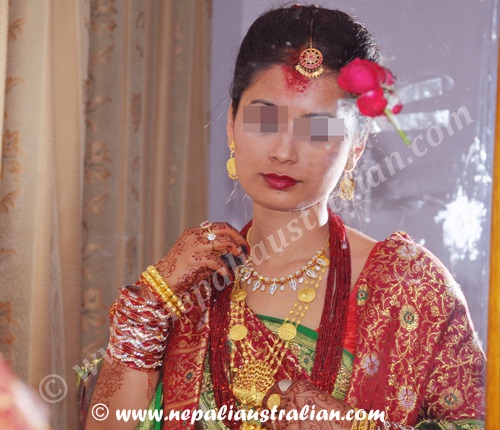
As this ceremony was in the morning for us, I got up early and got ready for the day. I wore a red Dupatta Sari with a green border and a matching shawl around my arms and a red veil covering my head.
Janti (3) Janti (6)

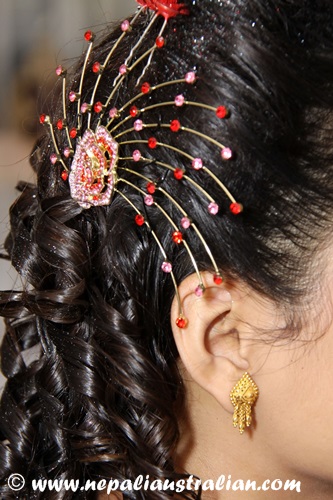
I wore my jewellery including the Tilhari and Chura (bangles). My aunty and friends did my hair and make-up. Once everyone was ready, we went to the wedding venue.

Janti (2)

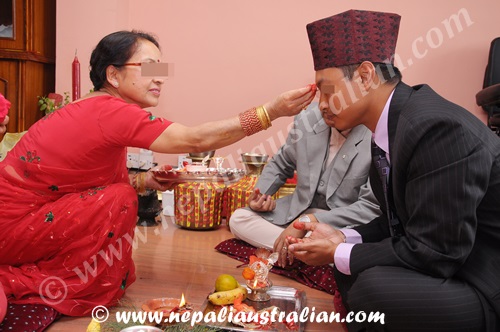
In the meantime, in AS’s home, they were getting ready as well and his family performed a Puja with the help of the priest to start the rituals.

Janti (7)Janti (10)Janti (11)

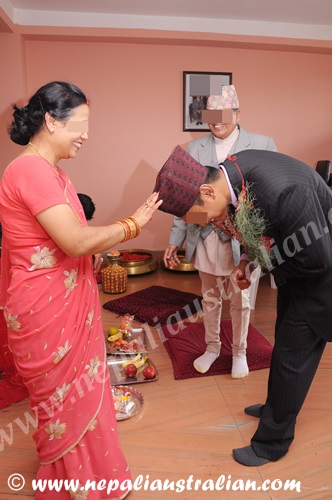
Then he asked for the blessing of his parents and left house in a decorated car with all his relatives following him and a band of colourfully dressed musicians, with drums and trumpets, in most cases performing very loud music.Janti (12)
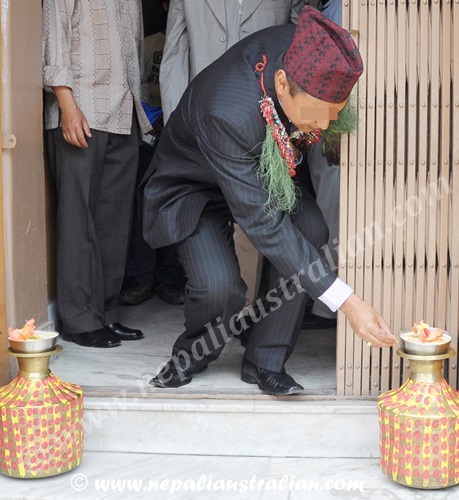
Before AS left his home, two decorated gagree (pitchers) were placed on either side of the main door of the house in which AS put some coins, asking the blessing of the gods before he stepped out of the house.
Janti (13)

The procession moved along slowly around the area, a way of letting the community know that the person is getting married.

Janti (14)Janti (21)

Once the Janti arrived at the venue, AS and his family were welcomed by my dad and my family.

Janti (15) Janti (16)

He was offered a seat on a sofa waiting for me to arrive near the mandap where the wedding ritual would take place. His relatives were seated in the chairs nearby. They were served with cocktails and drinks.

Wedding CeremonyOne of my favourite traditions in weddings is that of “Jutta lukaune” or hiding the groom’s shoes. So the tradition starts when the groom sits for the puja, he takes off his shoes. At that point, the bride’s sisters/cousins/bridesmaids/friends steal the shoes and hide them. It is the job of groom’s brothers/cousins to not let the bride’s entourage to steal the shoes, and at the same time the bride’s side has to try their best to get the shoes and hide them. It is not about the money, but the fun that comes along with the tradition.

janti (1)

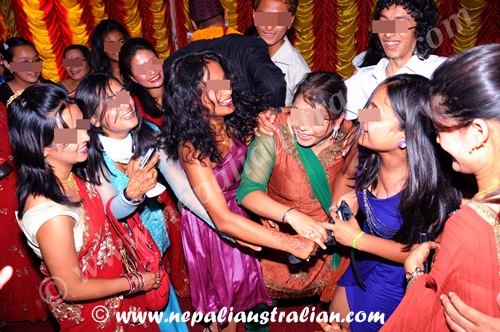
Before AS could sit in front of the mandap, he had to take off his shoes. I have lots of cousins, so as soon as AS was about to take off his shoe, they jumped in, trying to get his shoes. His brothers tried to make sure, my cousins didn’t get the shoes and there was a Tug of War. The poor shoe was damaged in the process but finally my cousins were able to get one of the shoes while the other was still with AS’s family. It was quite fun to watch.
janti (2)

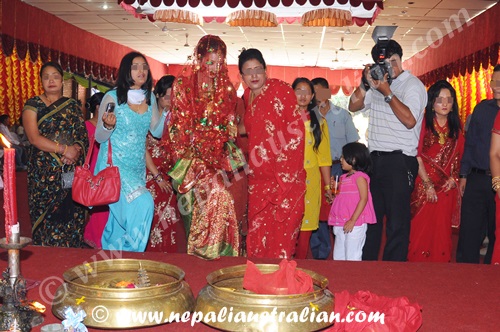
Once the “war over the shoes” was over, AS sat down next to me.
Janti (19)

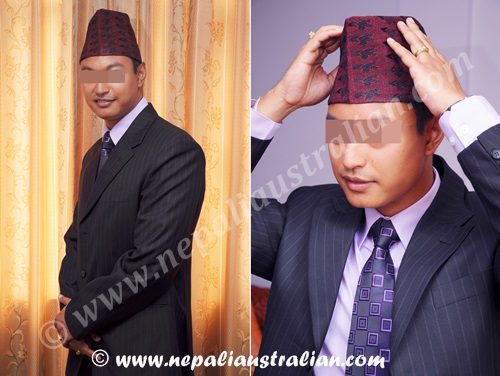
He was wearing a black suit with a traditional Nepali topi. I was happy looking at him through my veil that we are now goona be together forever. Everything we went through until that moment was worth it to see AS by my side with both our families so happy with our union.

Janti (8) Janti (9)

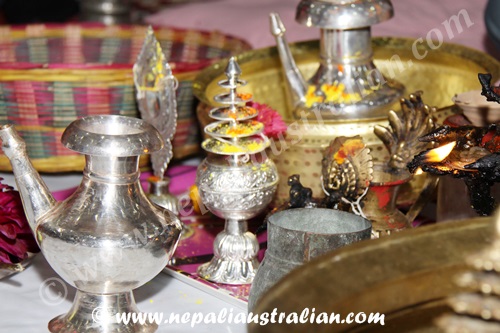
The Puja started with the same two priests as before. There was also one elder from each family (the eldest male of the family) sited next to the priests in front of the Mandap and the Puja went on for an hour. This process is called Kanyadaan where the bride is formally handed over to the groom by her father.
Wedding Ceremony Wedding Ceremony Wedding Ceremony

Then it was followed by AS and me sharing food from one plate called “Thaa bu” which had eggs, yogurt, wine, fruits, Roti, meat, fish and much more.

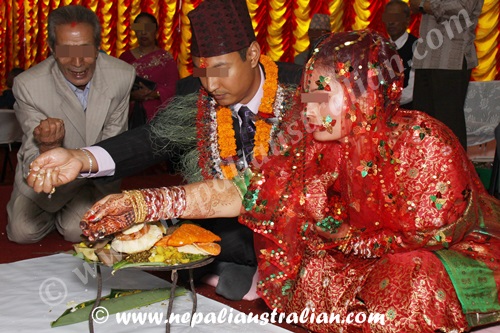
Wedding Ceremony Wedding CeremonyJanti (4) Janti (5)

After that, the eldest from AS’s family, put Tuuti Bagi (Special marriage anklet which literally means a carriage for the feet) on both my feet indicating I am married into their family. This is a tradition in Newari / Nepali wedding.
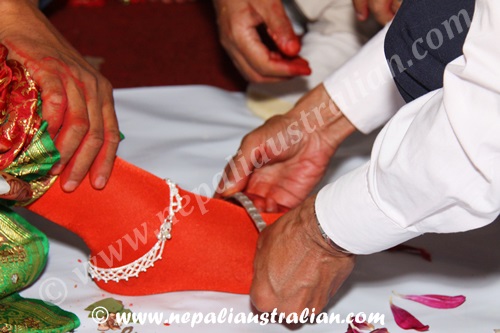
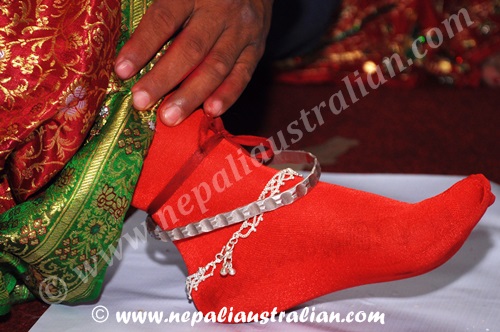
Wedding Ceremony Janti (7)

Now came the hardest part. It was time to give Supari to each member of my close family and say my good byes. In turn, they would give me some gift or money and take Supari from me. I promised myself I would not cry when I left to go to AS’s house since I don’t want to start a chain reaction with everyone crying after I did. I had seen how much my aunt had cried at her wedding and how everyone in her family started crying too. Therefore, I was keeping strong. This process went for a while, as I had to give Supari to almost 40 people with my parents coming at the end, just before I left my parents’ house forever.

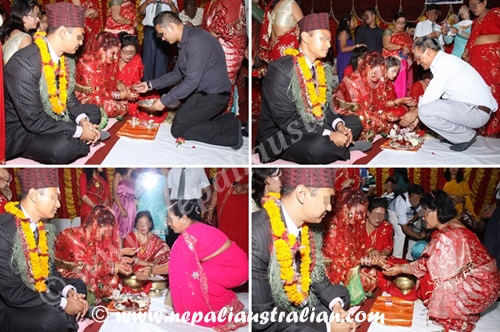
Wedding Ceremony Wedding Ceremony

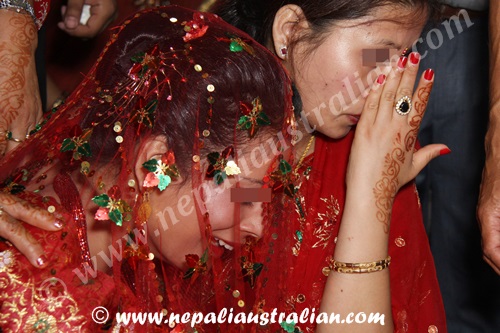
When I was half way through giving Supari I heard my mum sobbing. I was teary-eyed but I hadn’t started crying yet. Hearing her sob, I couldn’t stop but sob. Ohoo it started the chain reaction as I had predicated and most of my cousins and aunts started sobbing. While I was giving Supari to my parents, both of them were crying. It was such an emotional moment. It was as if you were saying “I am leaving you guys”.

Wedding Ceremony Wedding Ceremony Wedding Ceremony

And the band didn’t help any by playing the emotional song “Maitighar timro hoina...” which translate to, “The home of your birth is not yours anymore, you go to your husband’s house. Do still come and visit your parents sometime…” or something along those lines. Anyway, it took a few of my relatives to help my mum away from me. I couldn’t stop crying after that.
Wedding Ceremony

It was now time for me to leave my parents’ home and go to my husband’s. My brother carried me to the waiting car. He needed to go around the car 3 times before he could put me inside.

Wedding Ceremony Wedding Ceremony

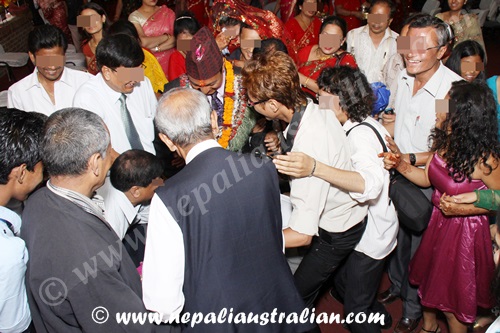
In the meantime, there was a big negotiation going on for the shoe (which my cousins had taken) between AS and my cousins. I think he gave them RS 5000 and finally they gave him his shoe back.
Wedding Ceremony

Once, AS got his shoes back from my cousins, he joined me in the car but I was still sobbing. I hugged my dad, mum and brother before they closed the door of the car.

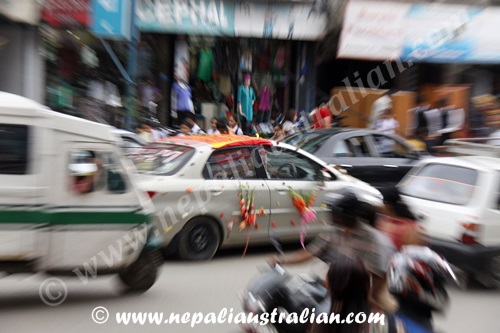
Janti (4)Red and gold cloth was put on the top of the car and everyone showered the car with rice, flowers and Sindoor. Inside, AS was consoling me as the band started up with the music and AS’s family said their good byes.
Wedding Ceremony

The car we were in was decorated with lots of flowers and with our initials at the back of the car.
Janti (4) Janti (5)

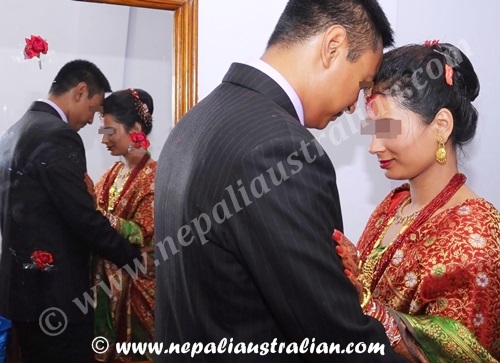
I was off to start my new life with my new family!

More on the wedding in the next post.

Take care,

M from nepaliaustralian

XOXO

P.S: Do not forget to vote your favorite blog . NEPALIAUSTRALIAN’s Blog Award 2014

Go to Part 44

Our Story : Bride side Reception ceremony- Part 42

This is a continuation of my previous posts. Please read the previous posts here.

My family had not had a chance to throw a big party for a while so this reception was more of a reason for my family to invite everyone to celebrate. In Nepal, you need to invite all your relatives, your neighbours and friends if anyone gets married. So to have close to 1000 guest is very normal. When we started the guest list, we thought it won’t be a lot but then we added up all the relatives and extended relatives, my parents’ friends, my friends, my brother’s friends and my uncles and aunts friends, the big number was inevitable. And this number didn’t include Groom and his family. They don’t attend this reception as, it is only for the Bride’s family. This is a tradition in Newari / Nepali wedding.

Wedding Ceremony

Surprisingly, the party venue was well equipped for more than 2000+ guests so it was not a problem at all.

In Nepali/Newari culture, you give all your close female relatives and friends Sari as wedding gift and they wear that at the reception. My mum usually gets at least a few from her relatives and friends each year. So this time it was our turn. Mum had already picked the red Sari and has ordered 60 of them. She picked the same Sari for everyone and had already given it to them.

Wedding Ceremony

For the reception, I was more relaxed than before. It was just a party with hundreds of people but all of them are my friends and relatives.

Wedding Ceremony

Like every bride, I wanted to look my best for the wedding and I am glad I was happy with the choices of clothes and accessories. My parents had gone well above and beyond my expectation and bought me so many sets of jewellery that I was lucky enough to be able to pick different ones for different functions.

Wedding Ceremony

I wore a marron lengha with bead and pearl work on it. It was expensive but I convinced myself that I get married once so it was all worth the money. I went to the beauty parlour again to do my hair and make-up. I wore golden shoes with flower and golden clutch (both gifts from my new MIL).

Wedding Ceremony

I was happy with the final outcome as the hairdresser followed my instruction so well and did the hair exactly the way I wanted it.

Wedding Ceremony

Once I was done at the beauty salon, I went home where the photographer was waiting for me. We had planned to take a few shots at home before going to the venue. I had photos at home with my parents, brother, sister in law and a few friends.

Wedding Ceremony Wedding Ceremony

Then we all headed toward the party venue.

Bride side reception (1) Wedding Ceremony

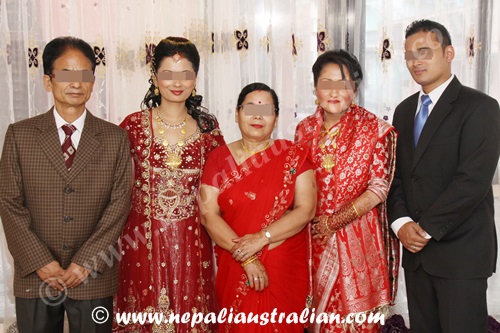
Guests were invited from 6pm. All our close relatives were there already when we arrived, woman and girls wearing red Saris given by mum. The stage was close to the main entrance and that is where I was going to stay for the rest of the night. I had my cousin and friends for company as guests started arriving.

Bride side reception (12)

Within an hour, the empty venue was filled with guests, some of whom I knew , some I have not seen for years and some I had never met. Some handed me flowers and others envelope with money. I greeted them, talked with them and made small conversation before they moved on to the hall to start the dinner and snacks.Wedding Ceremony

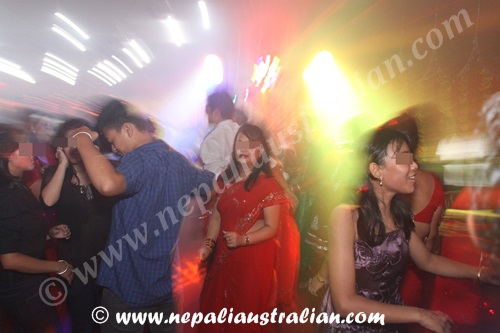
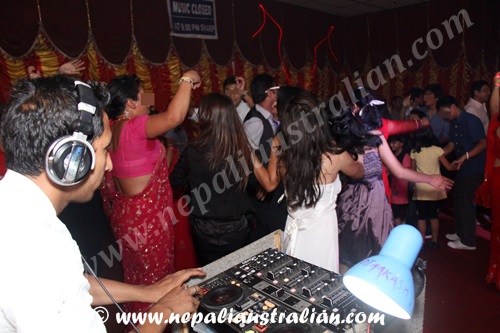
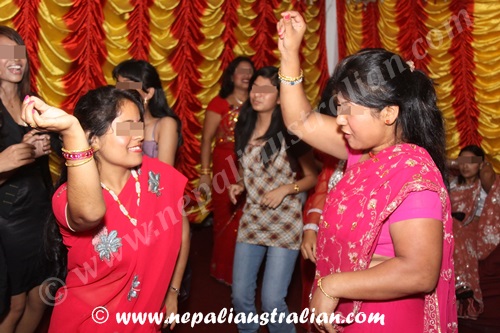
The party was in full swing and I could see everyone enjoying the evening. At one end of the hall, there was the cocktail area and on the other side, there was dinner area. There was loud music going on with DJ playing all types of music and many of the guests were on the dance floor.

Bride side reception (17) Wedding Ceremony Wedding Ceremony Wedding Ceremony

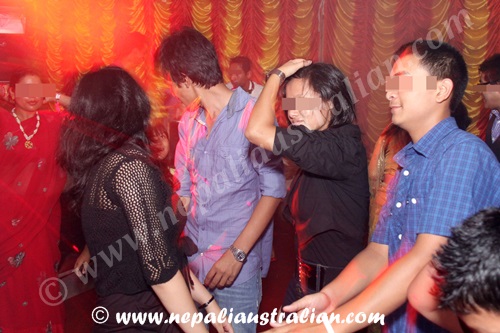
Guests as little as 1 year old and as old as 70 years old were rocking the dance floor. I couldn’t leave to join them on the dance floor yet as there were more guests coming. I was still busy greeting the guest and talking to them for next few hours.

Wedding Ceremony Wedding Ceremony

Looking around I was happy everyone seemed to be enjoying and eating. I had my friends from kindergarten to high school there. Most of them were there with their partners and kids. It was so nice to see all of them at my wedding after so many years. All of them made me feel like I never left Nepal and were so welcoming and nice.

Bride side reception (19) Wedding Ceremony Bride side reception (18)

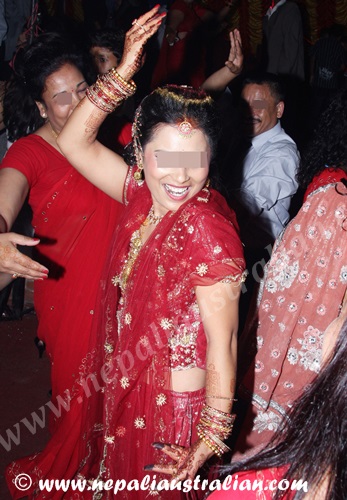
After few more hours when guests stopped arriving, I was free to leave the stage and join my friends and family on the floor. I went to the dance floor and danced my heart away. It was so much fun and was on the dance floor for almost an hour. Everyone was dancing around me and I felt really happy.

Wedding CeremonyBride side reception (16)Bride side reception (15)

After 10 pm, guests started leaving slowly and it was time for the family to have dinner as well. When things were winding down, I felt really good and both my parents were so happy that things went without a hitch. I was so happy and relieved at the same time that I had no appetite at all. Still someone got me a plate of food and I have no recollection what I ate.

I was tired from getting up and sitting down constantly.

On top of that I had to have a big smile on my face all the time. Don’t get me wrong, I was very happy but constantly smiling was hurting my face.

Wedding Ceremony

To be quite honest, my wedding reception was by far the most fun party I had during the whole process. Everything I planned went well and it was pretty awesome.  Everything turned out exactly how I wanted it.  Everyone I cared about was there and I was so honoured to have so many friends and family there. My parents were extremely proud of the reception as everyone was raving about how much they enjoyed and they loved the food.

Bride side reception (13)

After it was all over, we went home and I couldn’t wait to go to bed. Every muscle in my body was tired. On top of that, next day was Janti so I would have to wake up early.

More on the wedding in the next post.

Take care,

M from nepaliaustralian

XOXO

P.S: Do not forget to vote your favorite blog . NEPALIAUSTRALIAN’s Blog Award 2014

Part 43

Our Story : “Swayamvar” ceremony- Part 41

This is a continuation of my previous posts. Please read the previous posts here.

Swayamvar ceremony is the main event for the whole wedding and it literally means ‘Choosing the Groom by the Bride’. In the past, the bride had the right to choose one among many suitors. Nowadays, in the majority of marriages, Swayamvar is just a ceremony followed by Janti in Newari / Nepali wedding. For us the Swayamvar ceremony and Janti ceremony took place in two different days.

The Sahit sent during the Supari ceremony has an auspicious time written for the Swayamvar ceremony. For us the date and time was 24 June at 9.00pm. Therefore, it was going to be an evening ceremony.

Swayambar (2)

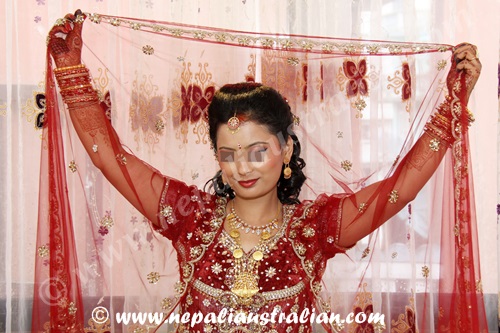
For this ceremony, I wore a red Dupata (silk with sliver work) sari, Dupata shawl around my arms and Ghumto (net red shawl similar to a veil) to cover my head. I went to the beauty parlour for hair and make-up.

Swayambar (3)

Before 9.00pm, all my family and I arrived at the venue. Due to the monsoon season, it was raining heavily. Everyone told me that the rain was a good sign for weddings. Anyway, all of us were waiting for the groom and his family to arrive for the ceremony. When they arrived, I was asked to go to the room upstairs so the groom and family could be welcomed and when everything was ready, I was to enter the room where the mandap was set.

Wedding Ceremony

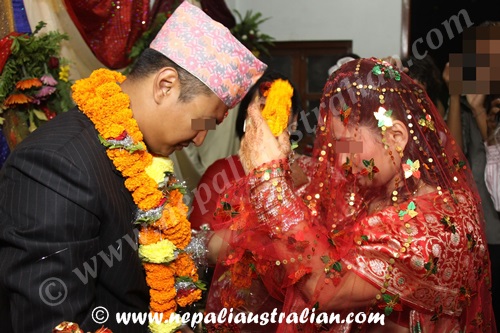
In this mean time, my dad and uncles welcomed the groom and his family. They put Tika on the groom’s forehead, garland around his neck and escorted him to the mandap room. Once everything was settled, my cousin asked me to come down. I had my veil to cover my face and I was looking down as I walked towards the mandap.

Swayambar (4)

When I saw AS , I was so happy. He was wearing a Daura-Suruwal, Nepali national costume in light grey colour with dark blue coat and Nepali Dhaka topi. I was asked to sit next to him and the ceremony began.

Swayambar (5)

There were two priests, one from my family and one from his. They both told us to do lots of things, like doing Puja and saying mantras in Sanskrit and we were meant to repeat it after them. Vedic hymns and prayers invoked the blessings of all Hindu gods and the support of every element under the sun that will have a role in the conjugal life of the couple. The five basic elements of earth, air, fire, water and sky are highlighted time and again.

Swayambar (7)

The Swayamvar ceremony continued with me circling AS thrice holding the Supari (from the Supari ceremony), Dubo ko mala (garland made out holy grass) and Ful ko mala (flower garland). Once I was done, I stood in front of him.

Wedding Ceremony

We exchanged Dubo ko mala and Ful ko mala.

Wedding Ceremony Wedding Ceremony

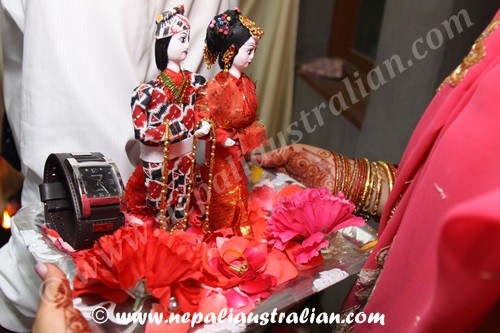
Then my aunt bought the tray with two traditionally dressed dolls (Bride and Groom) and all the jeweleries nicely displayed.

Wedding Ceremony Wedding Ceremony

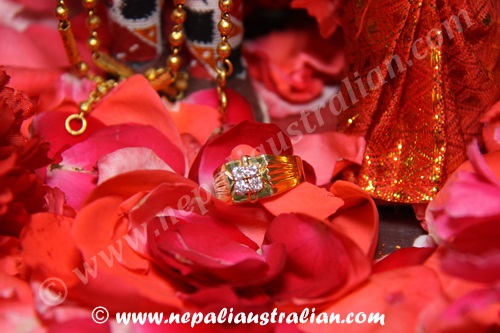
Now AS put the diamond necklace and Tilahari around my neck and golden bangles on my hands. Then we exchanged rings. It was followed by me putting a gold chain around his neck and watch on his wrist.

Wedding Ceremony Wedding Ceremony Swayambar (16) Swayambar (17) Swayambar (18)

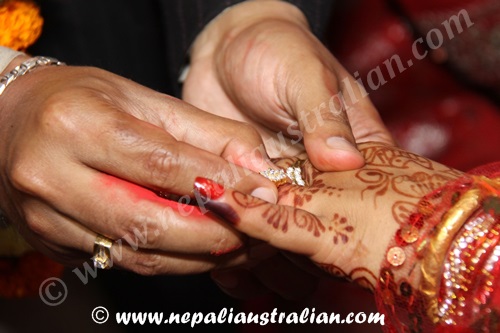
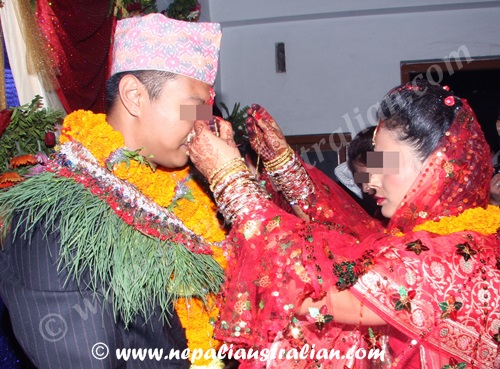
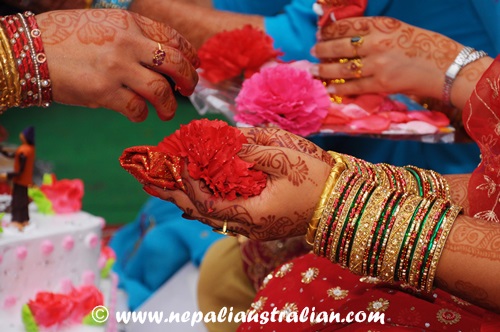
Then priest asked me to sit down for the most important Sindoor ceremony. My aunt put golden and red clothe around my face covering my eyes, holding it from the back. Then the priest instructed AS to take a pinch of Sindoor in between his ring finger and thumb. He had to put that first to his forehead and then put on my forehead. Wedding CeremonyHe had to then move it into my hair partition still touching the forehead.

Swayambar (20)

This step was repeated two more times and now I was officially married to be his wife. Wedding CeremonyI touched AS’s feet for his blessing as his wife, and he handed me the Supari.

Wedding Ceremony Wedding Ceremony Wedding Ceremony Wedding Ceremony

Under the Hindu (Newar) tradition the sindoor and tilahari are the signs of a married woman. Finally, the priests pronounced that AS and I are husband and wife. He explained that as his wife, it is his duty to protect me and to make me happy.

Swayambar (24)

Now the priest asked us to share yogurt from the plate. AS ate a spoonful and then hand it to me. I had one spoon too. It was a bit hard to eat when everyone is watching. After this, we bowed to all elder relatives to get their blessing.

Family photos followed the ceremony and yes a Bhoj (party) as well. Once the ceremony was over, everyone was relaxed and started enjoying the food and company.

Swayambar (25) Wedding Ceremony

AS and his family left after the ceremony and we went home as well. I was so tired after such a long day but I was a married woman that day. It felt good.

Wedding Ceremony

More on the wedding in the next post.

Take care,

M from nepaliaustralian

XOXO

P.S: Do not forget to vote your favorite blog . NEPALIAUSTRALIAN’s Blog Award 2014
Go to Part 42

Our Story : Supari ceremony – Part 40

This is a continuation of my previous posts. Please read the previous posts here.

Wedding Ceremony

The Supari is the Newari equivalent of the engagement ceremony in western weddings; a formal announcement/acceptance of the relationship. The bride’s family isn’t able to proceed with any of the wedding parties until the Supari is received from the groom’s side.

Supari (12)

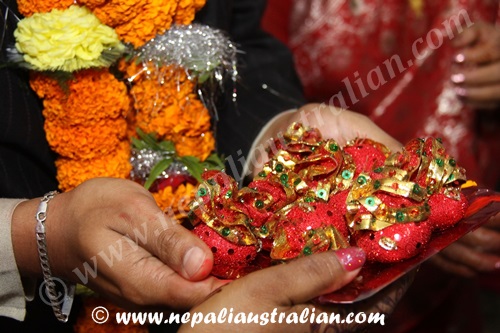
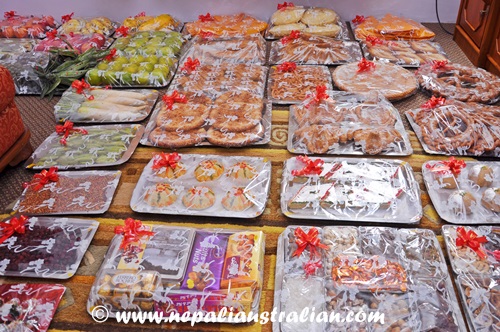
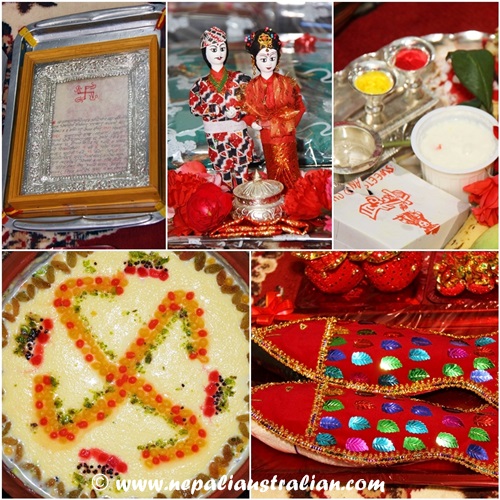
Supari is the Nepali word for betelnut and the deal is sealed by an event called ‘Gway Bigu’ or the sending of 12 pieces of supari (betle nut) from the groom’s family to the bride’s which is used during the “Swayambar” ceremony. The family of the groom-to-be also presents a set of clothes along with jewellery, lots of rotis, fruits for the bride as a sort of first gift to the soon to be daughter-in-law. In most cases, this supari-taking ceremony occurs four days before the actual wedding ceremony, but it can be earlier or later to suit the families.

Supari (13)

When I woke up that morning, I had butterflies in my stomach. I was relaxed before but suddenly I was a bit scared as it was getting very real with the upcoming Supari ceremony. It is funny how you can easily get overwhelmed by the situation looking at what is happening around you. My house was full of people, relatives and friends. It was noisy and everyone was busy doing something or other. They all seemed to be busy but I didn’t know what I was supposed to do. I asked my mum what things are to be done before I go to beauty parlour to get ready. She asked to have breakfast and go so I can come back as soon as possible. I had made an appointment in nearby salon and the lady had told me, it would take up to 3 hours to do my hair and makeup.

Wedding Ceremony Wedding CeremonyWedding Ceremony

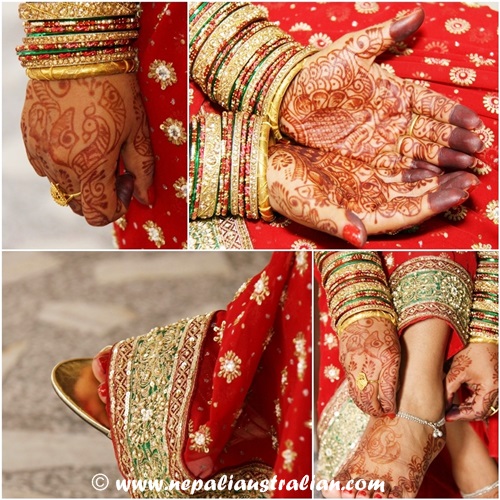
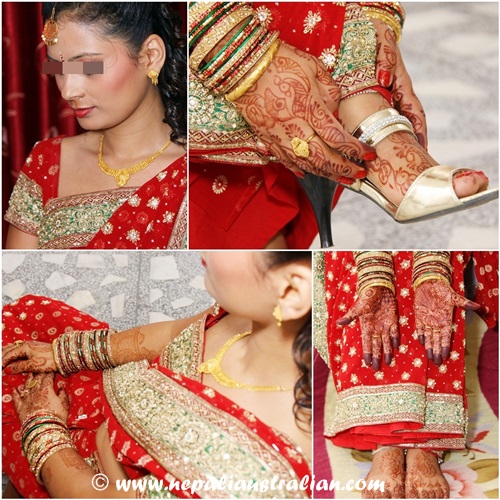
When I came out of the parlour, I felt like a real bride. I was wearing a red sari with green border which had golden work done with beads. I had bought this sari while I was in India and loved the simple style and the border. I had my hair made up in a bridal way complementing my bridal makeup. I wore lots of Chura (glass bangles) to match the sari.

Supari (1)Wedding Ceremony

I also wore a gold necklace set and golden chura my parents had made as part of my wedding jeweleries.

Supari (2)

My friend came to pick me up when I was done. From there it was straight to the venue where Supari ceremony was happening. As we were early and the photographer was already there, we had the opportunity for some photos. I am not sure what I was feeling because it was the first ceremony with so many people and things started to get more real.

Wedding Ceremony Wedding Ceremony Wedding Ceremony

Then most of the relatives and friends started to come. The groom’s family informed us that some of the family members were on the way for Supari ceremony. Like in most Asian society, wedding is the time when the family status is displayed by showering the bride with expensive jewelleries. My parents and MIL had made sure that nothing was spared in planning so I was getting lots of jewellery from both side of the family.

Wedding Ceremony

For this occasion, the groom doesn’t come but had sent his 4 cousins with trays of gifts like jewellery, Saris, cosmetic, shoes, bags (I went shopping with my mother in law beforehand and she let me pick everything of my choice which was so nice of her), fruits, Nepali Roti, Masala and much more. There was Supari (betle nuts) and coconut nicely decorated in red clothes and beads, fish decorated with lots of glitter, and decorated yogurt.

Wedding Ceremony

One of the biggest highlights was the cake(remember all the drama I had to get this cake done and I am so glad the final outcome was so good). It was a white forest two level cake with a traditional topper (two men carrying bride in Doli) . Everyone loved it. I am glad we selected that.

Wedding Ceremony Wedding Ceremony

There was a diamond necklace with earrings, a pearl set and the important Tilhari (necklace made of small pote beads with a gold pendant) and Sindoor (Vermilion).

Wedding Ceremony

But the most important out of all this is Sahit paper (The paper which has the details of date and time for our Swayambar). An astrologer decides on an auspicious date, or Subha Sahit, after gauging the influences of the celestial bodies on the bride and groom based on the dates and times of their birth. Fixing the date is but an end of a long, tedious process of setting everything on a right course. Preceding it are labyrinth of activities, like matching of kundalis and comparing and cross-checking of gotras, or ancestral lineages, of the couple. The Sahitpaper was framed nicely in a silver frame.

Supari (23)

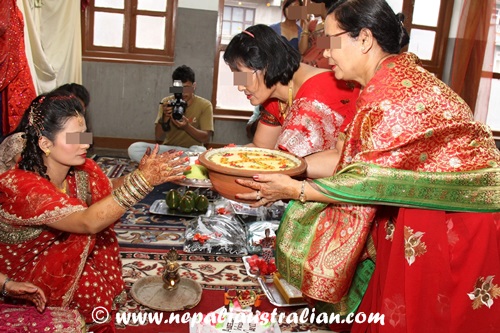
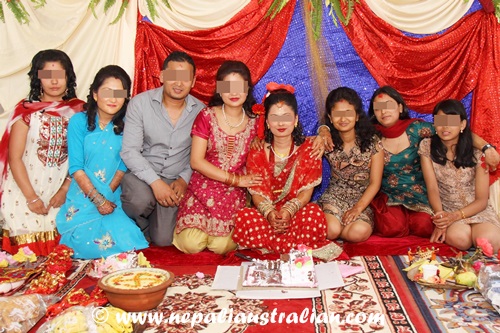
The ceremony started with my aunt (eldest woman in the family) doing some Puja and then they handed me all the gifts including Sahit paper, Sindoor and Tilhari. The priest was instructing my aunt on what to do and with the help of my mum the ceremony was concluded. Wedding CeremonyWedding Ceremony

I was so preoccupied during the ceremony that I missed lots of the things that happened. Luckily, there is a video as well as photos for me to relive all the wonderful memories from the day.

I wore all the jewellery and some glass bangles.

Supari (19)Supari (17)

Then it was time to cut the cake. In Newari wedding, both the cakes are cut by bride herself. I cut a cake and it was given to everyone. A big piece that said A weds M was sent for AS so he can have later.

Supari (20) Supari (21)

As you know, no ceremony in Nepali culture ends without the big Bhoj (party) so there was Bhoj and refreshment for everyone including AS’s cousins.

Wedding Ceremony

It was a simple ceremony but it had a great significance as it formally started the wedding 🙂 .

Supari (15)More on the wedding in the next post.

Take care,

M from nepaliaustralian

XOXO

P.S: Do not forget to vote your favorite blog . NEPALIAUSTRALIAN’s Blog Award 2014

Go to Part 41

Post marriage attire for women in Nepal

I was talking to one of my good friends on Skype recently. She is happily married with a 4 years old daughter. We have been friends for a long time but as she lives in Nepal and I live here, talking to her is always a treat. Every time we have a conversation we share our personal life and feelings.
I knew she hasn’t been very happy about a few things after her marriage. But recently I found her really happy and alive. I commented to her how glad I was to see her so happy. She told me she is happy because now she is free to wear what she wants. She said she is feeling better about herself now that she has control over her life.

Right then it struck to me that for the first few years after her wedding, she was wearing only Sari and Kurta. So here I am writing about the marriage attire for women in Nepal after marriage.

I have never lived outside of Kathmandu in Nepal. Both my parents are originally from Kathmandu so whatever I am going to write will most probably be the view of city life in Nepal.

In Nepal, for a long time, girls have freedom to wear what they want. I am not talking about low cut short skimpy dress but still they are allowed to wear what they want to a certain extent. I have seen my mum’s photos from her school and college days where she was wearing bell-bottom pants or big floral print t-shirt or beautiful colourful dresses.. Normally people let their daughters wear what they want and these days fashion in Kathmandu is not far behind western cities. So every time I go back to Nepal, I am amazed to see girls wearing low cut dress, short shorts or boob tube dresses and tops. I remember when I was there even halter dresses were not popular. But these days there seems to be not much restriction on what you can wear.

But things turn 180 degrees once the same girl gets married. Let’s take an example of my friend. She was wearing whatever she wanted for the last 20+ years of her life but as soon as she was married, she was forced to wear only Kurta and Sari for 2 years after the wedding. She did want to wear pants and dresses but her MIL and her husband’s immediate family member were against it so she couldn’t do anything about it. It is like my daughter/sister can do anything but if the girl is my DIL or SIL then they have to be seen as a traditional Nepali woman. I know things have changed a lot in the last few years as most of the women work after the marriage as well so they have to wear a uniform or still wear pants as it is more comfortable. But at the same time I have seen many families that didn’t allow their daughter in-laws to wear what she wants but instead says “You are a daughter in law now so you must wear only traditional attire. What will the neighbours says if they see you in pants or dress!” What a double standard.

I know in Nepal not only the in-laws but your own family will expect you to change how you dress, like my mum expected from me once I was married, but I believe society should accept the newlywed woman even if she prefers to wear pants or any other dress than just laying down a rule that married women must wear a Kurta or Sari. If she chooses to wear Sari and Kurta , let her but don’t make it compulsory. I love wearing Sari and Kurta on occasions as I feel very feminine in them but I can’t wear them everyday. For me it is not practical.

I have a cousin who got married recently and changed her dressing style completely after the wedding. I believe it is all expected from you and if you want no conflicts with your new family, girls just follow the rules.

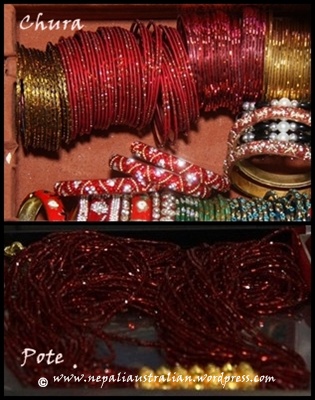
So the normal accepted attire for women after wedding in Nepal are Kurta and Sari with Sindoor(vermilion) on their head, glass chura(glass bangles) on their hands and pote (Glass beads) around their neck. My mum thought I would be wearing pote and chura after the wedding even here in Sydney. The first time I Skyped with her after our return to Sydney, post wedding, she suggested to me that I should either wear chura or pote now onwards. I told her I do wear them when I am wearing Sari or Kurta but I can’t wear them with my pants and dresses. I am sure she is not very happy about it but she does understand my point and hasn’t said anything after that. My MIL on the other hand has never mention anything close to this yet and  I am very glad because I can’t be blunt with her, like I can with my mum, about my reasons for not wearing them here. But the best thing is that she is very understanding.

After the wedding I stayed with my in-laws for 10 days before leaving for our honeymoon. On those 10 days I wore only sari. Mostly it was my choice as I was having fun being a new bride and loving my saris and also it was expected that a woman to look certain way once they are married.

I am not sure how things will be when I go to Nepal again. To start with, I have to live with my in-laws most of the time. I will be visiting my parents but will be expected to spend more time in my husband’s house. So there will be the problem like what I will be allowed to wear or what is accepted of me.

Here in Australia, I wear whatever I want. I haven’t changed my dressing style after my wedding so I am not sure what I am going to do when I go to Nepal. I am sure I can’t wear shorts and short dresses. Normally I used to wear pants with a not too tight t-shirt but I am not sure what will be expected of me. May be I will just wait for now and worry about it when I book my next flight to Kathmandu. But thinking about it sometimes gives me a headache.

I believe that woman should still have the freedom to choose what they want to wear after getting marriage just like before marriage. I am sure we won’t dress like teenagers when we are in our mid 20s. Otherwise if society forces women to dress in a certain way then it might make them unhappy, like my friend, which will affect the relationship with the in-laws. I hope this will change soon so a woman doesn’t feel obligated to do things she really doesn’t want to. I know society changes according to time so I hope Nepali society will change in this aspect soon and will not differentiate between married women and single women in terms of clothing.