Monthly Archives: April 2012

Welcoming Nepali New Year 2069

As most of you already know Nepal follows a different calendar than the Gregorian calendar so Nepali New Year falls on mid April instead of 1st of January. Bikram Sambat or Nepali Calendar or Nepali patro is approximately 56 years and 8½ months ahead of the Gregorian calendar. Unlike Gregorian months, the lengths of Nepali months are not predetermined, and change from year to year, varying from 29 days to 32 days. This year starting today is 1st of Baishak, 2069.

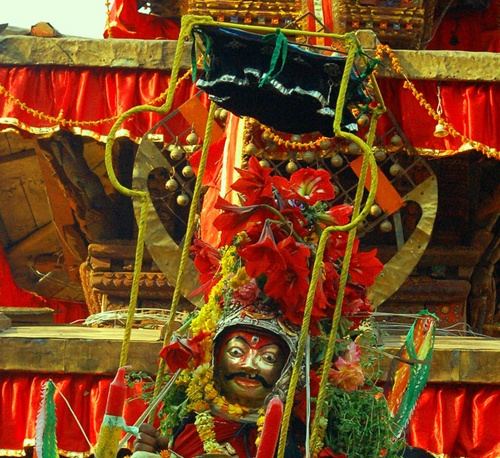
There are lots of celebrations for Nepali New year in Nepal but the most important one is a nine day long Bisket Jatra is held in Bhaktapur, which is 15 km east of Kathmandu. It is considered one of the liveliest cultural festivals in the world.

There is a legend that every man who married a Bhaktapur Princess died the first night. So, one brave prince after marrying the princess, stayed awake on the first night. He saw two serpents come out of the two nostrils of the princess when she was asleep. The prince quickly took out his sword and chopped off the serpents’ head . The next morning, the serpents were displayed on a pole in Bhaktapur and this continues till today in the form of Bisket Jatra Festival.

So on the first day of Bisket Jatra, a symbolic 25 ft Yoshin-Pole is erected in Taumadhi Tole of Bhaktapur.

Two days after the erection of the pole, the idols of Lord Bhairab and his female counterpart Bhadrakali are enshrined in two large chariots and pulled through crowds of cheering onlookers. When the chariot reaches a sloping open square, there is a tug-of-war between the inhabitants of the upper and lower parts of the town. The winners of the tug-of-war are considered blessed with good fortune for the coming year.

On the last day of the festival the Bhairav Chariot is parked in Gahi Tole. At midnight the smaller Bhadrakali Chariot is repeatedly rammed against the Bhairav Chariot in a not very subtle display of their explosive copulation.

Variations on the Bisket Jatra theme can also be seen in the villages of Thimi and Bode. In the former there’s a parade of images of the gods, with villagers throwing red powder over them. In the latter, there’s a tongue-piercing ceremony, with one villager spending the day with an iron spike piercing his tongue.

Apart from this, there are lots of dance parties organised in Kathmandu this year to welcome the new year. In Sydney, tomorrow (14 April) we are going to celebrate new year with the Nepali band Nepathya. They are performing live in Sydney’s Town Hall. I’ll update about the event later.

Till then, Happy Nepali New Year 2069 everyone. Have Fun…

My Easter long weekend

Even though I don’t celebrate Easter, it is one of the best times of the year to have fun. Every year there is an Easter breakfast at work with Easter buns and Easter eggs and after that, off we go for a 4 day long weekend.

This year after a long time, I spent my Easter long weekend in Sydney. Before, I have always tried to escape Sydney at this time of the year as it is the second longest holiday here after Christmas, but this year we have a holiday planned in May so we thought it was better to enjoy Easter in Sydney. And I was surprised how busy we were even in Sydney.

Over the four day period, we attended a family dinner, a baby shower, catch up with my friends for dinner, catch up with AS’s friends for dinner, catch-up with his family for  dinner, whew, even writing all that tired me out! I couldn’t believe that the time went so fast and I am back at work now.

As I mentioned before in my post , everyone around me is either pregnant or already has a baby. Our friend N and J are expecting their first baby soon, so I went for the baby shower. It was organised in a park and we had great fun with them and their guests. The most entertaining part of the day was the games they had organised. If anyone is planning a baby shower soon and looking for ideas for games, here are a few fun ones from the day.

  • Fill baby bottle with milk and have a competition on who can finish the milk from the baby bottle.
  • Have adults (blindfolded) taste baby food and ask what flavour it is.
  • Blindfold people and make them feel baby stuffs like pacifier, nappy, clothes and ask them what they are.
  • The best one out of all, in a baby nappy, put some baby food (like green spinach or yellow corn ones) which will look like poo and have a competition on who can lick them clean quickest. I know it sounds gross but it was fun to watch. 🙂

The next evening we went to a Thai restaurant for dinner, the food was amazing and the highlight of it was the fish we had. Tasty with a very spicy sauce.

Then one evening we went to AS’s friend’s place for dinner. There was so much food that by the end of the evening I was so stuffed that I could  barely walk.

On the last evening, we went for a BBQ and momo in AS’s cousin’s place. How can Nepali people party without a momo? I got to meet his side of the family and make momo. The sauce was really spicy and tasty.

Also Easter is the time to indulge with lots of chocolates as well so there was lots of exchange of chocolates at work as well as with friends. AS is a big fan of dark chocolates so I bought him handmade chocolates from Belle Fleur. It just melts in your mouth and tastes divine. They were in shape of bunny, Easter eggs and hot cross bun.

How was your Easter break?

Hope everyone had a great time.

‘There are downsides to looking this pretty’: Do You agree?

On 3rd of April,UK journalist, Samantha Brick wrote the following article and it has gone viral. If you haven’t read the article yet, please read it below.

When I first read the article, I thought that she came across as extremely arrogant for writing it. Then again I am a women and she will perhaps say that I am jealous of her.

Beauty is in the eyes of the beholder so I’m sure there are some people who find her attractive, especially her husband. Isn’t it nice that you have a man who admires you? (My husband also think I am the most beautiful woman in the world apart from Angelina Jolie and I think some Bollywood actress and I am sure there are a few others that he hasn’t told me yet :))

To me she looked like an average 40 year old who looks after herself. I am glad she does look after herself and thinks she is beautiful but there is a fine line between feeling ‘beautiful and positive’ and feeling ‘beautiful and arrogant’.

I think beauty is not only what one looks like from the outside but also from the inside. I will never judge a person based on just their outer beauty as I have met an average looking woman who had a very beautiful heart and some others who looked beautiful from the outside but are so full of  themselves and have an arrogant personality.

Outer beauty is transient and does not last a lifetime, as we age, our physical appearance ages too, and beauty gradually fades so it is really important to be beautiful from the inside as well. I think if you are beautiful from the inside, people will love you no matter how you look from the outside. I think the movie ‘Shallow Hal’ supports my thinking.

Here you go, judge for yourself and tell me what do you think about the article?

‘There are downsides to looking this pretty’: Why women hate me for being beautiful  (from daily mail uk)

 On a recent flight to New York, I was delighted when a stewardess came over and gave me a bottle of champagne. ‘This is from the captain — he wants to welcome you on board and hopes you have a great flight today,’ she explained. You’re probably thinking ‘what a lovely surprise’. But while it was lovely, it wasn’t a surprise. At least, not for me.

Throughout my adult life, I’ve regularly had bottles of bubbly or wine sent to my restaurant table by men I don’t know. Once, a well-dressed chap bought my train ticket when I was standing behind him in the queue, while there was another occasion when a charming gentleman paid my fare as I stepped out of a cab inParis.

Another time, as I was walking throughLondon’sPortobello Roadmarket, I was tapped on the shoulder and presented with a beautiful bunch of flowers. Even bar tenders frequently shoo my credit card away when I try to settle my bill.

And whenever I’ve asked what I’ve done to deserve such treatment, the donors of these gifts have always said the same thing: my pleasing appearance and pretty smile made their day.

While I’m no Elle Macpherson, I’m tall, slim, blonde and, so I’m often told, a good-looking woman. I know how lucky I am. But there are downsides to being pretty — the main one being that other women hate me for no other reason than my lovely looks.

If you’re a woman reading this, I’d hazard that you’ve already formed your own opinion about me — and it won’t be very flattering. For while many doors have been opened (literally) as a result of my looks, just as many have been metaphorically slammed in my face — and usually by my own sex.

I’m not smug and I’m no flirt, yet over the years I’ve been dropped by countless friends who felt threatened if I was merely in the presence of their other halves. If their partners dared to actually talk to me, a sudden chill would descend on the room.

And it is not just jealous wives who have frozen me out of their lives. Insecure female bosses have also barred me from promotions at work.

And most poignantly of all, not one girlfriend has ever asked me to be her bridesmaid.

You’d think we women would applaud each other for taking pride in our appearances.

I work at mine — I don’t drink or smoke, I work out, even when I don’t feel like it, and very rarely succumb to chocolate. Unfortunately women find nothing more annoying than someone else being the most attractive girl in a room.

Take last week, out walking the dogs a neighbour passed by in her car. I waved — she blatantly blanked me. Yet this is someone whose sons have stayed at my house, and who has been welcomed into my home on countless occasions.

I approached a mutual friend and discreetly enquired if I’d made a faux pas. It seems the only crime I’ve committed is not leaving the house with a bag over my head. She doesn’t like me, I discovered, because she views me as a threat. The friend pointed out she is shorter, heavier and older than me.

And, according to our mutual friend, she is adamant that something could happen between her husband and me, ‘were the right circumstances in place’. Yet I’m happily married, and have been for the past four years.

This isn’t the first time such paranoia has gripped the women around me. In my early 20s, when I first started in television as a researcher, one female boss in her late 30s would regularly invite me over fordinnerafter a long day in the office.

I always accepted her invitation, as during office hours we got along famously. But one evening her partner was at home. We were all a couple of glasses of wine into the evening. Then he and I said we both liked the song we were listening to.

She laid into her bewildered partner for ‘fancying’ me, then turned on me, calling me unrepeatable names before ridiculing me for dying my hair and wearing lipstick. I declined any further invitations.

Therapist Marisa Peer, author of self-help guide Ultimate Confidence, says that women have always measured themselves against each other by their looks rather than achievements — and it can make the lives of the good-looking very difficult.

‘Many of my clients are models, yet people are always astounded when I explain they don’t have it easy,’ she says. If you are attractive other women think you lead a perfect life — which simply isn’t true.

‘They don’t realise you are just as vulnerable as they are. It’s hard when everyone resents you for your looks. Men think “what’s the point, she’s out of my league” and don’t ask you out. And women don’t want to hang out with someone more attractive than they are.’

I certainly found that out the hard way, particularly in the office.

One contract I accepted was blighted by a jealous female boss. It was the height of summer and I’d opted to wear knee length, cap-sleeved dresses. They were modest, yet pretty; more Kate Middleton than Katie Price.

But my boss pulled me into her office and informed me my dress style was distracting her male employees. I didn’t dare point out that there were other women in the office wearing similar attire.

Rather than argue, I worked out the rest of my contract wearing baggy, sombre-coloured trouser suits. It was clear that when you have a female boss, it’s best to let them shine, but when you have a male boss, it’s a different game: I have written in the Mail on how I have flirted to get ahead at work, something I’m sure many women do.

Women, however, are far more problematic. With one phenomenally tricky boss, I eventually managed to carve out a positive working relationship. But a year in, her attitude towards me changed; the deterioration began when she started to put on weight.

We were both employed by a big broadcasting company. One of our maleUKchiefs recommended I take the company’s global leadership course, which meant doors would have opened for me around the world.

All I needed were two personal recommendations to be eligible. As everyone in the office agreed I was good at my job, I didn’t think this would be a problem.

But while the male executive signed the paperwork without hesitation, my immediate boss refused to sign. When I asked her right-hand woman why, she pulled me to one side and explained that my boss was jealous of me.

Things between us rapidly deteriorated. Whenever I wore something new she’d sneer at me in front of other colleagues that she was the star, not me.

Six months later I handed in my notice. Privately she begged me to stay, blaming the nasty comments on her hormones. She was in her early 40s and confided she was having marital problems. But by then I’d had enough.

I find that older women are the most hostile to beautiful women — perhaps because they feel their own bloom fading. Because my husband is ten years older than me, his social circle is that bit older too.

As a Frenchman, he takes great pride in hearing other men declare that I’m a beautiful woman and always tells me to laugh off bitchy comments from other women.

Yet I dread the inevitable sarky comments. ‘Here she comes. We’re in the village hall yet Sam’s dressed for the Albert Hall,’ was one I recently overheard. As a result I finddinnerparties and social gatherings fraught and if I can’t wriggle out of them, then often dress down in jeans and a demure, albeit pretty, top.

But even these ploys don’t always work. Take last summer and a birthday party I attended with my husband. At one point the host, who was celebrating his 50th, decided he wanted a photo with all the women guests. Positioning us, the photographer suggested I stand immediately to his right for the shot.

Another woman I barely knew pushed me out of the way, shouting it wasn’t fair on all the other women if I was dominating the snap. I was devastated and burst into tears. On my own in the loos one woman privately consoled me — well out of ear-shot of her girlfriends.

So now I’m 41 and probably one of very few women entering her fifth decade welcoming the decline of my looks. I can’t wait for the wrinkles and the grey hair that will help me blend into the background.

Perhaps then the sisterhood will finally stop judging me so harshly on what I look like, and instead accept me for who I am.

Pushpa Basnet: Pride of Nepal

Every year CNN Heroes is organised to honour individuals who make extraordinary contributions to humanitarian aid. In 2010, Anuradha Koirala not only got nominated for this prestigious award but won the award for her contribution to rescuing victims of girl trafficking in Nepal. This made every Nepali, around the world, proud.

Now in 2012, Nepal can be proud again for another extraordinary and selfless person. Pushpa Basnet, has been nominated for this award.

When I started to write this article, I read many interviews of Pushpa Basnet and after reading what CNN had put together after working with Pushpa Basnet for 3 months, I thought I would just share that as I couldn’t do a better job for sure.

So here is the story from the website.


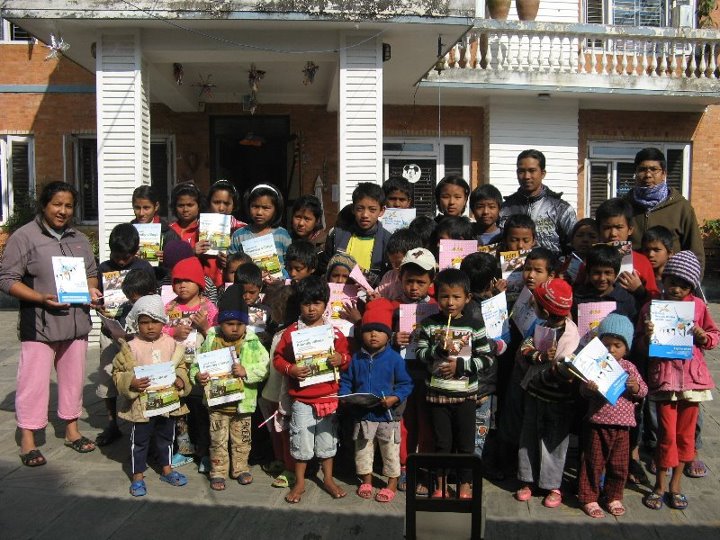
Pushpa Basnet doesn’t need an alarm clock. Every morning, the sounds of 40 children wake her up in the two-story home she shares with them. As she helps the children dress for school, Basnet might appear to be a housemother of sorts. But the real story is more complicated.All of these children once lived in Nepal‘s prisons. This 28-year-old woman has saved every one of them from a life behind bars.

 Nepal is one of the poorest countries in the world — according to UNICEF, 55% of the population lives below the international poverty line — so it lacks the social safety net that exists in most Western nations. Space is extremely limited in the few children’s homes affiliated with the government.So when no local guardian is available, an arrested parent often must choose between bringing their children to jail with them or letting them live on the streets. Nepal‘s Department of Prison Management estimates 80 children live in the nation’s prisons.


“It’s not fair for (these) children to live in the prison because they haven’t done anything wrong,” said Basnet, who started a nongovernmental organization to help. “My mission is to make sure no child grows up behind prison walls.” Basnet is one of several in Nepal who have started groups to get children out of prison. Since 2005, she has assisted more than 100 children of incarcerated parents. She runs a day care program for children under 6 and a residential home where mostly older children receive education, food, medical care and a chance to live a more normal life.

Since 2005, Pushpa Basnet has assisted more than 100 children of incarcerated parents.”I had a very fortunate life, with a good education,” Basnet said. “I should give it to somebody else.” Basnet was just 21 when she discovered her calling, she said. While her family ran a successful business, she was studying social work in college. As part of her studies, she visited a women’s prison and was appalled by the dire conditions. She also was shocked to discover children living behind bars.One baby girl grabbed Basnet’s shawl and gave her a big smile.

“I felt she was calling me,” Basnet said. “I went back home and told my parents about it. They told me it was a normal thing and that in a couple of days I’d forget it. But I couldn’t forget.” Basnet decided to start a day care to get incarcerated children out from behind the prison walls. While her parents were against the idea at first — she had no job or way to sustain it financially — eventually they helped support her. But prison officials, government workers and even some of the imprisoned mothers she approached doubted that someone her age could handle such a project. 

“When I started, nobody believed in me,” Basnet said. “People thought I was crazy. They laughed at me.” But Basnet was undaunted. She got friends to donate money, and she rented a building in Kathmandu to house her new organization, the Early Childhood Development Center. She furnished it largely by convincing her parents that they needed a new refrigerator or kitchen table; when her parents’ replacement would arrive, she’d whisk the old one to her center. 

Just two months after she first visited the prison, Basnet began to care for five children. She picked them up at the prison every weekday morning, brought them to her center and then returned them in the afternoon. Basnet’s program was the first of its kind in Kathmandu; when she started, some of the children in her care had never been outside a prison. 

Two years later, Basnet established the Butterfly Home, a children’s home where she herself has lived for the past five years. While she now has a few staff members who help her, Basnet is still very hands on.”We do cooking, washing, shopping,” she said. “It’s amazing, I never get tired. (The children) give me the energy. … The smiles of my children keep me motivated.” 

Coordinating all of this is no easy task. But at the Butterfly Home, the older kids help care for the younger ones and everyone pitches in with household chores. The atmosphere feels like an extremely large family, a feeling that’s fostered by Basnet, who smothers the children with love. The children reciprocate by calling her “Mamu,” which means “Mommy.” “I don’t ever get a day off, but if I [didn’t] have the children around me, it would be hard,” she said. “When I’m with them, I’m happy.” 

All the children are at the Butterfly Home with the consent of the imprisoned parent. When Basnet hears about an imprisoned child, she’ll visit the prison — even in remote areas of the country — and tell the parent what she can provide. If the parent agrees, Basnet brings the child back.She is still eager, however, for the children to maintain relationships with their parents. During school holidays, she sends the younger children to the prisons to visit, and she brings them food, clothing and fresh water during their stay. Ultimately, Basnet wants the families to reunite outside prison, and 60 of her children have been able to do just that. 

Parents like Kum Maya Tamang are grateful for Basnet’s efforts. Tamang has spent the last seven years in a women’s prison in Kathmandu. When she was convicted on drug charges, she had no other options for child care, so she brought her two daughters to jail with her. When she heard about Basnet’s program, she decided to let them go live with her. “If Pushpa wasn’t around, (they) could have never gotten an education … (they) would have probably had to live on the streets,” she said. “I feel she treats (them) the way I would.” Tamang’s oldest daughter, Laxmi, said she can’t imagine life without Basnet.”My life would have been dark without her,” said Laxmi, 14. “I would’ve probably always had a sad life. But now I won’t, because of Pushpa.” 

In 2009, Basnet started a program to teach the parents how to make handicrafts, which she sells to raise money for the children’s care. Both mothers and fathers participate. It not only gives them skills that might help them support themselves when they’re released, but it also helps them feel connected to their children. “Often, they think that they’re useless because they’re in prison,” Basnet said. “I want to make them feel that they are contributing back to us.”Making ends meet is always a struggle, though. The children help by making greeting cards that Basnet sells as part of her handicraft business. In the past, she has sold her own jewelry and possessions to keep the center going. 

Her biggest concern is trying to find ways to do more to give the children a better future. She recently set up a bank account to save for their higher educations, and one day she hopes to buy or build a house so they’ll always have a place to call home. Their happiness is always foremost in her thoughts.”This is what I want to do with my life,” she said. “It makes me feel (good) when I see that they are happy, but it makes me want to work harder. … I want to fulfill all their dreams.”

What an amazing woman. Please vote for her and help her win the CNN Heroes award and support a great cause.