Category Archives: Nepali Culture

My Special Mother’s Day

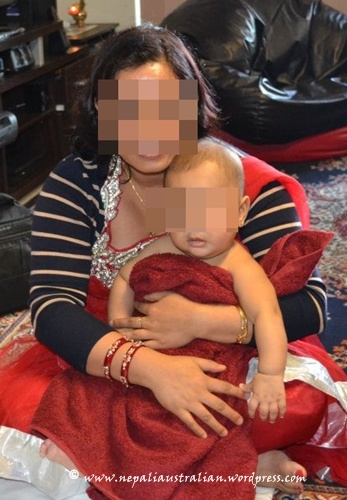
As I mentioned on my previous post, this year was my first Mother’s Day after my wedding. In my culture, you have to make the event special as it will be the first time a married daughter brings food and gifts for her mother from her home (husband’s home). If I was in Nepal, I would need to do all the preparation and make sure my mum had a great day but as I am so far away, my mother in law made sure that the ritual was done properly.

I am so happy that my in laws, mostly my MIL, made such a great effort to make sure my mum’s day was special. She did all the shopping and all the preparations and my FIL helped her a lot. Then my two BILs went and presented the foods and gifts to my mother. They also took these photos for us to see. I am so grateful and thankful for my new family for taking care of this and making sure things went great.

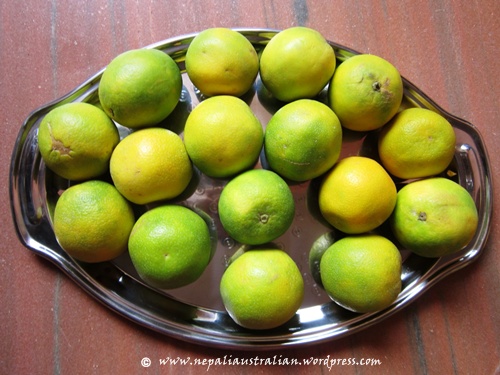
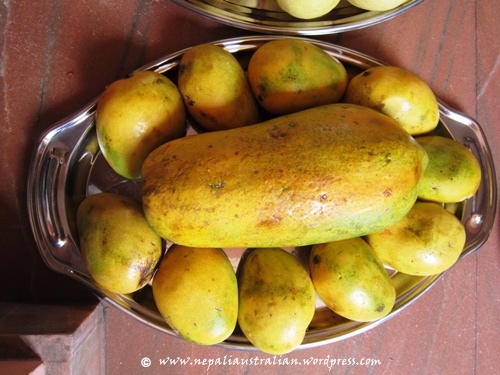
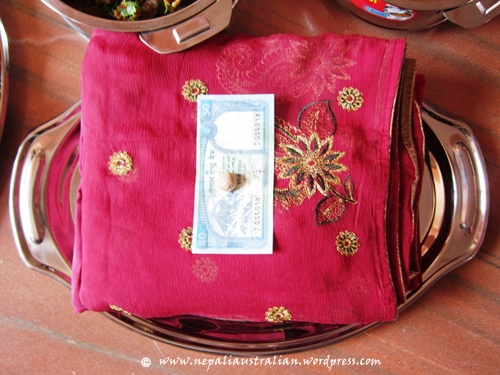
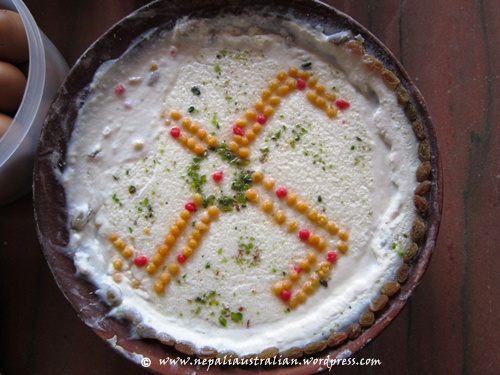
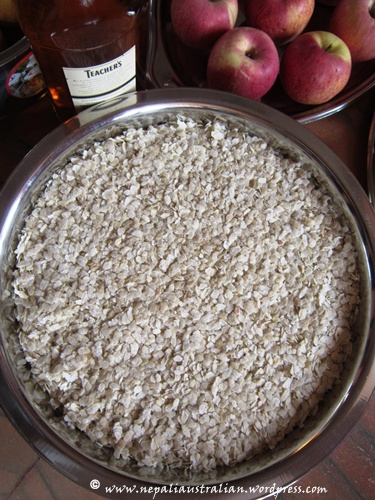
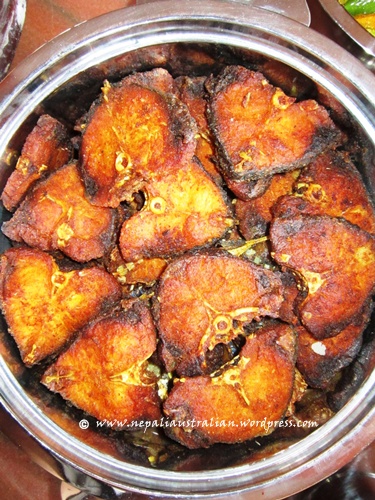
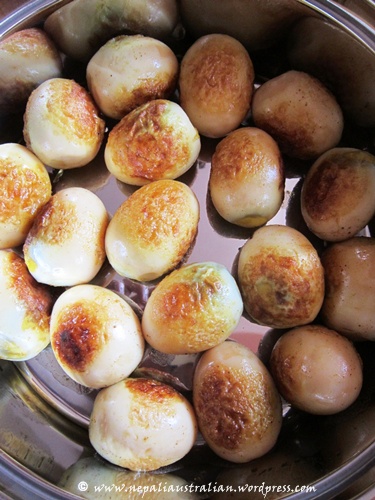
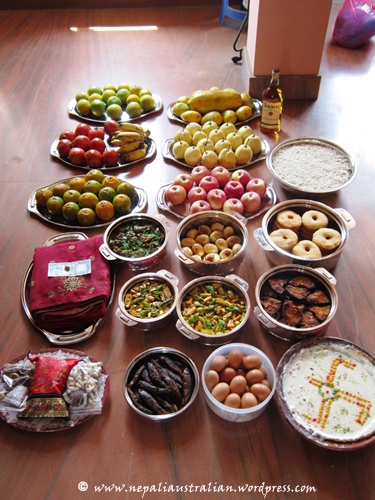
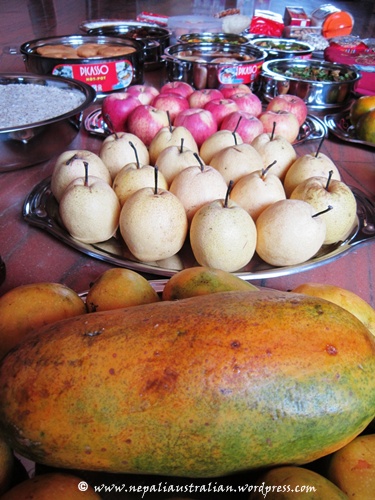
Have a look at the photos below and you can see traditional Newari Mother’s Day celebration. There are Sagun (egg, bara, whisky, fish, yoghurt and meat), also lots of fruits and rotis. It lookes so yummy. My mum also got a sari, a cake and masala. I really wish I could have been there to help prepare for it and to see the smile on my mum’s face.

Aama ko Mukh herne / Mata Tirtha Aunshi (Nepali Mother’s day)

As I have mentioned in many of my posts before,Nepal has a different calendar than the Gregorian calendar. So in Nepal people also celebrate Mother’s day on a different day than the western calendar. In Australia, Mother’s Day is the second Sunday of May every year but in Nepali calendar, it changes every year according to the positions of sun, moon and the planets. It falls on the last day of the dark fortnight of April or early May. This year, it happens to be on today,9 May 2013. It is commonly known as Aama ko Mukh here in Nepal. Aama ko Mukh here translates into seeing mother’s face.

When I was still in Nepal, I used to make a nice breakfast and buy my mum a small present which was the only thing that I could afford with my pocket money. My dad used to buy lots of sweets as well so that there were lots of delicacies for her to eat. Mum used to make Sagun (egg, bara) for my grandma(both dad’s mum and her mum) and we used to use the same for her as well.

In Nepal, if the children have left home/ married, they will come with presents and delicacies to spend time with their mother. The entire day is filled with festivities around the country.

Children whose mothers have already passed away visit the place called ‘Mata-Tirtha’ which is situated at about 15 km to the west of Kathmandu or some other holy place elsewhere in Nepal to make offerings to the souls of their departed mothers. Mata means mother; tirtha means a holy place. Thus, this name suggests the holy place for them to visit for making offerings to the deceased mothers once a year.

A religious festival is held at ‘Mata-Tirtha’ on the Mother’s day for a whole day. There is a legendary natural pond at ‘Mata-Tirtha’ where Nepali people pay homage to their deceased mothers. Thousands of people take a quick bath in the water flowing from the nearby stone spouts, and then they go to the holy pond to make offerings to their deceased mothers. They believe that the souls of their mothers come to this natural pond to accept their offerings on this day. Thereafter, they worship Shiva Linga located next to the holy pond.

A legend behind this day goes as follows. Shepherds used to quench their thirst with the cold water from the natural pond at the current day ‘Mata-Tirtha’ when they went to graze their cattle in a nearby forest. One day, one of the shepherds whose mother was already died happened to go to drink water from this pond she saw the image of her dead mother in the clear water of the pond. She was so excited by this that she went to every house in that village to tell them about how she had seen her mother’s image in the pond. Since then Nepali people have believed that they can see the image of their deceased mothers in the water of this holy spring. So, Nepali people from different parts of the country visit this pond on this day hoping to see the image of their departed mother. Thus, this place came to be a holy place for those who have lost their mothers. Also those who cannot go to Mata-Tirtha shower at home or take a quick dip in the water of a holy river early in the morning then offer a platter of sweets, fruits and money to a priest in the memory of their departed mother.

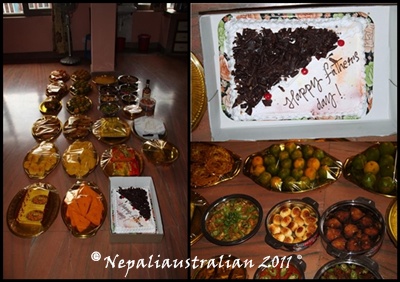
My MIL sent these gifts to my dad last Father’s day on my behalf

As I have describe in my previous post , in Nepal the first year of marriage is considered to be very important. So during every festival, there are things you are meant to do. This affects how you celebrate Dashain, Tihar, Father’s Day, Mother’s day and more. Last year, I had my first Father’s day after the wedding and my MIL made sure it was a special one for my dad. This year, it is my first Mother’s Day after the wedding so it will be really special for my mum. My MIL is doing everything that she can to make sure this day is memorable for my mum. I know a few details about what is going to happen but I will wait for things to happen today and will update in details about my special Mother’s day. Just so excited to Skype with my mum later and receive photos from Nepal afterwards.

So if you haven’t called you mum to wish her, do give her a call and make her smile. And to all the proud moms out there, Happy Mother’s day.

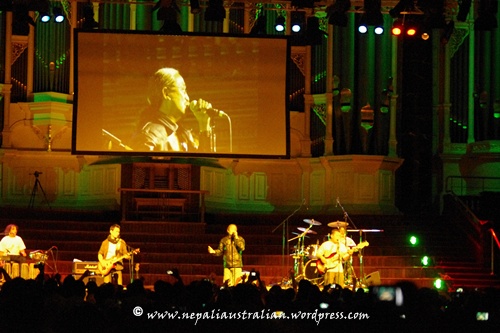
Nepathya rocked Sydney for Nepali New Year

As I mentioned in my last blog, I was planning to celebrate Nepali New Year 2069 with a concert by a Nepali band, Nepathya in Sydney Town Hall.

I don’t want to admit it but may be I am getting older since my wedding, I haven’t been partying and clubbing as I used to. One of the main reasons was that the few times I went out I felt so out-of-place and I couldn’t stand the loud and wild crowd around me. It is a big contrast to the life I used to have before my wedding when I used to go to dance parties at least a few times a month. Anyway, when I heard that Nepathya was coming to Sydney, I told AS and my friends that we have to go and have some fun.

For all who don’t know Nepathya, it is a popular band from Nepal who are known for blending folk melodies into new, youth-friendly pop and rock tune. The band members are Amrit Gurung (Vocals), Suraj Thapa (Keyboards), Subin Shakya (Bass), Nikhil Tuladhar (Drums), Niraj Gurung (Guitar), and Hari Maharjan (Guitar). They were really popular when I was in Nepal in the 90s and are equally popular today as well. Some of their popular songs include Resham, Tal ko Pani , Chekyo Chekyo, Jomsomai Bazaar Ma, Yo Mann ta Mero Nepali Ho etc.

So on Saturday, all of us were ready with our tickets and reached Sydney Town Hall by 6 pm. Just judging by the crowd outside the venue, I knew that it was going to be a very big concert. Sydney Town Hall is an international venue and Lady Gaga had her ‘Monster Ball’ concert there last year. It is the first time that any Nepali events was conducted in an international arena.  I later came to know that more than 2000 tickets were printed for the event and it was all sold out leaving lots of people who came thinking to buy tickets at the door disappointed. No wonder the place felt very crowded as during lady Gaga concert, there were only 800 in the audience.

We waited outside for the venue to be opened as it said in the ticket, the concert will start at 6 pm sharp but to our disappointment, we had to wait another 30 minutes before the door was open. Most of the people were already there so there was a long queue to get in. As I had been to this venue before, I was not worried about being last in the line as I thought we would be standing for the concert so no need to be the first inside. But I was surprised to see the sitting arrangements. There were chairs everywhere. When we got inside, the show had already started with local artists performing some songs. As we had gone in a group, it was really hard to find place in one row with 10 empty seats. Also it was already dark inside so we had to split with friends and try to get a sit wherever we could. Some of my friends were in the middle of the hall while me and rest of my friends were at back of the room. The worst part of this sitting arrangement is that people were walking in and out all the time and as we sat in behind the corridor, my view was constantly blocked. On top of that, as there were not so many empty seats left, people were putting their friends on their laps which blocked my view permanently. I was really disappointed thinking that I couldn’t enjoy the concert.

I would have preferred numbered sitting, if the organisers were planning to have chairs, so people who went in a group could sit together, if they bought tickets together like in any international event. Anyway, there were more dances by local artist on the stage and we were frantically searching for another area to enjoy Nepathya. Unfortunately, everywhere we looked it was full and there were lots of people who couldn’t find a seat and were just wandering around or standing next to their friends. At 8 pm, they promised, Nepathya would come on stage but due to some technical difficulties, they played videos of Nepathya’s songs on the big screen for a while instead. By this time I almost gave up hope  to enjoy this concert as the guys in front of us kept standing and blocking the view even after we have told them not to stand there. Not only couldn’t I see the stage now, I could hardly see the big screen as well. On top of that, as the town hall does not have sound absorbers as it was not built for a concert, the sound bouncing off the walls was really irritating.

I felt really luck when my friends who were sitting in the middle of the venue came and told us that there are a few empty seats around them. I was overjoyed and went to join them with the rest of my friends and it was the perfect timing as Nepathya just came on stage.

Once Nepathya took the stage, everyone around us started to stand and we did as well but it wasn’t a problem since from that side of the venue, I could still see the stage. Rest of the evening went smoothly and I really enjoyed the whole show.

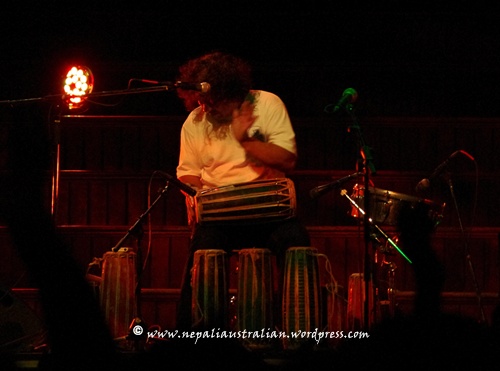
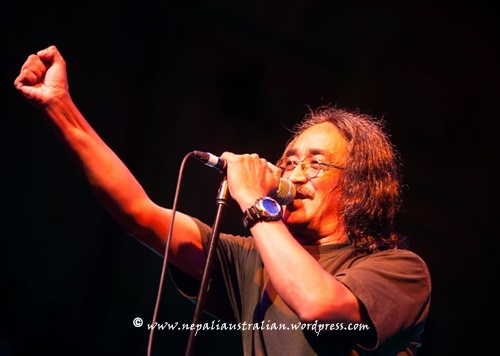
Amrit Gurung was such a great performer and kept everyone captivated for more than 2 hours straight. When he sang ‘Yo mann ta mero Nepali ho’ (This heart o’ mine is still Nepali), there was not a single person in the hall who wasn’t singing along. He sang a few songs that I haven’t heard before (must be new) but still the melody was so good that I enjoyed them all. When he sang ‘Resham’, the crowd were dancing and the audience got really loud and crazy. Overall, Amrit Gurug proved why they have been in this business for so long and still successful. The connection they made with the audience was undeniable. The guys who played  the maadal (Nepali drum) and guitar did a great job as well.

Making it clear to the crowd just how much he loves Nepal, Amrit Gurung at one stage draped a Nepali flag, that was given by the audience, around his shoulders. He delivered a few really heart touching words for people living abroad as well. One of the ones I really liked was

Mero desh lai padhe lekhako hoina safa hreedhya bhayako manche Ko jarurat cha. Matribhumi ko pukar sunidine bhitri kanbhayako maanish chahiyeko cha tashaile saknu huncha bhene Nepal farkinush haiiiiiiiiiiiiiiiiiiiiiiiiiiiiiii” –Amrit Gurung

 (Translation: My country doesn’t need scholars but it needs people who have a clean heart, one who can hear the country’s pleadings, so if you can, please come back to Nepal.)

I also got to know that he was involved with a lot of charities in Nepal where they look after poor and needy families. What an awesome human being. Going to a concert like these always draws me back toward Nepal and good people like him make me feel good about this world. I am still hopeful that things will get better in Nepal one day (hopefully soon) and we should always support people who are thinking of the betterment of Nepal in every way.

The organisers did a great job organising this event in such a big scale and was even proudly saying that it was a historical moment in Sydney for Nepalese people but I will definitely hope that they will be more organised in the future so that everyone one can enjoy the show without getting stressed out. Just one suggestion to the organisers for future events, if you are going to have seating arrangements, please number it .It makes everyone’s life easier.
Losar

Nepal is describe as ‘Char jat ra chhatis barna ko yo sundar desh’ which translate into Nepali is a beautiful, multilingual and multi-cultural country. If you have met many people from Nepal, you might have noticed how different they look from each other. Please click here for my post ‘Different Look of Nepali people’ for details. Also in Nepal, there are lots of celebrations for different cultural group and ethnic group.

Today is Losar, a festival in Nepal which is celebrated by Mongolian Nepali, mainly by Gurung community as well as Rai, Tamang, Sherpas to welcome their New Year. Losar is celebrated on the first full moon of the first month according to a lunar calendar. On the solar calendar it falls between January and March. Lho means year or age and Sar means new or fresh. The word Lhosar means New Year or beginning of new era.

It is a National Holiday in Nepal so people can celebrate the festival.

Losar is the time when family member gathers and celebrate with cultural processions and feasting. Also on this day, older people give money and blessing to younger ones. I remember when I was young; I used to go to my friend’s place to celebrate Losar as my family doesn’t celebrate Losar (I am from Newar culture so we have our New Year during Tihar. Click here for more info). In her house, I used to get some money as well as lots of delicacies among which I liked sel roti (special Nepali bread) and achar the most.

One of the highlights of this day is that the people who celebrate Losar dress in their traditional outfit and go around Buddist temples. Men wear Bhangra, a white cloth shirt-like apparel tied across the chest and open like a bag at the back (for carrying things), and a Kachhad, like a short sarong or kilt while women wear maroon velvet Ghalek (blouses), enhanced by large gold earrings and semi-precious stone necklaces. Even kids are dressed up in traditional outfits.

To mark the day, all the Buddhist monasteries in the country are decorated with colourful prayer flags and the monks offer prayers for good health and prosperity, If you are in Nepal, the places to visit will be Bouddha and Swayambhu stupas where there will be crowds of people gathered to welcome the New Year.

In Sydney, there is a gathering this weekend to celebrate Losar. There will be many people dressed in traditional dress and there will be entertainment like cultural dance and singing. The best of all, there will be lots of Nepali food including Sel roti and momos

Happy Losar everyone!!!

Post marriage attire for women in Nepal

I was talking to one of my good friends on Skype recently. She is happily married with a 4 years old daughter. We have been friends for a long time but as she lives in Nepal and I live here, talking to her is always a treat. Every time we have a conversation we share our personal life and feelings.

I knew she hasn’t been very happy about a few things after her marriage. But recently I found her really happy and alive. I commented to her how glad I was to see her so happy. She told me she is happy because now she is free to wear what she wants. She said she is feeling better about herself now that she has control over her life.

Right then it struck to me that for the first few years after her wedding, she was wearing only Sari and Kurta. So here I am writing about the marriage attire for women in Nepal after marriage.

I have never lived outside of Kathmandu in Nepal. Both my parents are originally from Kathmandu so whatever I am going to write will most probably be the view of city life in Nepal.

In Nepal, for a long time, girls have freedom to wear what they want. I am not talking about low cut short skimpy dress but still they are allowed to wear what they want to a certain extent. I have seen my mum’s photos from her school and college days where she was wearing bell-bottom pants or big floral print t-shirt or beautiful colourful dresses.. Normally people let their daughters wear what they want and these days fashion in Kathmandu is not far behind western cities. So every time I go back to Nepal, I am amazed to see girls wearing low cut dress, short shorts or boob tube dresses and tops. I remember when I was there even halter dresses were not popular. But these days there seems to be not much restriction on what you can wear.

But things turn 180 degrees once the same girl gets married. Let’s take an example of my friend. She was wearing whatever she wanted for the last 20+ years of her life but as soon as she was married, she was forced to wear only Kurta and Sari for 2 years after the wedding. She did want to wear pants and dresses but her MIL and her husband’s immediate family member were against it so she couldn’t do anything about it. It is like my daughter/sister can do anything but if the girl is my DIL or SIL then they have to be seen as a traditional Nepali woman. I know things have changed a lot in the last few years as most of the women work after the marriage as well so they have to wear a uniform or still wear pants as it is more comfortable. But at the same time I have seen many families that didn’t allow their daughter in-laws to wear what she wants but instead says “You are a daughter in law now so you must wear only traditional attire. What will the neighbours says if they see you in pants or dress!” What a double standard.

I know in Nepal not only the in-laws but your own family will expect you to change how you dress, like my mum expected from me once I was married, but I believe society should accept the newlywed woman even if she prefers to wear pants or any other dress than just laying down a rule that married women must wear a Kurta or Sari. If she chooses to wear Sari and Kurta , let her but don’t make it compulsory. I love wearing Sari and Kurta on occasions as I feel very feminine in them but I can’t wear them everyday. For me it is not practical.

I have a cousin who got married recently and changed her dressing style completely after the wedding. I believe it is all expected from you and if you want no conflicts with your new family, girls just follow the rules.

So the normal accepted attire for women after wedding in Nepal are Kurta and Sari with Sindoor(vermilion) on their head, glass chura(glass bangles) on their hands and pote (Glass beads) around their neck. My mum thought I would be wearing pote and chura after the wedding even here in Sydney. The first time I Skyped with her after our return to Sydney, post wedding, she suggested to me that I should either wear chura or pote now onwards. I told her I do wear them when I am wearing Sari or Kurta but I can’t wear them with my pants and dresses. I am sure she is not very happy about it but she does understand my point and hasn’t said anything after that. My MIL on the other hand has never mention anything close to this yet and  I am very glad because I can’t be blunt with her, like I can with my mum, about my reasons for not wearing them here. But the best thing is that she is very understanding.

After the wedding I stayed with my in-laws for 10 days before leaving for our honeymoon. On those 10 days I wore only sari. Mostly it was my choice as I was having fun being a new bride and loving my saris and also it was expected that a woman to look certain way once they are married.

I am not sure how things will be when I go to Nepal again. To start with, I have to live with my in-laws most of the time. I will be visiting my parents but will be expected to spend more time in my husband’s house. So there will be the problem like what I will be allowed to wear or what is accepted of me.

Here in Australia, I wear whatever I want. I haven’t changed my dressing style after my wedding so I am not sure what I am going to do when I go to Nepal. I am sure I can’t wear shorts and short dresses. Normally I used to wear pants with a not too tight t-shirt but I am not sure what will be expected of me. May be I will just wait for now and worry about it when I book my next flight to Kathmandu. But thinking about it sometimes gives me a headache.

I believe that woman should still have the freedom to choose what they want to wear after getting marriage just like before marriage. I am sure we won’t dress like teenagers when we are in our mid 20s. Otherwise if society forces women to dress in a certain way then it might make them unhappy, like my friend, which will affect the relationship with the in-laws. I hope this will change soon so a woman doesn’t feel obligated to do things she really doesn’t want to. I know society changes according to time so I hope Nepali society will change in this aspect soon and will not differentiate between married women and single women in terms of clothing.