Dry fry Nepali style goat curry

I had guests for lunch last weekend. They informed me that they don’t eat chicken and chicken is what I do best. I decided to make goat for them but wanted to do something special. I have never tried the goat like this before but was so proud at the end when the goat curry turned out so good that I didn’t even have a piece left at the end of the day. Even my brother who doesn’t like goat at all ate it and had second helping. AS was really happy and the guests all praised my cooking. My mum will be so proud to know that I am becoming a better cook every day.

Ingredients

  • 1 kg goat with bones cut into 1 inch cubes (pieces with bones can be a bit bigger too)
  • 3 medium onions thinly sliced
  • 2 dry red chilies
  • 2 medium tomatoes diced
  • 2 tablespoons ginger & garlic paste
  • 1 inch cinnamon stick
  • 1 tablespoon turmeric powder
  • 6-8 curry leaves
  • 1 tablespoon red chili powder
  • 3 tablespoons garam masala powder
  • Salt to taste
  • 5 tablespoons oil
  • Fresh coriander to garnish

Method:

  • In a pressure cooker, put cut goat meat cover half the meat with water and add 1 tablespoon of salt.
  • Cook it until the whistle goes off 5-8 times. Let it cool down.
  • The meat is perfect if you can separate the meat from the bone with hand.

goat curry (1)

  • Drain the water and pour the meat into a large bowl with 2 tablespoons ginger & garlic paste, 1 tablespoon red chili powder, 3 tablespoons garam masala powder, 2 table spoon of oil and marinat well and leave it for at least a few hours in the fridge. I left mine overnight and it was just great.

goat curry (2)

  • In a pan, add oil, onion and salt and sauté until onion becomes soft and translucent. Take the onion out of the pan and put it aside.

goat curry (3)

  • In the same pan, add remaining oil, add dry red chillies, cinnamon stick and curry leaves and fry them for a minute.

goat curry (4)

  • Now add the marinated meat and fry until the meat is brown on all the sides. Keep stirring frequently making sure, the meat doesn’t stick to pan and keep frying for 5 to 8 minutes on medium flame.

goat curry (5)

  • Add tomatoes and fry them all together for about 5 minutes or until tomatoes are cooked and mussy.

goat curry (6)

  • Transfer into a serving bowl and garnish with fresh coriander leaves.

goat curry (7)

Take care and happy FRIDAY ,

M from nepaliaustralian

XOXO
Bringing Nepal to our home

When I was young and naive, I had planned to build a nice Nepalese architecture style house in Sydney. I wanted to buy land and bring craftsmen from Nepal to construct this dream home.

I wanted to use wooden Nepalese style windows and doors. Make every part of the house as Nepali as possible.

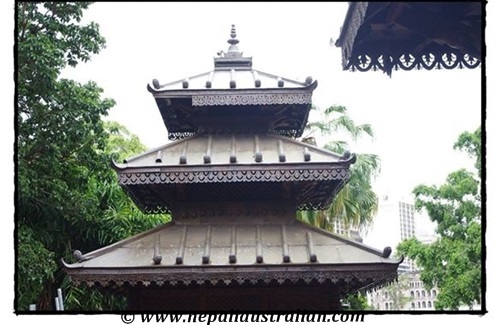
I also wanted a garden with a pagoda and dunga dhara (stone water feature). I still want to make it one day if I win a lottery but for the time being I need to dream a little smaller.

When we bought our place here in Sydney, it didn’t have anything Nepalese; it was a modern building with modern interior. Still I wanted people to get a feel of Nepal when they visit our place so we tried our best to bring Nepal into our living room.

When people visit us, the first thing they notice will be a big oil painting. The painting is of a landscape of Nepal with mountains, hills, village style house and everything Nepalese.

It is around 5 feet by 3 feet. There is a long story behind the painting. It took us a while in Nepal to find the painting and we are glad that we managed to get it. We brought it from Nepal but got it framed in here.

The next thing they will notice are two Nepalese handmade carpets in the dining area and living area. We were really lucky to get these carpets.

our home (7)

When we were in Nepal, we looked for the carpets for a month and we could not find anything we liked. Most of them were too multicoloured and too modern for our liking. We wanted a typical Nepalese design and we were hugely disappointed. Luckily, we went to do this trade fair and the first shop we went to had these carpets and we got them right away. It was just a few days before we left. For me, these carpets were love at first sight. 🙂

our home (2)

We also have a large statue of Goddess Tara displayed on one side of the TV cabinet.

our home (6)

On the TV table, I also have a statue of Buddha and the supari from our wedding.

our home (5)

On the buffet table, I have a statue of standing Budda and two panas.

our home (1)

I also got the window valance custom made in Nepal. It is not really Nepalese style but I like it.

our home (4)

I still have a few things planned to make the room more Nepalese but I am happy with the outcome.

What do you think of my Nepalese collection :)?Please share what did you bring from your heritage to your home?

Take care ,

M from nepaliaustralian

XOXO

The Himalayan Times Blog Surf :On arranged marriage

Another of my post is published in The Himalayan Times , one of the leading daily papers in Nepal.

I am honoured and happy to be a part of the paper again.

It was published in 05 August 2014 under Blog Surf section. If you are in Kathmandu, get the paper and find me on page 8 and for those who can’t, here is how it looked :).

 Capturearrange marriage

And here is the link to their epaper.

http://epaper.thehimalayantimes.com/epapermain.aspx?queryed=9&eddate=08/05/2014

Please read the full post here and share your view on arrange marriage.

Take care ,

M from nepaliaustralian

XOXO

Why I blog (Nepaliaustralian)?

This is a guest post I wrote for , nepalichori, amazing blog I have been following for a while. Thank you so much for the opportunity and sharing the post here.

AS Photography (10)

First of all thank you Nepali Chori for giving me the opportunity to share my thoughts and ideas on your blog. I believe that it is a great initiative and a brilliant idea.

Today I am going to share my ideas on why I blog and why Nepaliaustralian?

I think most of the people who know me via my blog know that I am an IT professional which means the computer is my livelihood. So when I spend so much time in front of the computer it is natural that I do lots of research and on one of these researches I found a few really nice blogs that I loved to read. The bloggers wrote about their lives, their likes and their thoughts.

282475_10150387248082678_1930552_n

I started reading these blogs regularly and there were times I wanted to leave a comment, which forced me to make an account with WordPress so I could comment easily rather than answering the same questions many times. One time when I was writing a comment I realised that I had typed more than a page and I was a bit ashamed to post it as a comment. It’s like I was hijacking the original post.

That moment I realised that I had so many ideas and thoughts that blogging might me a good place to share and that is how Nepaliaustralian.com was born. Initially I was not sure what I was going to share in my blog but as time went by I knew I wanted to blog about my life and my love for Nepali culture and traditions. I am also glad that people started reading my posts, commenting, and liking it which encouraged me to continue.

Nirbuni  (11)

As you know the theme of my blog is “Living in west with values of east” and I stand by it every day. If you read my blog, you will find posts and information about different places of Nepal, Nepali festivals, Nepali food, how I brought Nepali traditions to my home here in Sydney and much, much more.

I wanted to have a blog where words are not pre-planned, and thoughts are not edited. I have a passion for sharing whatever I know about Nepal, its cultures, traditions and to become a part of the community.  There are so many great people sharing their experience on the blogosphere that I am glad to share my ideas in the same platform.

Jhol momo soup (7)

I am overwhelmed when I receive an email or a comment thanking me for helping in someone’s life, how they read my blog regularly and how I inspire them. I could have never thought in my wildest dream that my writing could help someone I have never met in some corner of the world. It led me down a new road of adventure, learning so much about just everything along the way.

Through my blog, I have made some good friends who are a part of my life now. There are also many more I would love to meet one day as they are such beautiful human beings and it will be my pleasure to get to know them better.

laxmi puja (3)

So this blog has not only let me share my ideas and thoughts but also helped me get many excellent ideas from people as well as learn a lot from their experience.

I hope to continue writing for a long time.

What are your favorite blogs? What do you like to read? Do you have a blog yourself? Do you write your thoughts and ideas?

Take care ,

M from nepaliaustralian

XOXO

Gai Jatra

As you know in Nepal, there are heaps of festivals every year and today is Gai jatra. Gai means cow in Nepali and jatra means festival, so it is a festival of cows. It is said people in ancient times started worshiping Yamaraj,”the god of death” on this day.

The festival commemorates the death of people during the year. According to the tradition, every family who has lost a relative during the past year must participate in a procession through the streets of Kathmandu leading a cow. If a cow is unavailable then a young boy dressed as a cow is considered a fair substitute. It is believed that the cow, revered as a holy animal by Hindus, will help the deceased relative’s journey to heaven.

Legend has it that, when King Pratap Malla lost his son, his wife, the queen, was grief-stricken and would not be consoled. The king was very sad to see the condition of his beloved queen and in spite of several efforts could not lessen the grief of his wife.

Thus Pratap Malla announced that anyone who could make the queen laugh would be rewarded adequately. He also asked everyone in the valley to send a cow each for every dead relative in the family to show the queen that their son was not the only one who died.

During the festival of Gaijatra, the cow procession was brought before the grief-stricken queen. Then the participants began ridiculing and be-fooling the important people of the society. Finally, when the social injustices and other evils were highlighted and attacked mercilessly, the queen could not help but smile. The queen laughed and the king instituted a tradition of including jokes, satire, mockery and lampoon into the Gaijatra celebration. This still continues till today.

After the procession is over, in the afternoon, nearly everyone takes part in another age-old tradition in which the participants dress up and wear masks. The occasion is filled with songs and jokes. Mockery and humor of every kind become the order of the day until late in the evening. Hence, Gaijatra is a healthy festival which enables the people to accept the reality of death and to prepare themselves for life after death. According to Hinduism, “whatever a man does in his life is a preparation leading to a good life after death”.

Take care ,

M from nepaliaustralian

XOXO