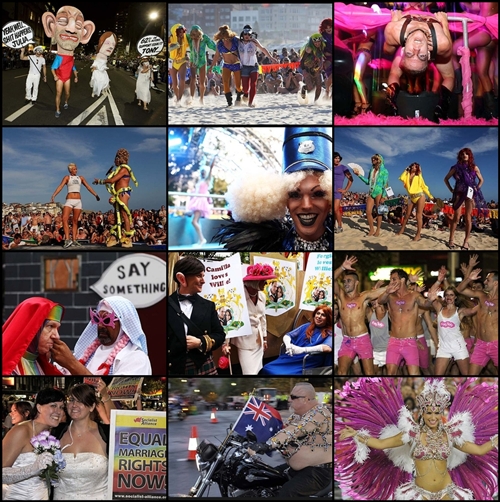
The weather didn’t cooperate with this year’s Mardi Gras as it was rainy and windy the whole day but it didn’t stop around 300,000 spectators from coming out in the aweful weather to watch the parade of 120 floats and almost 9000 participants. Here are some of the photos from the day.
Tomorrow, 3rd of March, is Sydney Mardi Gras which is a yearly parade for gays, lesbians, bisexuals, transgender, and intersex communities in Sydney, Australia. Every year there are lots of people who visit Sydney for this event and it is one of the biggest of its kind.
Normally this parade consists of tens of thousands of participants with lots of floats and loud music. Then there are thousands more who fill the streets of Sydney to get a glimpse of this magnificent event. It is also telecast on TV so there are thousands more who enjoy viewing the parade from their homes as well.
This year for the first time, the parade will be broadcast to an international audience online.
In the 1970s, Sydney Mardi Gras started as a celebration following a morning protest march and commemoration of the Stonewall Riots where 500 people gathered on Oxford Street, calling for an end to discrimination against homosexuals in employment and housing .
These days it has changed into a fun-filled parade with colorfully dressed men and women having a great time. There will be many floats with people dressing up as brides and grooms, cheerleaders, nuns, vampires etc.
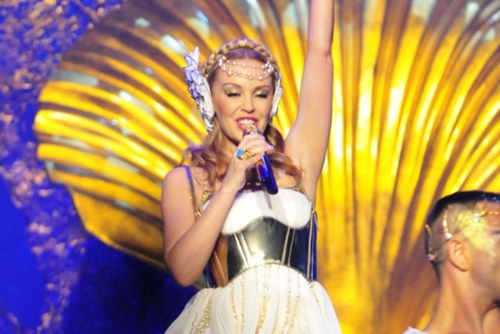
For the last few years each parade has a Chief of Parade like Rupert Everett (2007), Margaret Cho (2008), Matthew Mitcham (2009), Amanda Lepore (2010) and Lily Tomlin(2011), Peter Tatchell (2011) and I am so excited about this year’s Chief of Parade. She is no other than the famous Kyile Minogue, Australia’s pop queen. I am so excited to see her float after watching her spectacular show. I am sure it is going to be amazing and breath-taking.
According to the news, Minogue’s song arrangements are completely tailor-made for the show, backed by 16 dancers, to be held in the Royal Hall of Industries at an unspecified time during the night.
Diverse music styles and more performance art mark this year’s party, with ’90s sounds fashionably strong. Long, leggy drag singer RuPaul is confirmed to be there as well.
I am looking forward to going and watching the parade this year. It will be AS’s first one too so I hope he will enjoy watching the fun and fabulous parade with some weird stuff mixed in. I will update all of you on this year’s parade soon.
In Australia (I guess every where in the world), many people die every day waiting for an organ donation. The main reason of this is because, even though people have consented to donate their organs when they are alive, their family doesn’t want to donate them once they die.
This is how organ donation works in Australia. When people apply for get their driving licence, there is a section where it ask you if want to be an organ donor. You can tick No or choose to donate all parts of your body or certain part of the body. So the licences of a person can tell if one is donor or not. [This is only in NSW]
Not enough people choose to donate their organs in the first place, but things go worse when the even people who do choose to donate are not able to do so. Because, when someone dies, their loved ones have to consent before the doctor can go through the organ donation process. According to the statistics, more than 60% of the family members will say NO at this stage. So this is really reducing the number of real donors, which in turn reduces the number of people who could have been saved.
Losing someone is always a hard thing to deal with and no one wants to go through that process but at the same time we have to admit that death is a natural process and one day everyone has to die. But even after death , one organ donor can help save more than 10 lives. Think about it. What good is your body when it is cremated or buried? But if you die and it can help save so many lives, why don’t we do it?
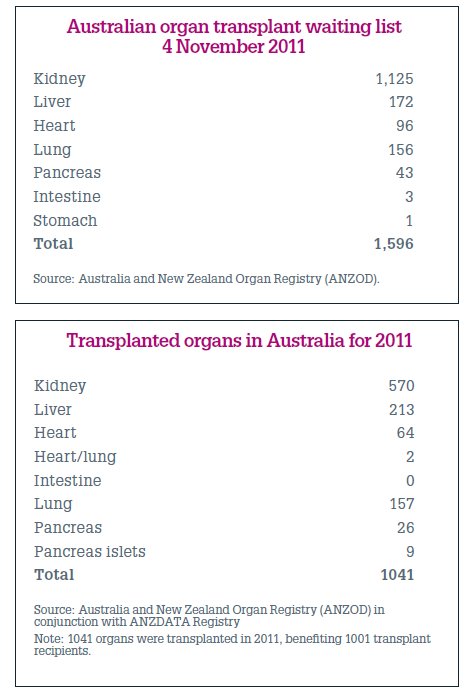
We never know how life going to turn out. May be you may need an organ donor one day. Imagine waiting in the queue for years to find a donor when every day is important for your survival. If you can’t imagine that happening to you then may be you don’t want anyone to go through that process either. Look at the list below. Imagine if any of the waiting patients was your loved one.
Last week when I was watching a TV, I came across this amazing story of parents, Oliver Zammit and RoseMarie Zammit, who donated their son’s organs. Here is what happened.
Doujon Zammit was 20 years and was on a holiday of his life time in Greece when the tragedy struck and died. Oliver Zammit flew immediately to Greece, to Doujon’s bedside, praying for a miracle – that his son would wake up. Unfortunately, he died but his family respected his wish to donate his organs, and those organs saved 4 lives. The story does not end here. The parents have met 3 out of the 4 receivers of their son’s organs. To top all this, Oliver Zammit became a best man on the wedding of the man Kostas Gribilas who received his son’s heart.
Here are some of the myths regarding organ donation which you can discard from today onwards. (Source: www.donatelife.gov.au)
Organ donation is against my religion.
Reality:
Most religions support organ and tissue donation as generous acts that benefit people. This includes Christianity, Islam, Buddhism, Hinduism and Judaism. If you are not sure whether your religion is supportive, speak to your religious adviser. You can also read or download a fact sheet on organ and tissue donation in relation to all the major religions at www.donatelife.gov.au
I’m too old, too young or not healthy enough to donate.
Reality:
Almost any one can donate their organs and tissue. While your age and medical history will be considered, you shouldn’t assume you are too old, too young or not healthy enough. There’s every chance that some of your organs and tissues will be suitable for donation. Only some medical conditions may prevent you from being a donor, such as transmissible diseases like HIV.
My family won’t be able to view my body.
Reality:
Yes they will. The removal of organs and tissue is no different from any other surgical operation, and is performed by highly skilled health professionals. The donor’s body is always treated with dignity and respect. The donation of organs and tissue does not alter the physical appearance of the body, and your family will be able to view your body and have an open casket if they wish.
I’ve already registered. I don’t need to tell my family.
Reality:
You do need to discuss your decision with your family and friends, even if you have registered on the Australian Organ Donor Register (or, in some states, on your driver’s licence). Donation won’t proceed without your family’s consent. Families are less likely to give consent for donation if they do not know the wishes of the deceased. That’s why every family is encouraged to discuss and know each other’s wishes.
There won’t be any support for my family.
Reality:
The Intensive Care Unit team caring for you and the DonateLife Agency Donor Coordinator and Donor Family Support Coordinator give the family as much support as they need during and after the decision to donate. Families considering organ and tissue donation will also have access to free bereavement counselling. The DonateLife Donor Coordinator will be the family’s initial point of contact from the time donation is first discussed. They provide the link between the family and the medical team and will help the family after the donation, particularly with arranging a private farewell and/or a viewing of the body, if the family wishes. The coordinator will contact the donor family with details of support offered in their state or territory. The coordinator can, if the family wishes, provide information on the outcomes of the donation and give details on how to write anonymously to the recipients.
My organs and tissue will be used for research.
Reality:
Organ donation is about helping save or improve other people’s lives. Donated tissues and organs will never be used for medical research unless explicit written permission is given by your family.
Doctors won’t work as hard to save my life if they know I’m a donor.
Reality:
Not so. Medical staff does everything possible to save lives. Their first duty is to you and saving your life. Organ and tissue donation will only be considered after all efforts fail and you have been legally declared dead. In most cases, a person may only be able to donate organs where they have been declared brain-dead in an intensive care unit in hospital. Brain death is when blood circulation to the brain ceases, and the brain stops functioning and dies with no possibility of recovery. A series of tests carried out by two independent and appropriately qualified senior doctors establishes that brain death has occurred. People are sometimes confused about the difference between brain death and coma. Brain death is completely different from coma. A patient in a coma is unconscious because their brain is injured in some way, but their brain can continue to function and may heal. Medical tests can clearly distinguish between brain death and coma.
Organ donation may also be possible after a person’s heart has stopped beating, commonly referred to as donation after cardiac death. A far greater number of people have the opportunity to donate tissue for transplantation. Tissue donation does not require the donor’s death to have occurred in the same limited circumstances as organ donation for transplantation to be successful.
I don’t need to donate my organs because thousands of others do.
Reality:
Few people die in such a way that donation is possible. Organ donors must die in hospital where their body can be medically supported until the organs can be donated. There are some 1600 Australians on official waiting lists at any one time.
People only need organs because of bad lifestyle choices.
Reality:
Many people have an inherited genetic condition, a severe illness or disease that will kill them, often at a young age. Common genetic conditions are cardiomyopathy (which affects the heart), cystic fibrosis (the lungs) and biliary atresia (the liver). Corneal transplants restore sight to people following a disease or damage to their eyes. Heart valves are used to repair congenital defects in young children and replace defective valves due to disease such as rheumatic fever, degeneration and infection.
I was so inspired by this show. Please watch this if you are still not convinced why you should donate the organ.
If you are in Australia, please go to this website http://www.donatelife.gov.au/ (If you are somewhere else, please Google and find the website where you can register as a donor) and I hope it will help you change your mind about donating your organs after your death, if you haven’t done so already. Imagine, so many people can live longer because of you some day. Don’t you want that? Imagine if one of your loved ones is an organ receiver and have prolong their life by many years. Please think rationally and donate life.
By now everyone already knows Prabal Gurung as one of the most happening designers, whose design was seen on Michelle Obama, Oprah Winfrey, Demi Moore and Sarah Jessica Parker just to name a few. Please click here for his detailed introduction.
This week was the Oscar and Kate Bosworth wore a Prabal Gurung during Vanity Fair Oscar Party. She wore a black tulle long sleeve dress with filigree cutwork, sparkling with jet beads and Sistine blue crystals and was accented with a heavy black belt. She looked absolutely stunning combined with her simple accessories and a slick bun.
Here are a few other celebrities who were spotted with a Prabal Gurung design.
Along with Hollywood celebrities, Bollywood celebrities like Sonam Kapoor and Kareena Kapoor have been spotted with Prabal Gurung designs as well.
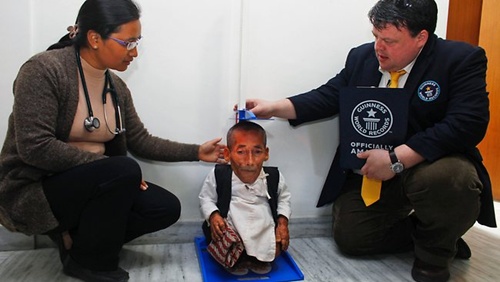
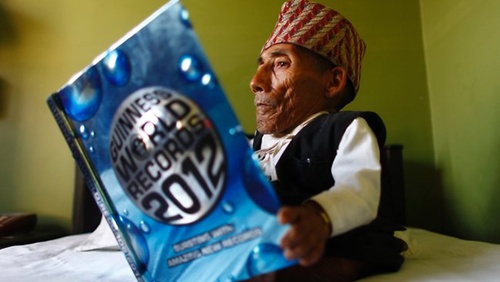
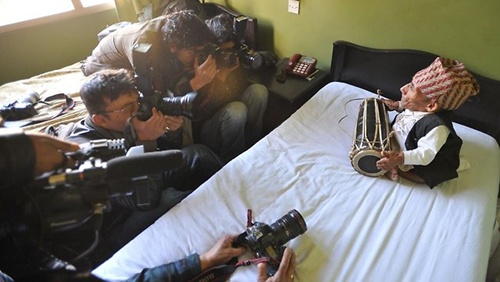
In 2010, Nepal had the title of world’s shortest man as Khagendra Thapa Magar who was 67cm tall . But the title was short-lived when Filipino Junrey Balawing was confirmed to be 59.93 cm. Now in 2012, Nepal has that title back as Chandra Bahadur Dangi who stands just 54.6cm tall. Guinness World Records has officially awarded him the title of the shortest man in the world.
Chandra Bahadur Dangi is 72 years old and weighs 12 kg. He is from Dang district which is 350km from Kathmandu where he survives weaving jute headbands. He has also been declared the shortest human adult ever recorded.
Being shorter than average has so many disadvantage and I can’t imagine being so short. According to Dangi’s interview he was orphaned at age 12 and was looked after by his relatives. His relatives used to display him at freak shows to make money for themselves. He has never experienced romance or found his soul mate. He wants to visit foreign countries and meet people from around the world.
I hope he will find some happiness with this record as Khagendra Thapa Magar did. Khagendra Thapa Magar has visited many countries including Australia and looked happy to be the centre of attention during events and dinners here. He was also the official face of Nepal’s tourism campaign, which featured him as the smallest man in a country that is home to the world’s highest peak, Mount Everest.

























 nepaliaustralian