Tag Archives: Australia

Walkabout Wildlife Sanctuary: A Real Australian Bush Experience

If you’re looking for a family-friendly day out near Sydney, Walkabout Wildlife Sanctuary is a hidden gem that offers an immersive and authentic wildlife experience. Just a 60-minute drive from the city, this sanctuary gives visitors the chance to interact with Australian wildlife in their natural habitat, offering a refreshing alternative to traditional zoos.

If you love animals but aren’t a fan of zoo environments, this is the perfect place for you. Set on 80 acres of lush Australian bushland, Walkabout Wildlife Sanctuary is home to free-roaming kangaroos, emus, and wallabies. The sanctuary provides a haven for many rescued animals, now living out their days in a caring and safe environment. From koalas to Tasmanian devils to flying foxes, the sanctuary features a wide range of native animals that can be seen up close. The free-roaming roos and emus offer incredible opportunities for interaction and photography, making it a fantastic destination for animal lovers of all ages.

We recently visited the sanctuary with the whole family and we all left with wonderful memories. The sanctuary has an organic, non-commercial feel to it, which adds to its charm. Unlike many attractions with concrete paths and overly sanitized environments, this sanctuary embraces the wild Australian bush. You’ll walk along natural dirt tracks, surrounded by the authentic sounds and sights of the wilderness.

Many of the animals, like kangaroos and emus, roam freely around the park, creating a fun and spontaneous experience as you interact with them in their natural setting. Other animals, such as Tasmanian devils, pythons, and flying foxes, are housed in enclosures for safety.

And if you have little ones with you, don’t miss the petting zoo! It’s filled with friendly chickens, ducks, rabbits, and, of course, the charming llama, giving kids a fun, hands-on experience they’ll absolutely love.

For those interested in reptiles, the sanctuary also hosts a fascinating reptile show. Here, you can touch a lizard, snake, or turtle, making it an exciting opportunity to learn about these incredible creatures up close. Walkabout Wildlife Sanctuary truly offers something special for animal lovers of all ages!

In addition to the wildlife, the sanctuary also offers walking tracks that lead to ancient Aboriginal sites, adding another layer of cultural and historical richness to the experience. These trails are a great way to connect with nature while learning about Australia’s Indigenous heritage. It’s not just about the animals—it’s about the land and its stories, too.

This sanctuary is not a highly commercialised attraction, so don’t come expecting pristine paved paths or a gourmet café. Instead, embrace the raw beauty of the Australian bush. The café is simple, and the walking trails are natural, but the trade-off is worth it for the authentic wildlife encounters you’ll experience.

We also found some comments about kangaroos lying on dry dirt amusing. This is exactly what kangaroos do in the wild! There’s no perfectly manicured green grass in the bush, and that’s what makes this place so special—it’s real, it’s raw, and it’s a true reflection of Australia’s natural landscape.

Our experience at Walkabout Wildlife Sanctuary was unforgettable, and I’d highly recommend it to anyone looking for an authentic wildlife experience. Whether you’re visiting with family, friends, or even solo, it’s a beautiful reminder of what the real Australian bush has to offer.

So, pack some snacks, lace up your walking shoes, and get ready for a day of adventure. The kangaroos, wallabies, and all their furry, feathered, and scaly friends are waiting to meet you!

Please follow me on Instagram! and Please follow me on TikTok to stay updated on my adventures.

Take care,

M from Nepaliaustralian
XOXO

Dashain Diaries: Welcoming Nepal’s Biggest Festival with Jamara, Joy, and Family Traditions

Dashain is here! The air is filled with excitement, nostalgia, and the promise of family gatherings, food, and festivities. Yesterday marked Ghatasthapana, the first day of Dashain, which sets the tone for the next 15 days of celebration. In households across Nepal—and for Nepali communities around the globe—this day is sacred. It’s the day we plant Jamara, those sprouting yellow-green shoots that symbolize prosperity and blessings.

But what makes Dashain so special?

For starters, it’s not just any festival. Dashain is Nepal’s biggest and longest Hindu festival, celebrated for 15 glorious days of tradition, reunions, and cultural pride. From Ghatasthapana to the grand finale on Vijaya Dashami, it’s a time when families gather, share meals, exchange blessings, and honour the victory of good over evil.

So, if you’re new to Dashain or just looking to rekindle that festive spirit, here’s a peek into why we cherish this time of year!

The Legends Behind Dashain: Why It’s More Than Just a Festival

Dashain is steeped in legends and Hindu mythology. According to one tale, it’s the story of Ram—the hero who defeated the demon king Ravana after nine days of prayer and worshipping Goddess Durga. The tenth day, Dashami, marks Ram’s victory, symbolizing the triumph of good over evil.

Another tale revolves around Mahishasura, the fearsome demon who terrorized both Earth and Heaven. The gods created Durga, the powerful goddess who battled Mahishasura for nine long days. On the tenth day, Durga slew the demon, marking the day of victory—Vijaya Dashami.

These stories remind us that no matter how challenging life gets, good will always prevail. And that’s why we place tika (a red vermilion paste mixed with rice and yogurt) on our foreheads during Dashain—it’s a blessing for victory, strength, and resilience in the coming year.

Day 1: Ghatasthapana – Planting Jamara, Growing Prosperity

Ghatasthapana (literally meaning “pot establishment”) marks the official start of Dashain. This is the day we plant Jamara—the sacred barley seeds that we lovingly water and nurture for the next ten days. These delicate sprouts will grow to represent blessings, and we use them on Vijaya Dashami for the tika ceremony.

I planted my Jamara yesterday. It’s always a special moment for me—preparing the soil, sowing the seeds, and knowing that in 10 days, those golden-green shoots will be ready for the most important ritual of Dashain. I can’t wait to see how well they grow this year!


Dashain Activities: Where Tradition Meets Fun

What makes Dashain feel so magical is the blend of deep-rooted traditions with simple pleasures. Here are some of the most exciting things we look forward to every Dashain:

1. Kite Flying

As soon as Dashain kicks off, the skies in Nepal fill with colorful kites—each one carrying the message that the monsoon season is over. I have fond memories of rooftop kite battles with my brothers, shouting “Changa Chet!” (which means “kite cut!”) every time we managed to down someone else’s kite. It’s a playful battle that I miss every year.

2. Family Card Games

I can’t talk about Dashain without mentioning the card games! Even though gambling is technically illegal in Nepal, Dashain is an exception. Families gather around with cards, placing small bets (or just playing for fun!). I used to love sneaking into the grown-ups’ game as a kid, hoping to win a few coins.

3. Shopping for New Clothes

Dashain is the time for new clothes! For many families, this is the only time of the year when they can afford new outfits. Shops across Nepal offer crazy discounts, and it’s a rush of excitement as everyone prepares for the festival. I treated myself to a new dress this weekend—because who doesn’t love a reason to shop, right?

4. Bamboo Swings (Ping)

In the countryside, you’ll find bamboo swings constructed just before Dashain. These aren’t your average playground swings either—they’re towering structures that often go 20 feet high! Swinging on a ping is a thrill, and for many, it’s a must-do every year.


The Sweet Chaos: Fairs, Concerts, and Food!

Dashain isn’t just about rituals; it’s also about fun and celebration! Throughout Nepal, you’ll find fairs, concerts, and dashain melas (markets) popping up in towns and cities. These events bring people together for a bit of light-hearted fun—think Ferris wheels, local snacks, and live performances.

And then there’s the food! The streets fill with the smell of fried treats, freshly made sel roti (a traditional rice doughnut), and crispy chatpate (Nepal’s beloved street food). It’s the time to indulge, because Dashain only comes once a year!


Happy Dashain, everyone!

Here are the posts I have written regarding Dashian over the years .

Please follow me on Instagram! and Please follow me on TikTok to stay updated on my adventures.

Take care,

M from Nepaliaustralian
XOXO

Nepaliaustralian Turns 13!

I can hardly believe it—Nepaliaustralian has officially turned 13! When I first started this blog, social media was just beginning to take off, and I had no idea it would connect me with so many amazing people across the globe.

What began as a simple hobby has grown into an incredible journey. Never in my wildest dreams did I think I’d be writing this 13th-anniversary post! This blog has become my personal way of celebrating Nepali culture, traditions, and the unique experience of being a Nepali living in Australia.

As of today, Nepaliaustralian proudly stands at 1,109 posts, 81 pages, 10,714 comments, 2,506,733 page views, 4,447 followers, and 1,383,135 readers from 230 countries. 🙂

I’m beyond grateful to each and every one of you for your support over these 13 years. Your encouragement, comments, likes, and shares have meant the world to me, and I truly couldn’t have come this far without you. Thank you for listening to my stories, sharing in my journey, and showing so much love to my family.

Please follow me on Instagram! and Please follow me on TikTok to stay updated on my adventures.

Take care,

M from Nepaliaustralian
XOXO

Janai Purnima (The Sacred Thread Festival of Nepal), Kwati Purnima and Raksha Bandhan

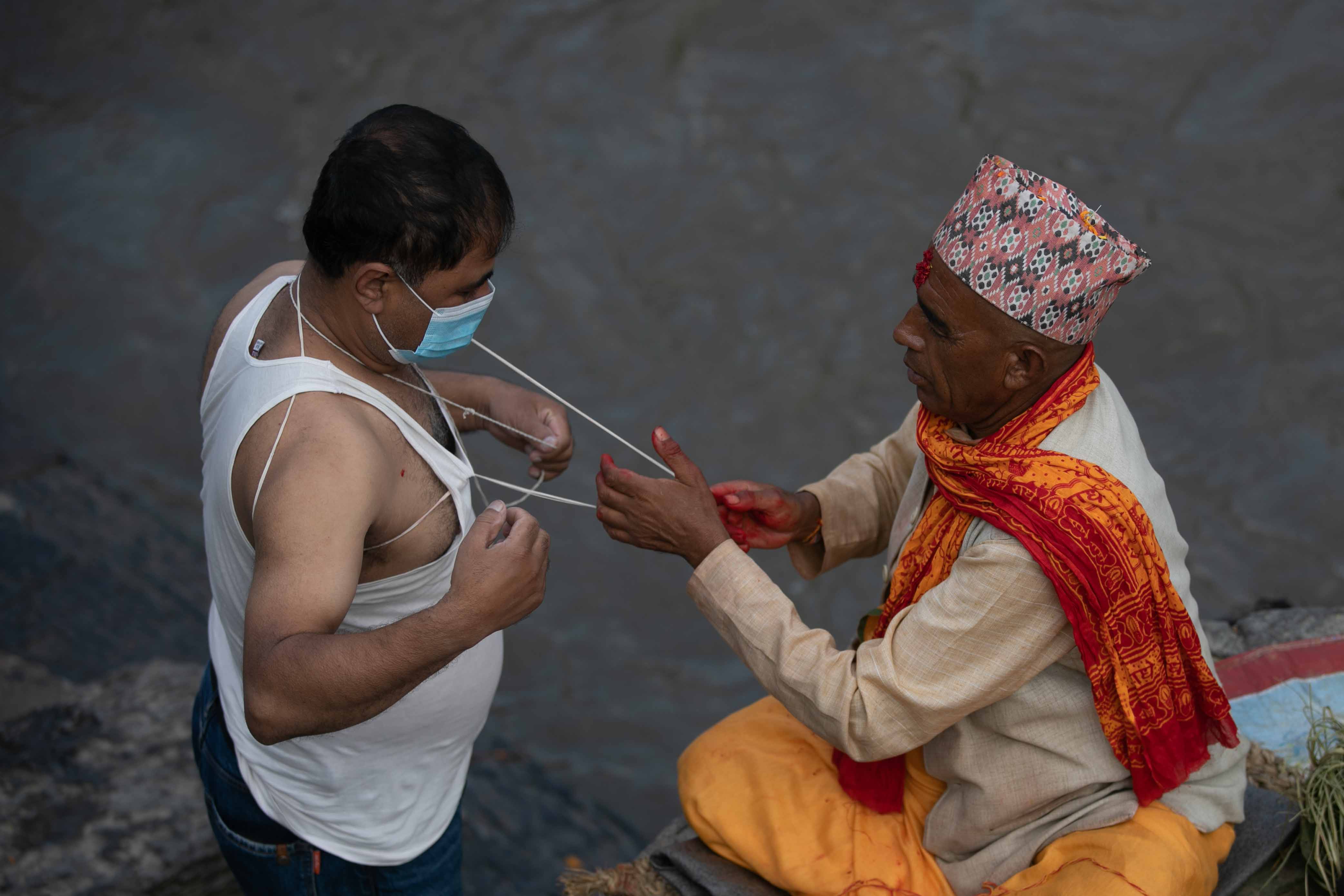
Today, we celebrate Janai Purnima, a festival deeply intertwined with Nepali culture and Hindu tradition. This day is particularly meaningful as it marks the time to renew their “janai,” the sacred thread they wear daily.

The janai is first bestowed upon a boy during his Bratabandha ceremony, a rite of passage signifying his initiation into manhood. On Janai Purnima, men come together to perform the sacred ritual of changing the thread while reciting powerful mantras. This thread, representing purity and protection, is worn as a bracelet until the next year’s festival, when the cycle of renewal begins again.

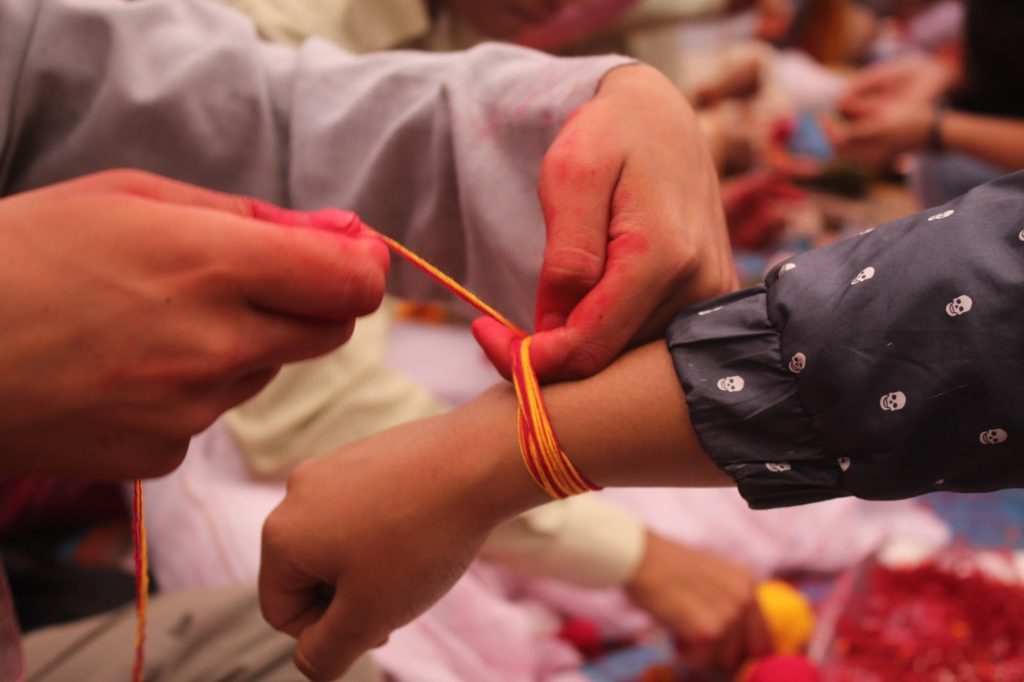
However, Janai Purnima is not solely about the janai. It’s also a day when men, women, and children, regardless of caste, participate in the ritual of tying a sacred yellow thread around their wrists. Men tie this thread on their right wrist, while women tie it on their left. This thread symbolises protection and is believed to bring good luck. Traditionally, it is removed on Laxmi Puja, three months later, and tied to the tail of a cow. In the absence of a cow, the thread can be thrown into a fast-moving river or tied to a plant—like the one I have in my office from last year’s celebration!

The sacred thread carries profound spiritual significance. According to tradition, when the wearer passes away, the cow to whom the thread was tied will help them cross the mythical river Bhaitarna, easing their journey into the afterlife.

Throughout Nepal, Janai Purnima is celebrated with a variety of rituals. Devotees flock to temples, shrines, and riverbanks to perform puja and offer prayers. The day is also marked by communal feasts and gatherings, where families and communities come together in joyful celebration.

Janai Purnima is more than just a religious observance; it is a rich tapestry of cultural practices, spiritual devotion, and the strengthening of family bonds. As Nepal’s streets come alive with the vibrant colors of sacred threads and the sounds of prayers, this festival serves as a powerful reminder of the values that unite us, no matter where in the world we may be.

Today is also celebrated as Kwati Purni in Newar community, a festival named after the cherished dish ‘Kwati.’ This nutritious and hearty soup is made from a combination of nine different soaked and sprouted beans, each bringing its own unique flavor and health benefits. The beans typically used include mung beans (mung), soya beans (bhatmas), red kidney beans (rajma), black grams (mas), black-eyed peas (bodi), fava beans (bakulla), chickpeas/whole grams (chana), field peas (kerau), and white beans (seto simi).

Traditionally, Kwati was a staple for farmers, consumed to rejuvenate their tired bodies during the labor-intensive rice plantation season. Its rich nutritional profile provided the much-needed strength and energy for the hard work in the fields. Beyond its role as a farmers’ food, Kwati is also valued for its digestive benefits and its ability to address various health issues, making it a dish that nourishes both body and soul.

In modern times, Kwati has become more than just a practical meal; it’s a symbol of tradition and a celebration of Nepalese culinary heritage. The preparation and sharing of Kwati bring families together, fostering a sense of community and continuity. Whether enjoyed as a comforting meal on a rainy day or as a festive dish during Kwati Purnima, this soup holds a special place in Nepali culture.

For those interested in making Kwati at home, I’ve shared the recipe here, where you can learn how to prepare this delicious and nourishing soup yourself.

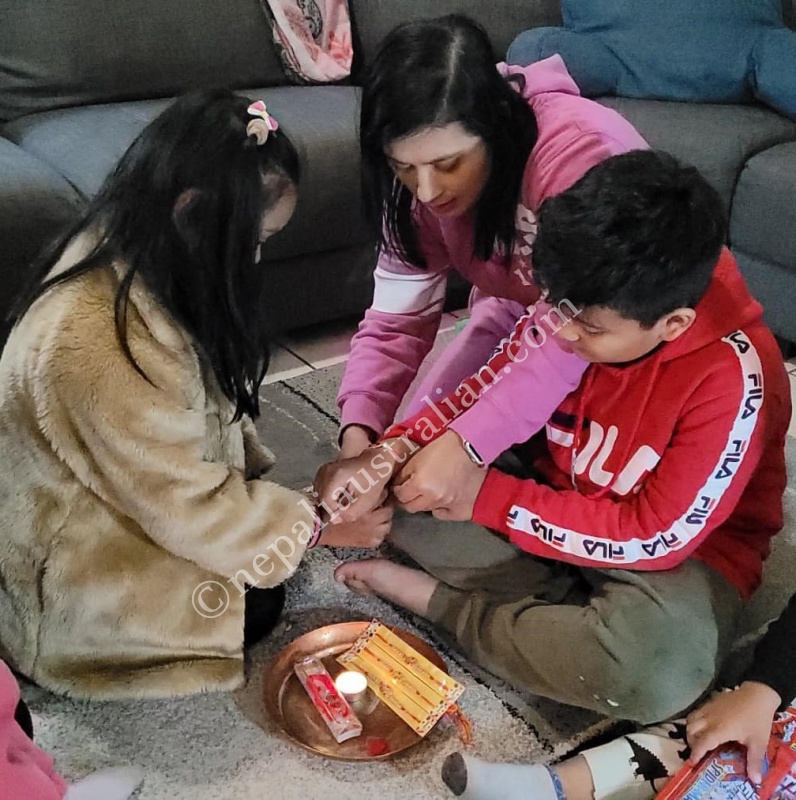
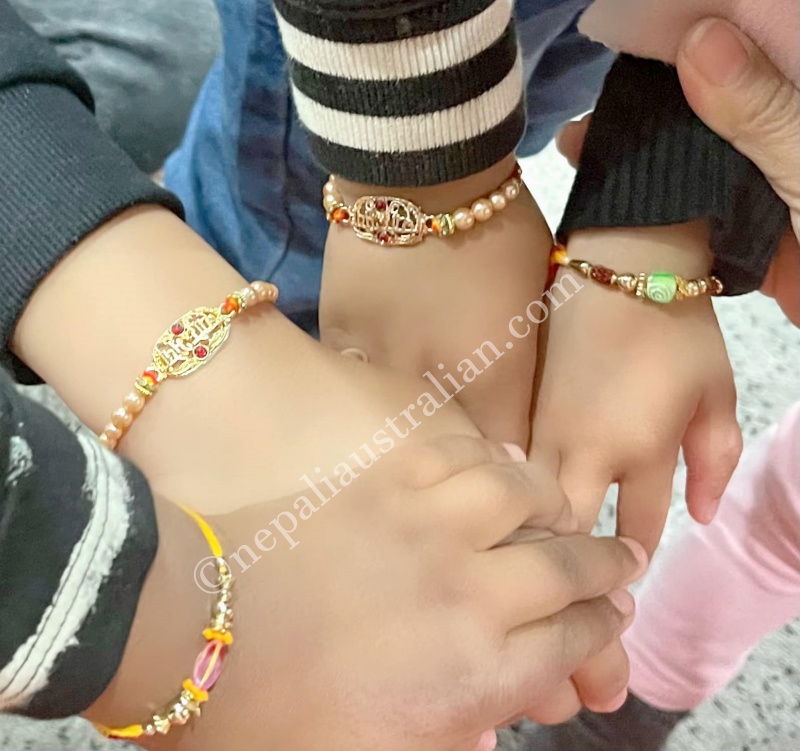
Janai Purnima also coincides with Raksha Bandhan, a cherished tradition where sisters tie rakhis—beautifully decorative bracelets—around their brothers’ wrists. This act symbolises love, protection, and care. In return, brothers give sweets or gifts, reinforcing the bonds of kinship and friendship.

This day is marked by a renewal of spiritual vows and a recommitment to the values symbolised by the janai, which consists of three strands representing purity, spiritual protection, and moral integrity.

The exchange of rakhis is a joyful celebration of sibling love, adding a warm and familial aspect to the festival. The mutual exchange of gifts and promises between brothers and sisters strengthens these bonds and creates lasting memories.

Although I didn’t grow up celebrating Raksha Bandhan, it has become a cherished tradition since I had children. Each year, we have a small ceremony with my brother’s children, and the kids are always so excited to participate. They love the unique traditions and, of course, the exchange of gifts! These moments are precious to me because, even though we are far from Nepal, my children are growing up learning about and staying connected to their Nepali heritage.

M from Nepaliaustralian

XOXO
Please follow me on Instagram! and Please follow me on TikTok

Exploring Tanah Lot Temple: A Magical Bali Experience

Tanah Lot Temple holds a special place in our hearts after our recent trip to Bali. It’s one of those places you have to plan for, especially considering the tides—high tide can literally cut off access to the temple! So, we kept a close eye on the website to make sure we timed our visit perfectly.

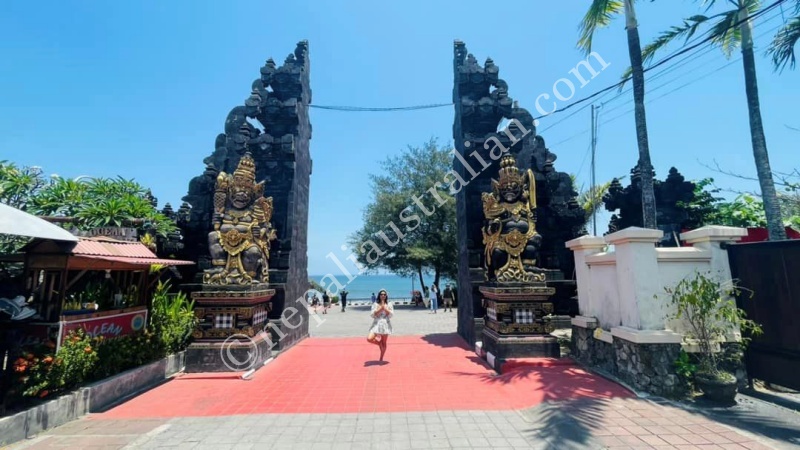
Imagine an ancient Hindu shrine perched dramatically on a rocky outcrop, surrounded by crashing waves and bathed in the warm glow of the setting sun—that’s Tanah Lot Temple. It’s not just a temple; it’s a breathtaking spectacle, offering some of the most stunning sunset views in Bali. We were in awe of its cultural significance and natural beauty, making it an experience we’ll never forget.

Walking across the beach during low tide to reach the temple was an adventure in itself. The waves crashing against the rocks added to the mystical atmosphere, creating a sense of reverence and wonder. It’s no wonder Tanah Lot is considered one of Bali’s most iconic and picturesque temples!

The area around Tanah Lot is bustling with activity, yet it retains a serene and spiritual ambiance. We enjoyed exploring the shops filled with local crafts, savouring delicious Balinese cuisine at the nearby restaurants, and even catching some traditional cultural performances. 

For our kids, the highlight was definitely the sea area where the waves crashed against the rocks. They had a blast watching the waves and exploring the sandy shores around the temple. As for me, I loved soaking in the vibe—the blend of spirituality, natural beauty, and vibrant culture that defines Tanah Lot.

Whether you’re a photographer looking to capture the perfect sunset shot, a traveller seeking spiritual enlightenment, or a family wanting to experience Bali’s rich heritage, Tanah Lot Temple offers something for everyone. It’s a place where nature and culture converge, leaving you with memories that will last a lifetime. We can’t wait to visit again and immerse ourselves in the magic of Tanah Lot!

Read my other pots from Bali .

M from Nepaliaustralian

XOXO

Please follow me on Instagram! and Please follow me on TikTok