Tag Archives: food

Samay Baji

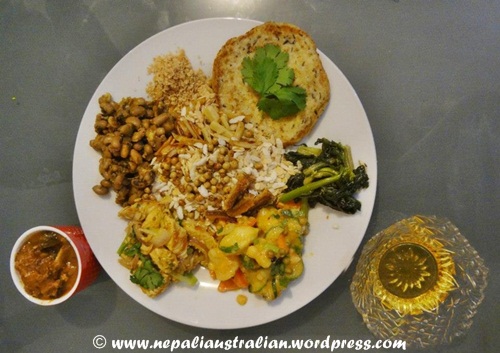
Samay Baji is one a traditional Newari dishes in Nepal that is prepared during festivals.

https://i0.wp.com/3.bp.blogspot.com/_Ds9jH5Hnnmk/TCCAuaSTC2I/AAAAAAAAAxE/aNa1lrjoQ7k/s1600/samayabaji.jpg

Typically it consists of  a variety of baji (beaten rice), haku musya (black soyabean), chhoela (smoked meat), puka-la (spicy roasted meat), aalu acha (boiled potato marinated with pickle), bhuti (boiled beans with spices), khen (boiled egg), panchkwa (bamboo shoot, potato, beans mixed curry), wo or bara (black lentil shallow fried pancakes, lava-palu (ginger and garlic), achar (pickle), wauncha (green vegetables) and aaila (Newari liquor). If you don’t have aaila, it can be replaced with any whiskey.

Samay baji is Newari food which is offered to the Gods on many occasions by Newars. This is the traditional dish and a regular item in many Newari festivals. Samay Baji is popular among Nepalese people because of its unique taste, unique cooking style and natural spices used in it.
Samay Baji

This year during Dashain, we tried to make Samay Baji and it had

Chiura (beaten rice)

Chiura, called Baji in Newari is beaten rice which is very popular in Nepal. Chiura is a common snack  in Nepal. The snack is made by pounding rice. The dish can be served with yogurt, curry, and or meat.

https://i0.wp.com/bossnepal.com/wp-content/uploads/chiura.jpg

Wo (black lentil shallow fried pancakes)

Wo is a Newari word which means mashed lentils cake and it is prepared from black lentils or green lentils (Mugh beans). Wo is called Bara in Nepali. There are different kinds of Wo depending on what is put in it and how it is cooked.

https://nepaliaustralian.com/wp-content/uploads/2011/11/2.jpg?w=500

Please click here for recipe

Aloo ko achar

Aloo ko achar is a very popular Nepali potato salad which is used in most bhoj in Nepal. There are many variations of this dish.

aloo ko achar (14)

Please click here for recipe

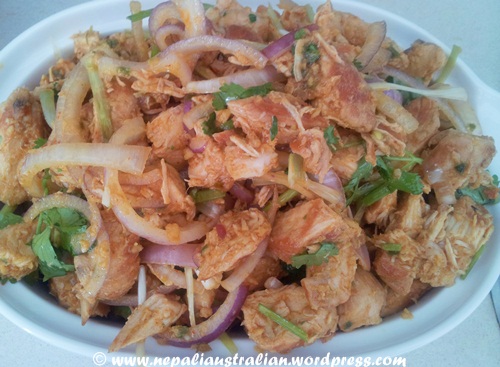
Chicken chhoela (smoked meat)

One of my favourite dishes and very popular in Nepal. an be made with goat , buffalo or chicken meat.
Chicken chhoela (10)

Please click here for recipe

Fried bhatmas (soyabeans)

Heat 1 tablespoon of oil in a pan and fry the soybean. When it is soft take it out of the pan and keep it aside and let it cool.

https://i0.wp.com/topnews.in/files/soya_1.jpg

Bodi (boiled black eyed beans with spices)

Soak bodi overnight. Press it in pressure cooker until cooked. Normally it will take 3-4 whistles. In a pan add oil, heat it a while then add the cooked bodi. Add garlic ginger paster, salt and chill and sauté for a while. Bodi is ready to be served.

https://i0.wp.com/static.flickr.com/62/210106145_c38f120456_b.jpg

Saag (green leaves)

https://i0.wp.com/3.bp.blogspot.com/_3xX21KaxjX4/Sr2Ck-5g4aI/AAAAAAAADLA/y8z7nsb-Cq4/s400/Sep-22-2009%2B003.jpg

You can use any type of green leave for this like English Spinach, Choy sum or Bok choy. You can either boil or fried it with some salt.

Khasi ko masu (Goat curry)

Khasi ko masu is one of the main dishes eaten during Dashain in Nepal. It can be made in different ways depending on personal preference.

goat curry (7)

Please click here for recipe

Fried fish

Just fry a few anchovies in oil.

https://i0.wp.com/1.bp.blogspot.com/_0CWdGn9Gu5c/TGag8GesbnI/AAAAAAAAEvA/vm2um9bllEE/s1600/netli%2Blast.jpg

Lava-palu (ginger and garlic)

Peel fresh garlic and cut into half.

https://i0.wp.com/farm4.static.flickr.com/3565/3602580339_ff9bfdde72.jpg

Peel ginger and cut into thin slices.

https://i0.wp.com/www.tigersandstrawberries.com/wp/wp-content/gingersliver.jpg

  • aaila (alcohol)

In Nepal, they make home-made rice wine aaila which is colourless. But that day we don’t have the typical newari wine so used rum.

http://theajnabee.files.wordpress.com/2010/10/gedc3073.jpg

Nepali style Goat curry (using a pressure cooker)

goat curry (1)

Ingredients

  • 2 red onions sliced
  • 2 tomatoes dices
  • 500gm goat meat
  • 10 curry leaves
  • 2 tablespoons of coriander powder
  • 2 tablespoons of garam masala
  • 3 tablespoons of ginger garlic paste
  • 3 tablespoons oil
  • 1 tablespoon of chilli powder
  • 2 teaspoons of turmeric powder
  • Salt to taste
  • Fresh coriander to garnish

 Steps

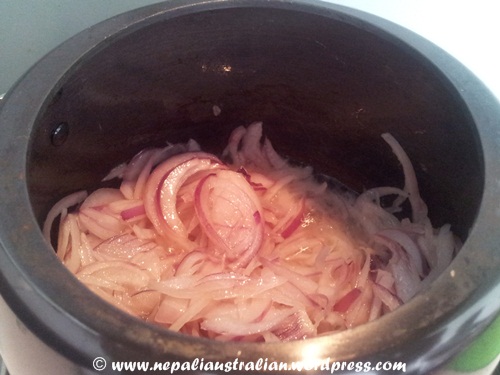
  • Take a pressure cooker and heat oil in it.
  • When the oil is hot add curry leaves and the finely sliced onions.

goat curry (2)

  • Add a pinch of salt so that the onion will get cooked quickly and becomes golden brown.

goat curry (3)

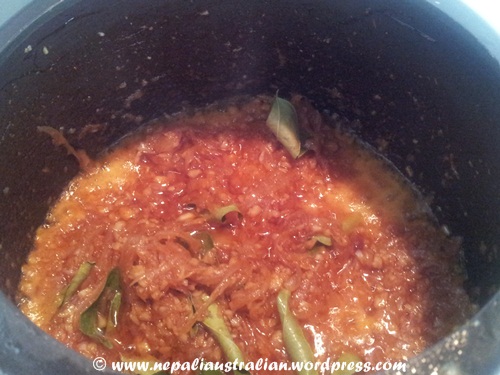
  • Add Ginger Garlic paste, garam masala, coriander powder, turmeric powder, salt, chili and let it cook for 2 mins.

goat curry (4)

  • Add finely diced tomatoes and let it cook completely, with the onion.

goat curry (5)

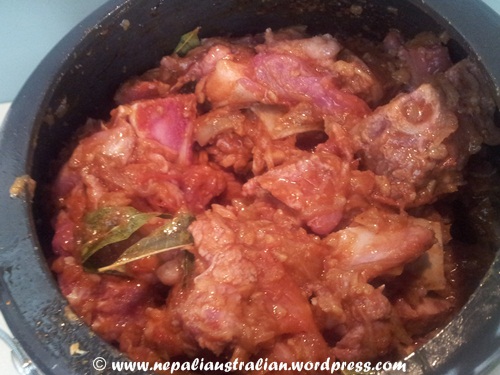
  •  Add the goat meat  to this mixture.
  • Let it cook for 10 min .
  • Add some water, close the cooker lid and keep the flame on medium
  • After 6 full (long) whistles, turn the heat off
  • Let the pressure in the cooker dissipate by itself; do not force the steam out by lifting the whistle etc.

goat curry (6)

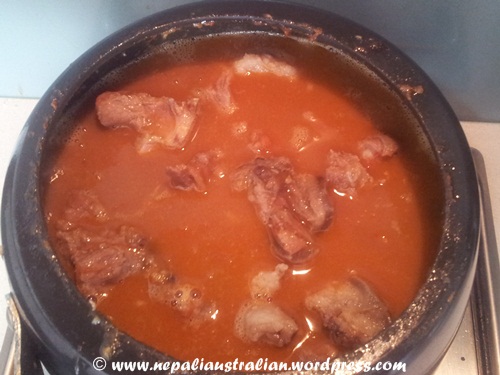
  • When the pressure has dissipated, open the lid and check if the mutton is tender enough if not add some water if required and let the curry cook for about 3-5 min on low to medium heat
  • Garnish the goat curry with fresh coriander and it’s ready to server!

goat curry (7)

You may also like :

*Momo *Aloo ko achar *Chicken chili

Bhogate Sadekoo

One of the things widely eaten in Nepal after the festival of Tihar is, Bhogate Sandheko. Bhogate is called Pomelo (Chinese grapefruit) in English and is used in Nepal during Mha Puja and Bhai Tika. Bhogate Sandheko roughly translates to marinated pomelo in English.

You may also like :

*Momo *Chatamari *Chicken chili

Pomelo is a crisp citrus fruit native to South and Southeast Asia. It is usually pale green to yellow when ripe, with sweet white (or, more rarely, pink or red) flesh and very thick albedo (rind pith).

Pomelo tastes a bit like grapefruit but is sweeter, less tart, and is not bitter. In Australia, we can’t find pomelo so the closest thing to Bhogate is grapefruit which is what I used in Bhai Tika during Tihar.

So like my mum used to, I tried to make Bhogate Sadekoo and am sharing my recipe here.

Ingredients:

  • 1 grapefruit/pomelo
  • 2  oranges  (I used oranges but you can use any fruit)
  • 4 tablespoons of  plain yogurt
  • 2 teaspoon of red chili powder (or to taste)
  • 2 tablespoon of sesame seeds, roasted and ground
  • Salt to taste
  • Sugar to taste (optional)
  • 2 teaspoons of mustard oil
  • 1 teaspoon fenugreek seeds (methi)
  • ½ teaspoon turmeric

Process

  • Peal grapefruit/pomelo and oranges and put it in a bowl .

  • Roast sesame seeds in a pan stirring constantly making sure it turns golden brown, not black.
  • Cool it and grind it.

  • Add yogurt, salt, sugar, sesame powder, red chili powder in the bowl with the pomelo and oranges and mix well

  • Heat a pan with mustard oil in it
  • When hot put fenugreek seeds in it
  • When the fenugreek seeds turn golden brown, take it off the heat and pour oil with fenugreek into the Bhogate mixture in the bowl

  • Mix it well

  • Bhogate Sandheko is ready to serve, yum yum yum 🙂

Loy Krathong in Parramatta

Sydney is so multicultural that every weekend there is some traditional celebration going on in different parks across the city. Two weeks ago we went to Parramasala and last weekend we were able to attend another amazing cultural event called Loy Krathong.

Loy Krathong takes place on the evening of the full moon of the 12th month in the traditional Thai lunar calendar. It is also called Thailand’s “festival of lights” and it is the time of year when the waters around the country come alive with candlelight and look not unlike a massive fairy ballrooms.

The history behind the festival is complex, and Thais celebrate for many reasons.  The main rice harvest season has ended and it’s time to thank the Water Goddess for a year’s worth of her abundant supply, as well as an apology for polluting the waters. Some believe that this is the time to symbolically ‘float away’ all the anger and grudges you have been holding onto, and including a fingernail or a lock of hair is seen as a way of letting go of the dark side of yourself, to start anew free of negative feelings. If your candle stays alight until your Krathong disappears out of sight, it means a year of good luck.

To celebrate this occasion, Sydney’s largest water festival, the Loy Krathong Festival, was held in Parramatta at the banks of the river by the same name. The festival attracted more than 12,000 people from Parramatta, Greater Western Sydney and Asian communities from all around Sydney.

The festival started at 5pm but we were there by 7 pm. By then, there were lots of people on both sides of the river.
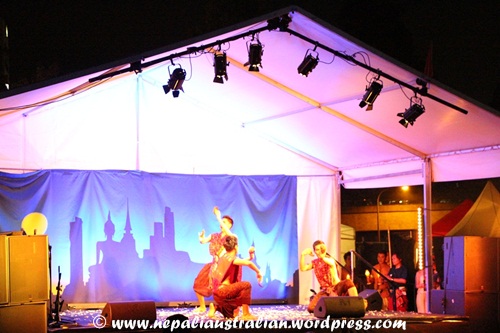
We started our journey from the main stage where there was some dancing going on. We watched a few shows and then started to look around to find out what else was going on.

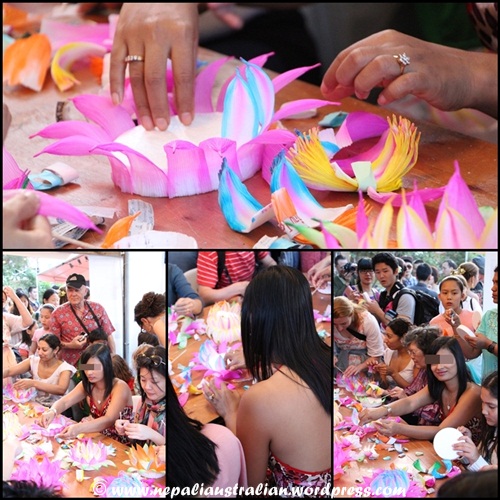
I was really drawn to the crowd where there were tables and chairs set up to make your own Krathong that you could put in the river later in the night.

There is no equivalent word in English for ‘krathong’. You may hear people referring to it as a small boat, vessel, receptacle or container. In the run up to the festival, many shops and market stalls will display ready-made Krathongs, or in parts so you can assemble and decorate as you wish. In the past, krathongs were made from natural materials – usually a section from a banana tree trunk, crafted into a lotus shape by using folded banana leaves, and these can still be found for sale around the main festival sites. More recently, Thais have become more creative in their craft and design the krathongs from coconut shells, flowers, baked bread, potato slices, some breaking with the conventional lotus leaf shape in favour of turtles and other sea creatures.

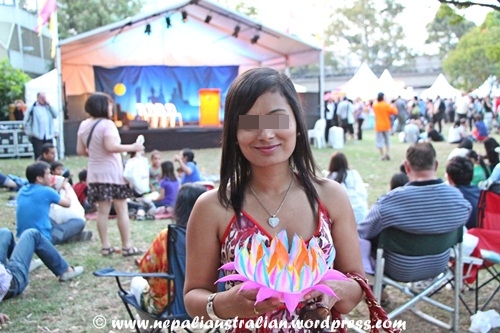
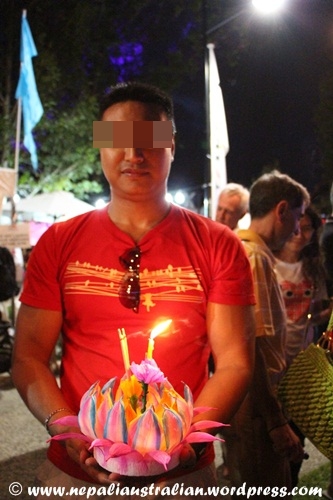
It was really fascinating to see kids and adults trying to make the Krathong. I joined the crowd and here are some of my photos AS took during the process. I really didn’t know what to do but I was happy to watch people and learn. It was fun and it took around 10 minutes to finish it.

I guess at the end it turned out great. What do you think? 🙂

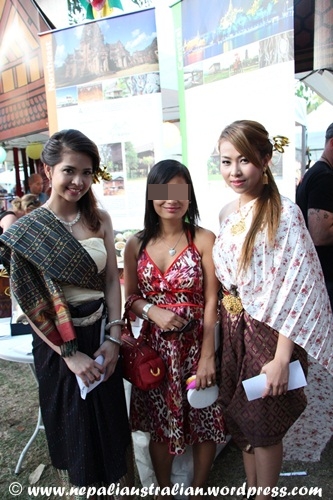
From there we looked at the stalls and check out lots of traditional jewellery making, umbrella making, the art of painting umbrellas and masks, weaving, making a lotus lantern, as well as other stuffs where there were beautiful ladies in traditional dresses explaining what they were doing.

Then we moved on to the food stalls where there was a long queue. We did manage to get some curry puffs, spring rolls, taro spring rolls as well as duck salad and Thai green curry with rice.

With all this food we took a seat on the grass by the river and enjoyed the food and waited for the launching of Krathongs.

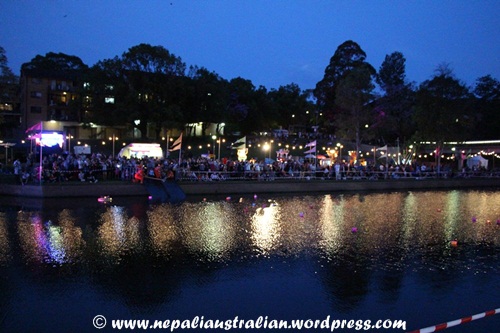
Once the official Krathongs were launched , I joined the queue and put mine into the water as well.

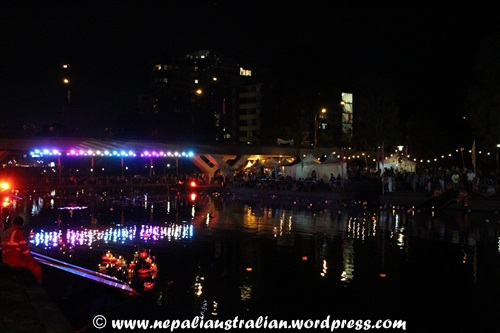
The river looked really beautiful with so many different designs and sizes of Krathongs floating on the water.

After that we went to the main stage where we watched Golden Lantern Dance, Candle Dance, Fighting Cock Dance as well as a Thai Puppet Show.  All of them were really interesting and fun.

After the show we went and crossed the bridge to go to the other side of the river where they had set up a Thai village as well as amusement rides for children.

At one corner there were fire dancers performing and there was also some free face painting going on. We also heard people singing Loy Karthongs songs in the competition.

Finally we finished the tour of all the stuffs and decided to sit at the top of a slotp on one side of the river and waited for the fireworks to start.

At 9.55, they started the fireworks and it went for more than 5 minutes. It was a really beautiful display. Finally we headed home after a good evening out.

Aloo dum (Nepali potatoes curry)

Aloo dum is a very popular dish in Nepal. My mum used to cook it almost every day when we were little as both me and my brother were very spoiled and didn’t eat most of the other veggies except potatoes.

Ingredients

  • 4 medium potatoes
  • 1 onion sliced
  • 1 tablespoon of crushed ginger and garlic
  • 2 tomatoes diced
  • 1 teaspoon of cumin seed
  • 1 teaspoon of cumin powder
  • 1 teaspoon of coriander powder
  • 1 teaspoon of chilli powder
  • 1 teaspoon of turmeric powder
  • 2 tablespoons of unflavoured yogurt
  • Salt to taste
  • 2 tablespoon of oil

Steps

  • Boil potatoes and cut into cubes.
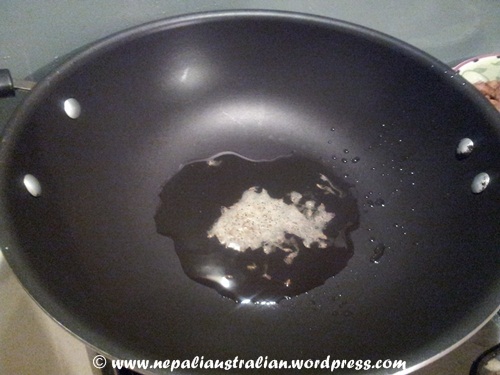
  • Heat oil in a wok.

  • When oil is hot, add cumin seeds and let it fry for a few seconds.

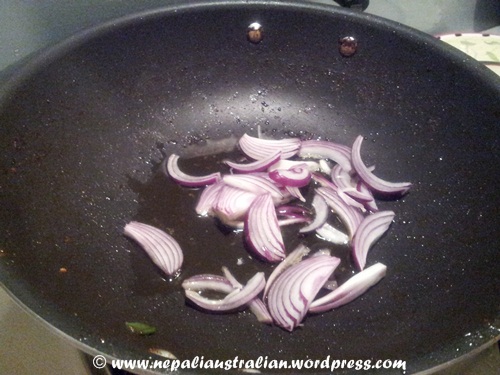
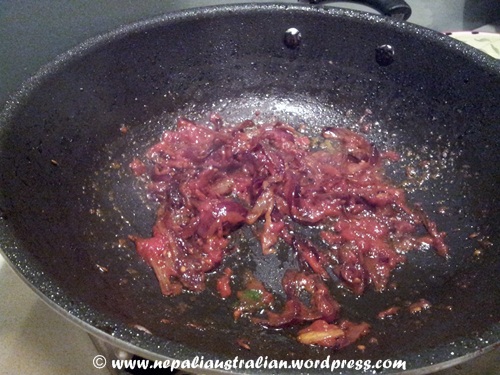
  • Add onion in the wok and fry till they are brown.

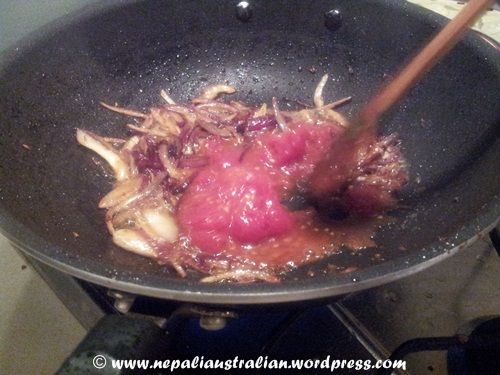
  • Add diced tomatoes and turmeric powder and fry some more.

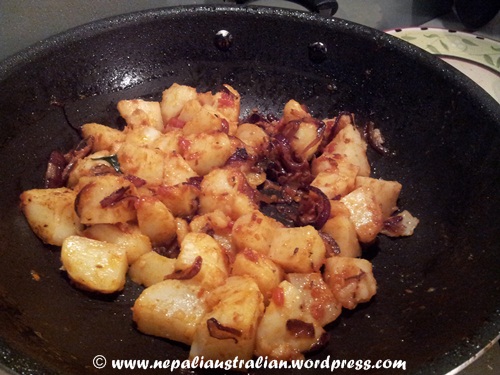
  • When the paste starts giving out oil that mean it is cooked so add the boiled potatoes to the wok.

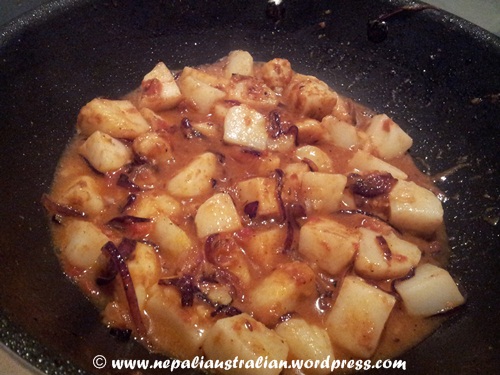
  • Just toss potatoes around and add salt, cumin, chilli, coriander powder and a half cup of water and let it boil.

  • Now add the unflavoured yogurt and mix it well.

  • Take the curry out of heat and serve with rice or roti.

You may also like :

*Momo *Aloo ko achar *Chicken chili