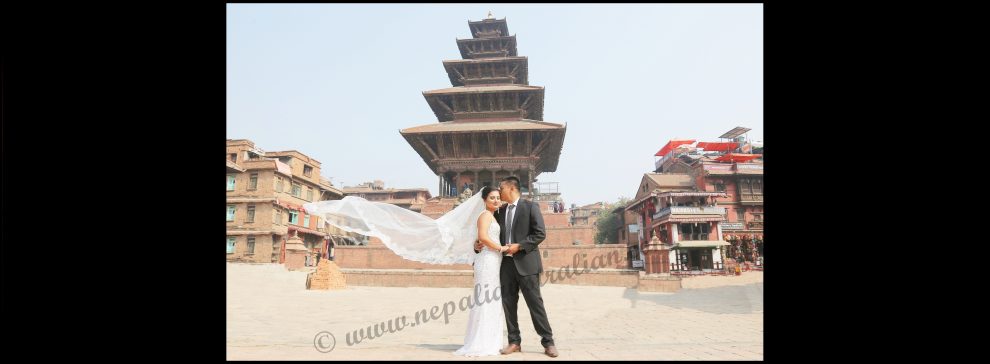
Over the years I have noticed many cultures, customs and etiquettes of Nepal which are so different from what we find in western countries. I am sharing a few of them here.
- In Nepal, everyone is your Brother, Sister, Uncle or Aunt even if you are not related.
- It is normal to slurp tea or any drink when you are out and about.
- Superstition goes hand in hand with culture. For example if a cat crosses the road, you wait for someone else to cross that path before you cross it.
- You should not step over an idol of a god or goddess or anything that is used to worship them. This is seen as a disrespect to god to step over them. A lot of time if someone is coming up the steps with Puja items you are not allowed to go up of down the steps above them as this constitutes stepping over the Puja items.
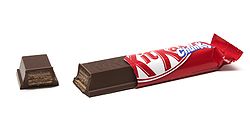
 Sharing is caring in Nepal so if you have a Kit Kat bar, you still ask who ever is around you and break that bar into pieces to share.
 - Fat is good in Nepal so if someone in Nepal said you look fat, don’t get offended. He/she is giving you a compliment on how healthy you look.
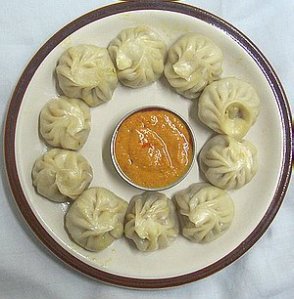 Momo is the best food in the world (according to every Nepali)
 - PDA (Public displays of affection) is a big NO NO.
- As respect to the God and Goddess, one should always take off your shoes before entering a temple.
- In most Nepali homes you should not wear shoes in the rooms, they have to be taken off before entering any room.
- Ask for permission before entering a Hindu temple. In some temples, only Hindu’s are allowed.
- Taking photographs inside most temples is not allowed.
- You always walk around a temple in clockwise direction.
- You will notice lots of people touch their forehead with their fingers as they pass by the temples. It is acknowledgement of God and showing respect.
- Never enter anyone’s kitchen until they ask you to.
- Staring is ok (I know it is silly).
 It is normal to find people of the same sex walking together hand in hand (girl and girl or even boy and boy) but boy and girl can’t walk hand in hand without being stared at.
 - People call each other Sir or Madam, like Mohan Sir or Rita Madam in the workplace.
- Bargaining is the first rule of shopping in Nepal. [I have paid twice the price of an item even when I bargain 😦 ]
- You will notice Nepali people shake their head a lot. If the head shakes (sways) from side to side it is YES an if it shakes from side to side (face turns from side to side) it’s a NO.
- When there is a visitor, they serve tea and egg. Noddles like Wai Wai and Maggie are served as lunch.
- If you are meeting someone and they didn’t come in time, don’t be surprise. It is called Nepali time which is to come a bit late to your appointment.
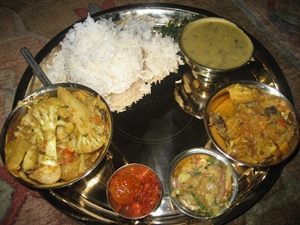
 Dal Bhaat Tarkai can be breakfast , lunch and dinner.
 - Nepali people don’t eat beef and until recently it was illegal to even sell beef.
- When woman has her period, normally they are considered impure and they are not allowed in the temple and kitchen for four days.
- There are no fines for littering in Nepal so you see people throwing things on the street even if the bins are just a few feet away.
- It is considered rude to touch any one’s head.
- In Nepal, you don’t eat and serve yourself. It is considered Jutho (impure) to touch the cooking pots while you are eating.
- Left hand is considered impure/Jutho so you never pass things around with your left hand.
- If someone dies in the family, the family will not celebrate any festivals or birthdays for a year and there will be no wedding or any other happy celebrations for that year.
- If someone touches their throat with their fingers then they blow on the fingers. Not blowing on it is believed to cause swollen glands in the throat.
- Footwear should not be left upside down as it will cause bad luck.
- You can see some vehicles in Nepal with a slipper hanging in the front (or rear). This is said to ward of evil (bad eye) so that accidents will not befall the vehicle.
- You should not say the word for Witch in Nepali, it is believed to bring you to the attention of a witch and she will harm you.
- If you find a mysterious bruise on the body, it is thought to be because a witch drank your blood.
- You should not pee on a Pipal tree as they are usually haunted by a witch and she will harm you for peeing on her home.
- You should not touch most stuff (that are not meant to be touched with the feet) with your feet, since everything is thought to have an essence of God and touching them with the feet is disrespecting God. Especially things for learning, as Saraswati is the goddess of learing and pillows as you normally put your head on it, etc.

There are many other things but I will leave that for another post.














 nepaliaustralian