Category Archives: Travel

Hot chocolate, no Cioccolata calda

I am not a coffee drinker as coffee gives me a headache so if I have to drink, I would order a hot chocolate while my hubby enjoys his mocha or cappuccino.  During our Europe trip as well I had hot chocolates instead of coffee whenever we sat down in cafes for drink.

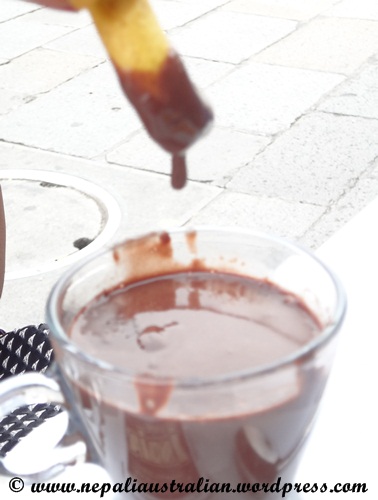
While in Burano, we fell like a coffee and cookie so we went to this small café along the way. We asked for a hot chocolate, a cappuccino and some cookies. The cookies were yummy and AS was happy with his cappuccino but I was surprised to get a cup full of thick hot chocolate with no milk.  It looked more like a dessert you get in Max Brenner  than a drink I was expecting. It was so thick that it stuck to the sides of the cup. It was very dark and with a bitter edge but too sweet for my liking. I didn’t know what to do with it as I could not drink it. I dipped a few cookies into it but did not drink rest of it . I was a bit disappointed that I could not get my normal hot chocolate.

Hot chocolate, cioccolata calda

That was not the only time we were served a thick hot chocolate. In Rome as well, I got the same drink when I ordered a hot chocolate. Luckily we had an Italian couple in our tour group so they helped me get a cup of warm milk and I made my own hot chocolate by mixing the thick chocolate with milk.

Hot chocolate, cioccolata calda

So after coming back to Sydney, I goggled what really happened to my hot chocolate in Italy and this is what I found. I got Cioccolata Calda when I asked for hot chocolate. Chi-o-co-la-ta Call-da is Italian for Hot Chocolate. Cioccolata Calda is described as authentic Italian Hot Chocolate which is a cup of thick, delicious, creamy, pudding like consistency, hot chocolaty goodness. I should have asked for milk chocolate if I wanted my normal hot chocolate. So remember if you ever visit Italy, do keep in mind the difference.

I learnt my lesson to do some research on food and drinks for the next time I travel.

If you want to try your own Cioccolata Calda, click here for the recipe.

Burano : Italy

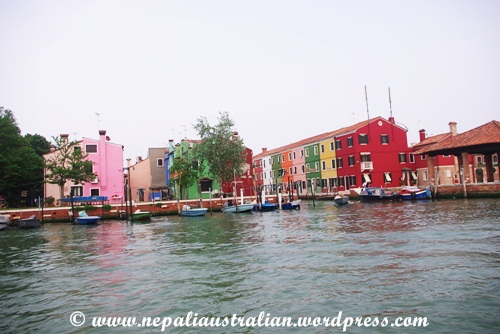
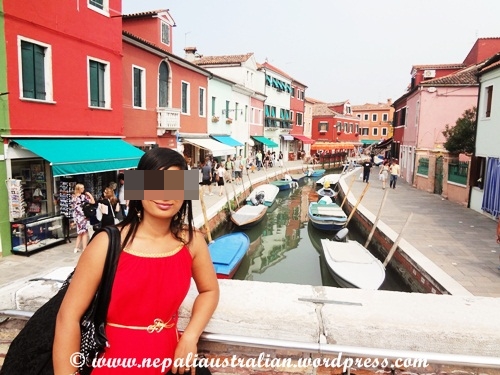
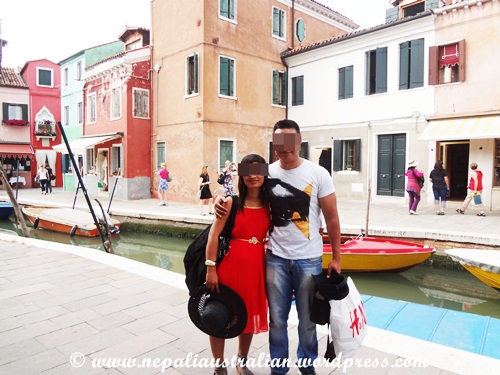
While in Venice, we took a boat trip to an island called Burano. It is an island famous for its lace and fisherman located in the Venetian Lagoon, in northern Italy.

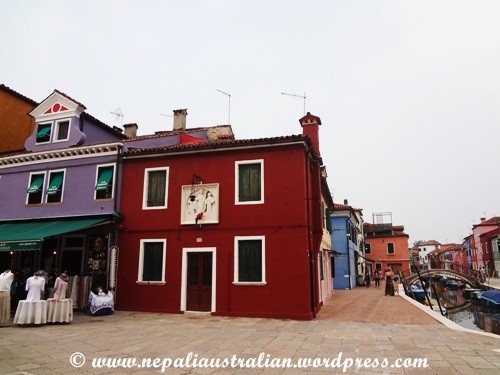
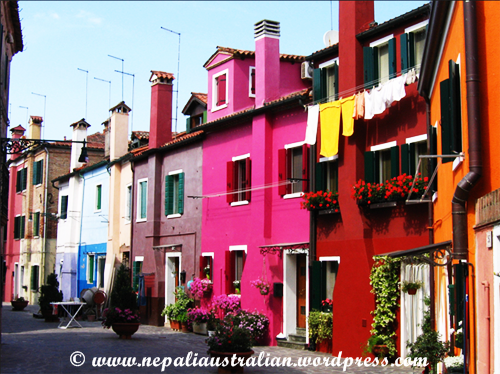
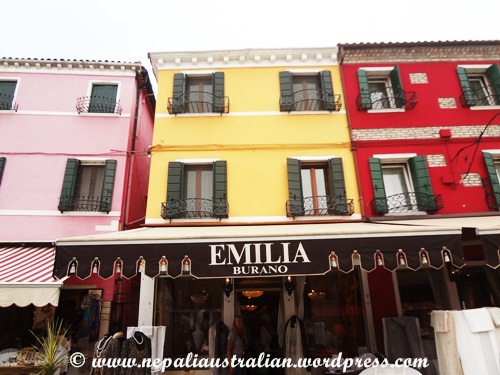
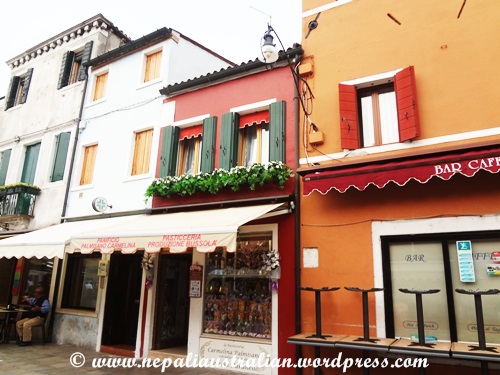
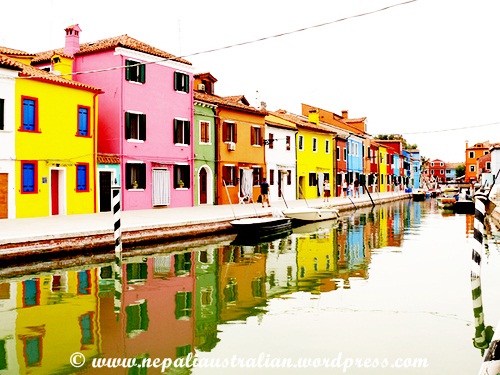
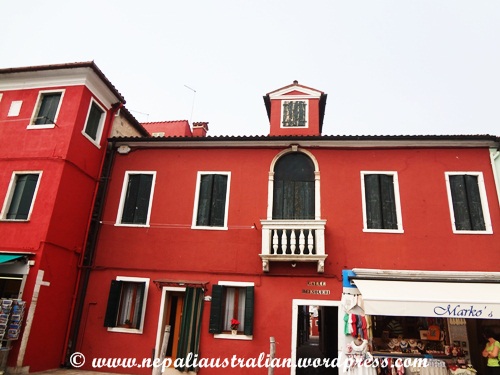
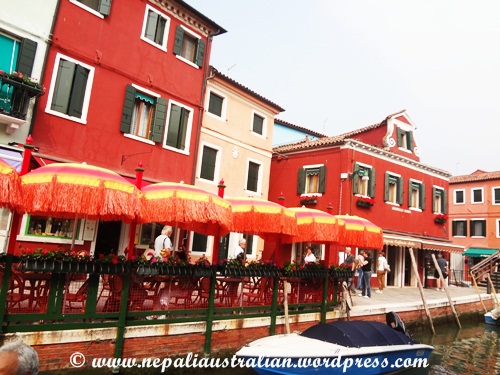
Burano is also known for its small, brightly-painted houses, popular with artists. The colours of the houses follow a specific system originating from the golden age of its development; if someone wishes to paint their home, one must send a request to the government, who will respond by making notice of the certain colours permitted for that lot.

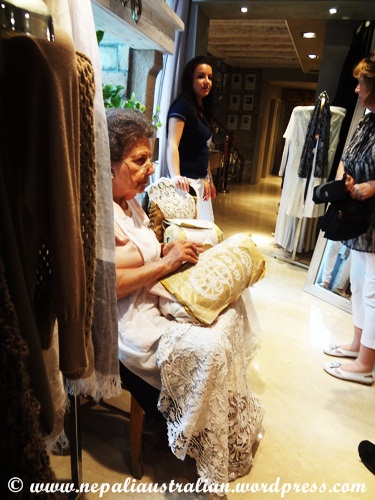
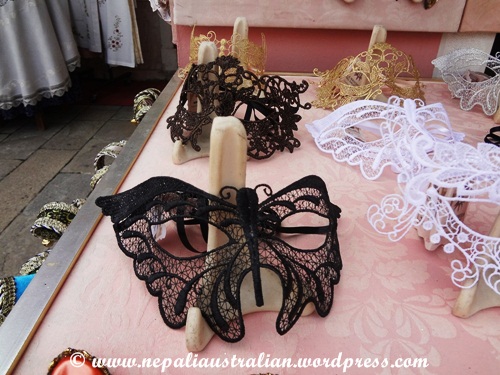
When we got off the island, we were taken to a lace shop called Emilia. We saw many lace works and a lady was working on a piece for us. It looks like a hard job but the end product is really pretty. There are beautiful products which range from tablecloths and doilies to Venetian masks and babies’ booties.

Back in the 16th century, the women of Burano started stitching lace. The work was extremely exacting—in fact, each woman specialized in a single stitch, and since there are seven stitches in total, each piece would have to be passed from woman to woman to finish. That’s why one handmade lace centrepiece for a tablecloth takes about a month to do! Because of that amount of work and how expensive it necessarily makes handmade lace, much of the lace you see being sold in Burano’s stores today is made by machine.

If you are really into laces there is a museum for lace and textiles called Museo del Merletto which is located on Burano’s main piazza of Baldassare Galuppi. The small two-story museum has impressive displays of historic and contemporary lace designs with some excellent examples of 16th and 17th-century lace, along with the beautiful, lace-trimmed gown worn by Queen Margherita, the Jackie Kennedy of late 19th-century.

Once we finished with looking at lace work in the shop, we had time for ourselves to go around and explore the island. The island was just beautiful and bright with many colourful houses. In ancient times families used to paint their homes in bright colours to designate where their family’s quarters ended and a neighbour’s began, as well as to make their homes more visible from the sea. The tradition has continues till today.

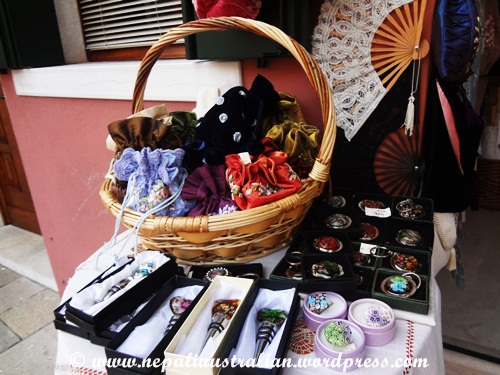
Walking around the village, we came across a church, some stands offering local souvenirs, Murano glass products and Venetian masks for a cheap price. Then we stopped over at a café to have a coffee and freshly baked biscuits. It was really a nice day trip in such a beautiful place.

Please click here for more photos.

Venice by night and Venetian dinner: Italy

It was afternoon when we reached Italy. Our guide told us that we will have a few hours free before we go to Venice for dinner so me and AS with a few others from our group decided to go on a shopping spree. I was so happy to find a mall close to the hotel. And we ended up buying 2 small suitcases for hand carry on the plane. As we travelled we had bought lots of souvenirs so we were running out of space on our suitcases. I am so glad we bought the suitcases as I was able to do my own shopping and fill up the extra space they allowed. I ended up buying 4 pairs of shoes and 4 dresses. I was so happy that we went to this mall and happier still to find dresses and shoes in my size.

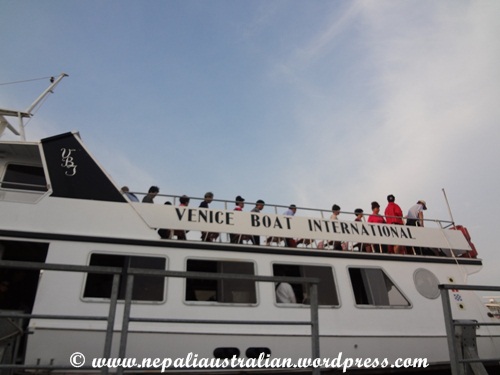
After shopping we went back to our hotel and got ready to go for our dinner trip. We took the bus till the port and then caught a motorboat to go to San Marco. The islands looked so beautiful with old buildings and lots of history. The guide was on a microphone explaining to us what each of the building were.  It was evening by that time and the sunset over the water was beautiful.

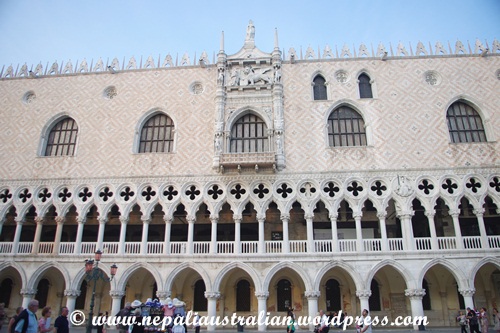
We walked to St. Mark’s Square, passing famous buildings, small bridges and inner canals to a typical Venetian restaurant for an aperitif including wine, mineral water and coffee before the four-course dinner. We had bread roll and butter on the table along with wines. We were seated next to a Canadian family and a couple from Brisbane. It was a fun night. The first course was a tomato and goat cheese platter followed by pasta. By then I was really full but main was still to come. For the main I chose chicken and AS had fish. Finally we were served homemade tiramisu as desert. It was really yummy but I couldn’t finish mine as by then I was stuffed like Turkey on thanksgiving. I am not a big fan of 3 course meals; imagine my state when it was four.

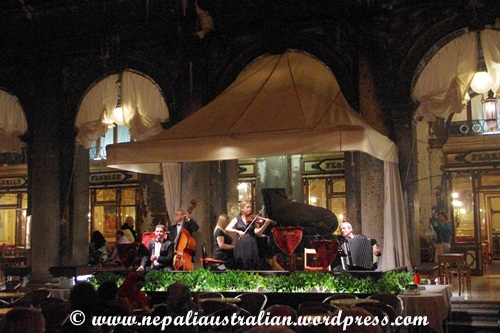
After dinner we had some time to explore the area. So we went to St. Mark’s Square and enjoyed listening to the musicians who were playing beautiful music in nearby café. From there we went for a walk and saw beautiful Venice with a cool breeze blowing in from the lagoon; the lanterns coming on, the peeling plaster glowing in the moonlight.

The evening was balmy and we felt quite relaxed, enjoying lovely Italy. There were people in the gondolas enjoying a nice evening ride and some of the shops selling masks and souvenirs were still open. We decided to wait till the next day to shop around. There were still lots of people out enjoying the music and dinner.  It was a really nice evening and I was so happy to have my husband next to me.

We stopped over at Rialto Bridge which is one of the famous bridges in Venice that cross the Grand Canal. In this area, which originally housed the food market, there has always been a canal crossing, at first, a simple bridge of boats, and later a real wooden bridge, made from two inclined ramps with a mobile section in the middle, in order to allow the passage of ships.

Rialto Bridge, a stone arch, was constructed under the supervision of Antonio da Ponte, between 1588 and 1591. We took a few photos there and it was almost time for us to board our boat to go back to the hotel.

On the way back to the mainland, it was a beautiful ride and I could see the beautiful place fading out on the horizon. I was really excited to come to Venice again the next day for proper tour and world famous gondola ride.

 Please click here for more photos.

Austria

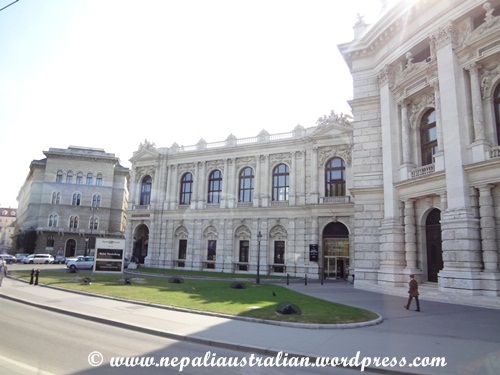
Vienna is extremely clean with beautiful architectural buildings and stunning statues everywhere. We had our local guide to take us through the Ringstrasse and numerous magnificent buildings, such as the MAK, the State Opera House, the Museum of Fine Arts and the Natural History Museum, the cultural district the Museums Quartier, the City Hall and the Burgtheater. She was really good with lots of information.

On the way back to the opera we passed by the Belvedere Palace, the former summer residence of Prince Eugen, which houses the largest and the most precious Gustav Klimt collection in the world.

 Hofburg Palace
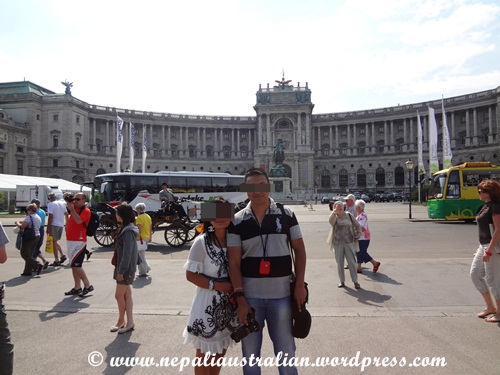
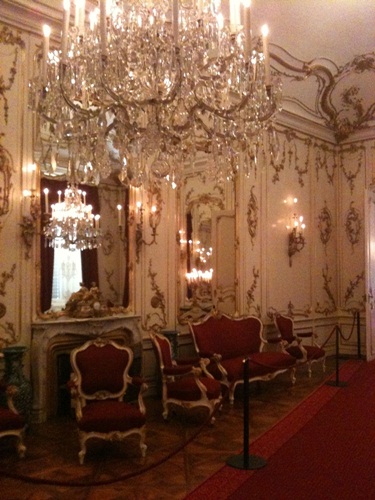
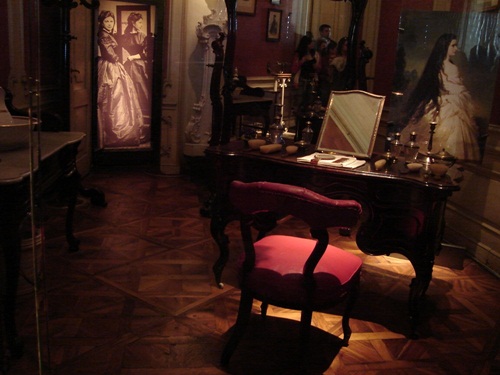
Hofburg Palace was the home of the ruling Hapsburgs until 1918, when all royalty was wiped out by WWI. It’s a beautiful and massive complex, and the main building now houses the National Library. The initial part is a museum of “Sissy” – Elizabeth, wife of Franz Josef, who was popular and well-loved Queen of Austria.  She was originally Bavarian and revered by everyone at the time as the most beautiful person. At the age of 15, she was chosen over her sister Helena to marry the Prince of Austria. Sissy was considered beautiful and mysterious, and became a cult figure similar to Princess Diana when she was tragically assassinated in her later years. Her life was extremely interesting.  The rest of the palace houses the imperial apartments.  Every citizen had the right to a private audience with the emperor, so many of the rooms were geared to this event.

In front of the palace there is the statue of Prince Eugene of Savoy. He was one of the most successful military commanders in modern European history, rising to the highest offices of state at the Imperial court in Vienna.

From there we went to  St. Stephen’s cathedral .

St. Stephen’s Cathedral

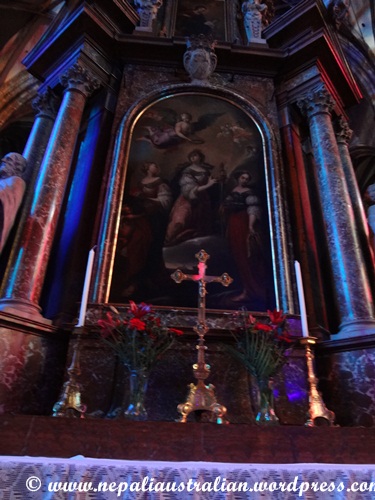
The St. Stephen’s Cathedral has a very pretty exterior.  The church sustained serious damage in WWII when a fire broke out; the roof burned and its large bell crashed to the floor.  Originally built in 1240, it is a beautiful church in the Gothic style.
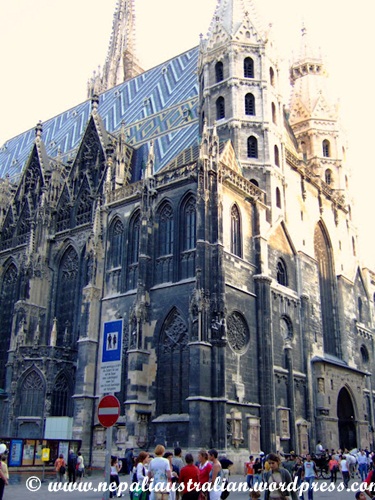
The cathedral is large and beautiful. There are tombs where the old Bishops are buried. Since its earliest days, St. Stephen’s Cathedral has been surrounded by cemeteries dating back to Roman times, and has sheltered the bodies of nobles and commoners. It has always been an honour to be buried inside a church, close to the physical presence of the saints whose relics are preserved there. Those less honoured were buried near (but outside) the church. Because of the colourful glasses on windows, multi-coloured light surrounds the cathedral making it bit difficult to see things as well as to take some nice photos.
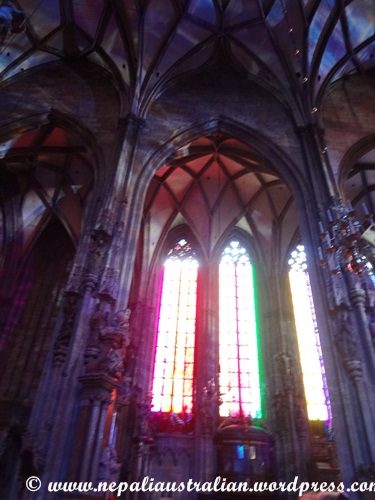
We were there in the morning and it was quite busy.

Salzburg

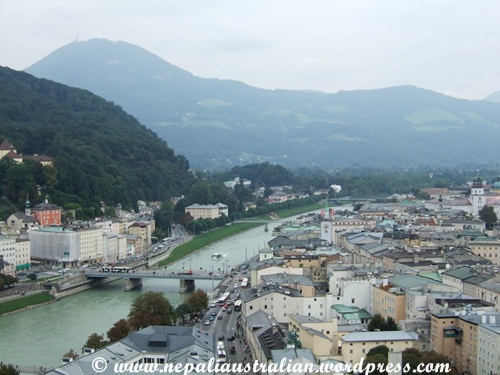
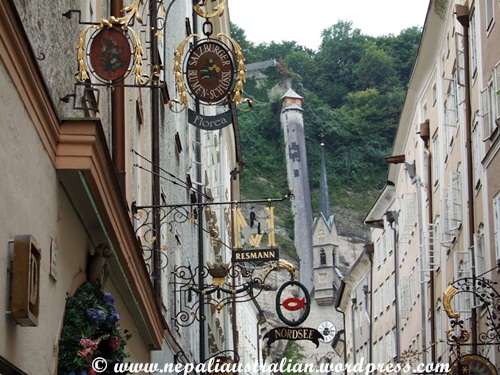
Salzburg is just beautiful with its medieval Old Town . Salzburg is set on the edge of the Alps and the Fortress sits high atop a mountain overlooking the town.  We crossed the Salzbach River to the Old City and headed to the famous Getreidegasse.  All the stores on this street put up iron signs above their doors with images of what to find within for those who couldn’t read.  And it is nice to see that till date the tradition has been maintained. Salzburg Cathedral was really beautiful even though it was destroyed in WWII.

Melk Abbey

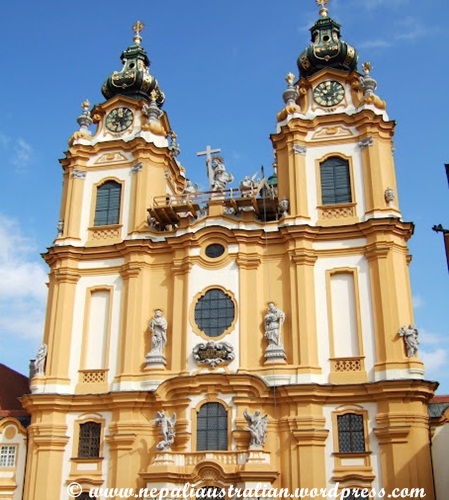
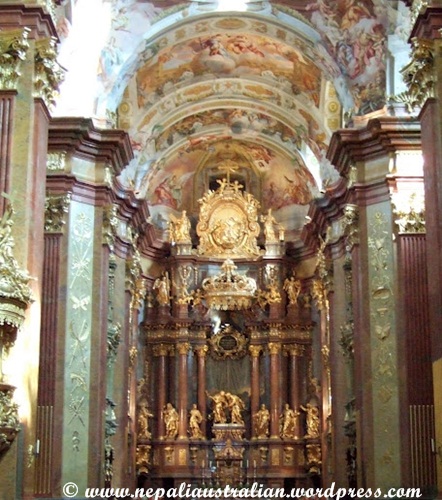
Melk Abbey is an Austrian Benedictine abbey, and one of the world’s most famous monastic sites. It is located above the town of Melk on a rocky outcrop overlooking the river Danube in Lower Austria, adjoining the Wachau valley.

It is symbolic to the 18th century excess of the baroque period by the religious aristocracy of the time. This is simply a superb place. The 30 year restoration of this Abbey was well done, and it is truly a jewel architecturally. Famous people and royalty have stayed within its walls and one certainly gets a sense of ”place” going through the various rooms.

The Abbey Chapel is really beautiful .There are also beautiful gardens and a pavilion, as well as a bastion and a nice restaurant with terrace rest and relax.

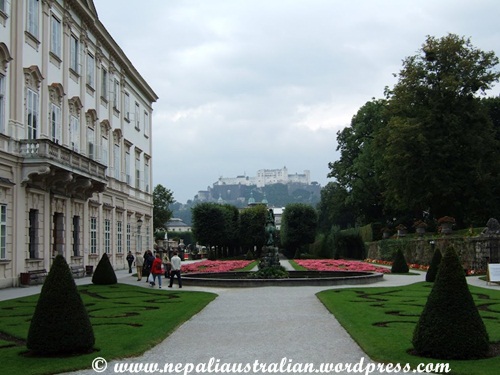
Mirabell Palace and gardens

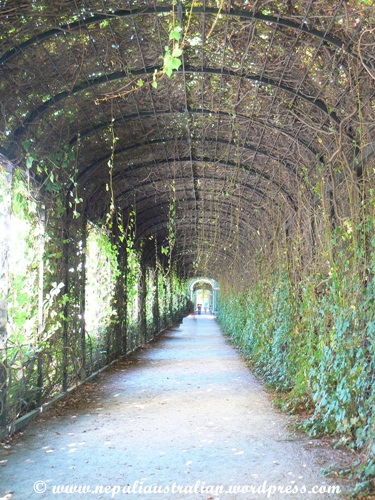
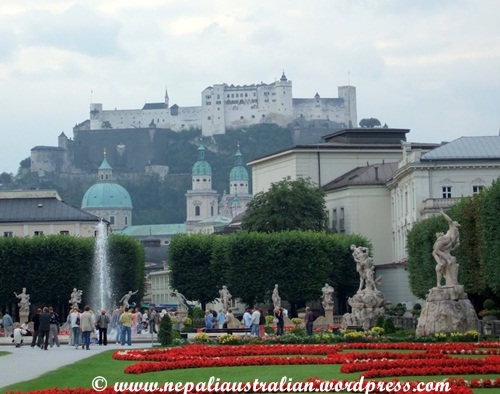
Mirabell Garden is located right in the heart of Salzburg and is the perfect place to relax and enjoy. There is fortress, fountains, a gnome garden, small hedge maze and a great rose garden. If you have watched Sound of Music, you will realise that “Do-Re-Mi” song was filmed in this garden. A lovely place to stroll through with shade from large trees and overhanging trellises.
Wörthersee: Lake Worth
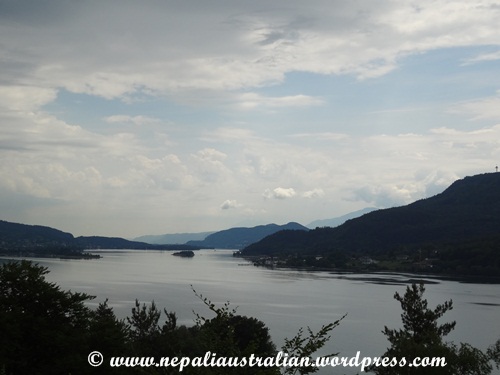
On the way to Italy we stopped over in this beautiful town called Wörthersee where there is an elongated lake that stretches from the Carinthian capital Klagenfurt in the east to Velden in the west.

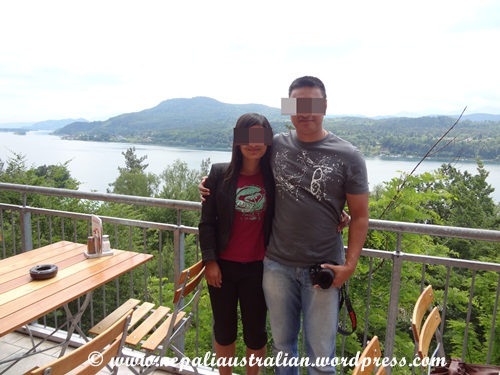
The Wörthersee is the biggest of the Carinthian lakes. The lake is crystal clear and the scenery beautiful. The lake is at the base of the mountains with small resort towns dotting the shoreline. In summer you can have a lot of activities, like swimming, surfing, sailing, and fishing making it very popular. We had lunch in the restaurant overlooking the lake.
Please click here for more photos.
Schönbrunn Palace : Austria

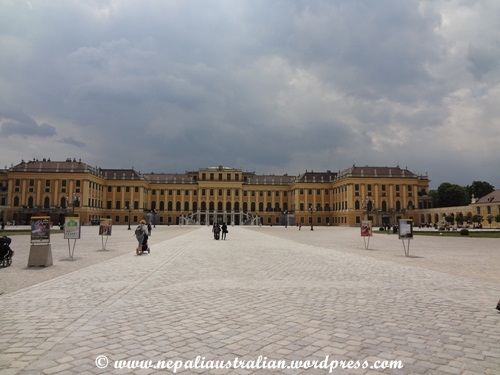
Anyone who knows much about European history knows about the important influence of the Hapsburg family. The aesthetic preferences of that family are displayed in the Schönbrunn palace and gardens that make up this amazing castle in the heart of modern Vienna.

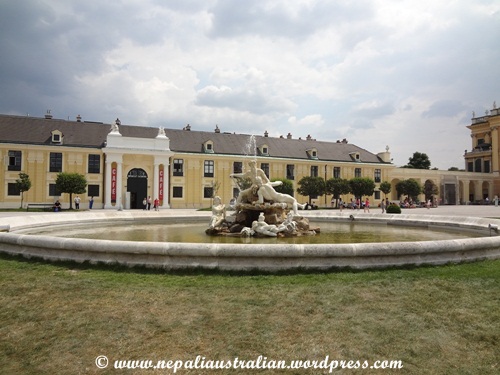
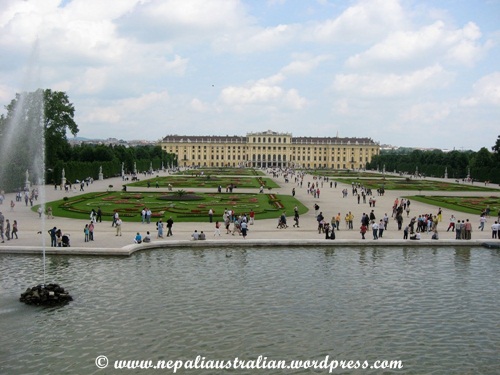
Schönbrunn PalaceAs soon as we were dropped off in front of the palace, I was in awe at its grand presence. The entrance has a long path that leads to the palace. On one side of the path, there is a fountain while the other side, servant quarters.

We were there with a local guide who was really informative and gave us lots of history behind the palace.
Despite its apparent unity of style, the complex incorporates various structural changes resulting from its long history. After World War I the palace became a museum; it was restored after damage in World War II.

Remodelling and modernization began in 1743, when the young Empress Maria-Theresa ordered that the building, one of her favourite residences, should be repaired and enlarged to accommodate the imperial household in comfort.

Schönbrunn Palace

Maria Theresa (1717-1780), archduchess of Austria, Holy Roman Empress, and queen of Hungary and Bohemia, began her rule in 1740. She was the only woman ruler in the 650 year history of the Habsburg dynasty. She was also one of the most successful Habsburg rulers, male or female, while bearing sixteen children between 1738 and 1756.

Maria Theresa was married to Francis I, Duke of Lorraine. Maria Theresa was one of the few people in her age who married for love. She loved her husband dearly and passionately. She had 16 children by him, with 11 daughters (ten of whom had the first name “Maria”) and five sons.

Her youngest daughter was Maria Antonia, better known under her French name Marie Antoinette, who would be promised in marriage to the later King Louis XVI of France. Marie Louise who became Napoleon’s second wife, bearing him a son, was a great granddaughter of Empress Maria Theresa through her father, and thus a great niece of Marie Antoinette.

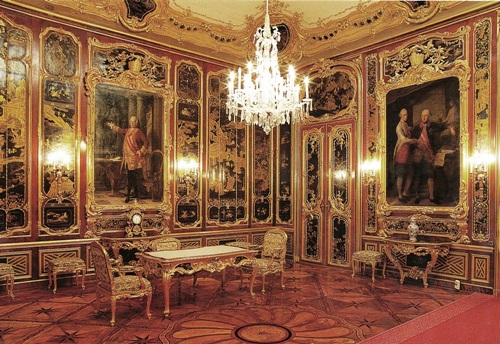
There are 1441 rooms in the palace but in the tour we were allowed in around 40 rooms. Every room have its history and is different that second room. There are so many photos of the children and family hanging everywhere. We went to a hall where Mozart himself at 6 years old played a concert in, then a bedroom Napoleon Bonaparte slept in, and lastly a ballroom where JKF conducted foreign relations. The décor of each room was fabulous.

Maria Theresa was a fashionista so there are lots of beautiful gowns on display as well as her long hair preserved.

Unfortunately we cannot take photos inside but this is what I can find online.

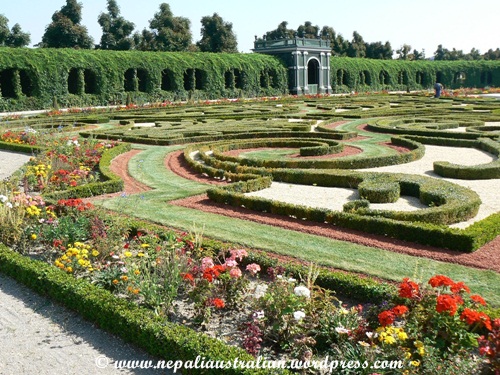
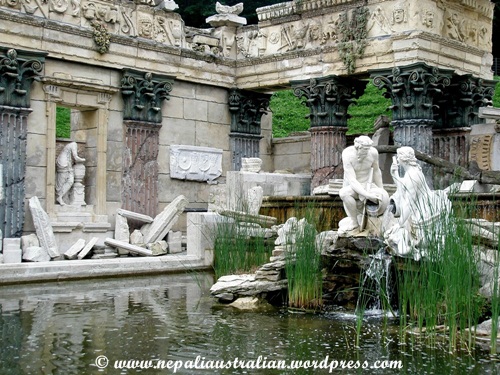
From the palace we went exploring the garden which was filled with original huts, orchard and pasture. The palace and gardens illustrate the tastes, interests, and aspirations of successive Habsburg monarchs. The grounds were beautiful, and the mazes and labyrinths are lots of fun. The garden is huge with alleys with trees whose branches and crowns which are cut in line by extraordinarily talented gardeners. The pruning and shaping must take an enormous amount of work.

Schönbrunn Palace

There are lots of sculptures in the Schönbrunn Garden which were mostly created between 1773 and 1780 under the direction of Johann Wilhelm Beyer, employing many sculptors. You need several hours to stroll, or you can take a buggy ride but as we have limited time in the palace we couldn’t go around everywhere.

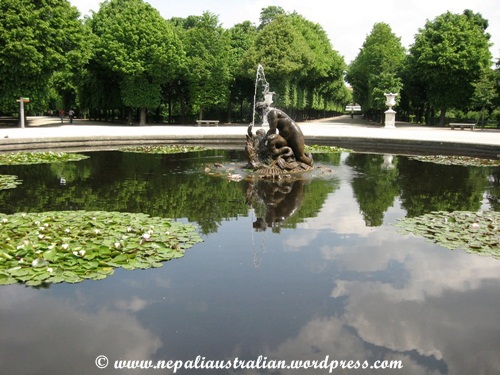
There are few fountains in the garden. The fountains are lovely, but it’s quite a walk to get all the way round the gardens.

It was nice to visit the palace and see how rich and famous once lived.

Please click here for more photos 🙂