Sydney Easter show

Sydney Royal Easter Show celebrates all things Australian from the bush heritage to the vitality of city life It features wood chopping competitions, more than 100 carnival rides and games, art exhibitions, food stalls, live music, extreme sports exhibitions, pet shows and more. It also features Sydney Royal Rodeo Series which is the only international rodeo series in the country. For kids the big reason to go will be show bags and 100s of thrilling rides.

When I said to my friends that I was planning to go to the Easter show, their reaction was “Aren’t those shows for kids”. Ahhh, I am sure they are not. Even though I haven’t been to the Easter show for 4 years now, I was so sure before I went that I was going to enjoy the event. I still remember lots of fun that I had the last time and one of the highlight was the flying pig and rodeo show. And it was gonna be AS’s first trip along with my friend SS.

As it was school holidays, I knew that it would be busy no matter which day we choose to go so I was fully prepared to face the crowd. The surprising part was that even before I reached the show, I got a glimpse of what was to come.

We headed to the Easter show in Sydney Olympic park using public transport, two trains actually. The first train was relatively less crowded but when we changed our train in Redfern, there were lots of people on the platform with the same intention and the same destination as us. I saw lots of kids with their parents but there were lots of adults as well.

I think enjoying rides and patting animals brings out the kid in all of us and I was so exited to start the day.

I was grateful that it was a sunny afternoon. We started our day by going through lots and lots of colourful stalls selling soft toys, perfumes, fake tattoos, artists making cartoon version of people and much, much more. When we saw the first food stalls, we stopped to have a bite. I was a bit disappointed that almost all the food were deep fried but still we enjoyed the Dagwood Dogs and chicken with chips. There were so many foods like fairy floss, snow cones, Chips on a stick, Cheese on a stick, potato swirl and much more.

Then we were off to see more of the show. We stopped at Alpaca wool shredding, fashion show of wool products, a working dog show. Then we were off to see cows, lots of different types of chicken, turkeys and goose as well as Alpacas, sheep, goats, pigs and cows. Some of the chicken were so strange looking and the cows were very big. There was a pig that just had a baby and the piglet looked so cute. In one of the barns, I got to see baby lambs and baby sheep. We took lots of photos.

Then we went to see the parade where there were lots of animals including horses, alpaca, cows paraded on the grounds in a circle. After the parade, we went to the food display hall. There was a huge display of fruit and grains that we’d all stop and gawk at with wonder and huge expanses of creative scenery, meticulously arranged to showcase the best of the region. The five regions–North, South, South East Queensland, West and Central–battled it out for the best display.
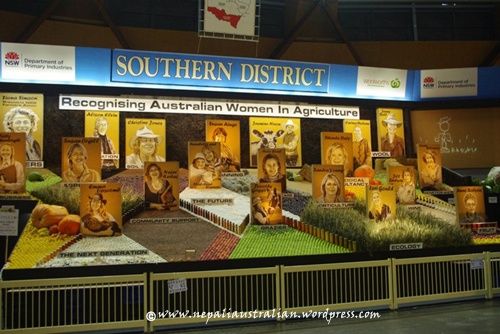
The display I liked best was the cake decoration ones where there were thousands of different shapes and sizes of cakes beautifully displayed for us to admire. And I also liked the display of dolls with really nice costumes.

After that we went to see the rodeo show. The ambiance was just great and there were thousand of people cheering for the horses and bulls.

On the way out, there were so many rides and some looked scarier than other. They were called Dodgem cars, Rockstar, Breakdance, Pirates Revenge, Slingshot, Skymaster Wheel , Cliff Hanger,Hollywood Horrors, Speed.

Overall, a great day out.

My Special Mother’s Day

As I mentioned on my previous post, this year was my first Mother’s Day after my wedding. In my culture, you have to make the event special as it will be the first time a married daughter brings food and gifts for her mother from her home (husband’s home). If I was in Nepal, I would need to do all the preparation and make sure my mum had a great day but as I am so far away, my mother in law made sure that the ritual was done properly.

I am so happy that my in laws, mostly my MIL, made such a great effort to make sure my mum’s day was special. She did all the shopping and all the preparations and my FIL helped her a lot. Then my two BILs went and presented the foods and gifts to my mother. They also took these photos for us to see. I am so grateful and thankful for my new family for taking care of this and making sure things went great.
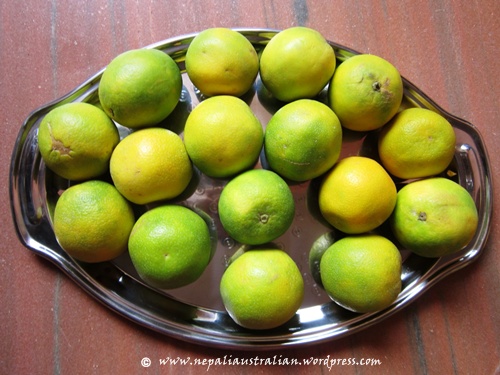
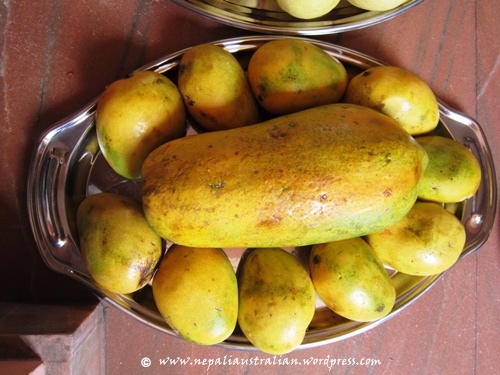
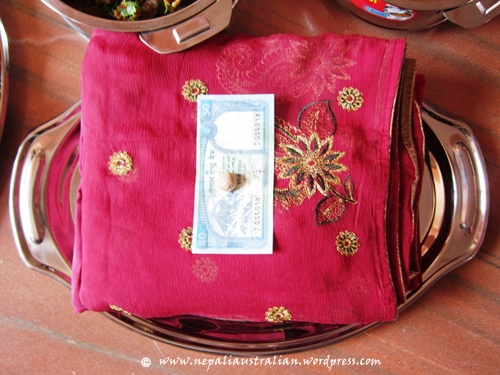
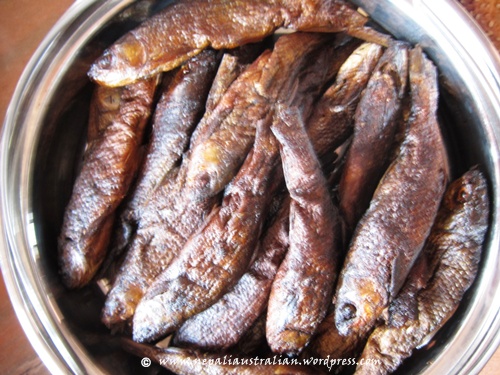
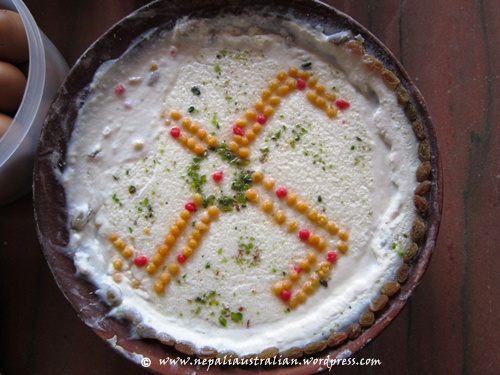
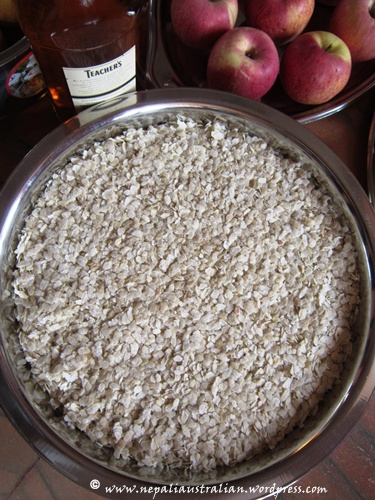
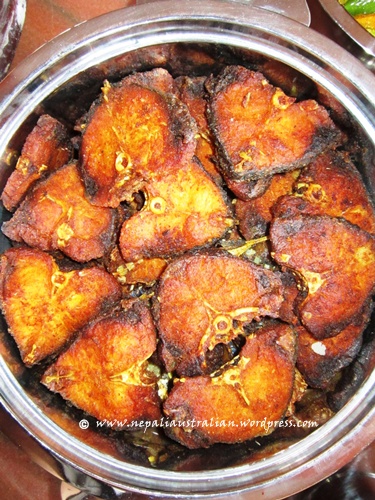
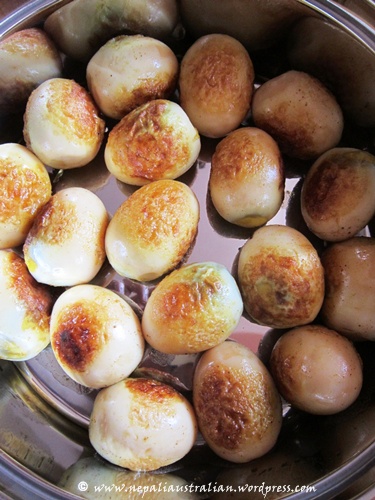
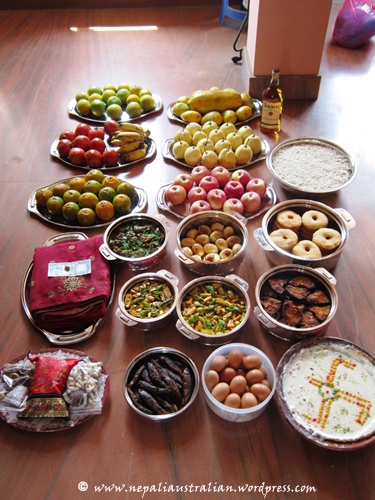
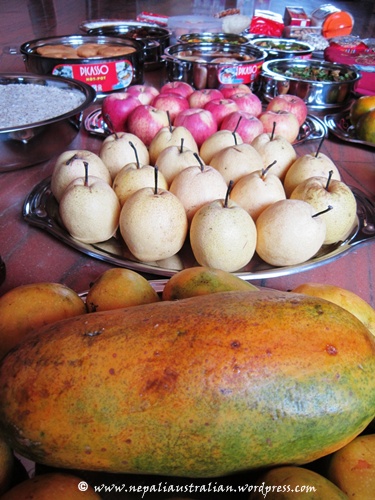
Have a look at the photos below and you can see traditional Newari Mother’s Day celebration. There are Sagun (egg, bara, whisky, fish, yoghurt and meat), also lots of fruits and rotis. It lookes so yummy. My mum also got a sari, a cake and masala. I really wish I could have been there to help prepare for it and to see the smile on my mum’s face.

Learn Nepal Bhasa

Nepal Bhasa is the native language of the Newar people. I cherished learning this language from my grandmother during my childhood. However, after she passed away, speaking Newari became painful, as it constantly reminded me of her absence.

However, after moving to Australia, my proficiency in Nepal Bhasa has waned over the years due to a lack of practice. AS, despite being a Newar, never learned the language and expressed a desire to do so. Motivated by this, I’ve decided to compile some Newari language resources here for anyone interested.

If you spot any mistakes, please don’t hesitate to correct me. I greatly value your feedback and suggestions to improve this page.

Chapter 1

English Nepali Nepal Bhasa
Hello Namastē (नमस्ते)/Namaskāra (नमस्कार Jwa-ja-la paa(ज्वजलपा)
What Kē (के) Chuu (छु)
This Yō (यो) Thwa (थ्व)
That Tyō (त्यो) Wa (वो)
Yes Hō (हो) Khah (ख)
No Hō’ina (होइन) Ma-khu (मखु)
When Kahilē (कहिले) Ga-ba-le (गबले)
Where Kahā (कहा) Ga-na (गन)
Which Kuna (कुन) Gu-gu(गुगु)
Who Ko (को) Su (सु)
Why Kina (किन) Chayaa (छ्या)
Whose Kasakō (कसको) Su-yuu (सुयु)
Whom Kasalāi (कसलाई) Sui-ta (सुइ त)
How (in what way) Kasarī (कसरी) Gay-na (गेनां)
How (to what degree) Kati (कति) Gu-li (गु लि)
Best Wishes Hārdika śubhakāmanā(हार्दिक भकामना) Bhin-tu-naa (भिन्तुना)
Welcome Swāgata cha (स्वागत छ) La-sa-ku-sa (लशकुश)
Thank you Dhanyavāda (धन्यवाद) Su-bhaay (सुभाय्)

Please click here for previous chapters.

Anzac day

Every year on 25 April Australian mark the anniversary of the first major military action fought by Australian and New Zealand forces during the First World War. It is called ANZAC day and Australia has public holiday to commemorate this day. I am going to city in the afternoon to watch the parade.

What does ANZAC stand for?

ANZAC stands for Australian and New Zealand Army Corps. The soldiers in those forces quickly became known as ANZACs, and the pride they took in that name endures to this day.

Why is this day special to Australians?

When war broke out in 1914,Australia had been a federal commonwealth for only 13 years. The new national government was eager to establish its reputation among the nations of the world. In 1915 Australian and New Zeal and soldiers formed part of the allied expedition that set out to capture the Gallipoli peninsula in order to open the Dardanelles to the allied navies. The ultimate

Australian War Memorial

objective was to capture Constantinople(now Istanbul in Turkey), the capital of the Ottoman Empire, an ally of Germany.

The Australian and New Zealand forces landed on Gallipoli on 25 April, meeting fierce resistance from the Ottoman Turkish defenders. What had been planned as a bold stroke to knock Turkey out of the war quickly became a stalemate, and the campaign dragged on for eight months. At the end of 1915 the allied forces were evacuated, after both sides had suffered heavy casualties and endured great hardships. Over 8,000 Australian soldiers had been killed. News of the landing on Gallipoli had made a profound impact on Australians at home, and 25 April soon became the day on which Australians remembered the sacrifice of those who had died in the war.

Although the Gallipoli campaign failed in its military objectives, the Australian and New Zealand actions during the campaign left us all a powerful legacy. The creation of what became known as the “ANZAC legend” became an important part of the identity of both nations, shaping the ways they viewed both their past and their future.

Early commemorations

The 25th of April was officially named ANZAC Day in 1916. It was marked by a wide variety of ceremonies and services in Australia, a march through London, and a sports day in the Australian camp in Egypt. In London over 2,000 Australian and New Zealand troops marched through the streets. A London newspaper headline dubbed them “the knights of Gallipoli”. Marches were held all over Australia; in the Sydney march, convoys of cars carried wounded soldiers from Gallipoli attended by nurses. For the remaining years of the war, ANZAC Day was used as an occasion for patriotic rallies and recruiting campaigns, and parades of serving members of the AIF were held in most cities.

During the 1920s ANZAC Day became established as a national day of commemoration for the 60,000 Australians who had died during the war. In 1927, for the first time every state observed some form of public holiday on ANZAC Day. By the mid-1930s, all the rituals we now associate with the day – dawn vigils, marches, memorial services, reunions, two-up games – were firmly established as part of ANZAC Day culture.

With the coming of the Second World War, ANZAC Day also served to commemorate the lives of Australians who died in that war. In subsequent years the meaning of the day has been further broadened to include Australians killed in all the military operations in which Australia has been involved.

ANZAC Day was first commemorated at the Memorial in 1942. There were government orders prohibiting large public gatherings in case of a Japanese air attack, so it was a small occasion, with neither a march nor a memorial service. Since then, ANZAC Day has been commemorated at the Memorial every year.

What does it mean today?

Australians recognise 25 April as an occasion of national remembrance, which takes two forms. Commemorative services are held at dawn – the time of the original landing – across the nation. Later in the day, ex-servicemen and women meet to take part in marches through the major cities and in many smaller centres. Commemorative ceremonies are more formal and are held at war memorials around the country. In these ways, ANZAC Day is a time when Australians reflect on the many different meanings of war.

Australian War Memorial wall

 The ANZAC Day Ceremony

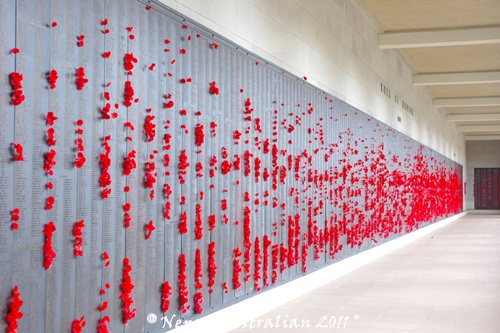
At the Australian War Memorial, the ceremony takes place at 10.15 amin the presence of people such as the prime minister and the governor-general. Each year the ceremony follows a pattern that is familiar to generations of Australians. A typical ANZAC Day ceremony may include the following features: an introduction, hymn, prayer, an address, laying of wreaths, a recitation, the Last Post, a period of silence, either the Rouse or the Reveille, and the national anthem. After the Memorial’s ceremony, families often place red poppies beside the names of relatives on the Memorial’s Roll of Honour, as they also do after Remembrance Day services.

LEST WE FORGET.

Source: http://www.awm.gov.au

Sydney Aquarium

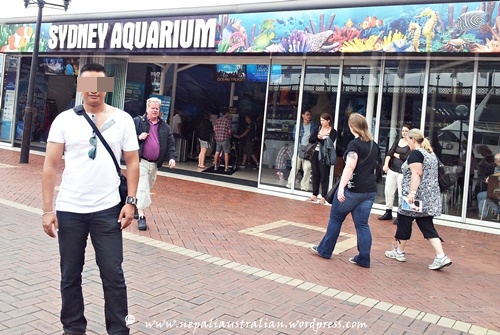
I hadn’t been to Sydney aquarium for many years, so a few weeks ago, AS and I decided to go there as it was a rainy Saturday afternoon as there wasn’t much we could do outdoors. Sydney Aquarium in situated on the eastern edge of Darling Harbour and is close to the heart of the city. The cost of entry for an adult is AU$35 per person.

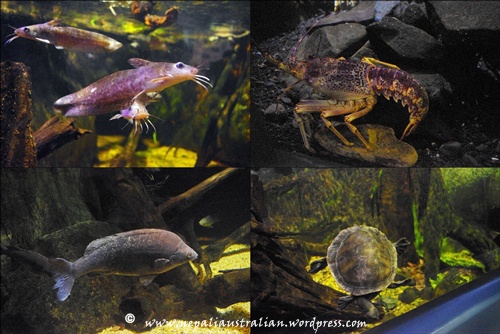
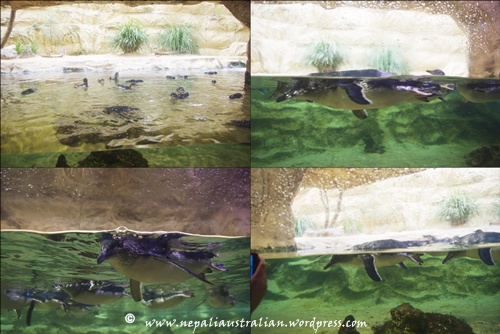
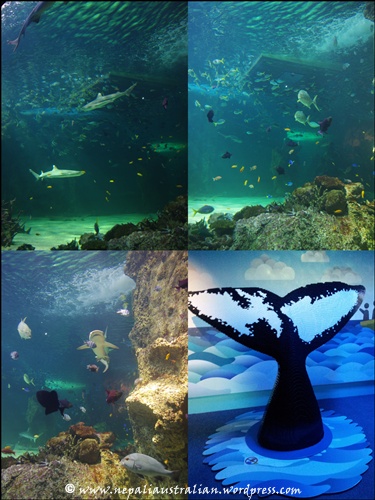
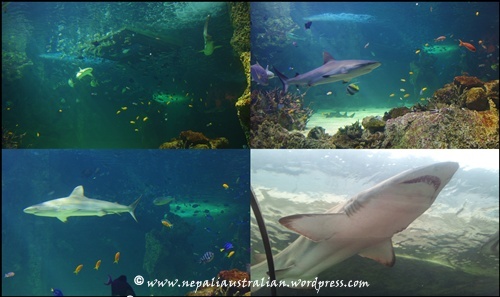
When we went to buy the ticket, we realised that lots of people, especially families with young kids and tourist had the same idea as we did. So there was a bit of a wait before we could get inside. Once inside, there were a large variety of fish and water creatures like huge sharks, massive stingrays, majestic turtles, jellyfish, platypuses, penguins, and sea dragons.

There were many interesting Lego structures which wasn’t there on my last visit. I later learned that they are aquatic inspired constructions containing around 20000 pieces of Lego.

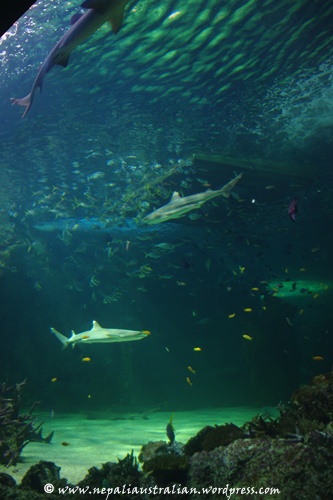
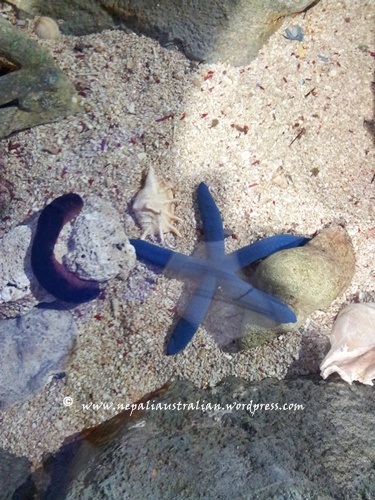
There was a section called Great Barrier Reef and I swear I saw all the fishes there which I had seen while snorkelling in Great Barrier Reef itself. They were so colourful with similar coral around them. All sorts of tropical fish, sharks and rays darted about the coral reef formations swimming over creatures that live on the ocean floor including lobsters and sea cucumbers.

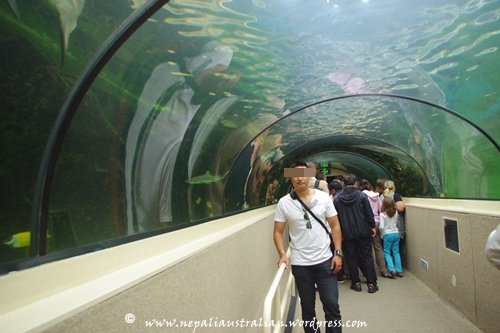
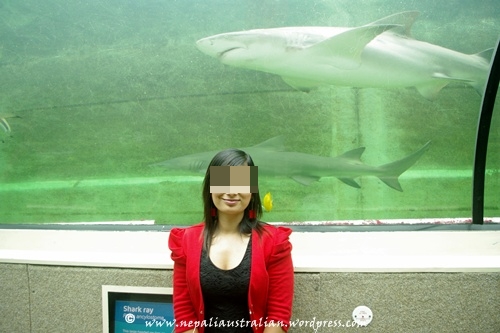
The best part of all was the underwater tunnel. There were so many sharks and sting rays that we spent more than 30 minutes looking at them.  I felt really excited when a three-metre shark or giant sting ray glided silently above me :).

Luckily we were there when they had shark feeding as well where one of the keepers told us many things about the sharks and sting rays in the tank.

 A few facts I learnt that day.

  • Opened in 1988, Sydney Aquarium is one of the largest aquariums in the world.
  • Six million litres of water house this varied and colourful exhibit.
  • They have beautiful dugongs – 2 of only 5 on display anywhere in the world
  • Almost every Australian sea and major waterway is represented at the Sydney Aquarium: from the open sea to the Great Barrier Reef, to the Australian Bight and Sydney Harbour, to the Murray-Darling river system, the rivers of the Far North, mangrove habitats, rocky shores.
  • Some of its displays are contained in the main exhibit hall, others in one of the three large floating oceanariums.
  • A large purpose-built tank called Mermaid Lagoon is where the rather adorable Dugongs Pig and Wuwu call home. Most Dugongs spend their time in warmer northern Australian waters and they are a strictly marine herbivores.
  • Little Penguins are on display in a large tank replicating their natural habitat which stretches around southern Australia from northern NSW all the way to southern WA, and can include Sydney Harbour.
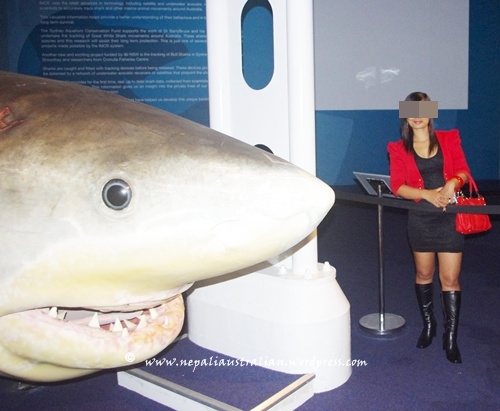
  • There are a number of shark exhibits at the aquarium. Together they tell the story and life cycle of sharks and also their relationship with man.

The aquarium is great for kids (and adults) who can appreciate the cool things the world can offer like sharks and turtles. I really enjoyed my day out and if you ever visit Sydney, I think this should be one of the places to go on your list.

For more information on the aquarium, please visit their site

http://www.sydneyaquarium.com.au/