Category Archives: Nepal

Chana chatpat

Chana chatpat is a snack I used to love while growing up in Kathmandu. They were usually sold by street vendors and I used to love it. Now every time I go back, I feel like having it but am scared of getting sick so I decided to try to make my own home made Chana chatpat. I am happy with the result even though it might lack the touch of the street vendor.

I think it is healthy and definitely tasty snack perfect for anytime.

Ingredients

  • 1 cup puffed rice
  • ½ cup chickpeas, soaked (I used canned)
  • 1/2 cup aloo bujiya (bought a pack from Indian grocery store)
  • 1 medium sized onion, finely chopped
  • 1 medium sized tomato, finely chopped
  • 1 green chilli, finely chopped
  • 1 teaspoon chili powder
  • 1 tablespoon mustard oil
  • 1 table lemon juice
  • 2 tablespoon finely chopped coriander leaves
  • 2 teaspoons of chat masala (salt if chat masala not available)

chana chatpat (1)

 Method

  • Mix puffed rice, chopped onion, chickpeas, chopped tomatoes, chilli powder, green chilli, aloo bujiya , coriander leaves in a bowl.

chana chatpat (2)

  • Now add lemon juice and oil and mix it well.
  • The chana chatpat is ready.
  • I served mine in a paper cone like the street vendors in Kathmandu, you can just serve in a plate or bowl.

chana chatpat (3)

Note : It needs to be consumed immediately otherwise the puffed rice will go soft and it won’t be nice and crunchy as it is supposed to be.
Hope this will bring back your childhood memories as well 🙂

Take care,

M from nepaliaustralian

XOXO


Janku (Pasni for older people)

In Newari culture Janku (also known as Buda Janku or Pasni, different from pasni for baby  ) is a celebration when a person reaches a certain age. If it’s a couple, the date is determined by the age of the husband and the couple will celebrate the Janku together irrespective of the wife’s age at the time. If it is a single person, then it is according to their birth date.

There are five Jankus performed during the lifetime of the person if s/he happens to live to be 106 years old.

The first Janku is when a person is of 77 years, 7 months and 7 days where they are worshipped as an aspect of the sun. This is called BHIMRATHAROHAN where the grandsons carry the person’s chariot on their shoulders and visit temples of god and goddess.

The second Janku is at the age of 83 years, 4 months and 4 days where they are worshipped as an aspect of the moon. This is called CHANDRARATHAROHAN as it is believed that a person has seen 1000 full moons in their life and their prayers are directed towards the moon.

The third Janku is performed at the age of 88 years, 8 months and 8 days, which is called DEVRATHAROHAN and they are worshipped as an aspect of god. This time too the grandsons pull the chariot and visit temples. While entering to home the persons chariot is entered from the window of the house.

The forth Janku is at the age of 99 years, 9 months and 9 days, which is called DIVYARATHAROHAN.

The final one is at the age of 105 years, 8 months and 8 days old, called MAHADIVYARATHAROHAN.

Janku is celebrated at such defined ages for two reasons. “Newari texts mention that the particular ages for the ceremonies mark inauspicious times in a person’s life, times when even the smallest hurdle might pose a serious threat to one’s life. The various rituals are performed in order to please particular deities to help the person overcome those problems”.

Before the invention and availability of modern medicine the average life expectancy of the people was 60 to 65 years and reaching the age of 77 and beyond was like getting a new lease on life. The second reason for a Janku is that after their Janku ,they are considered as god or goddess and the title of Thakali is given the as they are one of the senior members of the community.

Few weeks ago, my Ma (maternal grandmother) celebrated her second Janku. I wish I was in Nepal for that as I missed the first one too but I am so glad to see that she has one great grandson with her.

My Ma has four kids, one of them being my mum and all of them are married. She has 10 grand kids and 6 great grand kids but unfortunately all of the grand kids live overseas so it was so rare for a great grand kid to be around during that time.

Luckily my brother, SIL and nephew were visiting Nepal and they were there to celebrate the big occasion.

During each Janku, the person is dressed like a bride or groom and takes seven steps before getting on the Rath (chariot). The sons and grandsons carry them on the chariot take them around town with family and relatives following the procession.

Women shower them with flowers and vermilion powder and when they reach their home they are given Sagun wishing them a long healthy life.

All the relatives and even distant ones visit them to receive their blessings and have a Bhoj (party) after the completion of all the rites and rituals.

Till next time, take care

M from nepaliaustralian

XOXO
Prabal Gurung Resort 2015

Inspired by a show of the British artist Matthew Stone’s work at The Hole gallery, Prabal Gurung ( my favourite designer), named his latest Resort collection: Unconditional Love. He said he approached his striking new Resort collection as if it were a “one-stop shop from morning to evening”. The idea, he explained, was prompted by all the traveling he’s been doing to trunk shows in places as far-flung as Singapore and Toronto.

I love everything from this collection, from tees and sweatshirts to floor-length gala dresses with prints or jacquards designed to evoke Stone’s brushstrokes. The prints and jacquards came in vivid shades of red or blue, sometimes mingled together, and they turned the clothes into moving canvases.

Here are some of my favourite from the collections..And looks at those choose, love love love.

View the rest of the collection .

Apart from his latest collection, he is definitely making waves around the world and doing a great job.

Take care,

M from nepaliaustralian

XOXO

Dakshinkali Temple

Dakshinkali Temple is located 22 kilometres outside Kathmandu and the last time when I was in Nepal, I went there with my parents.

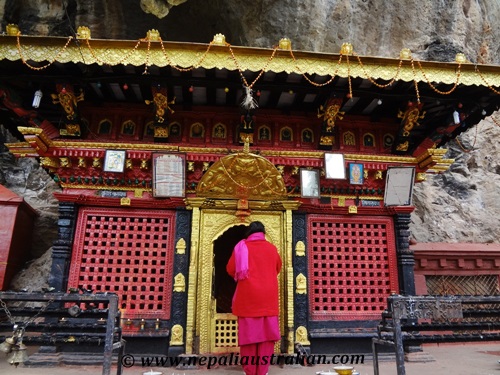
Dakshinkali Temple is one of the most famous and popular Hindu shrines dedicated to Goddess Kali, “The Black One”. Scowling and emaciated, with protruding tongue and red eyes, decked with a necklace of skulls, Kali is just another form of the great goddess Durga. Kali is believed to be extremely powerful and accomplished. In Hindus holy Vedas and Purans, it is written that she has a blue body with three eyes, each eye is made up of the Sun, the Moon and fire respectively.

The drive from our place to the temple was very scenic once we crossed the ring road area. The roads were windy but I loved the view of old houses and wide green fields.

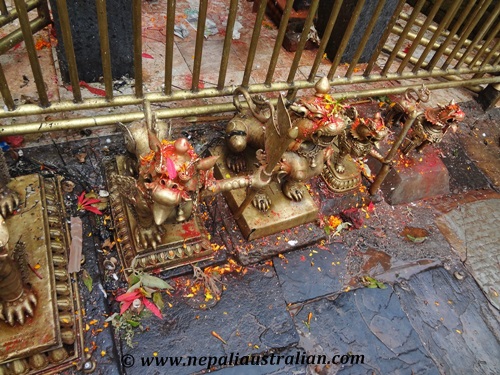
Legend has it that Daksinkali came into existence after goddess Kali herself appeared in the dream of a Malla king, the ruler of 14th century Nepal. Goddess Kali then commanded the king to build a temple dedicated to her in a very unknown and strange place. As the command was about to be followed, a person said that he already had a stone image of the goddess kali in the same place where the goddess  commanded the king to build the temple. The idol was then left open to the elements as she had commanded and over her head a gilded canopy was erected with four golden serpents. Also images of lord Ganesh, seven Asthamatrikas and a stone Bhairav were erected near her image.

Dakshinkali  (2)

Dakshinkali temple is of great importance among those who need her blessing and also among the blessed ones. There is a strong belief in the ability of the goddess to make wishes come true.

Dakshinkali  (3)

To satisfy the blood-lust of the goddess, pilgrims take a menagerie of chickens, ducks, goats, sheep, pigs and even the occasional buffalo up the path to the temple to be beheaded and transformed into cuts of meat by the temple priests, who are also skilled butchers.

Dakshinkali  (1)

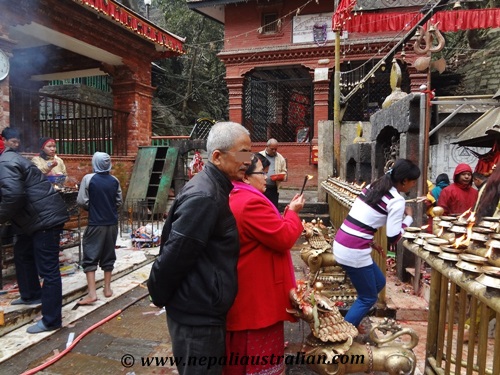
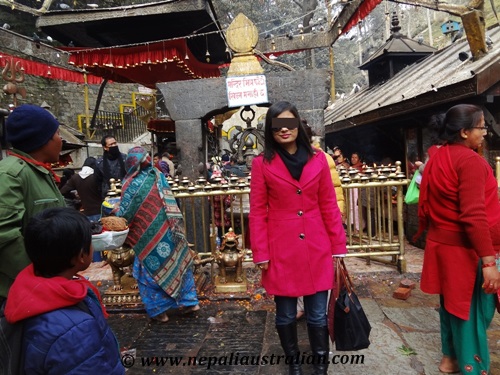
We went there on the weekdays so it was not busy. It took us 10 minutes for our puja and from there we went to another temple on the top of the hill which is called the Mata temple.

Dakshinkali  (4)

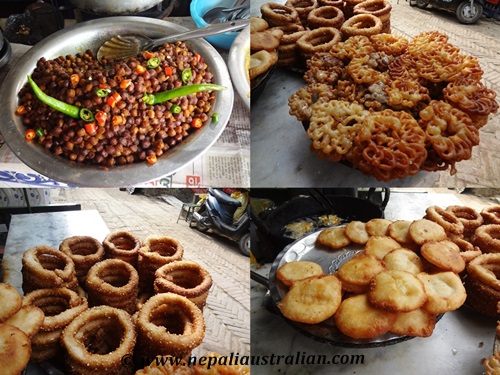
After puja, we went to one of the local restaurants and had tea and freshly prepared sel, jeri, and malpuwa. Just writing about it, I am salivating as it was really good.

Dakshinkali  (5)Dakshinkali  (6) Dakshinkali  (7) Dakshinkali  (8) Dakshinkali  (10)

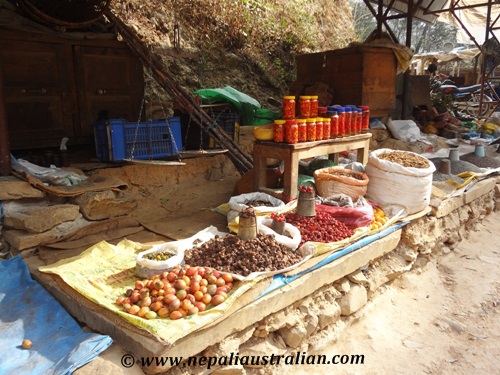
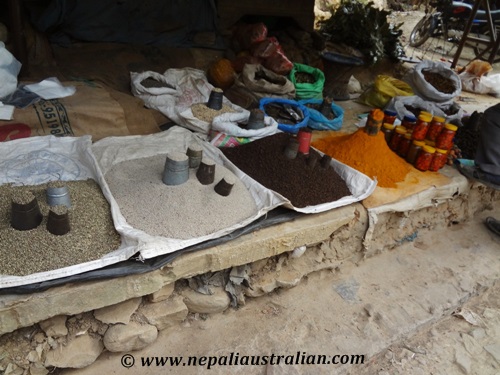
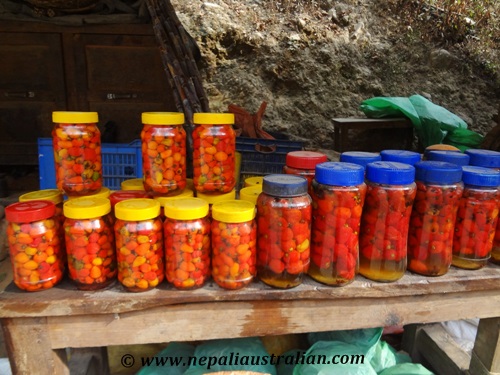
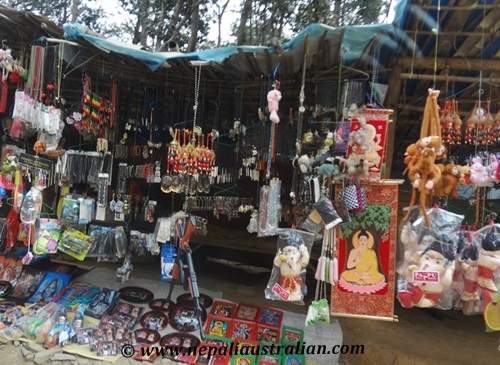
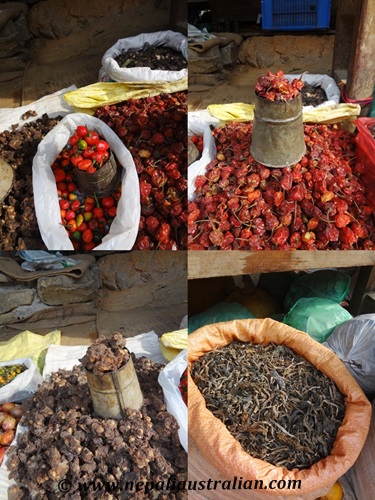
After that my mum did a quick shopping at the local market there as they were selling gundruk, kafal and other items.

Dakshinkali  (9)

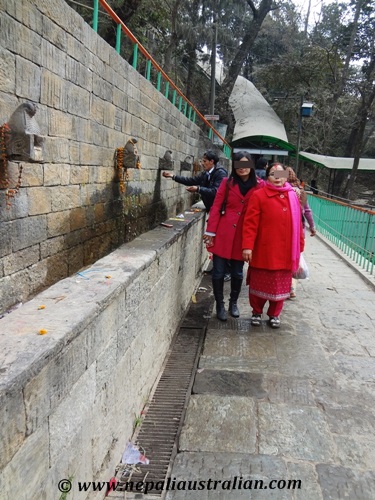
On the way back home, we also stopped at the Sheka Narayan.

Dakshinkali  (12)Dakshinkali  (11)Dakshinkali  (15)

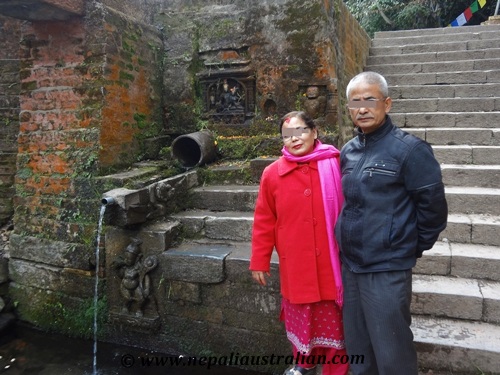
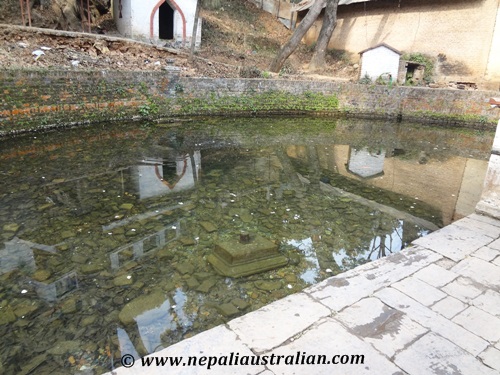
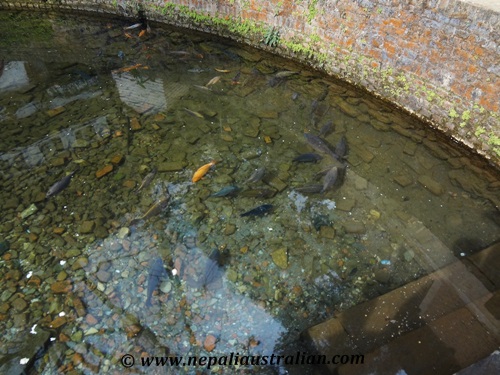
There is temple on the top and a pond filled with crystal clear water. The pond has different types of fishes swimming around. There was a guy selling a bag of bread to feed the fish. It was a really nice and quiet place compared to Dakshinkali Temple.

Dakshinkali  (13) Dakshinkali  (14)

Every time I visit places like this, I feel really happy to see all the old Nepali architecture and idols of god which has been preserved from ages past. If you are in Kathmandu, it is a nice place to go for a day trip.

Take care,

M from nepaliaustralian

XOXO

Kwati: Nepali mixed bean soup

This is a guest post I wrote for , Chai- A cup of life, amazing blog I have been following for a while. Thank you so much for the opportunity and sharing the post here.

I would like to introduce you to M who writes her blog called ‘Nepali Australian‘. M is a Nepalese born Australian living in Sydney, an IT Business Analyst who loves blogging, travelling and fashion! We have been following each others blogs for some time now and I love reading about her thoughts, the Nepalese way of life and of course her life in Sydney. Her writings have been published in magazines, newspapers and she has even held her own Nepali Australian ‘Blog Awards 2013′, (which Chai a Cup of Life received an award for- thank you!) Today she is sharing a traditional Nepalese dish called ‘Kwati’. Here it is: 

It is really cold in Sydney these days. It is supposed to be autumn but it feels like winter already so I am always looking to cook warm meals for dinner. In Nepal, they have food for every season and Kwatiis especially made during rainy and cold season and is a very popular Nepali soup. Kwati is a traditional Nepalese dish which is a thick stew of several kinds of beans. It is high in protein so it is considered good to be given to sick people to gain strength.

kwati (10)

This soup is  made during the festival JanaiPurnimain Nepal. Kwati is normally a mix of 9 beans namely, black eye peas, cow peas, black lentils, chickpeas, adzuki, soybeans, mung dal, green peas and favas. But we can use any beans and pluses you have to make this soup. Luckily for me, I found a pre-mixedkwati pack in a Nepali grocery store.

Some people like to sprout it before making it into a soup but I just soaked it overnight and made the soup without sprouting.

Ingredients

  • 200 gm Kwati Mix
  • 1 medium onion sliced
  • 2medium tomatoes diced
  • 1 tablespoon of ginger garlic paste
  • 1 teaspoon of turmeric powder
  • 1 tablespoon of red chilli powder
  • 1 tablespoon of garam masala powder
  • 2 tablespoons of oil
  • 3 cups of vegetable /chicken stock
  • A few bay leaves
  • Salt to taste
  • 2 teaspoons of ghee
  • 1 teaspoon jwanu (Lovage)

kwati (5)

Steps

  • Wash and soak the Kwati mix overnight and drain the water.

kwati (11)

  • In a pressure cooker, heat oil and season with turmeric powder and bay leaf. Add the chopped onion and fry until it turns golden brown.
  • Add ginger garlic paste, salt, red chilli powder, garam masala powder and fry for a minute or two.

kwati (2)

  • Add chopped tomatoes and cook until the tomatoes are soft. Make them into a paste.
  •  Add the soaked Kwati mix to the pressure cooker, mix well and add vegetable /chicken stock and cook until 5-7 whistles or until you can smell the beans.

kwati (3)

  •  Let it cool in the pressure cooker before you open the lid. As there are different types of beans, test the big ones like broad beans to check if it is cooked properly. The beans must be tender on touch. If it is not cooked enough then press again.

kwati (4)

  • In a pan, heat the ghee.

kwati (7)

  • Once ghee is hot, add jwanu(lovage)and fry for 30 seconds until it is dark brown in colour.

kwati (8)

  • Pour this into the pressure cooker with kwati and mix well.

kwati (6)

  • You could add more water/vegetable /chicken stock depending upon how thick you want the soup.

kwati (9)

P.S : If you are not into vegetable soup, you could add cooked/boiled  meat into the soup as well. Enjoy a tasty and healthy soup!!