Category Archives: Nepal

Pushpa Basnet: Pride of Nepal

Every year CNN Heroes is organised to honour individuals who make extraordinary contributions to humanitarian aid. In 2010, Anuradha Koirala not only got nominated for this prestigious award but won the award for her contribution to rescuing victims of girl trafficking in Nepal. This made every Nepali, around the world, proud.

Now in 2012, Nepal can be proud again for another extraordinary and selfless person. Pushpa Basnet, has been nominated for this award.

When I started to write this article, I read many interviews of Pushpa Basnet and after reading what CNN had put together after working with Pushpa Basnet for 3 months, I thought I would just share that as I couldn’t do a better job for sure.

So here is the story from the website.


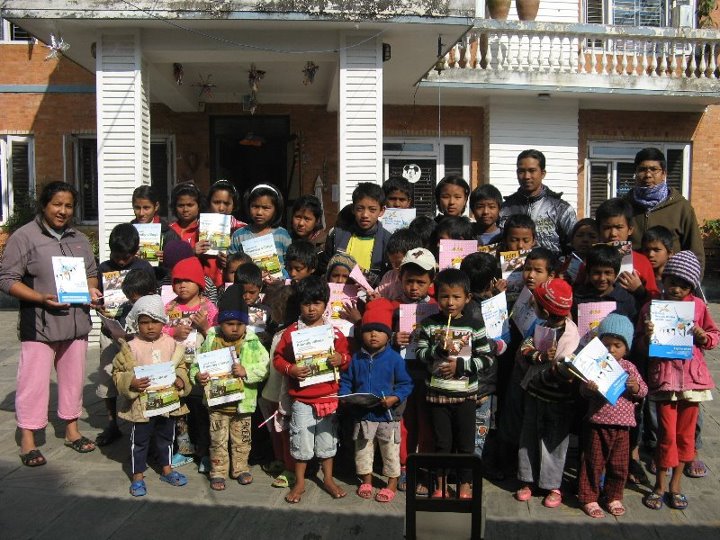
Pushpa Basnet doesn’t need an alarm clock. Every morning, the sounds of 40 children wake her up in the two-story home she shares with them. As she helps the children dress for school, Basnet might appear to be a housemother of sorts. But the real story is more complicated.All of these children once lived in Nepal‘s prisons. This 28-year-old woman has saved every one of them from a life behind bars.

 Nepal is one of the poorest countries in the world — according to UNICEF, 55% of the population lives below the international poverty line — so it lacks the social safety net that exists in most Western nations. Space is extremely limited in the few children’s homes affiliated with the government.So when no local guardian is available, an arrested parent often must choose between bringing their children to jail with them or letting them live on the streets. Nepal‘s Department of Prison Management estimates 80 children live in the nation’s prisons.


“It’s not fair for (these) children to live in the prison because they haven’t done anything wrong,” said Basnet, who started a nongovernmental organization to help. “My mission is to make sure no child grows up behind prison walls.” Basnet is one of several in Nepal who have started groups to get children out of prison. Since 2005, she has assisted more than 100 children of incarcerated parents. She runs a day care program for children under 6 and a residential home where mostly older children receive education, food, medical care and a chance to live a more normal life.

Since 2005, Pushpa Basnet has assisted more than 100 children of incarcerated parents.”I had a very fortunate life, with a good education,” Basnet said. “I should give it to somebody else.” Basnet was just 21 when she discovered her calling, she said. While her family ran a successful business, she was studying social work in college. As part of her studies, she visited a women’s prison and was appalled by the dire conditions. She also was shocked to discover children living behind bars.One baby girl grabbed Basnet’s shawl and gave her a big smile.
“I felt she was calling me,” Basnet said. “I went back home and told my parents about it. They told me it was a normal thing and that in a couple of days I’d forget it. But I couldn’t forget.” Basnet decided to start a day care to get incarcerated children out from behind the prison walls. While her parents were against the idea at first — she had no job or way to sustain it financially — eventually they helped support her. But prison officials, government workers and even some of the imprisoned mothers she approached doubted that someone her age could handle such a project. 

“When I started, nobody believed in me,” Basnet said. “People thought I was crazy. They laughed at me.” But Basnet was undaunted. She got friends to donate money, and she rented a building in Kathmandu to house her new organization, the Early Childhood Development Center. She furnished it largely by convincing her parents that they needed a new refrigerator or kitchen table; when her parents’ replacement would arrive, she’d whisk the old one to her center. 

Just two months after she first visited the prison, Basnet began to care for five children. She picked them up at the prison every weekday morning, brought them to her center and then returned them in the afternoon. Basnet’s program was the first of its kind in Kathmandu; when she started, some of the children in her care had never been outside a prison. 

Two years later, Basnet established the Butterfly Home, a children’s home where she herself has lived for the past five years. While she now has a few staff members who help her, Basnet is still very hands on.”We do cooking, washing, shopping,” she said. “It’s amazing, I never get tired. (The children) give me the energy. … The smiles of my children keep me motivated.” 

Coordinating all of this is no easy task. But at the Butterfly Home, the older kids help care for the younger ones and everyone pitches in with household chores. The atmosphere feels like an extremely large family, a feeling that’s fostered by Basnet, who smothers the children with love. The children reciprocate by calling her “Mamu,” which means “Mommy.” “I don’t ever get a day off, but if I [didn’t] have the children around me, it would be hard,” she said. “When I’m with them, I’m happy.” 

All the children are at the Butterfly Home with the consent of the imprisoned parent. When Basnet hears about an imprisoned child, she’ll visit the prison — even in remote areas of the country — and tell the parent what she can provide. If the parent agrees, Basnet brings the child back.She is still eager, however, for the children to maintain relationships with their parents. During school holidays, she sends the younger children to the prisons to visit, and she brings them food, clothing and fresh water during their stay. Ultimately, Basnet wants the families to reunite outside prison, and 60 of her children have been able to do just that. 

Parents like Kum Maya Tamang are grateful for Basnet’s efforts. Tamang has spent the last seven years in a women’s prison in Kathmandu. When she was convicted on drug charges, she had no other options for child care, so she brought her two daughters to jail with her. When she heard about Basnet’s program, she decided to let them go live with her. “If Pushpa wasn’t around, (they) could have never gotten an education … (they) would have probably had to live on the streets,” she said. “I feel she treats (them) the way I would.” Tamang’s oldest daughter, Laxmi, said she can’t imagine life without Basnet.”My life would have been dark without her,” said Laxmi, 14. “I would’ve probably always had a sad life. But now I won’t, because of Pushpa.” 

In 2009, Basnet started a program to teach the parents how to make handicrafts, which she sells to raise money for the children’s care. Both mothers and fathers participate. It not only gives them skills that might help them support themselves when they’re released, but it also helps them feel connected to their children. “Often, they think that they’re useless because they’re in prison,” Basnet said. “I want to make them feel that they are contributing back to us.”Making ends meet is always a struggle, though. The children help by making greeting cards that Basnet sells as part of her handicraft business. In the past, she has sold her own jewelry and possessions to keep the center going. 

Her biggest concern is trying to find ways to do more to give the children a better future. She recently set up a bank account to save for their higher educations, and one day she hopes to buy or build a house so they’ll always have a place to call home. Their happiness is always foremost in her thoughts.”This is what I want to do with my life,” she said. “It makes me feel (good) when I see that they are happy, but it makes me want to work harder. … I want to fulfill all their dreams.”

What an amazing woman. Please vote for her and help her win the CNN Heroes award and support a great cause.

Ghoda Jatra

As always, no month passes in Nepal without a festival and today it is Ghoda Jatra (Festival of horses).

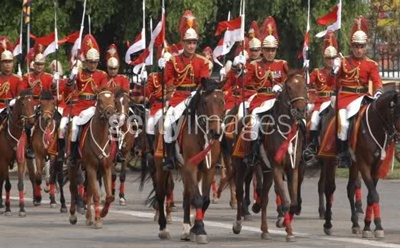
On this day there is a grand parade in Tundikhel, a large open ground in the middle of the city. It is believed that this festival began after the Kathmandu people buried a demon under the soil of Tundikhel show grounds. They say that he may rise again and cause terror in the world if he is not trampled on by horses each year. So every spring, this victory over evil is celebrated by organizing processions and grand display of show jumping, motorcycling feats, parachuting, aerobatics, bicycle races and gymnastics. The president, prime minister, ministers and other official along with, the Living Goddess Kumari, and thousands of people from all over the country observe this Jatra.

After this great function of horse ridding in Kathmandu, there is the Khat Jatra of the eight sister goddesses. The Newars of Kathmandu city observe this day as a family get together or ‘Pachare’. The chariot of Goddesses Lutidevi, Swetakali, Kankeshwori and Bhadrakali is brought to Ason, and the family get together of eight sister goddesses also takes place, as legend says.

At Bal Kumari area, in Patan during Ghode Jatra festival, a horse is intoxicated with spirit and an equally drunk person in a traditional Newari attire rides it and the townspeople chase the intoxicated animal through the streets amidst much cheering and clapping. This race is thought to have been commenced in the olden times by a certain king of Patan to give a better show in comparison to Tundikhel’s parade, as in those days no one from Patan could attend the show in Kathmandu as it was a rival kingdom, a time when Kathmandu valley was divided into three kingdoms of Kathmandu, Patan and Bhaktapur.

How much time should you spend in the shower?

Coming from a country like Nepal, I do appreciate getting an abundance of clean drinking water and hot water for a shower.

Even in the urban areas in Nepal not all people have availability of constant running water in their homes. The Nepal Water Supply Corporation supplies drinking water to the homes in urban areas but even there people are lucky if they can get drinking water a couple of times or so in a week. They still need to store this water as it has to last them until the next time the water is released in their area. In some areas where piped water is not available, due to technical reasons or unavailability of water, the water is distributed by water tankers, so there the people have to collect the water from the taps on tankers and use that water for the rest of the week. In summer months it is normal not to get water for many days as the dam level is low and the supply of water to even urban areas is severely disrupted.

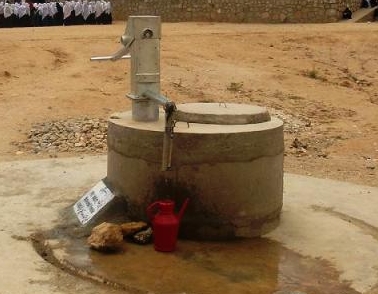
I was lucky that the house I grew up in Nepal had a well in front of it which made sure that we always had enough clean water to drink, shower and wash cloths with. When my parents moved away from joint family into their own house, we had a well built in our yard and a big tank installed to collect water in, so we always had plenty of water.

But I have seen lots of people in Nepal struggling due to the unavailability of water. Most people these days buy water at least once a month, this includes my in-laws as well. So they use water with great care.

In Australia, it is really difficult for people to believe that so many people don’t have access to clean drinking water and use water from ground wells or ponds to bathe and wash cloth. This made me curious to know how much time we normally spend having a shower.

I myself am guilty of taking hot showers in the winter and spending more than 5 minutes under the shower with a constant flow of water running over me as it helps me relax. I know that I am wasting water but I am trying hard to mend that habit.  Normally I shower every day in summer and every other day in winter. These showers are not too long, may be 5-10 minutes max. But on weekends when I take a shower, I take my time and enjoy the hot water so these can go up to 30 minutes max. I am also guilty of filling a bathtub with hot water and relaxing in it. I can’t imagine how much water I am wasting by showering/bathing so long but I really feel good after these long showers.

I find that most men don’t take long showers, most likely because they have short hair :-D. This is my observation from watching how long my dad, brother and now my husband takes in the shower. But I know people who spend more than one hour every time they take a shower. I had a flatmate once, who used to spend at least 2 hours in the shower every time. It used to get really annoying when one of us had to use the toilet. Even when we talked to her about it; she used to say that it is her habit and she couldn’t change it.

When I talk to my friends and colleagues about their shower habits, most of them seem to think 30 minutes for a shower is a reasonable time. But I am sure if I talk to anyone from Nepal or a country where there is not enough clean water available even to drink; they will have a different opinion.

Since I got married, my husband reminds me, constantly, to save water and I am making an effort to do so as much as possible. He hates it when I have the tap running while brushing and reminds me that there are people for whom the water that I waste would last months.

So what is going on in the shower? How long do YOU shower?

Titaura

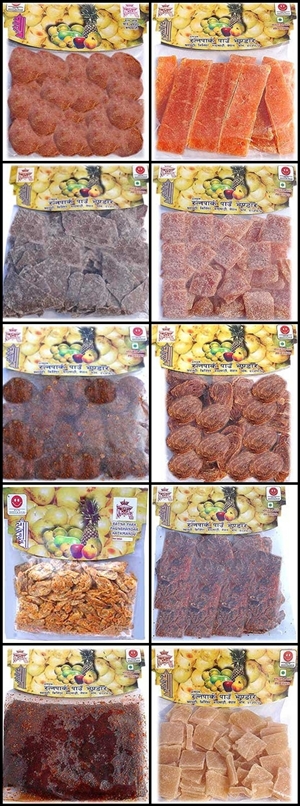
Anyone who is from Nepal already knows what Titaura is. Just thinking about it, my mouth is salivating already. For the rest of you who don’t know, Tiatura is sweet, sour, salty or hot or mixture of all those made from fruits like lapsi (pronounced “Lopsy”) which is also known as Nepali Hog Plum or scientific name Choerospondias axillaries. Titaura is also known as Paun in Nepal Bhasa.

Titaura seems to be famous among teenage girls so it is also known as lyase paun. In Nepal Bhasa the word lyase means young girl .

Lapsi is found in Nepal in the hills and they bloom in spring which is around March /April. Lapsi grows in a tree and it has green cover with flesh and a single seedstone inside when it is ripe.  Lapsi by itself tastes sour but when they make Titaura, they boil lapsi and take the seedstone out . The gluey flesh is mixed with ingredients like sugar, chilli, salt, other spices depending upon what type of Titaura need to be made. Then it is dried in the sun before packing in a plastic pouch to sell it.

One of the most famous shops in Kathmandu for Titaura is Ratna Park Paun bhandar. The Tiatura from Paun bhandra is sold every where in Nepal form corner shop to supermarkets. These days you also find Titaura made from mango, tamarind, dates, lemon, gooseberry and lime.

For the last few years, we have been lucky to get Titaura in Nepali /Indian grocery shops in Sydney as well. It does cost almost 100% more but it is worth the price for the treat sometimes. I don’t buy it  often but when I do, I love it. I love the sweet ones a lot. Not a big fan of salty and hot ones.

Normally in Nepal, it is believed that these Titaura are not made in hygienic way and are discouraged by parents but you will find people of all age enjoying it nevertheless.

If you ever get a chance, do try it out. You may like it. 🙂

Holi / Phagu Purnima

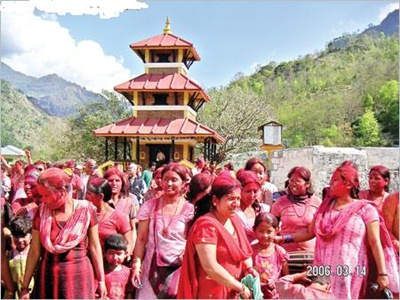
Holi is one of the many festivals celebrated by Hindus in Nepal. It is also known as Phagu Purnima which is a festival of colours.

Holi is celebrated in two days in Nepal, today as Phagu Purnima (except in Terai)  and tomorrow in Terai region as Holi.

Chir of Holi

People install  Holi pole, “Chir’, a bamboo pole, fringed with strips of cloth representing good luck charms indicating the arrival of the Holi festival. This Chir pole is erected a week before the Holi festival is celebrated at all the three heritage squares of Nepal namely Kathmandu Durbar Square, Bhakatpur Durbar Square and Patan Durbar Square. Once the erecting is done, people throw red vermillion powder in the air as the symbol to mark the beginning of  Holi, a time for fun and frolic. It is said to symbolize the tree on which lord Krishna hung the milkmaids’ garments while they were bathing. At the end of the festivities the Chir is taken to a bonfire.

Here are some of the legends behind Holi (source: internet)

There is a popular legend behind the installation of Chir. The story is again about the mischievous nature of Lord Krishna who loved to play pranks with the milkmaids or gopis. Playful as he was, it is said that once he seduced all the local girls with his dashing good looks. He then danced with them all and when they were fully engrossed in him, then he thought they were ripe for a tease. He doused them in coloured water and stole all their clothes while they were bathing in the water of river Yamuna. Naughty Krishna then hung their clothes on a tree to bug them. Chir symbolizes that very tree.

Holika gets burnt in the fire

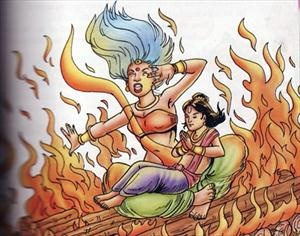
Another myth following Holi, reveals that a fiend named Holika together with her brother, an atheist king by the name of Hiranyakasyapu conspired to kill his son Pralhad because Pralhad was an ardent devotee of Lord Vishnu. But their attempts always failed for Lord Vishnu protects those who love him. Finally, Holika who having received a blessing from Lord Bramha to be immune to fire, jumped in a bonfire with Pralhadin her lap. But Brahma’s blessing could only be used for

Colours for Holi

good purposes and so Holika was consumed by the fire where as Pralhad was saved by the grace of the Gods. Thus, Holi is said to be celebrated to rejoice Holika’s extermination and the traditional bonfires are believed to commemorate her death.

Yet another legend says that there was an Ogress known as Putna. Lord Krishna’s devil uncle Kansa seeked the help of Putna to kill infant Krishna by feeding him poisonous milk.Putna disguised herself as a simple and pious woman and treacherously fed baby Krishna with her poisoned breast. Lord Krishna, however, sucked her blood which revealed the monster behind that pious woman and laid her to death.

On the night before Holi, there is a practice to burn an effigy of Putna – the Ogress who nearly killed Lord Krishna. The tradition is symbolic of victory of divinity over demonic forces. It also shows the end of winter and darkness – as typified by Putna.

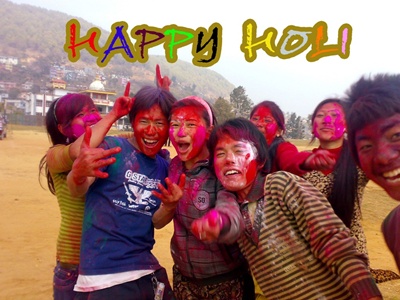
I used to love Holi while growing up. It used to be a few days off from school and we loved playing will lola (water filled balloons) and abeer (colours). It was time of fun and frolic. People spent the day smearing coloured powder all over each other’s faces, throwing coloured water at each other, having parties, and dancing.

Lola

The only drawback of Holi in Kathmandu is for young girls and women who get lola thrown at them everywhere they go. I remember being bombarded by hundreds of balloons from someone’s roof top on the way to school or on the way back. It was days before the real Holi and it used to piss me off. Can you imagine, you are going somewhere and you are drenched with water from these balloons? Also as you know clean water is not available easily in Nepal so I am not even sure, what kind of water they used. I used to fight with these people who spoiled the real meaning of Holi.

If you are in Nepal, hope you are having a great time.

Sydney is celebrating Holi at the end of the month so hoping to go and have some fun then.

Happy Holi everyone !!!

Happy Holi