Category Archives: Nepal

Everything about Nepal

How to pronounce in Nepal Bhasa

How to pronounce in Nepal Bhasa

Vowels

as in as in
a err e ten
aa are ai height
i it o owe
ii eat au ouch
u full ann French
uu fool ah awe

nn as nasalized

 Consonants

as in as in
ka cup pha fun
kha loch ba bus
ga gull bha verse
gha shanghai ma mother
nga jungle ya yuppy
cha church ra run
chha cha la love
ja just wa won
jha vision sha shun
yann yon kha special
ta ton sa sun
tha thud ha hug
da dug ksha ox
dha dharma tra truck
na nut gya gap
pa pup  

Vowel marks illustrated with letter ka

as in as in
ka come ke keg
kaa calm kai kaiak
ki kin ko coat
kii keen kau cow
ku cook kann camp
kuu ` cool kah caw

Please click here for previous chapters.

My Special Mother’s Day

As I mentioned on my previous post, this year was my first Mother’s Day after my wedding. In my culture, you have to make the event special as it will be the first time a married daughter brings food and gifts for her mother from her home (husband’s home). If I was in Nepal, I would need to do all the preparation and make sure my mum had a great day but as I am so far away, my mother in law made sure that the ritual was done properly.

I am so happy that my in laws, mostly my MIL, made such a great effort to make sure my mum’s day was special. She did all the shopping and all the preparations and my FIL helped her a lot. Then my two BILs went and presented the foods and gifts to my mother. They also took these photos for us to see. I am so grateful and thankful for my new family for taking care of this and making sure things went great.

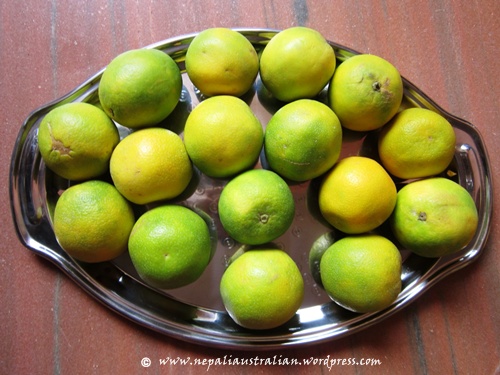
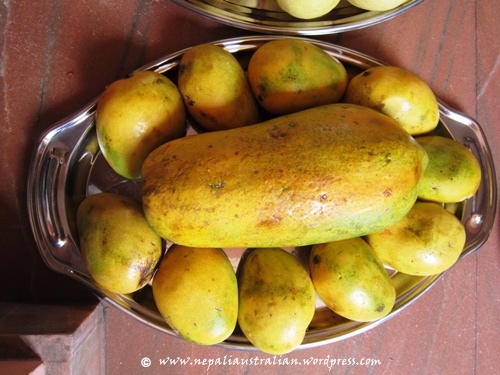
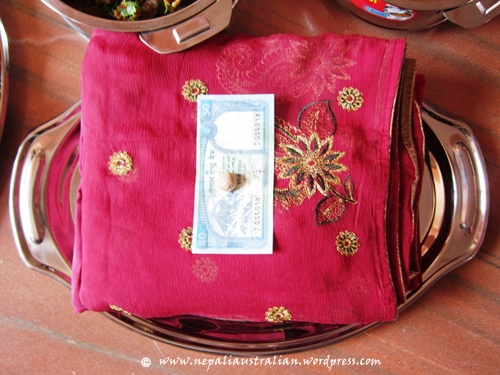
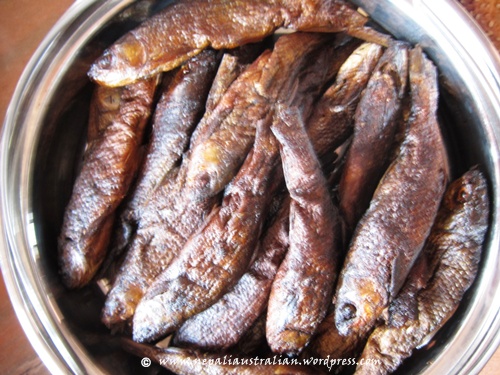
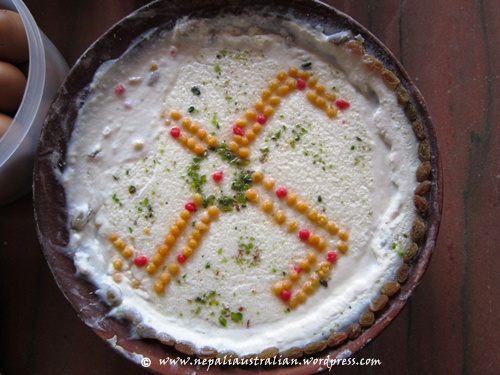
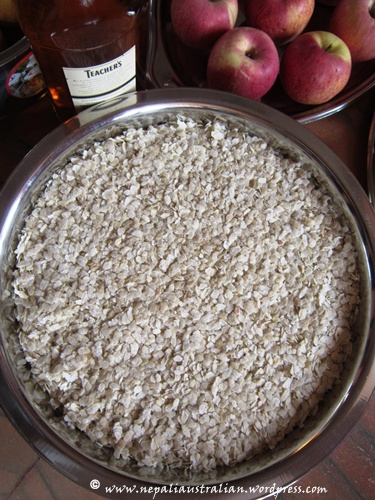
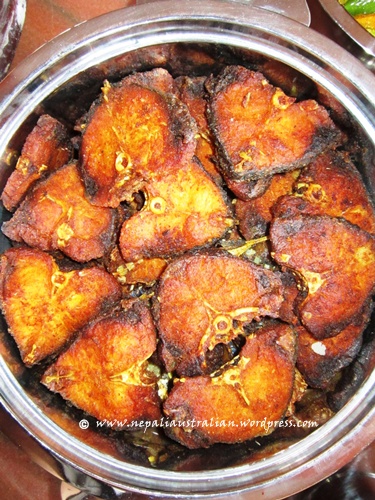
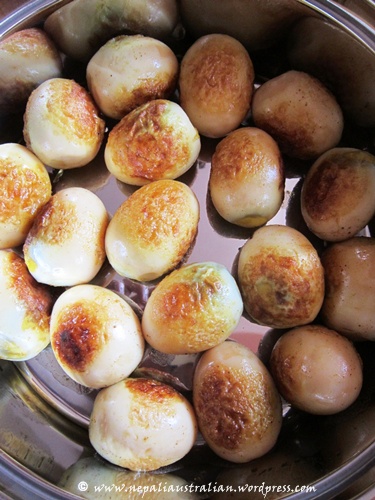
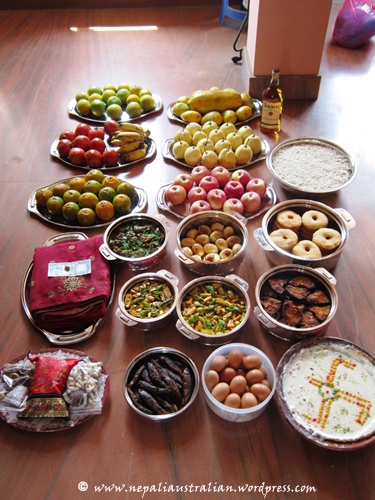
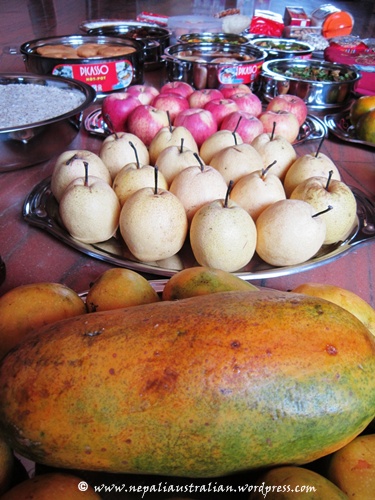
Have a look at the photos below and you can see traditional Newari Mother’s Day celebration. There are Sagun (egg, bara, whisky, fish, yoghurt and meat), also lots of fruits and rotis. It lookes so yummy. My mum also got a sari, a cake and masala. I really wish I could have been there to help prepare for it and to see the smile on my mum’s face.

Learn Nepal Bhasa

Nepal Bhasa is the native language of the Newar people. I cherished learning this language from my grandmother during my childhood. However, after she passed away, speaking Newari became painful, as it constantly reminded me of her absence.

However, after moving to Australia, my proficiency in Nepal Bhasa has waned over the years due to a lack of practice. AS, despite being a Newar, never learned the language and expressed a desire to do so. Motivated by this, I’ve decided to compile some Newari language resources here for anyone interested.

If you spot any mistakes, please don’t hesitate to correct me. I greatly value your feedback and suggestions to improve this page.

Chapter 1

English Nepali Nepal Bhasa
Hello Namastē (नमस्ते)/Namaskāra (नमस्कार Jwa-ja-la paa(ज्वजलपा)
What Kē (के) Chuu (छु)
This Yō (यो) Thwa (थ्व)
That Tyō (त्यो) Wa (वो)
Yes Hō (हो) Khah (ख)
No Hō’ina (होइन) Ma-khu (मखु)
When Kahilē (कहिले) Ga-ba-le (गबले)
Where Kahā (कहा) Ga-na (गन)
Which Kuna (कुन) Gu-gu(गुगु)
Who Ko (को) Su (सु)
Why Kina (किन) Chayaa (छ्या)
Whose Kasakō (कसको) Su-yuu (सुयु)
Whom Kasalāi (कसलाई) Sui-ta (सुइ त)
How (in what way) Kasarī (कसरी) Gay-na (गेनां)
How (to what degree) Kati (कति) Gu-li (गु लि)
Best Wishes Hārdika śubhakāmanā(हार्दिक भकामना) Bhin-tu-naa (भिन्तुना)
Welcome Swāgata cha (स्वागत छ) La-sa-ku-sa (लशकुश)
Thank you Dhanyavāda (धन्यवाद) Su-bhaay (सुभाय्)

Please click here for previous chapters.

Aama ko Mukh herne / Mata Tirtha Aunshi (Nepali Mother’s day)

As I have mentioned in many of my posts before,Nepal has a different calendar than the Gregorian calendar. So in Nepal people also celebrate Mother’s day on a different day than the western calendar. In Australia, Mother’s Day is the second Sunday of May every year but in Nepali calendar, it changes every year according to the positions of sun, moon and the planets. It falls on the last day of the dark fortnight of April or early May. This year, it happens to be on today,9 May 2013. It is commonly known as Aama ko Mukh here in Nepal. Aama ko Mukh here translates into seeing mother’s face.

When I was still in Nepal, I used to make a nice breakfast and buy my mum a small present which was the only thing that I could afford with my pocket money. My dad used to buy lots of sweets as well so that there were lots of delicacies for her to eat. Mum used to make Sagun (egg, bara) for my grandma(both dad’s mum and her mum) and we used to use the same for her as well.

In Nepal, if the children have left home/ married, they will come with presents and delicacies to spend time with their mother. The entire day is filled with festivities around the country.

Children whose mothers have already passed away visit the place called ‘Mata-Tirtha’ which is situated at about 15 km to the west of Kathmandu or some other holy place elsewhere in Nepal to make offerings to the souls of their departed mothers. Mata means mother; tirtha means a holy place. Thus, this name suggests the holy place for them to visit for making offerings to the deceased mothers once a year.

A religious festival is held at ‘Mata-Tirtha’ on the Mother’s day for a whole day. There is a legendary natural pond at ‘Mata-Tirtha’ where Nepali people pay homage to their deceased mothers. Thousands of people take a quick bath in the water flowing from the nearby stone spouts, and then they go to the holy pond to make offerings to their deceased mothers. They believe that the souls of their mothers come to this natural pond to accept their offerings on this day. Thereafter, they worship Shiva Linga located next to the holy pond.

A legend behind this day goes as follows. Shepherds used to quench their thirst with the cold water from the natural pond at the current day ‘Mata-Tirtha’ when they went to graze their cattle in a nearby forest. One day, one of the shepherds whose mother was already died happened to go to drink water from this pond she saw the image of her dead mother in the clear water of the pond. She was so excited by this that she went to every house in that village to tell them about how she had seen her mother’s image in the pond. Since then Nepali people have believed that they can see the image of their deceased mothers in the water of this holy spring. So, Nepali people from different parts of the country visit this pond on this day hoping to see the image of their departed mother. Thus, this place came to be a holy place for those who have lost their mothers. Also those who cannot go to Mata-Tirtha shower at home or take a quick dip in the water of a holy river early in the morning then offer a platter of sweets, fruits and money to a priest in the memory of their departed mother.

My MIL sent these gifts to my dad last Father’s day on my behalf

As I have describe in my previous post , in Nepal the first year of marriage is considered to be very important. So during every festival, there are things you are meant to do. This affects how you celebrate Dashain, Tihar, Father’s Day, Mother’s day and more. Last year, I had my first Father’s day after the wedding and my MIL made sure it was a special one for my dad. This year, it is my first Mother’s Day after the wedding so it will be really special for my mum. My MIL is doing everything that she can to make sure this day is memorable for my mum. I know a few details about what is going to happen but I will wait for things to happen today and will update in details about my special Mother’s day. Just so excited to Skype with my mum later and receive photos from Nepal afterwards.

So if you haven’t called you mum to wish her, do give her a call and make her smile. And to all the proud moms out there, Happy Mother’s day.

Aloo Chop

Aloo means potatoes in Nepali and this is a simple Nepali vegetarian dish.

Ingredients

  • 5 medium-sized potatoes
  • 2 onions, finely chopped
  • 2 cups gram flour (besan)
  • 3-4 green chillies finely chopped
  • 1 teaspoon of ginger paste
  • 2 teaspoons of  garlic paste
  • 1 lemon (squeezed)
  • 1 teaspoon mustard seeds
  • 1 teaspoon turmeric powder
  • 1/2 teaspoon red chilli powder
  • 1 teaspoon cumin seeds
  • A pinch of  baking soda
  • Salt to taste
  • Oil for deep frying

Method:

  • Boil the potatoes (use pressure cooker if you have one) and make a mash after peeling off the skin.
  • Add chopped onion, chillies, ginger, garlic, lime and salt and mix well. Make sure the mixture is a bit lumpy and not too smooth like a paste.
  • Heat two spoon oil and add the mustard seeds and curry leaves. When the mustard crackles, remove from heat and add to the potato mixture and mix well.

  • In one bowl, make a batter from gram flour and baking soda.
  • Add salt to taste, cumin seeds, red chilli powder and turmeric powder.
  • The batter should not be runny and should remain a bit thick.
  • Divide the potato mixture into equal sized portions, in the size of small egg.  and make a flat disc shape.

  • Dip each disc in the batter and deep fry till golden brown in colour.
  • Serve hot with achar/ketchup

You may also like :

*Momo *Aloo ko achar *Chicken chili