Category Archives: Travel

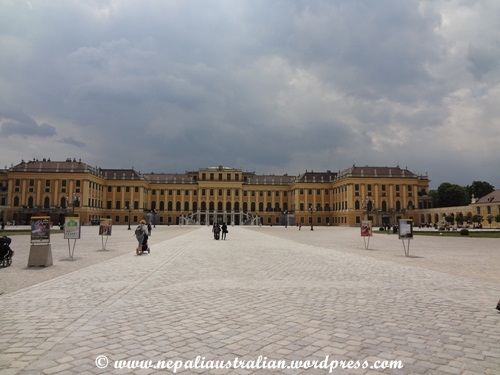
Schönbrunn Palace : Austria

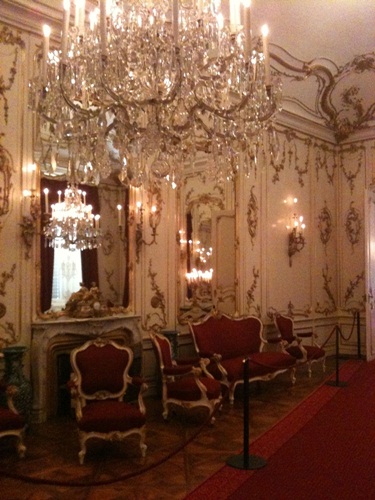
Anyone who knows much about European history knows about the important influence of the Hapsburg family. The aesthetic preferences of that family are displayed in the Schönbrunn palace and gardens that make up this amazing castle in the heart of modern Vienna.

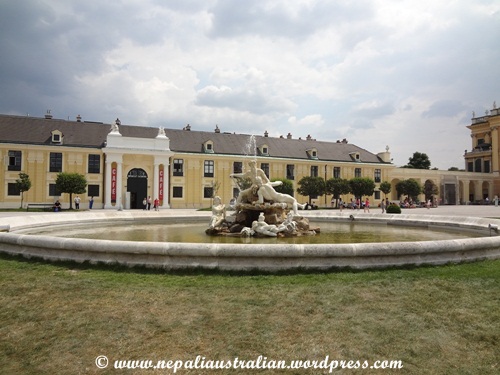
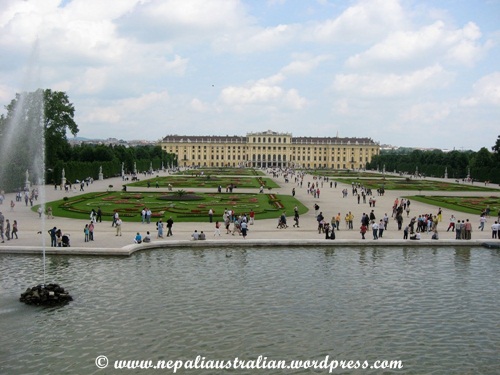
Schönbrunn PalaceAs soon as we were dropped off in front of the palace, I was in awe at its grand presence. The entrance has a long path that leads to the palace. On one side of the path, there is a fountain while the other side, servant quarters.

We were there with a local guide who was really informative and gave us lots of history behind the palace.

Despite its apparent unity of style, the complex incorporates various structural changes resulting from its long history. After World War I the palace became a museum; it was restored after damage in World War II.

Remodelling and modernization began in 1743, when the young Empress Maria-Theresa ordered that the building, one of her favourite residences, should be repaired and enlarged to accommodate the imperial household in comfort.

Schönbrunn Palace

Maria Theresa (1717-1780), archduchess of Austria, Holy Roman Empress, and queen of Hungary and Bohemia, began her rule in 1740. She was the only woman ruler in the 650 year history of the Habsburg dynasty. She was also one of the most successful Habsburg rulers, male or female, while bearing sixteen children between 1738 and 1756.

Maria Theresa was married to Francis I, Duke of Lorraine. Maria Theresa was one of the few people in her age who married for love. She loved her husband dearly and passionately. She had 16 children by him, with 11 daughters (ten of whom had the first name “Maria”) and five sons.

Her youngest daughter was Maria Antonia, better known under her French name Marie Antoinette, who would be promised in marriage to the later King Louis XVI of France. Marie Louise who became Napoleon’s second wife, bearing him a son, was a great granddaughter of Empress Maria Theresa through her father, and thus a great niece of Marie Antoinette.

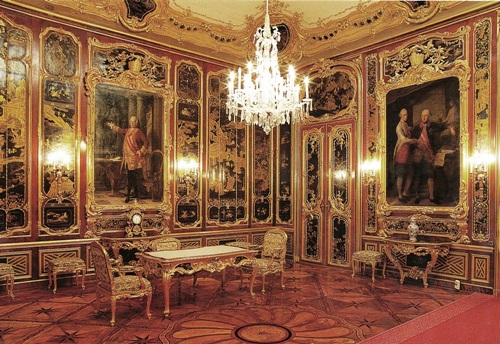
There are 1441 rooms in the palace but in the tour we were allowed in around 40 rooms. Every room have its history and is different that second room. There are so many photos of the children and family hanging everywhere. We went to a hall where Mozart himself at 6 years old played a concert in, then a bedroom Napoleon Bonaparte slept in, and lastly a ballroom where JKF conducted foreign relations. The décor of each room was fabulous.

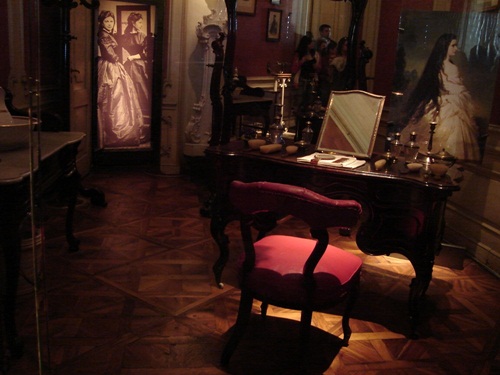
Maria Theresa was a fashionista so there are lots of beautiful gowns on display as well as her long hair preserved.

Unfortunately we cannot take photos inside but this is what I can find online.

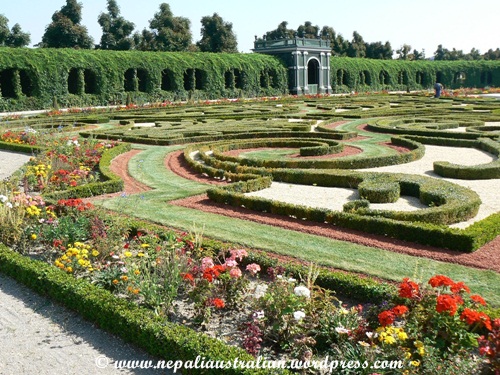
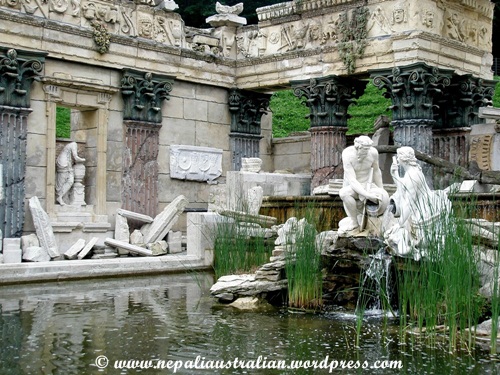
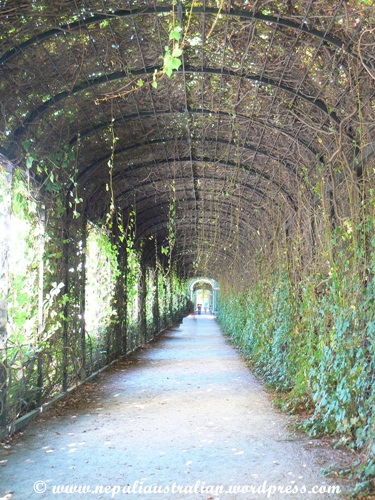
From the palace we went exploring the garden which was filled with original huts, orchard and pasture. The palace and gardens illustrate the tastes, interests, and aspirations of successive Habsburg monarchs. The grounds were beautiful, and the mazes and labyrinths are lots of fun. The garden is huge with alleys with trees whose branches and crowns which are cut in line by extraordinarily talented gardeners. The pruning and shaping must take an enormous amount of work.

Schönbrunn Palace

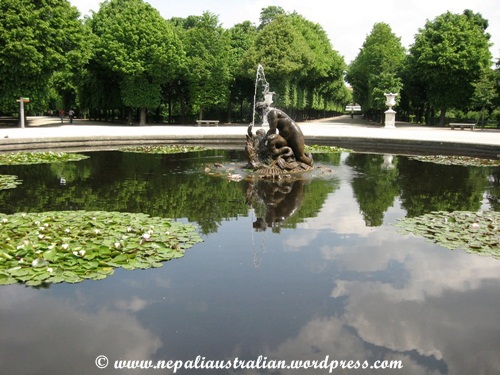
There are lots of sculptures in the Schönbrunn Garden which were mostly created between 1773 and 1780 under the direction of Johann Wilhelm Beyer, employing many sculptors. You need several hours to stroll, or you can take a buggy ride but as we have limited time in the palace we couldn’t go around everywhere.

There are few fountains in the garden. The fountains are lovely, but it’s quite a walk to get all the way round the gardens.

It was nice to visit the palace and see how rich and famous once lived.

Please click here for more photos 🙂

Enjoying Viennese residential orchestra: Austria

Everyone asked me to make sure to go and enjoy the orchestra while in Austria so we decided to join our tour group and listen to the Viennese residential orchestra. I am not into orchestras but as they say, when in Rome… so we went with the flow. The bus took us from our hotel and dropped us at the Auersperg Palace.

Viennese residential orchestra

We attended an evening concert of Mozart and Strauss music presented by the Vienna Residence Orchestra in a beautiful concert room of the Auersperg Palace. The venue was lovely and intimate with beautiful painting, high ceiling and big chandeliers.

Viennese residential orchestra

It was an evening concert consisting of musicians many with instruments from the 18th century plus an Opera singer and Ballet troupe. The performance included solos and duets by a soprano and a baritone, a male and a female dancer, and a string ensemble.  Most of the musicians looked very young. Me and AS were observing their expressions, they were so into the music.

Viennese residential orchestra

During the show they got the audience to clap along with the music and some of the ballet scenes were very comic.

Viennese residential orchestra

Overall, the music was beautiful and professional, but they didn’t provide a program of what they were going to play unless you spent an additional 5 euros for a ‘professional’ program.

We enjoyed the performance immensely and it was absolutely one of the highlights of our trip. The music was mostly Mozart and Johann Strauss.

Viennese residential orchestra

There was one intermission. During the intermission we were offered a drink of either champagne or orange juice.

Viennese residential orchestra

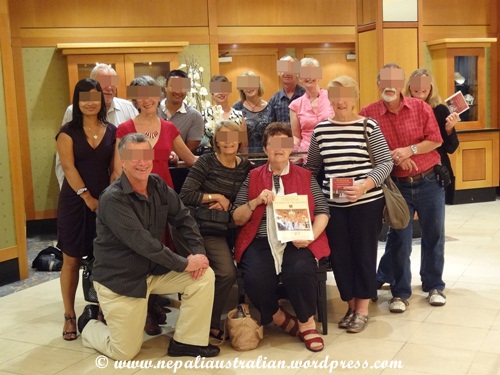
We were given a CD from the Vienna Residence Orchestra too.

Viennese residential orchestra

Here is some samples of what we listened to.

Snowy Mountains: Australia

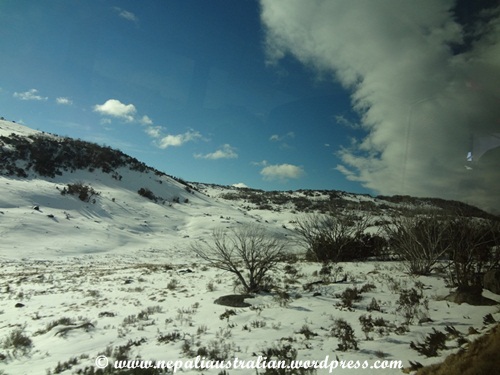
I guess lots of people living in US and Canada will call us crazy but we do drive 7 hours to play with snow. There is no snowfall in Sydney so we have to jump into a car and drive almost half a day to reach Perisher or Thredbo to play with snow during winter. And last weekend that is what we decided to do, take a visit to a winter wonderland :). We were 8 people altogether which included my hubby, my cousin K didi, her husband and her son and 3 of their friends.

Perisher valley

So we left Sydney after work on Friday to be get to the mountain early morning Saturday. The drive down there was not much fun as it was cold and dark. We stopped at one shop for coffee and cookie and to hire some gear.

We hired snow trousers, jackets and walking boots. We all decided to hire toboggans instead of ski or snow board because it is much easier. I fell so many times while trying to learn how to ski in the past that it was not fun at all. Generally a normal skier would spend the majority of their time skiing and a fraction of their time falling so I knew already that I don’t have ski genes within me. And ohoo how can I forget all the pain and body aches the next day. I really wanted to avoid that this time as my body is still in recovery mode from last weekend’s City2Surf run.

Perisher valley

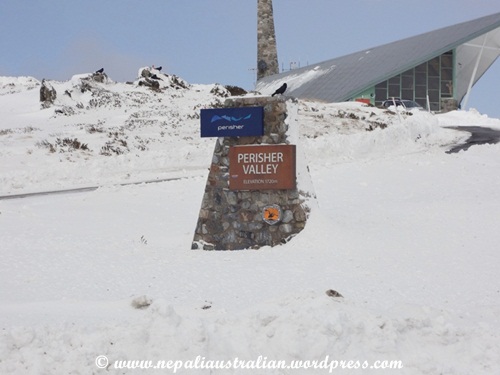
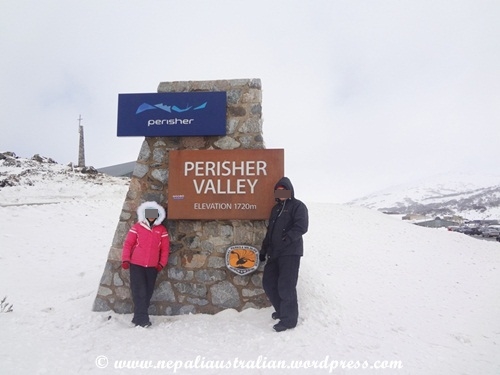
Perisher valleyAnyway, from there our next stop was the Perisher valley. Perisher Valley (elevation 1720m) is a ski resort village in the Snowy Mountains of New South Wales, Australia, in the Snowy River Shire. It is located within the Kosciuszko National Park between beautiful Jindabyne and Charlotte Pass on the Kosciuszko Road.

Perisher valley

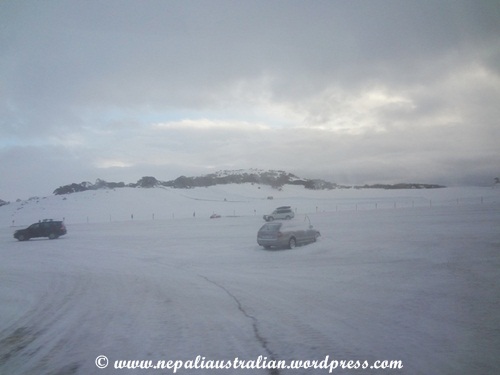
Perisher valleyPerisher valleyThe place looked really beautiful with snow everywhere. We got lucky as it snowed the day before so there was 27cm of fresh snow to play with. The lift to the mountains was not opened then so there were not that many people around. I have to admit it was really cold so we decide to have breakfast before we stared to play in the snow.

Perisher valley

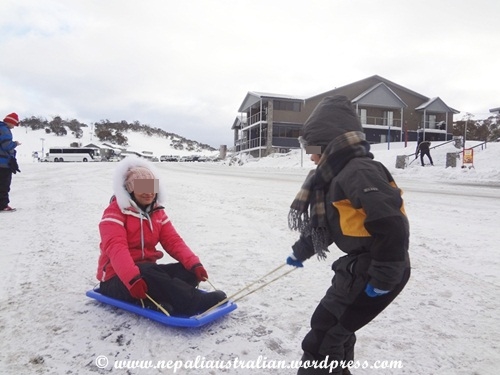
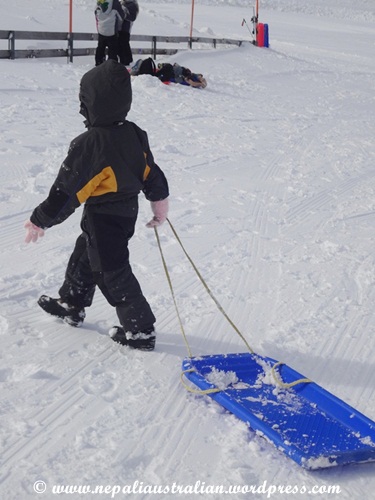
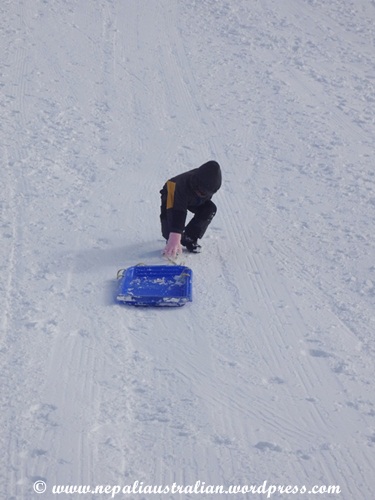
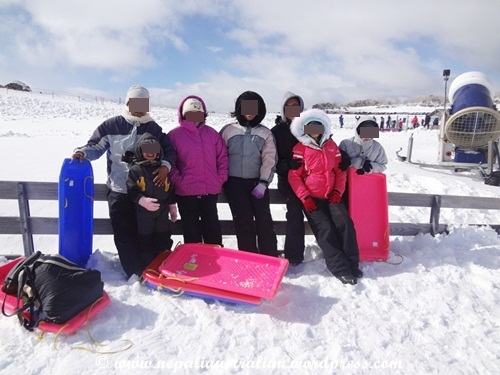
Perisher valleyAfter breakfast we took our toboggans and made our way uphill. First we stared on a small hill to get the hang of the toboggan and later went to the big hill. My nephew who is nearly five was enjoying his ride as well. He would come down and immediately walk his way up the hill. It was a really exciting experience. After may be 10 rides, it started getting hot but AS didn’t let me take my jacket off as he said I might get sick later. I know he does look after me  🙂

Perisher valley

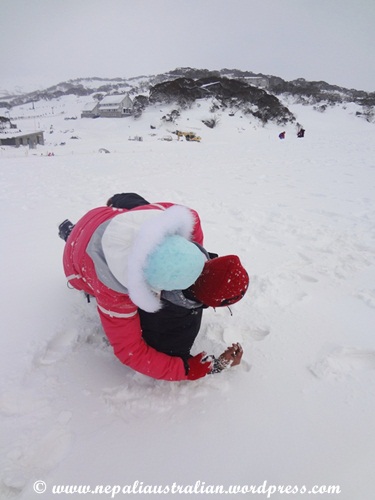
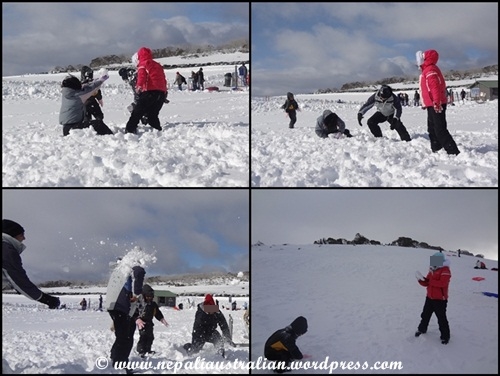
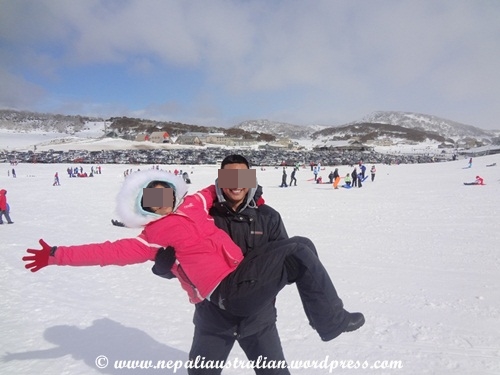
Perisher valleyWe also had some fun with snow war. As we were talking photos, I went and stood behind AS. So while he was posing, I took a heap of snow and started the fight. I knew he was not going to leave me alone after that. It was so much fun. Later everyone joined the fight including my nephew who was having the time of his life.

Perisher valley

Perisher valley

Perisher valley

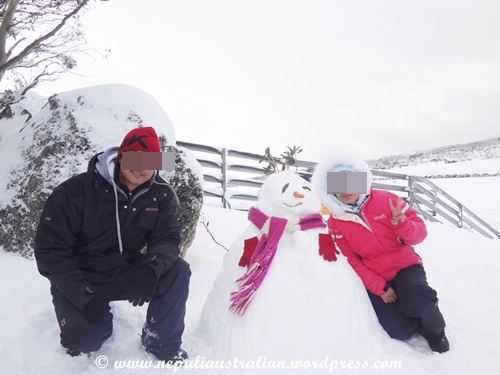
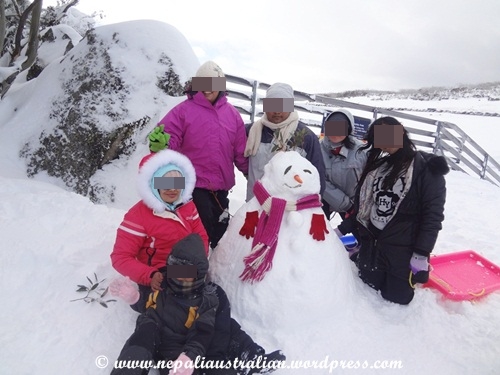
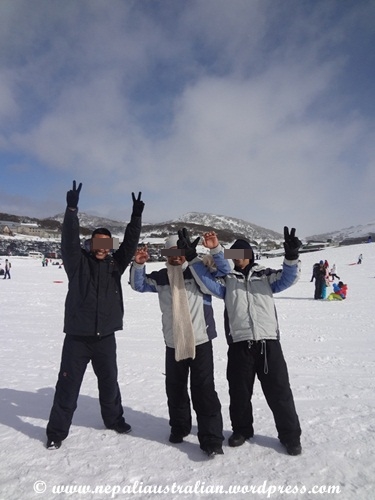
How could a snow trip be successful without a snowman? Someone started the snowman on the top of the mountain which we continued and he looked beautiful with my gloves and muffler :). We all posed to take our photo with the snowman.

Perisher valley

Perisher valley

By midday we all were starving so we decided to have a break and went for lunch. We had brought some dry home cooked lunch and it tasted the best after so much energy was lost. On the way to the eating area it started snowing as well.

Perisher valleyAfter the break, we took our toboggans again and continued the ride for rest of the day.

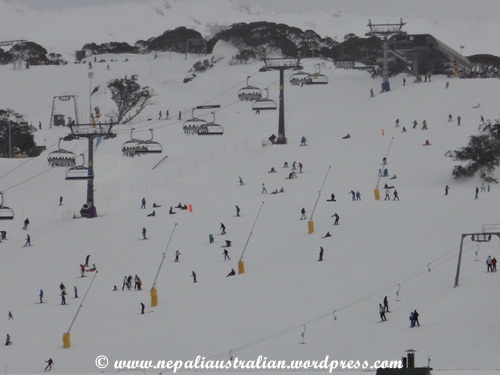
Perisher valleyPerisher valleyOn the higher hills, I could see people skiing and snowboarding. I do want to learn how to do that well without falling of course but I really enjoyed what we did.  It was really fun. Planning for next trip to snow already for the next year  🙂

Please click here for more photos.

Perisher valley

Perisher valley

Prague: Czech Republic

Czech Republic was one of the countries that I was very excited to visit. I have seen so many photos and travel show on Prague that I knew it is going to be a beautiful experience.

prague

Prague didn’t disappoint me at all. What I saw of it was gorgeous, beautiful coloured buildings, a stone bridge, and hilly vistas. Prague is the capital and largest city of the Czech Republic situated in the north-west of the country on the Vltava River. It is one of the historical places we visited and I really loved it.

prague

We had a local guide for the city tour and it was one of the most amazing and oldest cities with lots of history. I forgot the name of the guide but he was funny and he used to repeat everything twice. At first it was very awkward but then we got used to it.

prague

New town

prague

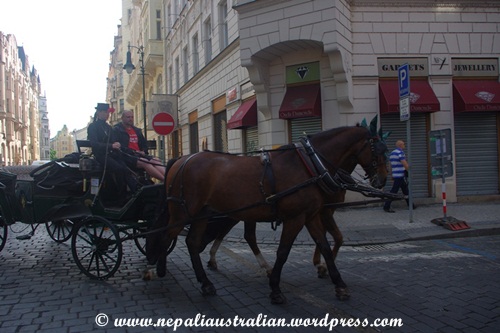
We were dropped off near a bridge in Prague from where we could see the Grand Prague castle. We took a few photos there and then the guide took us to the new town area of Prague. We passed through by beautiful houses and churches which made the town look really amazing. We went through Welceslas Square which was originally a horse market and Charles Square which was originally a cattle market.

Charles Bridge

Charles Bridge

Charles Bridge

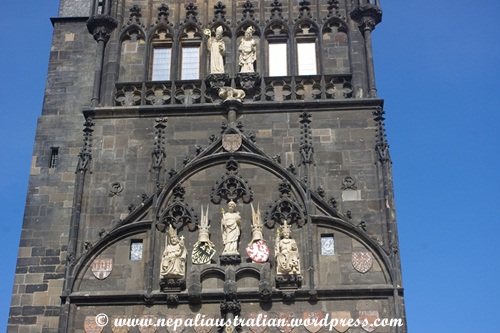
It is Prague’s most lively and photogenic bridge over the Vltava.  It is the stone bridge which is really old. On our right, we could see the famous Malá Strana. When we walked past the gate there is the bridge between Prague Castle and the city’s Old Town and adjacent areas. I have seen so many photos of this bridge that I didn’t feel that I was there for the first time. We walked around, took photos with the statues on the bridge.

Charles Bridge

There is a tower standing on each end of the bridge. Both towers can be climbed for a view of Prague and the bridge from above. The place seems to be also popular with Czech artists, musicians and souvenir vendors whose stands line both sides of the bridge .

Charles Bridge

Charles Bridge

Charles Bridge

St. Vitus Cathedral

St. Vitus Cathedral

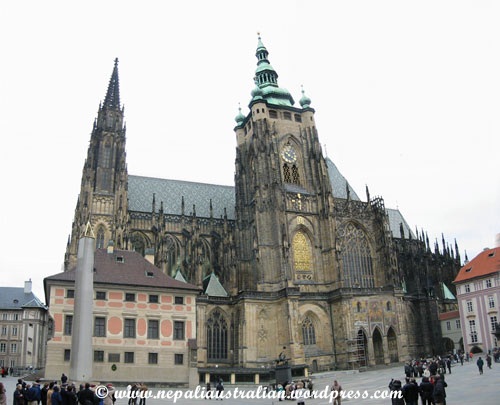
Our next stop was this phenomenal Gothic cathedral, called St Vitus Cathedral. It contains the tombs of many Bohemian kings and Holy Roman Emperors; this cathedral is an excellent example of Gothic architecture and is the biggest and most important church in the country.

St. Vitus Cathedral

Old Town Square

Old Town Square

The Old Town Square is the oldest and most important square of the historical Prague. It is surrounded with historical buildings such as the Old Town City Hall with the famous Astronomical Clock, the imposing St. Nicholas Church and Church of Our Lady before Tyn, and many houses and palaces of various architectural styles and colourful history.

Old Town Square

When I stood in the middle of the square, I could truly see why people love it there so much. Full of history and architecture, it was pleasant and beautiful place to spend hours admiring the beauty and history.

Old Town Square

If you know the history of Czech Republic, this is the square where there was an execution of 27 leadersof the rebellion against Emperor Matthias in 1621. These days the square ground is full of restaurants with outdoor eating area and musicians playing traditional music.

Old Town Square

Astronomical Clock

Astronomical Clock

Astronomical Clock

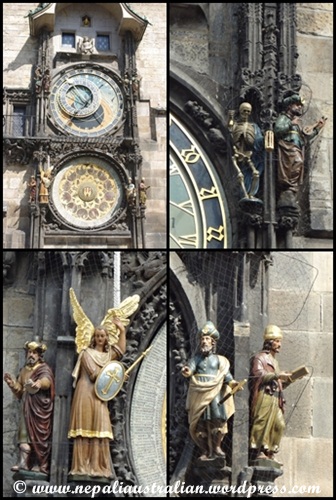
The astronomical clock in the Prague square is the third-oldest astronomical clock in the world and the oldest one still working. It is really beautiful and looks so antique. It has three main components: the astronomical dial, representing the position of the Sun and Moon in the sky and displaying various astronomical details; “The Walk of the Apostles”, a clockwork hourly show of figures of the Apostles and other moving sculptures—notably a figure of Death (represented by a skeleton) striking the time; and a calendar dial with medallions representing the months. I must admit that people were so intelligent in those times that they have this complex clock built which works even till today.

Astronomical Clock

Astronomical Clock

The real author of the clock was discovered in 1961 in an old document, which describes the astronomical dial and says it was made by Mikulas of Kadan in 1410.

Astronomical Clock

Astronomical Clock

The Jan Hus Memorial

The monument of the Protestant reformer Jan Hus, burnt as a heretic in 1415, is situated in the middle of the Old Town Square since 1915. It is one of the most important personalities in Czech history.

The Jan Hus Memorial

Master Jan Hus, the dean of the Charles University in Prague, criticized church practices such as selling indulgence. The monument consists of Jan Hus statue and statues of Czech people around him. Jan Hus statue is looking at the Church of Our Lady Before Tyn, which was the main church of the Hussites. The people around him are the Hussite warriors on one side and on the other side there are prostrated people, forced to leave the country in 1620s, after the rebellion of Czech estates was defeated.

Church of Our Lady before Týn

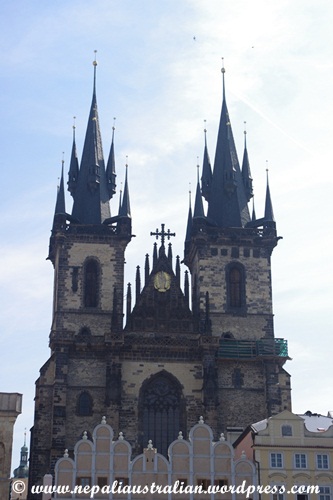
In the old square, there is a cathedral which is called Church of Our Lady before Týn. The Týn church has always played a major role in the history of the reformation in Bohemia and it was the most important church of the Hussites in the 16th century. Inside, there are many fine sculptures from the pre-Hussite period.

Church of Our Lady before Týn

Church of Our Lady before Týn

The towers of the Church of Our Lady before Tyn are 80 metres high. The church is 52 metres long and 28 metres wide and there are many Gothic, Renaissance and Baroque works of art inside. There is a Gothic tinny font from 1414, the oldest one in Prague. You can see a Gothic baldachin by Matthias Rejsek from 1493 on the pillars there.

The main altar is decorated with paintings by Karel Skreta. There are 19 altars in the church altogether. The church organ, made by Hans Heinrich Mundt in 1673, is the oldest one in Prague.

Prague meridian

Prague meridian

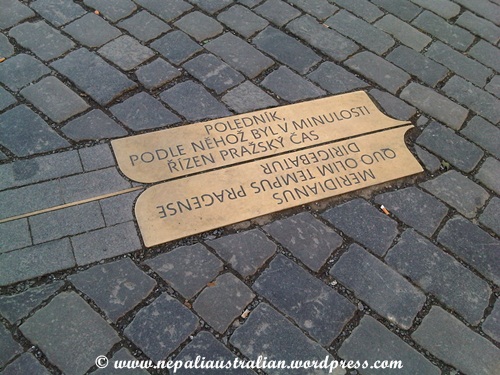
You can still see the Prague meridian in the paving of the square. It indicates the place, where the former Marian column used to cast its shadow at noon. There is an inscription in Czech and Latin languages, saying that time used to be measured according to the meridian.

Medieval houses at the square

Medieval houses at the square

Medieval houses at the square

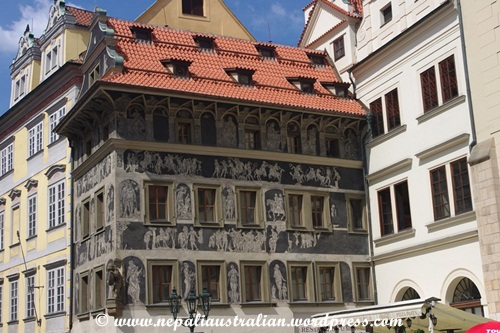
The first houses were built around the Old Town Square in the 12th and 13th centuries. Some of the present houses still have their Romanesque or Gothic foundations, basements or ground floors. The Old Town City Hall was built in the 14th century and the Church of Our Lady before Tyn a little later. The Old Town Square became the economic and political center of Prague Old Town.

The Municipal House

The Municiple House

The Municipal House

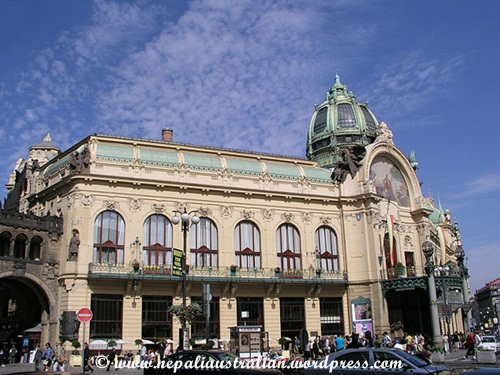
The Municipal House, a national cultural landmark, is among the most significant Art Nouveau buildings in Prague. It is located in the very centre of Prague, directly neighbouring the Powder Gate. The most significant Czech painters and sculptors of the time participated in the decoration of the Municipal House. That list included: Jan Preisler, Mikoláš Aleš, Max Švabinský, František Ženíšek, Ladislav Šaloun, Josef Mařatka, Josef Václav Myslbek, Alfons Mucha.

The Municiple House

The Municipal House

Dinner in Prague

I have to say, the dinner we went to in Prague was the best one on the whole tour. They knew how to entertain the guest and get them involved the whole evening. The evening started with  traditional music and folk songs followed by dances.

dinner in Prague

They served us a typical Czech meal including unlimited drinks with wine served from special glass pipes.

dinner in Prague

Once the dinner was done they invited us to dance and taught us how to do the traditional steps. Overall a very happy experience.

Charles Bridge

Prague was really a great place to enjoy traditional European hospitality and it was the cheapest place in Europe to do some shopping. AS bought a pair of shoes and I bought 3 while we were there. I definitely need to come and see more of Czech Republic in future.

From Prague we went thru Bohemia and Moravia before crossing into Austria.

Please click here for more photos.

Germany

Once we joined the tour, our life ruled by schedules. It will be like

6.00 am: wake up call

6.30 am: Suitcase out to be picked up

7.00 am: Breakfast

7.30 am: On the bus to go to the next destination

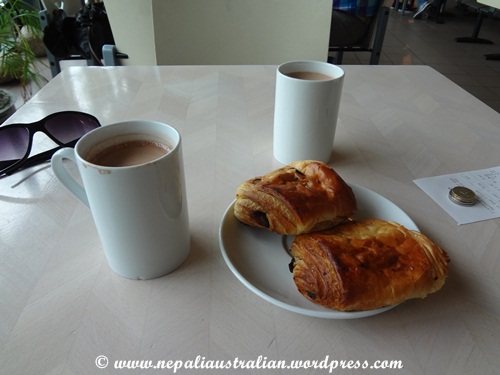
From Belgium, he made our way to Germany.  After a while on the bus, we stopped for coffee and croissant in a cafe and it was the first place where we had to pay money to go to the toilet. Yes, it may sound a bit ridiculous but most of the places in Europe charges from € 0.40 to € 0.60 to access the public toilets.
Then we made our way to Sankat Goar via Frankfurt.

Frankfurt
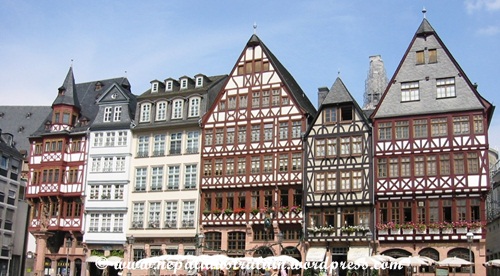
Frankfurt is the largest city in the German state of Hesse and the city is at the centre of the larger Frankfurt Rhine-Main Metropolitan Region .Frankfurt is the financial and transportation centre of Germany and the largest financial centre in continental Europe. Frankfurt lies in the former American Occupation Zone of Germany, and it was formerly the headquarters city of the U.S. Army in Germany.

The centre city is very nice, lots of shops, old sections of the city to see, lots of outside cafe’s and very walkable.

Sankt Goar
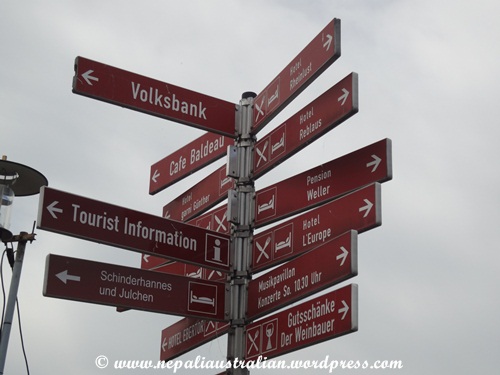
Sankt Goar is a town on the left bank of the Middle Rhine in the Rhein-Hunsrück-Kreis and it’s well known for its central location in the Rhine Gorge, a UNESCO World Heritage.

Sankt Goar is lovely, we arrived early in the afternoon, so had some time to wander around before we needed to join the Rhine river cruise. We were lucky to have a beautiful bright sunny weather.
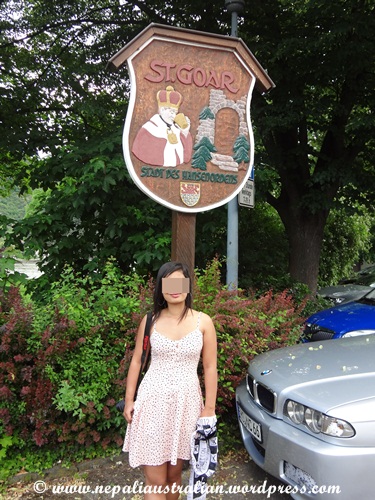
We walked along the river and then went to the town square with churches, lots of little cafes with outdoor sitting and souvenir shops. There was a really interesting Statue of a lady and a boy. I didn’t know what it meant but it looked like the boy was asking for some food and she was giving something from a pouch in her hand. It reminded me of Oliver Twist 🙂

We took some photos in front of the church and then went inside to look around. There were a few people praying so we left them in peace and continued to wander around the area.
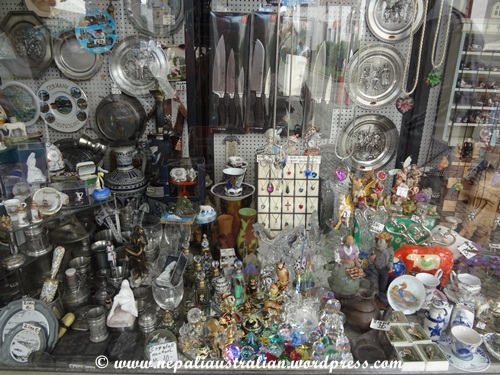
We bought few items from a souvenir shop but were really disappointed by the service. I was not planning to buy any breakables if they didn’t have proper wrapping so I specifically asked if they had boxes to pack them in and the owner said he did. But when I bought the item, they wrapped it in just a newspaper without any box. When I tried telling her that I really needed a box, she was so annoyed and replied, they don’t keep any boxes. I’m glad that the piece came to Sydney in one piece.

There were some shops selling really beautiful lace works as well. As it was almost time for us to catch the boat for cruise, we made our way towards Rhine River.

Rhine River Cruise
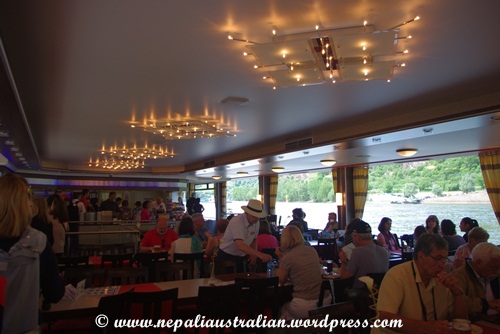
We had almost 40 people in our tour and there were many other buses that were waiting for the Cruise boat. So when we boarded the boat  it got very crowed. As we didn’t get time to have lunch, we went straight to the counter to order something to eat. There was a long queue already and it was almost 30 minutes before we were served.
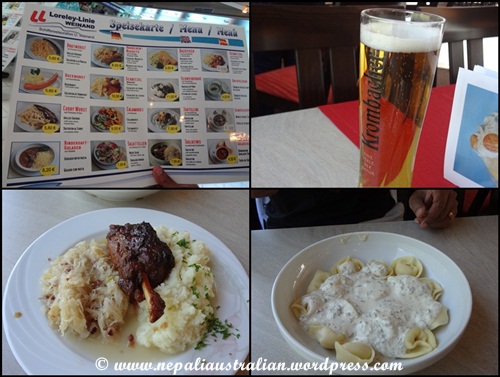
AS ordered a beer and tortellini pasta stuffed with cheese herbal sauce and I ordered orange juice and Schweinshaxe which is knuckle of pork with sauerkraut and mash potatoes. We took a window seat and enjoyed our food with the river view. Once we were done, we went to the top deck to join the other. It was a nice sunny day which made the trip quite pleasant.

There was a commentary along the way pointing out some of the main features. We passed the Castle Pfalz situated on an island mid river and small towns on the riverside including Oberwesel with its stunning mountain top castle/hotel.

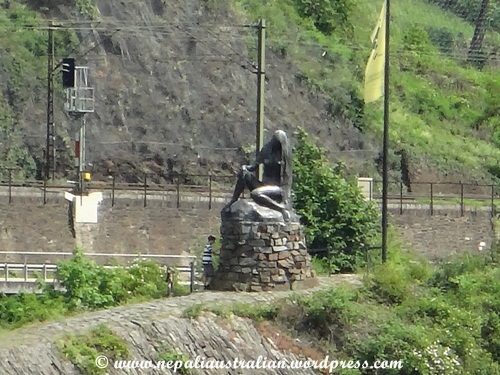
The highlight of the trip was The Lorelei .The mighty slate rock Lorelei in the Romantic Rhine Valley rises up almost vertically to 132m above the water-level. Downstream the river is squeezed into its narrowest and deepest (22m) point, so the Middle Rhine at this point used to be very difficult to navigate and the correct passage is (today) clearly marked with buoys. Even in the 19th century, reefs and rapids made it extremely dangerous for ships to pass this point.
The legend tells us, that a siren called “Lorelei” bewitched the hearts of the sailors and when they looked up to the rock, their boat crashed and they sank.
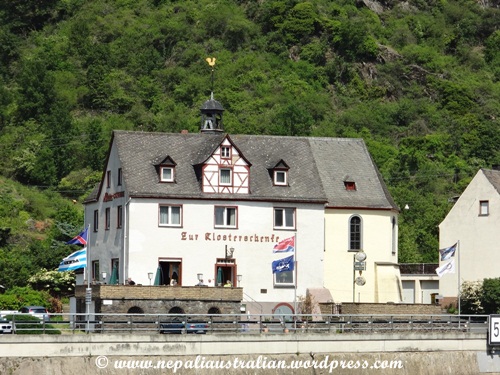
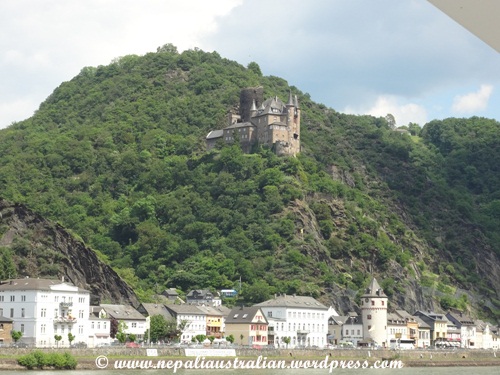
From there was the turning point with Burg Katz and Maus (Cat and Mouse) on display. Overall it an nice trip

Wurzburg
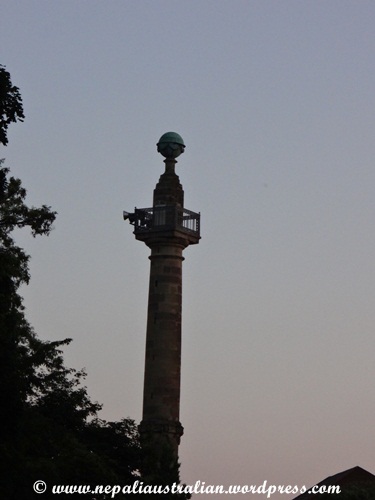
Würzburg is a city in the region of Franconia, Northern Bavaria, Germany. Located on the Main River, it is the capital of the Regierungsbezirk Lower Franconia.

After we settled in the hotel (Novotel) and had our meal, a few of us decided to discover the city by ourselves. The first stop was Rezidenz, a royal castle which looks pretty much like every other royal castle. It has beautiful gardens behind the palace.

Then we move to the Market square of Wurzburg, where they had Würzburger Weindorf (Wine Festival) going on. There was music, lots of wine stalls and food on display.
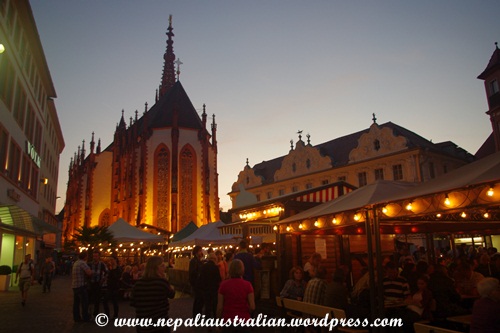
The square itself looked beautiful with lights everywhere. The square houses most of the city’s top landmarks and it is a charming and pleasant area to congregate as there are cafes, restaurants, shops, and of course the open market where one can delight in the fresh produce and flowers for sale.

Due to the wine festival the place was transformed into a giant fairground, food with wine and lots of people.

We saw a bridal party having something similar to a hen’s night. She had this box and it has small paper with prizes on them. You needed to pay 1 euro to play the game. Some of us did and there was only one winner who got to dance with the bride. The money was going toward her hen’s night drinks in the evening. It was quite interesting for us to find such a nice culture.
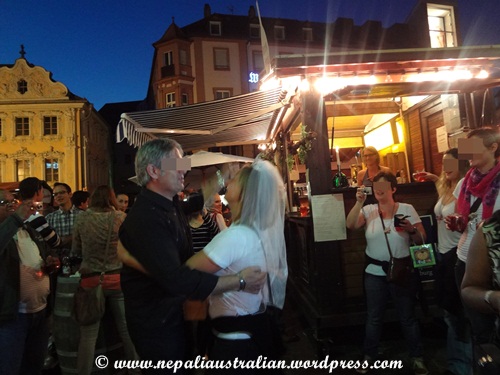
Everyone loved the wine and we got a souvenir cup from the place. From there we saw a few more historical churches and landmarks on the way back to our hotel.
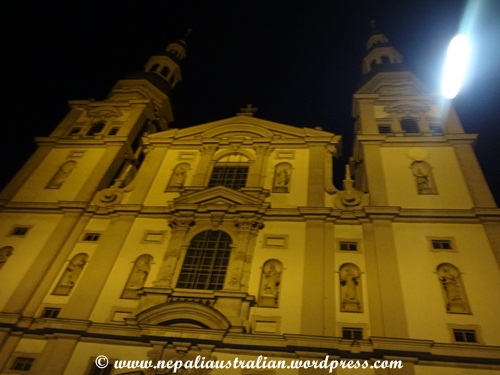
Nuremberg
Nuremberg is Bavaria’s second city after Munich. While its history dates to the 11th century, Nuremberg is tied in most minds to the 20th century and more specifically to World War II. It first served as the site of many pre-war Nazi rallies, then was nearly levelled by Allied bombing, then was the site of the famous post-war Nuremberg Trials.

We were dropped off in the central square in Nuremberg. There is this beautiful church called St. Lorenz Church at one end and at the other end there is Der Schoene Brunnen.

St. Lorenz Church looked so amazing despite it being ruined after the war and was refurbished.

Der Schoene Brunnen is a 19 meter fountain with no running water which originally was erected around 1385. It looked really beautiful in the morning sun. It was originally intended as a church spire for the woman. Two rings are attached at the fountain, said to have been forged from one piece supposedly. There were few cafes and souvenir shops in the square as well.

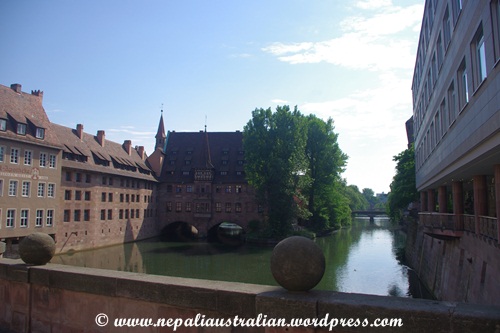
From there we walked around and went to Heilig-Geist-Spital over the river Pegnitz. It was one of the largest hospitals in the middle ages for the care of the sick and elderly in the city of Nuremberg. After the World War II, the building complex was razed to the ground. It was situated on an island and has two lovely arches. Now it is partly used as a restaurant with a beautiful courtyard with fountain and summer houses, pretty tables for dining by candlelight and distinctive places within the premises furnished in typical Bavarian style.
Germany was interesting, a place I’d definitely go back to visit. Nice people and really awesome looking villages.

Please click here for more photos.