Dhido is a traditional and very popular food in Nepal. It is an everyday food for many people in rural Nepal. I have eaten dhido only once before and it was made out of maze flour. Today I am sharing the recipe of dhido, made of buckwheat flour and millet flour, which I learnt recently from my friend.
Generally dhido can contain any grain as long as it is ground into flour.
Ingredients
1 liter water
100 gm buckwheat flour
150 gm Millet flour
20ml ghee (optional)
Method
In a large pot, bring water to a boil.
Add 50 gm of millet flour to the water, while stirring continuously.
Now add the rest of millet flour and then the buckwheat flour stirring continuously. You need to keep stirring the mixture constantly for 7-10 minutes so the dhido is not lumpy. It is a good workout for the arms for sure.
It is cooked when color turns to dark brown.
Server with your favorite curry or dal with a dash of ghee.
Eating dhido
Dhindo is eaten by first making a small ball with the fingers, dipping it in the curry or dal and some ghee and then swallowing it. It is not chewed at all.
Hope you will try this easy recipe soon. Till next time, take care
As I have mentioned before, Nepal follows a different calendar than the Gregorian calendar so Nepali New Year falls on mid-April instead of 1st of January. Bikram Sambat or Nepali Calendar or Nepali patro is approximately 56 years and 8½ months ahead of the Gregorian calendar. Unlike Gregorian months, the lengths of Nepali months are not predetermined, and change from year to year, varying from 29 days to 32 days. The year 2074 started yesterday as 1st of Baishak, 2074.
For us, in Australia, this year had been great as the New Year Eve fell on Easter long weekend so it is double celebration here. I will write more about about Easter long weekend soon.
Just want to wish everyone celebrating a
Happy New Year 2074!!!
To mark the occasion, on Saturday 8th of April, “Tasting Nepal “, a food festival entirely dedicated to Nepali cuisine was organized for the first time here in Sydney.
As there was to be food and entertainment, we decided to go and enjoy the festival.
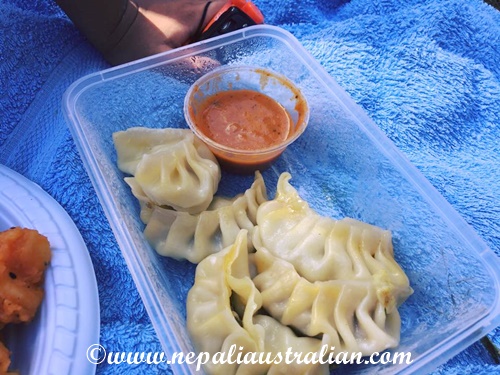
The festival featured food and culture from various parts of Nepal including Momo, Sekuwa, sel roti, chatpat, puri, jeri, samay baji and many more varieties from various restaurants in Sydney.
But the highlight of the event was a stall of Bajeko Sekuwa, one of the popular restaurant chains in Kathmandu. The chef came all the way from Nepal just to join the event and I am sure he was not disappointed as there was a long queue for the sekuwa throughout the day.
Personally for me, the highlight was the pyramid of Samay baji displayed by Guthi Australia. Check out the video and see the detail yourself.
I was surprised to know that even AS hadn’t seen such a pyramid in Nepal before. For me, it was a yearly thing that they did in the temples near us.
As the number of Nepalese are increasing in Sydney, it was no surprise that the festival was busy. We had a great time with our friends and family as well.
Wishing all of you a very Happy start of new year once again from 3 of us.
Thank you from the bottom of my heart for riding along this journey with me.
I appreciate all the love and support you guys have given me throughout the year and I hope you continue to do so this year too.
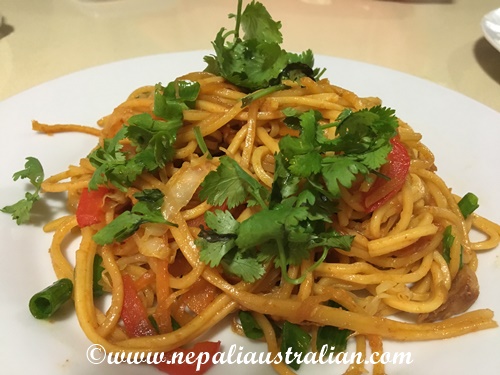
After momo, chowmein is one of the most popular dishes in Nepal. I have been cooking it for a while but getting the right texture and taste took me a while. Now I am happy with it so I am sharing the recipe here.
Ingredient
1 pack cooked ready to eat Singaporean noodle (you can use any noodle as you like)
200gm thigh fillets
1 tablespoon finely chopped Ginger
1 tablespoon finely chopped Garlic
1 onion thinly sliced
1 medium carrot thinly sliced
¼ cabbage thinly sliced
½ capsicum thinly sliced
1 tablespoon oil
1 tablespoon chili sauce
1 tablespoon tomato sauce / ketchup
1 tablespoon soy sauce
1 tablespoon vinegar
1/2 tsp pepper powder(chili powder optional)
1/2 cup spring onions chopped
Coriander to garnish
Salt as required
Method
Boil the thigh fillets for 10 minutes and let it cool. Slice it thinly.
Heat oil and add boiled chicken and cook until it is brown. Season with salt and pepper. Keep it aside
In the same pan, heat oil and add finely chopped ginger and finely chopped garlic. Then add sliced onion and sauté it for a couple of minutes until the onions turn translucent.
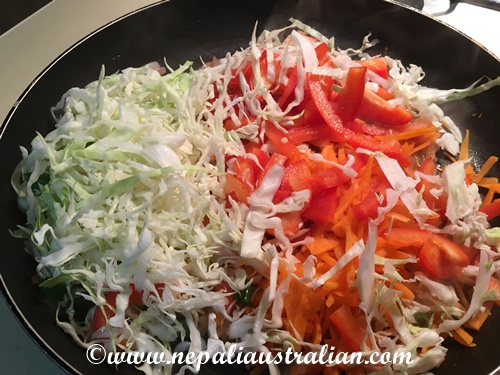
Now add cabbage, carrots, capsicum and cook for a few minutes. Do not overcook the vegetables.
Then add chili sauce, tomato ketchup, soy sauce and vinegar.
Add the cooked noodles and mix it well with the vegetables and the sauces.
Now add the cooked chicken, salt, pepper and spring onions and turn off the heat.
I have written a recipe about dal before but this one is slightly different as this is thicker and I have used different spices.
½ cup red lentils
½ cup brown lentils
1 pinch turmeric powder
1 tablespoon ghee
1 medium red onion finely chopped
½ inch ginger crushed
6 garlic cloves crushed
2 dry red chilies
1 teaspoon methi, crushed
1 large tomato finely chopped
¼ teaspoon turmeric powder
½ teaspoon red chilli powder
½ teaspoon coriander powder
¼ teaspoon garam masala powder
½ to ⅔ cup water or add as required
salt as required
2 tablespoons chopped coriander leaves
1 teaspoon cumin seeds
½ inch cinnamon stick
2 to 3 cloves
2 green cardamoms
1 bay leaf
Instructions
In a pressure cooker, pour all lentils and add 1 teaspoon salt, a pinch of turmeric powder and add 2 cups water.
Cook for 15 minutes on a low to medium flame.
When cooked, the lentils should be soft. Lightly mash and keep aside.
In a pan, heat 1 tablespoon ghee and add cumin seeds, cinnamon stick, cloves, cardamoms and bay leaf to the pan and sauté them till they crackle and become fragrant.
Add turmeric powder, ginger garlic and fry for a few minutes.
Now add the chopped onions and fry till the onions turn light golden brown.
Add chilli and methi and stir for a minute.
Add the chopped tomatoes; stir and sauté till the tomatoes soften.
Now add chilli powder, coriander powder, garam masala powder and mix with the rest of the onion-tomato masala.
Add the cooked dal and mix well.
Add water and stir very well and season with salt as required.
Simmer the dal on a low flame till the dal thickens a bit. Keep on stirring the dal at intervals so that it does not stick to the bottom of the pan.
When the dal is done, switch off the flame, add chopped coriander leaves .


























 nepaliaustralian