Tag Archives: nepali culture

Celebrating Tihar 2024: A Festival of Lights, Love, and Heritage

Tihar, my favourite Nepali festival, has come and gone, leaving behind a glow that warms my heart. Known as the festival of lights, Tihar honours animals, family bonds, and the goddess of wealth, Laxmi. Each day has its own deep meaning, blending spirituality, gratitude, and family love. Living far from Nepal, we’ve found creative ways to keep the spirit of Tihar alive, celebrating these rituals as a bridge to our culture and traditions. Here’s a glimpse into how each day brought us closer to our roots, no matter the miles between us.


Day 1: Kaag Puja – Honoring the Messenger Crow

Tihar begins with Kaag Puja, dedicated to the crow, a symbol of the god Yama’s messenger. Traditionally, we offer food to crows as they’re seen as bearers of news, both good and bad. In Nepal, the sight and sound of crows herald Tihar’s arrival, and this ritual reminds us to respect all forms of life, especially the ones that serve as nature’s messengers.

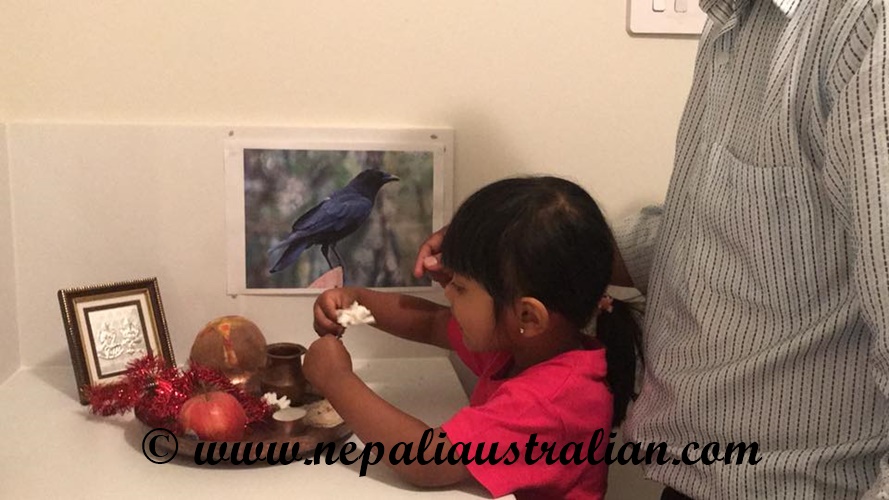
Here in Australia, I couldn’t find any crows around, so I improvised by using a photo of a crow, setting it up in our home, and offering flowers and sweets. It’s a humble gesture, but it’s also a way to begin the festival with gratitude and respect for life’s simplest messengers.


Day 2: Kukur Puja – Celebrating Man’s Best Friend

Kukur Puja is one of my favourites because it honours dogs, the most loyal and loving animals. In Hindu culture, dogs are seen as guardians, protectors, and friends. On this day, people place a red tika on their dogs’ foreheads, garland them with marigolds, and offer them treats.

I don’t have a dog here, but my family in Nepal has Chhotu, our loyal companion. While I couldn’t be there, I celebrated in spirit by printing his picture, offering a small prayer, and thanking him for watching over my family. It’s a reminder that love transcends distance, even when it comes to our furry friends.


Day 3: Gai Puja and Laxmi Puja – Honouring the Cow and the Goddess of Wealth

Gai Puja is a morning ritual devoted to the cow, a revered animal in Hinduism. Cows represent abundance, nurturing, and sustenance, qualities we cherish. The day begins with offerings of fruits and garlands to cows, showing gratitude for all they give us.

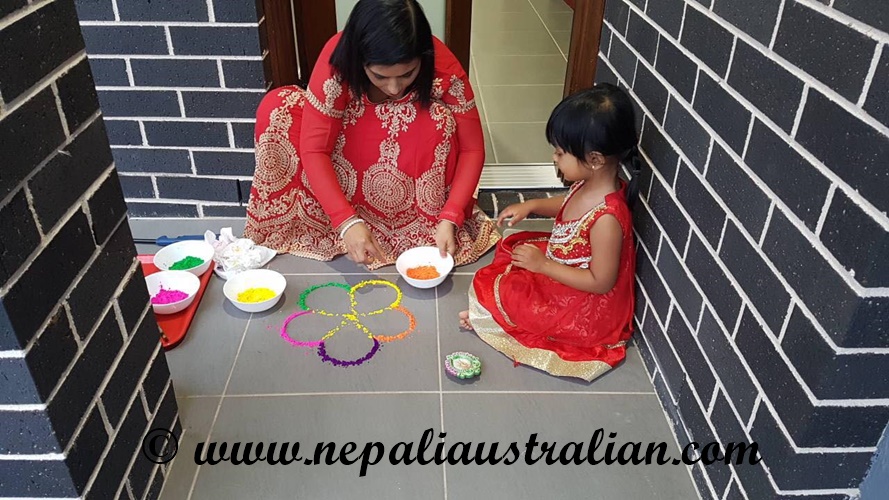
Later, we celebrate Laxmi Puja, dedicated to the goddess of wealth. This is the heart of Tihar, when families light diyos (oil lamps), decorate their homes with rangoli, and prepare for Laxmi’s arrival. In Nepal, a red mud trail is drawn from the doorstep to the altar to welcome Laxmi.

This year, we set up a small altar with a photo of Laxmi and created footprints leading into our home. I added twinkling lights and candles, transforming our space into a sanctuary of warmth and blessings. It’s these small touches that keep Laxmi Puja magical, even far from home.


Day 4: Govardhan Puja and Mha Puja – A Celebration of Self and Community

The fourth day of Tihar, Govardhan Puja, honours the story of Lord Krishna lifting Mount Govardhan to protect his village from a storm. Families create a small mound symbolising the mountain, celebrating nature’s strength and resilience.

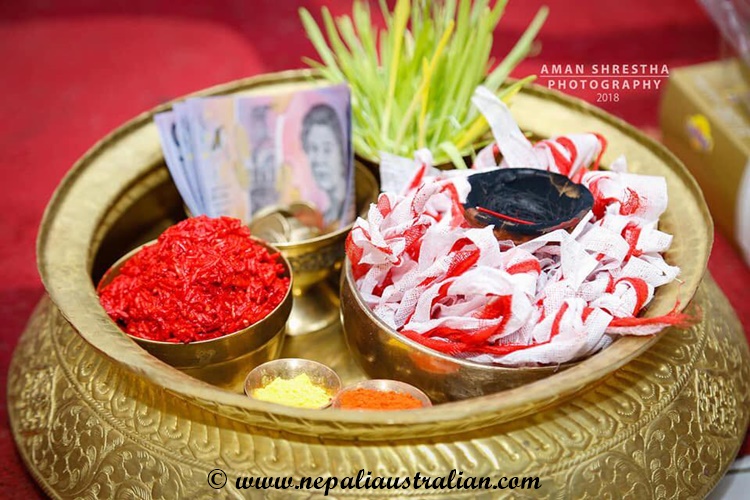
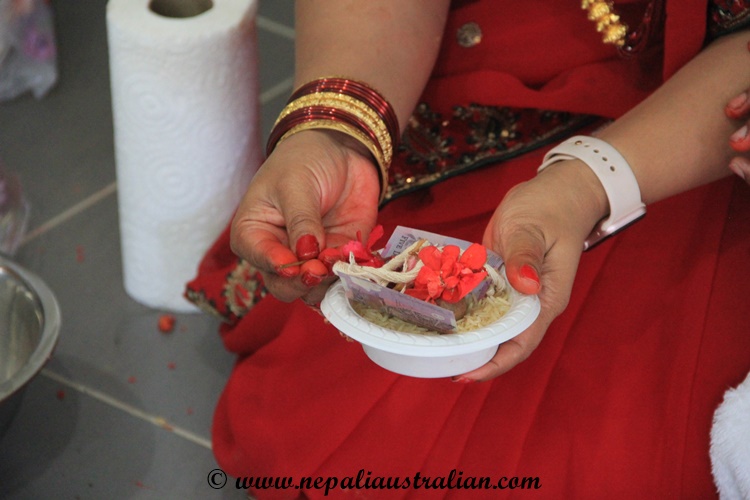
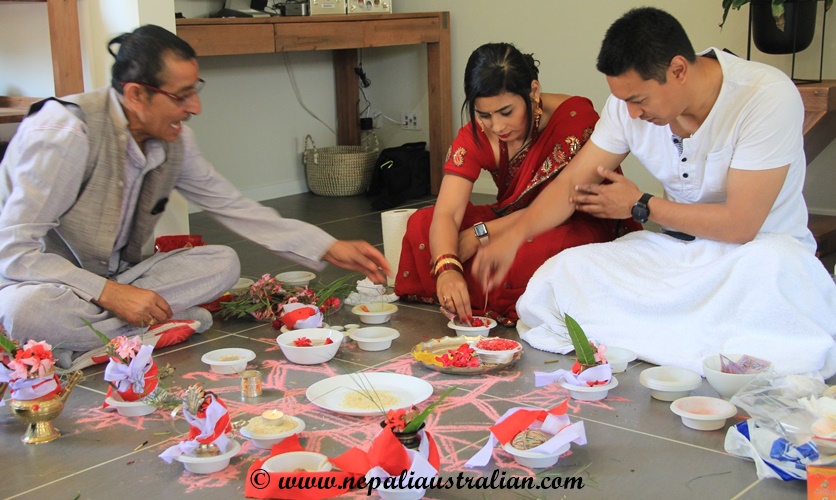
For us Newars, this day also marks Mha Puja, a beautiful tradition of self-worship. “Mha” means “body” in the Newar language, and the ritual is about cleansing and honouring oneself as a sacred vessel. We arrange mandaps (small, decorated seats) for each family member, light a diya representing the soul, and offer flowers and grains.

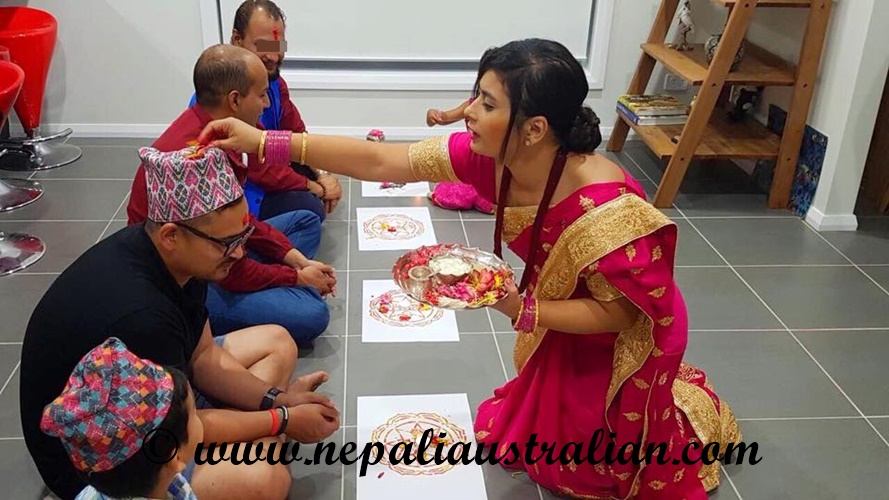
I’m incredibly fortunate to have family here as well, so we were able to celebrate Mha Puja with all the traditional rituals, bringing the spirit of Newar culture to life even far from Nepal. Together, we carefully set up mandaps with grains, fruits, flowers, and oil lamps, making sure every detail echoed our heritage. It was a beautiful opportunity not only to honour the self, as Mha Puja represents, but also to pass down these customs to our kids, who were eager to learn. As we went through each step, I explained the meaning behind the rituals, sharing stories about our ancestors and why we celebrate Mha Puja. The kids loved participating and adding their own touches, making it a fun, memorable day filled with laughter, learning, and togetherness. Celebrating this tradition abroad felt like creating a bridge between generations, where they can appreciate the values we hold dear and, hopefully, carry them forward.

Also on this day we celebrate Nepal Sambat, the traditional Newar New Year, is a significant celebration of Newar culture and heritage. This unique lunar calendar, which traces its roots back to 880 AD, holds deep historical and cultural significance for the Newar community, an indigenous group from the Kathmandu Valley. Nepal Sambat is celebrated with enthusiasm, as it marks not only the New Year but also the enduring spirit of unity and resilience. The Newars, known for their rich art, architecture, and festivals, embrace Nepal Sambat as a time for cultural renewal. During this period, Newar families honour their heritage by participating in rituals, gatherings, and traditional feasts. The celebration of Nepal Sambat exemplifies the vibrant Newar culture, highlighting values of family, community, and continuity, while paying homage to a history of independence and cultural pride.


Day 5: Bhai Tika – Strengthening the Sibling Bond

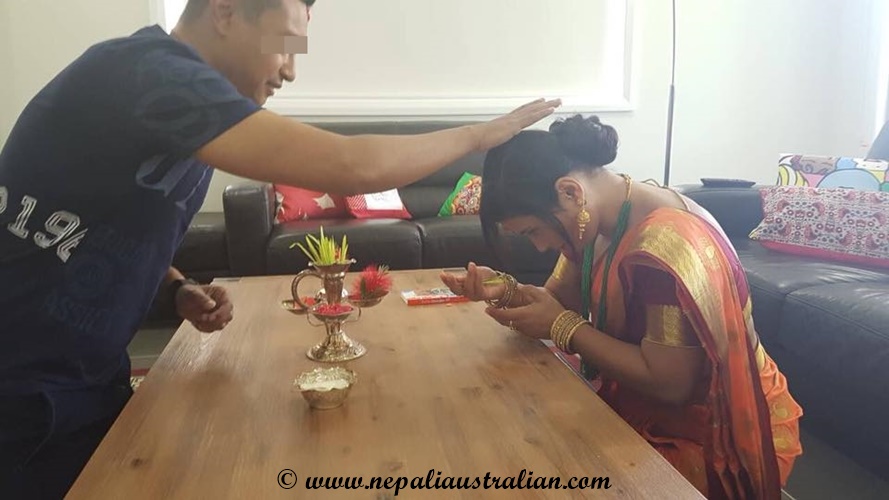
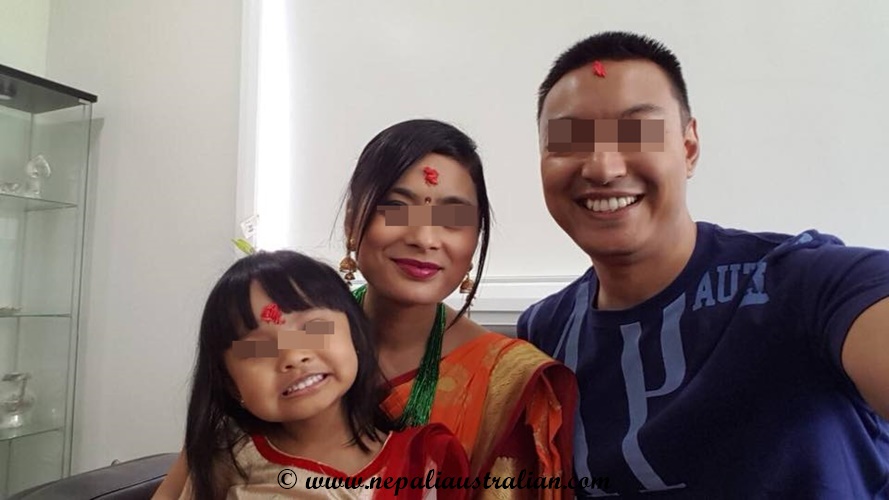
The last day of Tihar is Bhai Tika, a day to celebrate the bond between brothers and sisters. Sisters place a tika on their brothers’ foreheads, wishing them long life and protection. In return, brothers offer gifts as a symbol of their love and promise to protect their sisters.

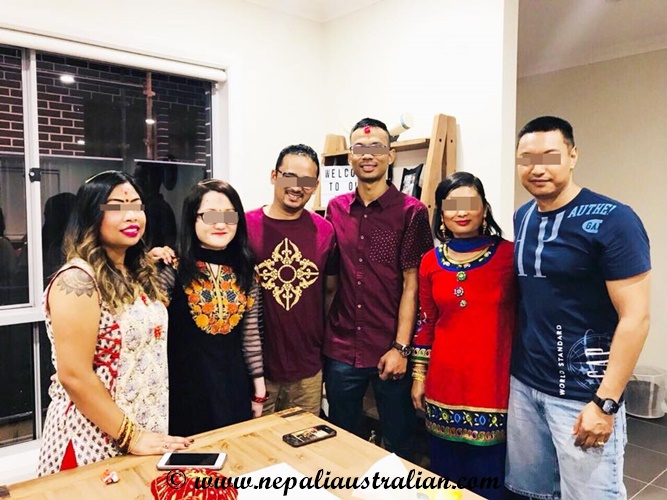
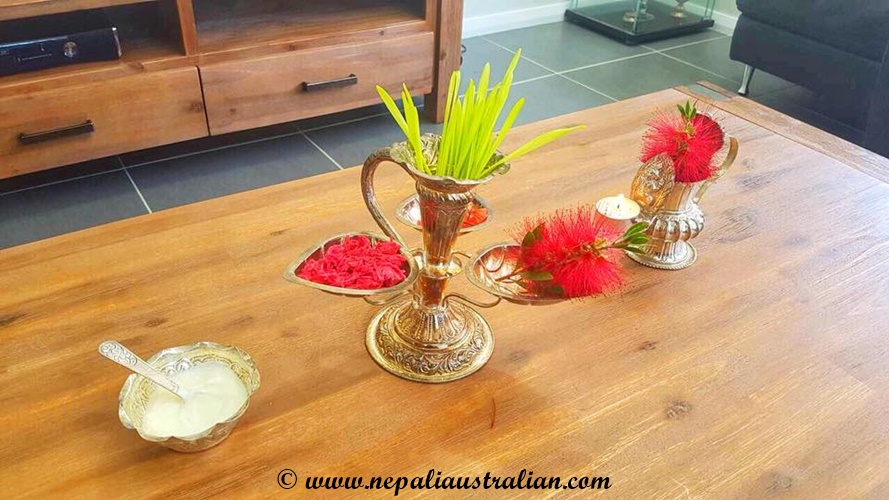
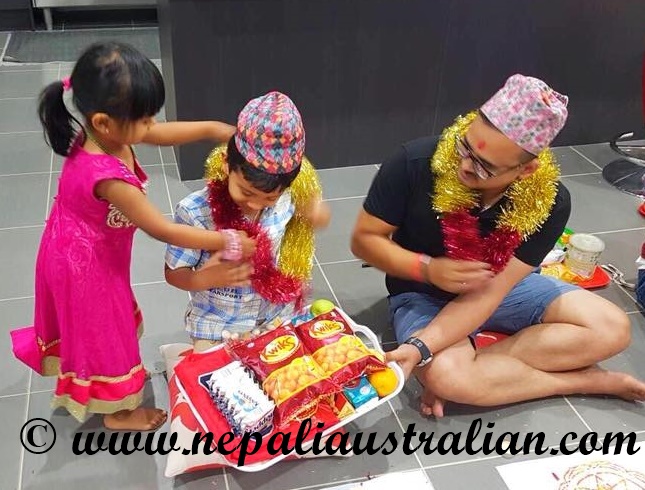
I feel incredibly lucky to have my brother here with me to celebrate Bhai Tika, bringing the spirit of Tihar even closer to home. This special day is all about the love, blessings, and lifelong bond we share. Here are some highlights from our celebration – from the tika, tradition garland and masala to exchanging gifts and laughter, every moment felt like a cherished tradition we’ve carried with us.


Deusi-Bhailo Traditions

Traditionally, people celebrate with Deusi and Bhailo, lively songs sung to bless each home in exchange for treats, bringing joy and unity as groups go door-to-door singing.

We’re fortunate to live in a neighborhood that embraces these traditions, filling our celebrations with warmth and connection. Alongside all the delicious feasting, we were blessed to be part of a community where Deusi-Bhailo thrives.

This year, we had groups of seniors, adults, and children stopping by to play Deusi-Bhailo, filling our home with song, laughter, and festive spirit.


Wishing everyone celebrating Nepal Sambat a joyous and prosperous new year! Tihar reminds me that home is wherever our heart and traditions are, and no matter how far we go, we carry these festivals with us. Here’s to another year filled with light, love, and togetherness.

Please follow me on Instagram! and Please follow me on TikTok to stay updated on my adventures.

Take care,

M from Nepaliaustralian
XOXO

Sri Krishna Janmashtami

Today is Sri Krishna Janmashtami, a revered festival celebrating the divine birth of Lord Krishna. This festival is observed on the Ashtami Tithi—the eighth day of the dark fortnight (Krishna Paksha) in the month of Bhadra according to the Nepali Bikram Sambat calendar. In the Gregorian calendar, it typically falls in August or September.

Sri Krishna Janmashtami is more than just a festival; it is a profound expression of devotion, spirituality, and the eternal battle between good and evil. On this day, Hindus around the world unite in celebration, fasting until midnight—the sacred hour believed to mark the moment of Krishna’s birth. The day is filled with the chanting of verses from the Bhagavad Gita, the singing of bhajans, and the joyous celebration of kirtans. Temples dedicated to Lord Krishna are adorned with vibrant decorations, and the air is filled with the sounds of devotion and the scent of incense.

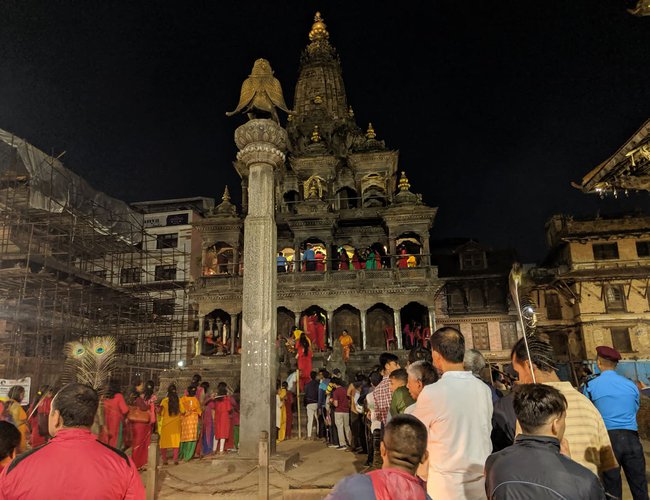
In Nepal, the Krishna Mandir in Patan Durbar Square, along with the Narayanhiti Krishna Mandir and other significant temples, become the epicenters of Janmashtami celebrations. Devotees flock to these sacred sites, transforming the night into a vibrant tapestry of faith and devotion. As they gather in large numbers, their hearts are united by the love and reverence they hold for Lord Krishna. The sight of women chanting Krishna’s many names, ‘Narayan, Narayan’ and ‘Gopal, Gopal,’ and the rhythmic clapping of hands in tune with ancient hymns creates an atmosphere of divine energy. The narrow steps leading to the temple’s inner sanctum are filled with worshippers, each offering flowers, coins, and food, yearning for a glimpse of the sacred idol of Krishna. After receiving ‘prasad’—the blessed food offerings—from the temple priests, they return home, their spirits uplifted and hearts content.

The festival also features the installation of beautiful cribs holding small idols of ‘Balgopal’ (baby Krishna), symbolising the joyous moment of his birth. These cribs, often referred to as “jhulas,” are tenderly decorated in Krishna temples, evoking the playful and endearing nature of the child-god. Additionally, the night comes alive with performances of Krishna Lila, dramatic reenactments of Lord Krishna’s life, showcasing his divine play (Lila) and his role as the protector of dharma (righteousness).

But beyond the rituals and festivities, Krishna Janmashtami carries a profound message that resonates through the ages. In the Bhagavad Gita, Krishna famously declares, “Whenever there is a decline in righteousness and an increase in unrighteousness, I manifest myself on earth.” This statement is not merely a declaration of divine intervention but a promise that goodness will always find a way to triumph over evil. Krishna Janmashtami serves as a powerful reminder that in times of darkness, when the world seems engulfed by sin and corruption, divine intervention will restore balance and order. The festival symbolises hope, the promise of renewal, and the assurance that no matter how overwhelming the forces of darkness may seem, the light of truth and righteousness will always prevail.

During Krishna Janmashtami, one of the most delightful sights is seeing little kids dressed up as Lord Krishna. Adorned in vibrant dhotis, peacock feathers, and tiny flutes, they embody the playful and charming spirit of Krishna, bringing joy to everyone around. The innocence of these young ones, coupled with their radiant smiles, adds a special sweetness to the celebration, making the occasion even more heartwarming. It’s a beautiful tradition that not only honours the birth of Lord Krishna but also creates cherished memories for families and communities. Just look at chhora as Krishna ji—it’s simply too adorable!

Sri Krishna Janmashtami, therefore, is not just a celebration of Krishna’s birth but a reaffirmation of our faith in the ultimate victory of good over evil, a timeless truth that continues to inspire and guide us through life’s challenges.

M from Nepaliaustralian

XOXO

Please follow me on Instagram! and Please follow me on TikTok

Happy New Year 2019

Hello everyone, 

First of all, a very Happy New Year 2019. 

Hope all of you had a great holiday and are looking forward to an amazing 2019. 

Thank you everyone who sent me emails, dm on Twitter and Instagram. I really appreciate all the love you have been sending my way. 

I know I have been MIA for a while but life has been so busy that it is hard to sit down and write but I have decided to make at more effort this year. 

So much has happened in the last few months so I thought I will give you a quick update. 

In August, we bought a new place and moved in and that is one of the biggest reason why I am so busy. Before moving we were busy packing and I couldn’t have imagined how much stuff we had accumulated. It took us more than two weeks to pack, a whole day to move and I am still unpacking boxes and fixing stuff in our new house. 

One of the reason we decided to move was to get a place with a backyard. Now that Chhori is growing up, we realised that she needs more space to be active so our unit was feeling too small. 

After moving, Chhori has been really happy enjoying the stairs and the backyard. 

In September, we celebrated Teej with friends and family.

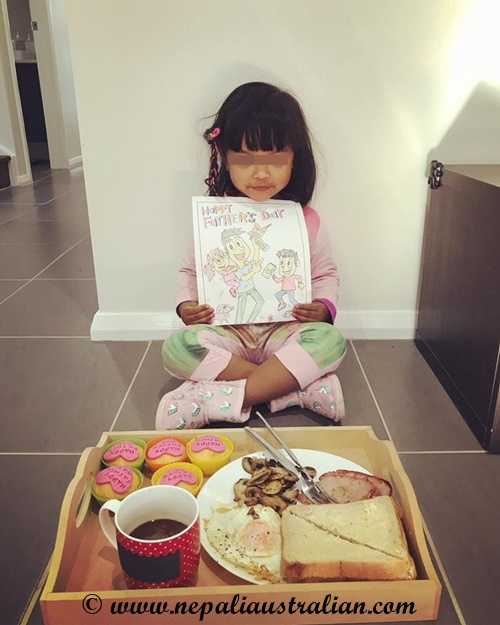
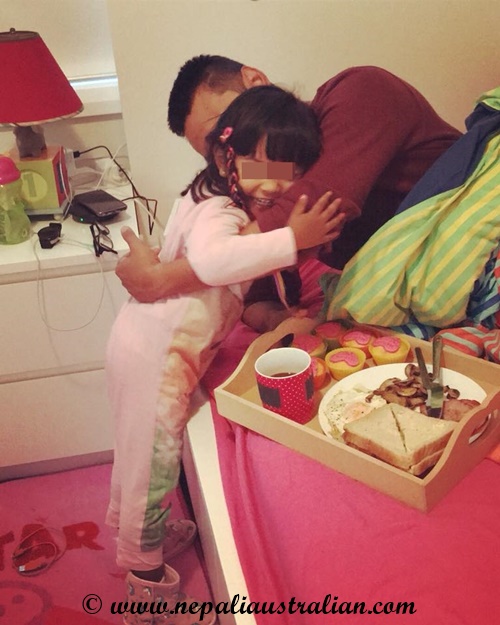
We also celebrated father’s day which was great. Chhori helped me bake and we surprised AS with breakfast in bed. 

We also celebrated Nepali Father’s Day.

October was super busy with Dashain as we had so many things to do and so many people to visit but I am not complaining as we are able to celebrate this big festival even though we are not in Nepal. 


Then on 28 October, we celebrated my birthday with visit to a circus and an amazing lunch. AS organized the surprise for us and Chhori and I had a great time.  

In November, we did Ghar Puja for our new place as we had for the previous one.

It was followed by Tihar. We had great time as Chhori is old enough to understand and she enjoyed each ceremony.

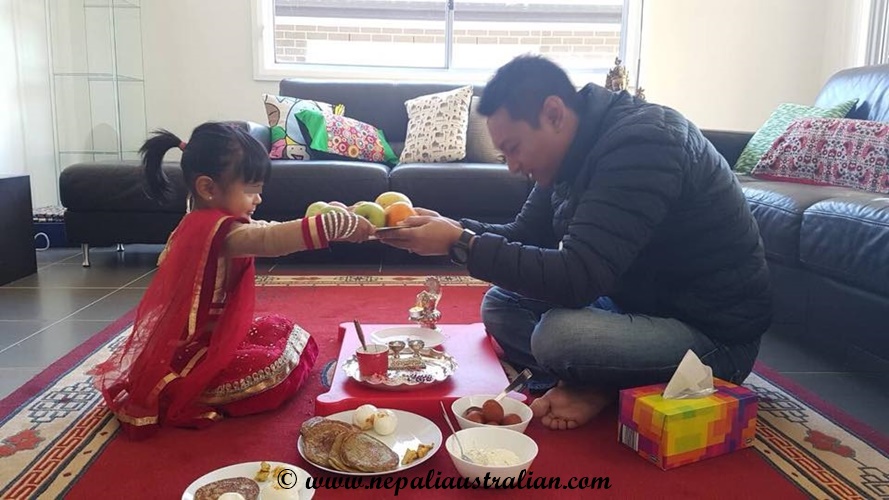
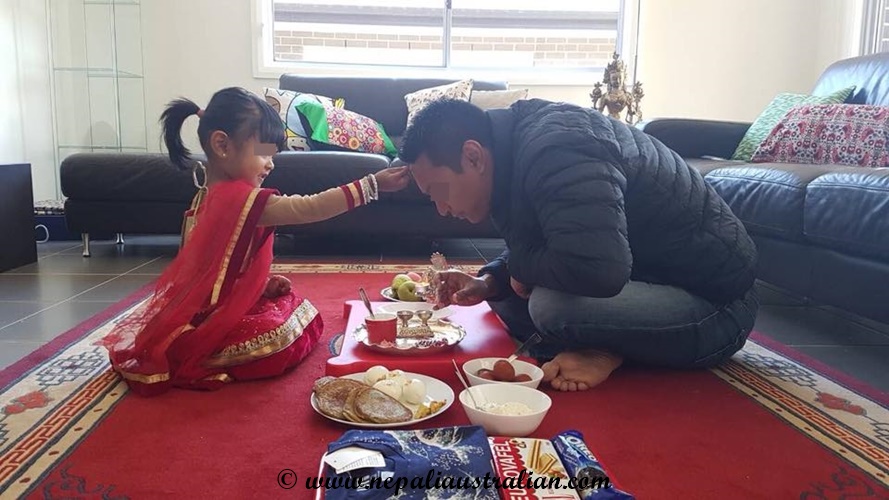
She loved her gift from her brother for Bhai Tika. 

December was busy at both work and home. We celebrated Christmas with friends and family and it was AS birthday on 28. We celebrated the traditional way with sagun and of course cake 🙂 .  

At the end of the month, we went to Melbourne for our holiday. I will write more about it in my next post. Till then please keep reading my blog and sending me your love and support. 

Take care. 

 M from nepaliaustralian

XOXO 

Superstitions Practices during Pregnancy in Nepali culture

As I come from a background where there are lots of superstitions and beliefs practiced till today. It is normal to hear dos and don’ts regarding pregnancy. I can see the logic behind some of the beliefs while about others I have no idea why they are followed.

In Nepal, they believe that when the baby is in the womb it picks up a lot from his/her surroundings and emotions and thoughts of the mother. Even though we may not realize his/her senses are active at that time, our actions have a great impact on babies even before they arrive on earth.

From the type of food to the mother’s daily actions, what to wear and what to do are some of the traditions that amazed me. Some of them I did considered following while others I couldn’t. Most of these superstitions don’t cost more money and doesn’t hurt anybody. It just may prove to be a little more inconvenient at times.

As educated as I am in the 21st century of advanced science, I am still scared sometimes not to follow the superstitions. At the back of my mind, I think that if something does happen to the baby, it will be my fault. I definitely do not follow the beliefs blindly but I do follow them as long as they sound reasonable enough and it are morally right.

Not announcing the pregnancy until after 3 months have passed

I wrote a whole post regarding this because I have my own idea why we shouldn’t announce the pregnancy very early. A higher percentage of miscarriages occur during the first trimester. Some people may feel it is just wiser to wait until after the period of instability is over. We did tell our immediate family members early and waited 3 months to tell the rest of the world, but at the end of the day it is a personal preference.

nepaliaustralian

Eating lots of almond, milk and saffron to have fair skin baby

I have talked about Asian people’s obsession with fair skin before in my blog. I thinking living in Australia for more than a decade now I have come to love my skin tone. Most people around always complement me about it and I am proud of my colour.

http://www.youtube.com/watch?v=ubbufbkbovY

But in Nepal, they still believe that fair is beautiful. Everyone wants a fair baby regardless of the colour of parents’ skin. Most people will call a fair person beautiful disregarding any other quality.

So when I told people that I am having a baby, they asked me to drink lots of milk with saffron and almonds. Some of my friends and cousins swear by it.

I do drink plenty of milk for calcium and snack on almonds but don’t do saffron at all. But in my head, I can’t imagine my baby being too fair as both AS and I are brown and I am sure we are going to have a brown baby no matter what I eat or drink.

Not watching Horror/scary/action movie

I know lots of people have asked me not to watch scary movies/ TV during pregnancy. It’s advisable not to watch horror or action movies which involve a lot of blood during pregnancy because it is believed that it may indirectly effect the growing baby. Watching violent and horror stuff on television or reading such books can create fear or violence in your child.

I do see some logic behind this because when we watch such movies, our heart may pump heavily as we get excited and this could lead to pressure on our womb.

I generally don’t watch horror movies but I do watch lots of cops/ detective dramas so I am not sure what it is doing that to the baby. I think if you feel happy after watching a movie and not frightened then go for anything that you like.

Look at the photo/picture of great people or God

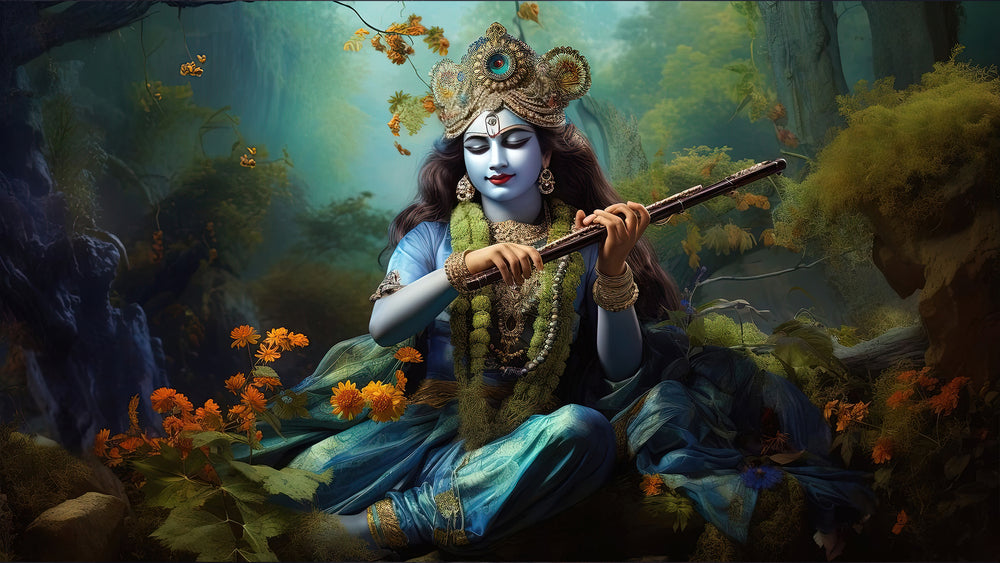
Lots of people believe that you should have a photo of a god/goddess or some famous person in your room while you are pregnant. It is also believed that keeping pictures of baby Lord Krishna and smiling faces around you in the room will also create a harmonious environment.

When my SIL was pregnant, my brother put up president Obama’s photo in their bedroom. I really don’t know what was going on in his head but if my nephew becomes a prime mister/president one day, then I will be sure that this theory works.

Also having photos of beautiful baby is supposed to make your baby beautiful as well.

Do not touch the baby in tummy during eclipse

It is believed that if one is expecting and there is an eclipse during that time both parents should be very careful and cautious. Parents should not do any activity like using a knife, scissors, pen as their child will have a mark or mole or cut on his body.  So during eclipse, one should not leave the house and should lie on the bed straight and stay indoors. Reading holy books during eclipse is beneficial for everyone specially couples expecting a baby.

Read holy/spiritual book

Parents who are more into spiritualism and read spiritual books during pregnancy believe that they notice their children will be coming from the same thought process because they read these books during pregnancy.

There is a myth people believe in for a long time in our holy book Gita.

Abhimanyu, who is the son of Arjuna & Subhadra (half-sister of lord Krishna). As an unborn child in his mother’s womb, Abhimanyu learned the knowledge of entering the deadly and virtually impenetrable Chakravyuha from Arjun. The epic explains that he overheard Arjun talking about this with his mother Subhadra from the womb. Arjun explains to Subhadra in detail, the technique of attacking and escaping from various vyoohs (an array of army formation) such as Makaravyoha, Kurmavyooha, and Sarpavyuha etc. After explaining all the vyoohs, he explains about the technique of cracking Chakravyuha. Arjun tells how to enter the Chakryavyuha. When he was about to explain how to exit from the Chakravyuha, he realizes that Subhadra is asleep and stops explaining about the Chakravyuha further. Thus the baby Abhimanyu in the womb did not get a chance to learn how to come out of it, which played a big role in his life.

Be around and in contact with positive and cheerful people.

I completely agree with this one because you don’t need extra stress during pregnancy apart from what you are already going through. If the mom to be is depressed and sad most of the time during pregnancy it will affect the child in the same manner.

I made sure that I only met people who had a positive attitude so I didn’t dwell on negative thoughts and kept myself happy during the journey.

Reciting, chanting or listening to devotional mantras

Good, peaceful thoughts and reciting, chanting or listening to devotional mantras plays a great role at the time one is expecting.  It is believed that if you listen to devotional mantras when the baby is in the tummy, he/she will have a calm personality.

Wearing loose clothing

You don’t want to show off your pregnancy in case you get an evil eye from someone. They even suggest wearing scarfs (kasto) so people won’t notice you are pregnant. Making sure you stay away from evil eyes and evil thought seems to be very important in Nepali culture.

For me it was not possible for me to wear covered clothing as most of my pregnancy was during spring and summer. I was happy to wear comfortable clothes that were not too tight but never went beyond that to make people think I was not pregnant.

Until around 5 months, I think it was not a problem anyway as it was not obvious but after that no matter what I wore, it was obvious.

I am sure there are a lot of other superstations and beliefs in Nepali/Newari culture I could add to this list. But I am going to stop here.

Please do share superstitions and practices during pregnancy in your culture. I am sure there are some interesting ones and some weird ones out there.

Till  next post take care everyone,

from nepaliaustralian

XOXO

Living in the west with values of the east

This article was published in DREAMS online magazine on 3rd October 2013.

dreams

When I was living in Nepal, I used to be annoyed and irritated by Nepali culture, tradition and values from time to time. Sometimes, I wished that I could run away from all that and live my life the way I wanted. And my wish was fulfilled when I left Nepal to come to Australia.

Having lived outside the country for more than decade now, I know how wrong my thoughts were. These days, I miss our culture, tradition, rituals and values that I used to ignore before. Not only do I miss it, I actually want to be a part of it and hope to pass it on to my kids and grand-kids one day, like my mother and grandmother did.

The festive season of Dashain and Tihar is here, and it is one of my favourite times of the year. This festive time has helped me connect with Nepal, Nepali culture and tradition. Before, I used to wish things could be as good in Australia as in Nepal, but that was just wishful thinking. So instead of being sad and depressed, this time I decided that we would celebrate the festivals with whatever we could.

With the motto, “If the mountain will not come to M, then M must go to the mountain”, we bring Nepali style Dashain and Tihar to Sydney. For the last few years, I have been having a lot of fun in Nepali festivals here.

For Dashain, I plant Jamara during Ghatasthapana, and it is ready for Tika day. During Asthami, Nawami and Dashami, we plan a Newari bhoj to mark the days.

Last year we had Kuchi Bhwey, a Newari bhoj consisting of Baji/Chiura(beaten/flattened rice), Chicken curry, Spinach, Methi kerau (fenugreek and peas), Thulo kerau (big peas), Golbheda achar (tomato pickle), Butan(meat fry), Aloo tama(potatoes with bamboo shoots), and Methi(fenugreek) salad on Asthami.

On Nawami, we followed the tradition and performed a worship of our car. Later we had Samay Baji, a Newari dish consisting of Baji/Chiura(beaten/flattened rice) , Haku Mushya (black soyabean), Chhwela (smoked meat), Puka-la (spicy roasted meat), Aalu achar (cold potato salad ), Bhuti (boiled beans with spices), Khyen (boiled egg), Panchkwa (bamboo shoot, potato, beans mixed curry), Wo or Bara (shallow fried pancakes made of black lentil), Lava-palu (ginger and garlic), Achar (pickle), Wauncha (green vegetables) and Aayla (Newari liquor).

On Vijaya Dashmi, we normally take a day off from work so we can have fun with our loved ones. It is always fun to be blessed by elders with red Tika and Jamara. Following Tika, there are a few days where we get invited for tika, and this normally concludes the celebration of Dashain.

After a few weeks, we celebrate Tihar in full swing as well. I know people overseas normally celebrate only Bhai Tika but I didn’t want to miss out on the other days. So I perform Kag Tihar, Kukkur Tihar, Laxmi Puja and Mha Puja as well.

I haven’t seen many crows around in Sydney, so I decided to print a photo of a crow to perform my puja with. I know it sounds a bit silly, but it helps me to celebrate the festival. I did the same during Kukur Puja, printed the photo of a dog that my parents have in Nepal. If you ever feel like celebrating Tihar in full swing, you may want to follow my ideas.

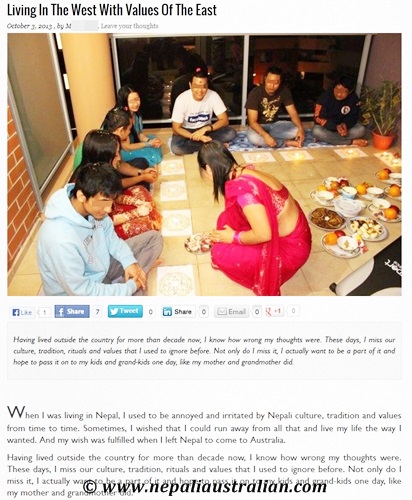
I love Laxmi Puja as it make me feel happy and there is so much to do. We start the evening by lighting fairy lights and candles. Then I perform Laxmi Puja to the best to my knowledge. I normally print out the Mandap and Laxmi’s footsteps so I can perform the puja. Living overseas, we have to make do with whatever we can rather than missing out in the belief that we can’t do it.

Following Laxmi Puja, we performed Mha Puja with my brother, cousins, and friends. Mha Puja is such a great way to come together and have fun in our Newar culture. For this puja too we used printed mandaps, which made it easy for us to set up the puja. Like in Nepal, we have Shagun (a traditional plate typically consisting of a boiled egg, smoked fish, a “bara”, haku chhoila”  and “aila”, which ends with “dhau”) and bless our body for good health.

And finally, there is the Bhai Tika, which is always a big deal for me. I have two brothers on whom I perform the Puja, and I wanted to make sure it is a great celebration. I and my cousin even learned how to make Sel Roti, so our celebration is a lot like Nepal’s. I prepare for Bhai Tika weeks in advance, making masala (pack of dry fruits & nuts) and buying fruits, snacks and clothes. I prepare Shagun on the day and bake cakes for puja as well. I am always happy to see my brothers enjoying the day with me, and blessing me with happiness and gifts.

Not only celebrating Dashain and Tihar, but we try to do whatever we can to be in touch with Nepalese tradition and culture. Recently, my nephew had his 6th birthday, and it was celebrated with yomari (a newari delicacy made of external covering of rice-flour and an inner content of treacle) mala like in Nepal. One of my nephews was born here in Australia, so we did his chatti and nwaran (naming ceremony) according to Hindu rituals. We celebrate Teej every year wearing red and eating yummy Nepalese cuisine. And whenever possible, we go to Nepal to celebrate milestones like marriage and pasni. We had a traditional Newari wedding which went for over a week, and my nephew had his pasni in Nepal with our relatives and friends.

Even though I don’t have kids of my own right now, I know that they are affected by many thing in life, but their strongest main values are learned from their parents, society and surrounding environment. I know that even in Nepal, with globalisation we are losing some of our traditional values fast, while we adopt easily imitable aspects of western culture. Nepal has a unique blend of culture and customs, and people travel millions of miles to learn and observe these in Nepal. It will be a shame for our kids not to know their own customs, traditions, and rituals.

I hope my effort in bringing our eastern culture to the west will help my kids and their kids to learn more about Nepal, Nepali culture, traditions, rituals and values, so that they know their root and can be proud of it. I have been away from Nepal for a long time, but I still cherish the values that I have learned, and I hope one day, our next generation will do the same.

Happy Dashain and Tihar to all readers. No matter where you are, enjoy it in full swing!!!!

You may also like :

*Confessions of a Shoeholic *Recycling and reusing in Nepal *Slave of Smartphone and Instant messaging