Category Archives: Nepali food

Newari Gwaramari

In Kathmandu most of us have happy memories of eating Gwaramari and tea for breakfast during cold winter months.

In Newari “Gwara” means round and “mari” means bread so Gwaramari literally means round bread but to people who have eaten it, it is not just ordinary bread but a very yummy one with a distinct flavour.

I was craving for some Gwaramari for a while so I decided to try making it with a friend. It took us a few attempts to get it right but I am very happy with the end result. It tasted really good.

Ingredients

  • 250 g plain flour
  • 2 teaspoon baking powder
  • ½ teaspoon ground cumin
  • ½ teaspoon ground coriander
  • Salt to taste
  • 300 ml water
  • 500ml vegetable oil (for deep-frying)

Method

  • In a large bowl, combine flour, baking powder, cumin, coriander and salt.

Nepali Gwaramari (2)

  • Add water slowly stirring continuously to make a thick paste.
  • If you have time, cover with plastic wrap and place in the fridge overnight otherwise for at least 2 hours.

Nepali Gwaramari (3)

  • In a deep pan, heat the vegetable oil. The oil is hot enough, if you drop small amount of batter and it quickly rises and becomes brown.
  • Once the oil is hot enough, take a table spoon of mixture and place it gently on the hot oil. The dough will puff up and rise to the top of the pan. You can add multiple balls at the same time.

Nepali Gwaramari (4)

  • Fry them until golden brown.
  • Take it out and use paper towel to soak the extra oil.

Nepali Gwaramari (1)

  • It is best served hot with some Masala tea.

Take care everyone,

from nepaliaustralian

XOXO

Jwano ko Jhol (Thyme Seeds Soup)

As I mentioned in my previous post, Jwano ko Jhol is a traditional Nepali soup which is given to new mums to increase their supply of milk. I wasn’t very sure about it before but I now swear by it.

Jwano ko Jhol  (1)

Initially when I started drinking it, I had an over supply of milk so I needed to decrease the amount I drank. Then after a while when I stopped drinking it completely, I could feel the supply of my milk went low as well. So I started drinking it in again but in small amount.

Jwana ko jhol is also believed to have lots of health benefits like helping to heal the wounds, relieve body aches and help with cold and cough. Thyme also has potassium, iron, calcium, manganese, magnesium, and selenium for the well-being of our body.

The soup is very easy to make.

Ingredients for 2 cups of soup

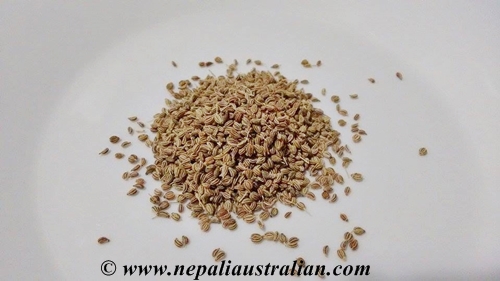
  • 2 tea spoon Jwano (Thyme seed)
  • 1/8 teaspoon of turmeric powder
  • 1 tea spoon of fresh ginger garlic paste
  • ½ tea spoon cumin powder
  • ½ teaspoon ghee (clarified butter)
  • Salt as per taste
  • 2 ½ cups water

Method

  • Heat a saucepan over medium heat and add ghee when hot.
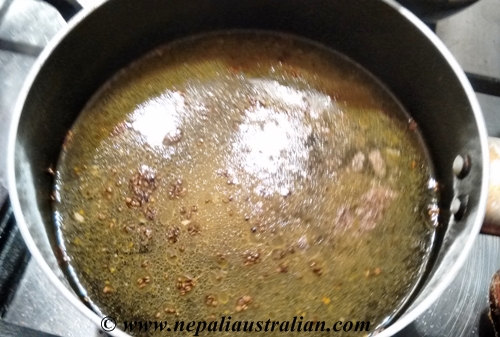
  • When ghee is melted, add jwano, turmeric powder, cumin powder, ginger garlic paste and salt and stir them together.

Jwano ko Jhol  (2)

  • After about a minute once you smell the ginger garlic flavour add water and let it boil for a few minutes.

Jwano ko Jhol  (3)

  • Jwana ko jhol is now ready to serve
  • Enjoy!

Take care everyone till next post.

from nepaliaustralian

XOXO

My extra special Aama ko Mukh herne (Nepali Mother’s day)

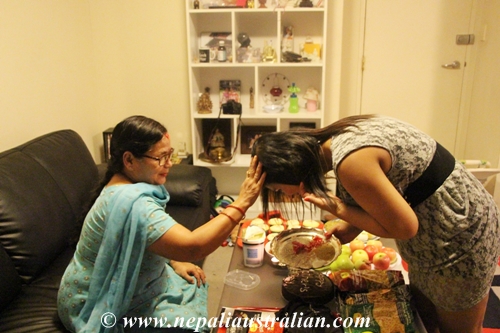
As I have mentioned in many of my posts before, Nepal has a different calendar than the Gregorian calendar. So in Nepal people also celebrate Mother’s day on a different day than the western calendar. In Australia, Mother’s Day is the second Sunday of May every year but in Nepali calendar, it depends on the moon. It falls on the last day of the dark fortnight of April or early May. This year, it happened to be on 18 April 2015. It is commonly known as Aama ko Mukh herne in Nepal which translates to “Looking at one’s mother’s face”.

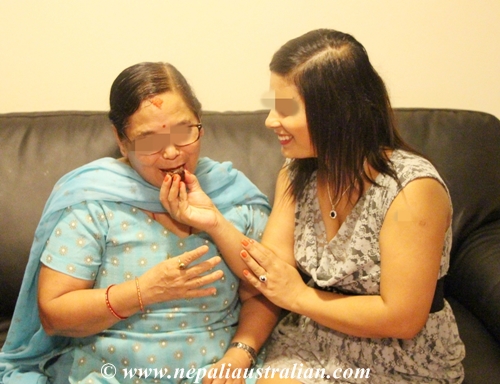
This year Aama ko Mukh herne was extra special because my mum is here with me. The last time we were together for Aama ko Mukh herne was more than a decade ago so I was really excited.

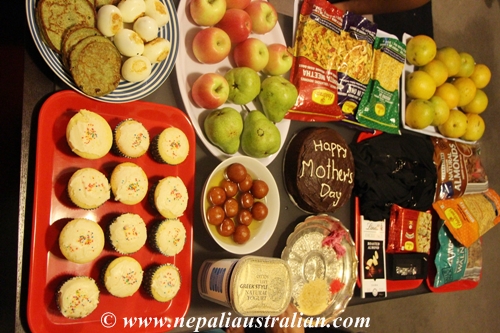
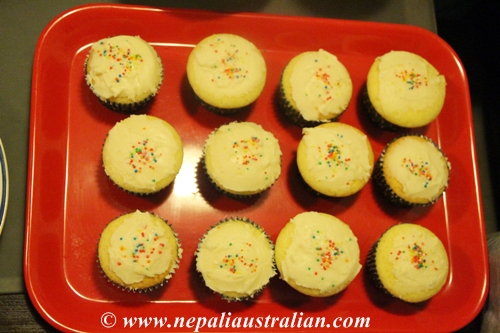
To make the day special for her I prepared Sagun, baked cupcakes and a cake. I also bought a dress, a nice watch, fruits, sweets and snacks.

Aama ko Mukh herne (1) Aama ko Mukh herne (4) Aama ko Mukh herne (3) Aama ko Mukh herne (2)Aama ko Mukh herne (12)

It was amazing to do the Aama ko Mukh herne ritual in person as compared to on Skype Aama ko Mukh herne.

Aama ko Mukh herne (5)Aama ko Mukh herne (6)Aama ko Mukh herne (7)Aama ko Mukh herne (8)

Mummy was really happy and I am glad I was able to make her feel special.

Aama ko Mukh herne (10)Aama ko Mukh herne (11)

Also this is my first Aama ko Mukh herne as a mum and just looking at Chhori smiling in the morning made my day extra special.

Aama ko Mukh herne, Mata Tirtha, Nepali Mother’s day

So if you haven’t called your mum to wish her, do give her a call and make her smile. And to all the proud moms out there, Happy Aama ko Mukh herne.

Till  next post take care everyone,

from nepaliaustralian

XOXO

Dahi Chiura Ceremony

As I mentioned in my previous post, I had my baby shower but I was waiting for my parents to arrive from Nepal to do a traditional baby shower, also known as Dahi chiura ceremony in Nepali or Dhau-baji in Newari.

In this ceremony, the mother-to-be’s family comes to feed Dhau-baji (yogurt and flattened/beaten rice) and brings Sagun and lots of food along with gifts for the mother-to-be as well as the unborn baby.

My parents have arrived in Sydney now so I am extremely happy as I will have a helping hand to look after the little one for the first few months. I could not imagine how I would have managed if they were not here.

Last weekend, my parents along with the help of my brother and SIL organised the Dahi Chiura ceremony. It was a traditional ceremony with the ladies all wearing saris.

Dhai Chiura (14)

My mum made Yomari and sagun (bara, boiled eggs, chicken and fish) for the occasion and bought some sweets, fruits and cakes as well. They also bought clothes for me along with jewelleries as well as things for little one.

Dhai Chiura (5) Dhai Chiura (4) Dhai Chiura (3) Dhai Chiura (1)

It was a family affair with just me, AS, my parents, brother, SIL and my little nephew.

Dhai Chiura (15) Dhai Chiura (2)

For the ceremony, my mum followed the followings steps, if anyone wants to know. It might be different for different cultures but I believe the basic will remain the same.

Dhai Chiura (6) Dhai Chiura (7)

  • The ritual started with my mother worshipping Lord Ganesh in the Sukanda. She put tika made of vermillion, rice and yogurt and flowers on Lord Ganesh..
  • Then she put tika for me and AS.
  • Then she gave us the gifts of fruits, sweets, clothes, and jewelleries.
  • This was followed by Sagun and then the main event of dahi chiura, where everyone feeds me dahi chiura.
  • Everyone was given Sagun and sweet as well after this.
  • Thus the main event of dahi chiura is was conclude.
  • Cake is normally not a traditional inclusion for dahi chiura but we had one so I and AS cut the cake together

Dahi Chiura (12) Dahi Chiura (13) Dahi Chiura (16)

For many reasons, the dahi chiura ceremony is one of my favourite celebrations for our coming daughter.

Dahi Chiura (9) Dahi Chiura (10) Dahi Chiura (11)

In addition to normal family dahi chiura, the pregnant mother is often invited by her relatives to eat meals with them. I had invited many of my family and friends who were pregnant to my place and done the same ceremony so it is my turn to be invited to my close friends and family’s place for the dahi chiura ceremony as well.

It was really nice of all of them to get involved making me and the baby feel special. Here are some of the pics from various occasions of dahi chiura. I was spoiled with lots of blessings, yummy foods and lots of useful gifts .

Dahi Chiura (18)

I am so glad that we are keeping Nepali traditional alive living so far from home and I want to show all these photos to my daughter one day and explain the traditions and culture.

Hope you enjoyed the traditional way of Nepali/Newari baby shower.

Take care,

from nepaliaustralian

XOXO 

Payaj ko pakoda (Crispy Onion Fritters)

As you know mums love to cook and my MIL is no exception so when she was here we got to eat a variety of Newari and Nepali food like Yomari, Haluwa, aloo chops and she also made Pyaj ko pakoda.

Pyaj means onion in Nepali.

The process is very simple and I am sharing the recipe here.

Ingredients

  • 3 medium size Onions, finely sliced
  • 1/2 cup Gram Flour (Besan Flour)
  • 1/4 cup Rice Flour
  • 1 teaspoon grated Ginger
  • 1/2 teaspoon Red Chilli Powder
  • 2 tablespoons finely chopped Coriander Leaves
  • Oil, for deep frying
  • Salt to taste

Method

  • In a bowl, mix sliced onion gram flour, rice flour, ginger, red chilli powder, coriander leaves and salt.

Payaj ko pakoda (1)

  • Add ¼ cup of water and mix well and keep aside for 5 minutes.
  • The onion pakoda batter is ready to be fried. Do not add more water unless required otherwise pakodas will not turn crispy.
  • Heat oil in a deep pan (or wok) and take a handful of batter mixture in the hand and gently drop 3-4 small fritters into the oil at a time and deep fry.

Payaj ko pakoda (2)

  • Fry the onion pakodas, till they look crisp and golden on both sides (once the underside is golden brown turn them over so both sides are golden). Repeat the process for the remaining batter and deep-fry in batches.
  • Remove them with a slotted spoon and drain them on the kitchen paper towels for excess oil to be absorbed.

Payaj ko pakoda (3)

  • Serve onion pakodas with your favourite sauce.

Payaj ko pakoda (4)

Take care,

M from nepaliaustralian

XOXO