Tag Archives: Mehendi

Happy Sharwan Sankranti

Shrawan, the fourth month in the Nepali Hindu calendar, is steeped in religious and cultural significance. This month is considered the holiest for Hindus, with rituals and traditions that embody devotion, purification, and the deep connection between the divine and human realms.

The word “Sankranti” in the context of Shrawan Sankranti refers to the Sun’s transition from one Rashi (zodiac sign in Nepali astrology) to another, signaling the beginning of a new Nepali month. Specifically, Shrawan Sankranti marks the Sun’s southward journey, an event that is both astronomically and spiritually important.

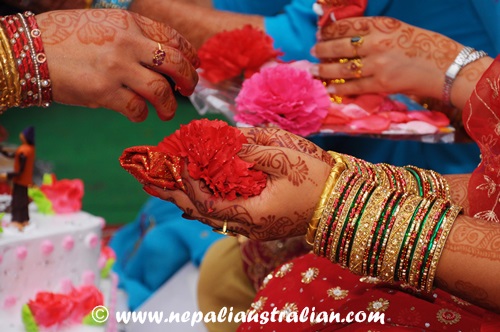
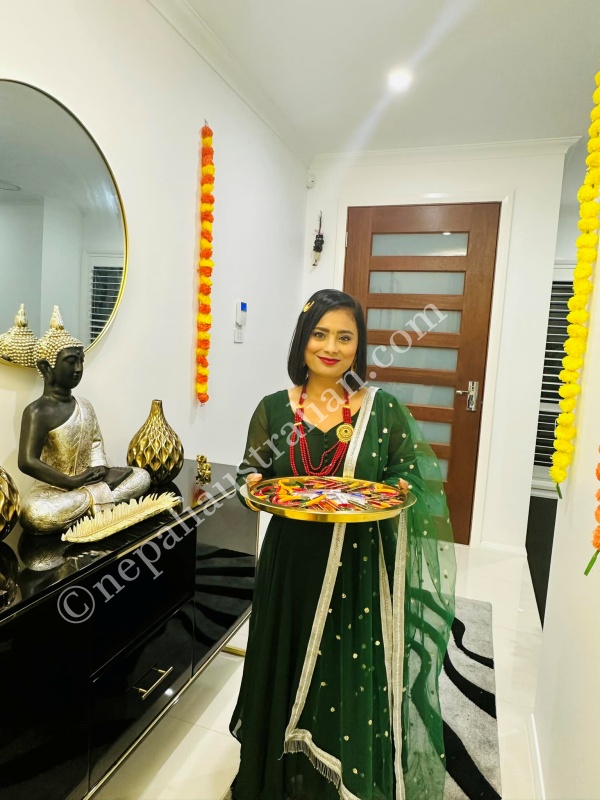
From the very first day of Shrawan (which fell on July 17 this year), social media and public spaces alike are vibrant with images of women adorned in mehendi (henna) and green and yellow chura (bangles). These colors are not just for beauty; they symbolise fertility, prosperity, and the health of their families. The entire month is dedicated to these rituals, with Mondays, or Shrawan Somvars, being particularly significant. Each Shrawan Somvar, devotees flock to Shiva temples, fasting and offering prayers to Lord Shiva, the god of destruction and transformation.
Shrawan’s importance is deeply rooted in Hindu mythology. It is said that Sati Devi, in her previous birth, vowed to have Mahadev (Lord Shiva) as her husband in every lifetime. After her death, she was reborn as Parvati, who fasted and prayed throughout the month of Shrawan, eventually winning Shiva’s heart and becoming his consort. This story is why Shrawan is so sacred and why women, especially, dedicate this month to worshiping Lord Shiva, seeking his blessings for marital bliss and familial prosperity.

Throughout Shrawan, married women wear red attire complemented by green and yellow glass bangles, along with green pote (glass beads) around their necks. These adornments are more than just accessories; they are symbols of devotion and prayers for the long life and well-being of their husbands. For unmarried girls, wearing these bangles during Shrawan is a hopeful gesture, symbolising their wish for a good husband and a happy marriage.

The spiritual fervour of Shrawan is also evident in the Bol Bam pilgrimage. Devotees undertake this challenging journey, walking or running barefoot, often covering great distances to reach the Pashupatinath Temple and other Shiva temples. Along the way, they chant ‘Bol Bam,’ which means “Say Shiva,” as a form of devotion and penance. The pilgrimage is believed to bring blessings, good health, wealth, and happiness to the devotees and their families.

In addition to these rituals, Shrawan is also a time for various religious festivals and fasts. One of the most celebrated festivals during this month is Nag Panchami, where snakes are worshiped as protectors and symbols of fertility. Devotees offer milk, rice, and flowers to snake idols or real snakes, seeking their protection and blessings.

The month is also associated with the practice of fasting, especially by women. Mondays are often observed with strict fasting, where women consume only water or fruits and spend the day in prayer, reciting mantras dedicated to Lord Shiva. These fasts are believed to purify the body and soul, bringing spiritual merit and the fulfillment of desires.

Shrawan is a time when the monsoon season is at its peak in Nepal. The heavy rains are seen as blessings from the gods, nourishing the earth and bringing fertility to the land. This natural abundance is mirrored in the cultural practices of the month, where green, representing life and growth, becomes a dominant color in clothing and decorations.

The vibrancy of Shrawan is not just limited to religious practices but extends to social and familial gatherings. Communities come together to celebrate, share meals, and participate in collective prayers. The month fosters a sense of unity and continuity, as age-old traditions are passed down and kept alive by the younger generations.

Shrawan is a beautiful blend of devotion, tradition, and nature, encapsulating the spiritual essence of Hindu culture. The month is not just about rituals but about reconnecting with one’s roots, honoring the divine, and celebrating the eternal cycle of life.
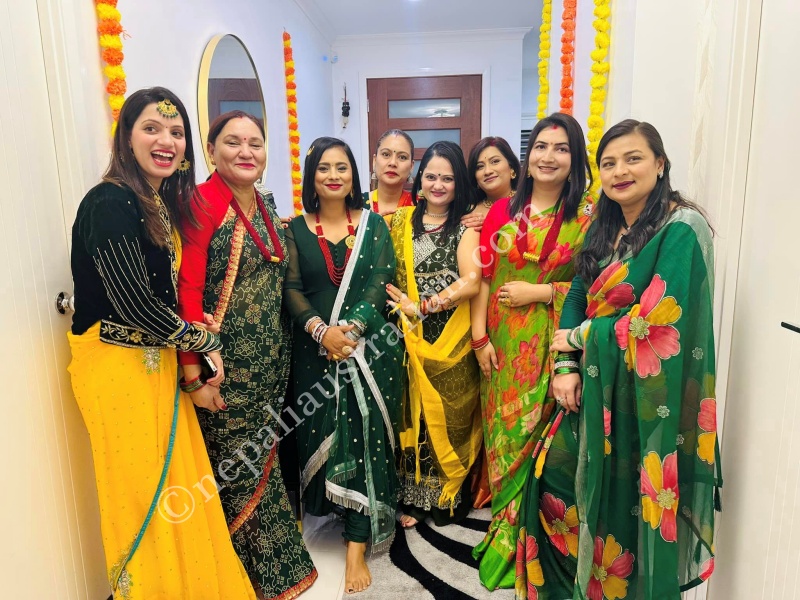
I am fortunate enough to celebrate this beautiful tradition with my friends here in Australia. Being able to partake in the customs and rituals of Shrawan, even far from home, is a blessing that fills me with joy and a deep sense of connection to my culture. The laughter, the shared stories, and the collective prayers made the experience truly special. It was so much fun to immerse myself in this vibrant tradition, and it’s heartwarming to see our cultural practices thriving across the world. Celebrating Shrawan here reminds me that no matter where we are, our traditions keep us connected to our roots and to each other.

Wishing you all a blessed and joyous Shrawan!

Take care, everyone!

XOXO

M from NepaliAustralian

Our Story : Supari ceremony – Part 40

This is a continuation of my previous posts. Please read the previous posts here.

Wedding Ceremony

The Supari is the Newari equivalent of the engagement ceremony in western weddings; a formal announcement/acceptance of the relationship. The bride’s family isn’t able to proceed with any of the wedding parties until the Supari is received from the groom’s side.

Supari (12)

Supari is the Nepali word for betelnut and the deal is sealed by an event called ‘Gway Bigu’ or the sending of 12 pieces of supari (betle nut) from the groom’s family to the bride’s which is used during the “Swayambar” ceremony. The family of the groom-to-be also presents a set of clothes along with jewellery, lots of rotis, fruits for the bride as a sort of first gift to the soon to be daughter-in-law. In most cases, this supari-taking ceremony occurs four days before the actual wedding ceremony, but it can be earlier or later to suit the families.

Supari (13)

When I woke up that morning, I had butterflies in my stomach. I was relaxed before but suddenly I was a bit scared as it was getting very real with the upcoming Supari ceremony. It is funny how you can easily get overwhelmed by the situation looking at what is happening around you. My house was full of people, relatives and friends. It was noisy and everyone was busy doing something or other. They all seemed to be busy but I didn’t know what I was supposed to do. I asked my mum what things are to be done before I go to beauty parlour to get ready. She asked to have breakfast and go so I can come back as soon as possible. I had made an appointment in nearby salon and the lady had told me, it would take up to 3 hours to do my hair and makeup.

Wedding Ceremony Wedding CeremonyWedding Ceremony

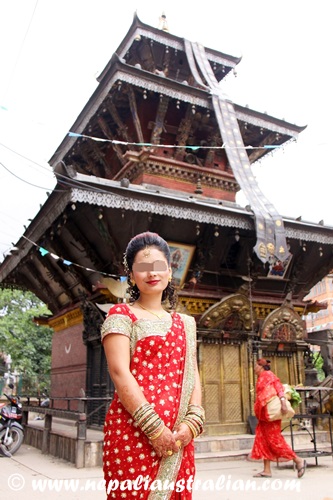
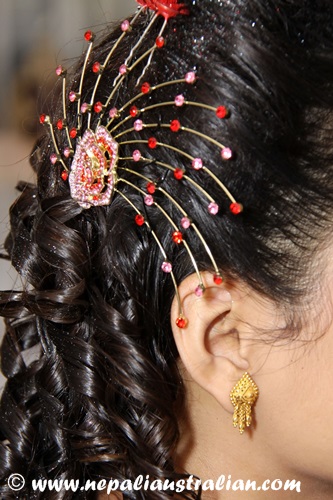
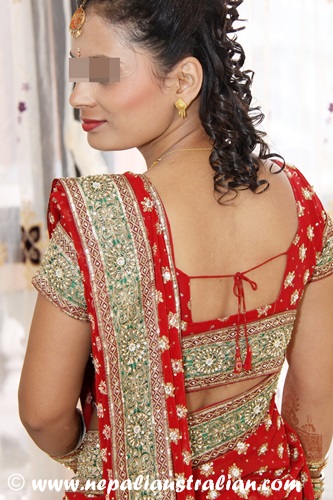
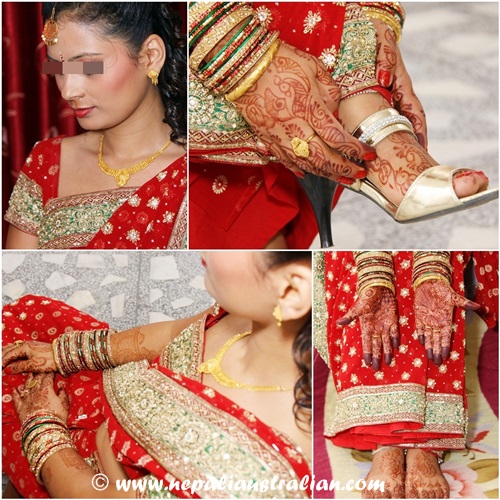
When I came out of the parlour, I felt like a real bride. I was wearing a red sari with green border which had golden work done with beads. I had bought this sari while I was in India and loved the simple style and the border. I had my hair made up in a bridal way complementing my bridal makeup. I wore lots of Chura (glass bangles) to match the sari.

Supari (1)Wedding Ceremony

I also wore a gold necklace set and golden chura my parents had made as part of my wedding jeweleries.

Supari (2)

My friend came to pick me up when I was done. From there it was straight to the venue where Supari ceremony was happening. As we were early and the photographer was already there, we had the opportunity for some photos. I am not sure what I was feeling because it was the first ceremony with so many people and things started to get more real.

Wedding Ceremony Wedding Ceremony Wedding Ceremony

Then most of the relatives and friends started to come. The groom’s family informed us that some of the family members were on the way for Supari ceremony. Like in most Asian society, wedding is the time when the family status is displayed by showering the bride with expensive jewelleries. My parents and MIL had made sure that nothing was spared in planning so I was getting lots of jewellery from both side of the family.

Wedding Ceremony

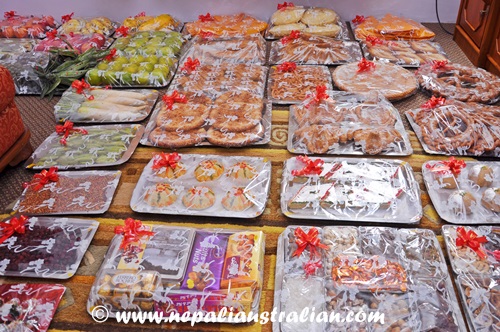
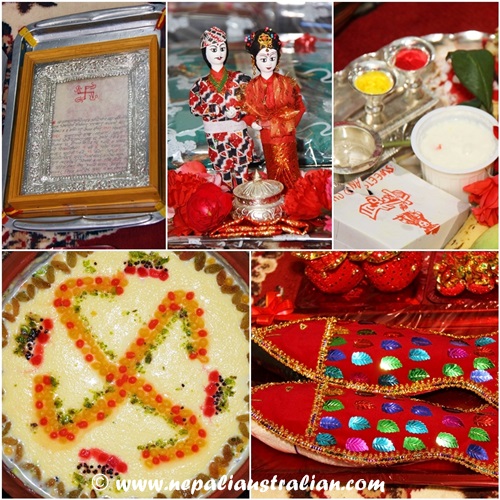
For this occasion, the groom doesn’t come but had sent his 4 cousins with trays of gifts like jewellery, Saris, cosmetic, shoes, bags (I went shopping with my mother in law beforehand and she let me pick everything of my choice which was so nice of her), fruits, Nepali Roti, Masala and much more. There was Supari (betle nuts) and coconut nicely decorated in red clothes and beads, fish decorated with lots of glitter, and decorated yogurt.

Wedding Ceremony

One of the biggest highlights was the cake(remember all the drama I had to get this cake done and I am so glad the final outcome was so good). It was a white forest two level cake with a traditional topper (two men carrying bride in Doli) . Everyone loved it. I am glad we selected that.

Wedding Ceremony Wedding Ceremony

There was a diamond necklace with earrings, a pearl set and the important Tilhari (necklace made of small pote beads with a gold pendant) and Sindoor (Vermilion).

Wedding Ceremony

But the most important out of all this is Sahit paper (The paper which has the details of date and time for our Swayambar). An astrologer decides on an auspicious date, or Subha Sahit, after gauging the influences of the celestial bodies on the bride and groom based on the dates and times of their birth. Fixing the date is but an end of a long, tedious process of setting everything on a right course. Preceding it are labyrinth of activities, like matching of kundalis and comparing and cross-checking of gotras, or ancestral lineages, of the couple. The Sahitpaper was framed nicely in a silver frame.

Supari (23)

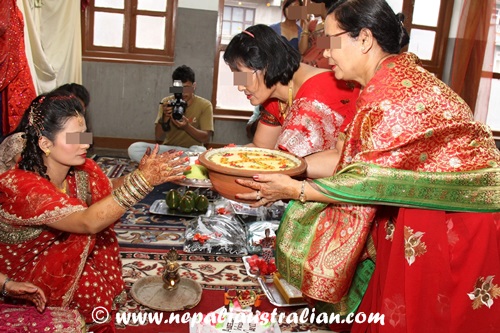
The ceremony started with my aunt (eldest woman in the family) doing some Puja and then they handed me all the gifts including Sahit paper, Sindoor and Tilhari. The priest was instructing my aunt on what to do and with the help of my mum the ceremony was concluded. Wedding CeremonyWedding Ceremony

I was so preoccupied during the ceremony that I missed lots of the things that happened. Luckily, there is a video as well as photos for me to relive all the wonderful memories from the day.

I wore all the jewellery and some glass bangles.

Supari (19)Supari (17)

Then it was time to cut the cake. In Newari wedding, both the cakes are cut by bride herself. I cut a cake and it was given to everyone. A big piece that said A weds M was sent for AS so he can have later.

Supari (20) Supari (21)

As you know, no ceremony in Nepali culture ends without the big Bhoj (party) so there was Bhoj and refreshment for everyone including AS’s cousins.

Wedding Ceremony

It was a simple ceremony but it had a great significance as it formally started the wedding 🙂 .

Supari (15)More on the wedding in the next post.

Take care,

M from nepaliaustralian

XOXO

P.S: Do not forget to vote your favorite blog . NEPALIAUSTRALIAN’s Blog Award 2014

Go to Part 41

Our Story : Mehendi ceremony- Part 39

This is a continuation of my previous posts. Please read the previous posts here.

Finally after so many ups and down, the wedding rituals began. The first ritual was the Mehendi ceremony.

Nepali wedding, Newari wedding, Nepali bride , Nepali groom, Traditional Nepali wedding, Nepali wedding Sari

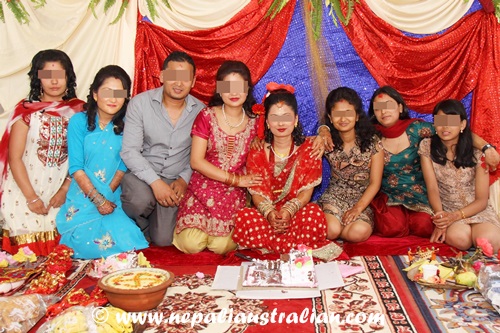
Mehendi ceremony is not a traditional part in Nepali wedding but I wanted to do something similar to hen’s night in Nepal. I did have a hen’s night in Australia but I still wanted to do something in Nepal with my cousins and friends as well to remember my wedding as a fun ceremony.

mehendi (3)

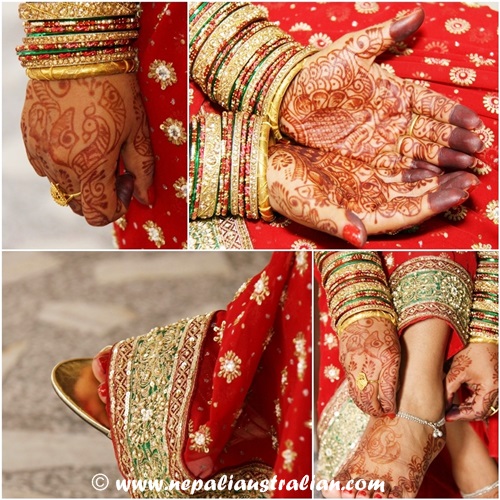
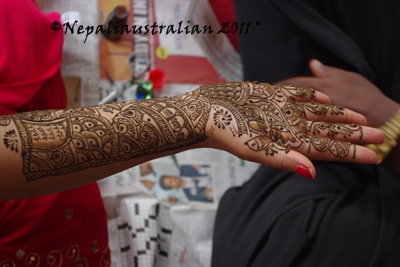
Mehendi means henna and, during this ceremony, a henna artist applies mehendi to the bride’s hands and feet, as well as to the hands of all female relatives and friends. This is purely done for decoration and to make the bride look even more beautiful on her wedding day. So I arranged a person to come to my place to put Mehendi on. I invited all my close female relatives and good friends. So it was going to be a girl’s night with Mehendi and music.

Nepali wedding, Newari wedding, Nepali bride , Nepali groom, Traditional Nepali wedding, Nepali wedding Sari

I went for bridal Mehendi while all my friends and family had simpler ones. The bridal designs are so intricate, that they require several hours to be drawn and then to dry. My mehendi took more than 3 hours. It was hard spending 3 hours sitting on a chair, with somebody painting your hands and feet, you just cannot move even to eat, drink, go to the loo or basically do anything at all except for talking.

Nepali wedding, Newari wedding, Nepali bride , Nepali groom, Traditional Nepali wedding, Nepali wedding Sari

I waited for another hour for the mehendi to get a little dry and then applied a mixture of lemon and sugar. It is supposed to make it darker. Whole day passed with us having fun while the mehendi guy was applying mehendi to everyone’s hand.

Nepali wedding, Newari wedding, Nepali bride , Nepali groom, Traditional Nepali wedding, Nepali wedding Sari

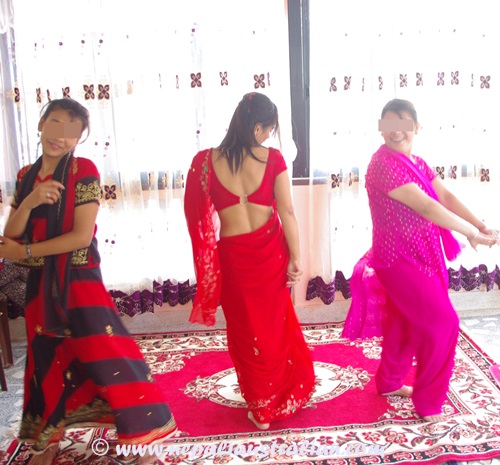
The mehendi was followed, in the evening, by dancing and music. It was great to see people dancing including my aunts and cousins and having fun. My mum was also having a great time and even though she was busy at the same time as she was making lunch for the guests. It was worth all the effort and money I paid the guy at the end of the day.

mehendi (2)

When I scrubbed off the dried out Mehendi, it had left a deep red coloured design. It is a common belief that the darker the colour of the mehndi on the hands on a bride, the more will she be loved by her husband. I was thinking, of course I know that and that is the reason I am getting married to him 🙂

Wedding Ceremony

Take care,

M from nepaliaustralian

XOXO

P.S: Do not forget to vote your favorite blog . NEPALIAUSTRALIAN’s Blog Award 2014

Go to Part 40

Sharwan Sankranti

Shrawan is the fourth month in the Nepali Hindu calendar. The word Sankranti means transmigration of the Sun from one Rashi (zodiac in Nepali astrology) to another and is also the beginning of the Nepali months. The day when the sun begins to move southwards is called Shrawan Sankranti.

My Facebook wall is painted with my friends’ photos with mehendi (henna ) and green and yellow chura (bangles) on their hands from the 1st of the Sharwan (17 July).

Shrawan month is considered as the holiest month of the year for Hindus and each Somvar (Monday) of this month known as Shrawan Somvar is a special day in Shiva temples. For women this month is all about Mehendi (henna tattoos) and green/yellow chura.

According to a legend, Sanat Kumar asked lord Shiva why Shravan Monday is his favourite day. So lord Shiva Mahadev told him that Sati devi did Sankalpa that to get Mahadev as husband in every birth before her spirit left her body in her father’s house with the power of Yoga. In another of her births, Sati devi took birth in Himachal as Parvathi as the daughter of Queen Menka. Parvati fasted the whole month of Shravan and pleased Mahadev and so was married to him. Due to these reasons it is regarded as the main month for worshiping Lord Mahadev.

During this month Hindu women wear red attire with green and yellow bangles, pray for the long and prosperous life for their husbands. For married women, along with green/yellow glass bangles on their wrists, they also wear strings of green pote (glass beads) around their necks. It is believed that green glass bangles are worn for fulfilling one’s desires and wishing a happy and prosperous life to families.

On the other hand, unmarried girls of marriageable age also wear bangles in hopes of getting a handsome guy, and for those who already have boyfriends, making them husbands.

In addition, women perform rituals for Lord Shiva, the god of destruction, at the Pashupati temple and other Shiva temples like in Makhan, Hanuman Dhoka in Kathmandu, capital of Nepal.

Another important facet of Sharwan month is “Bol Bam” pilgrimage. Thousands of devotees visit the Bol Bam Dham, a pilgrimage to offer their worship to Lord Shiva. The pilgrims shout ‘Bol Bam’ or ‘Bol Bam’ meaning ‘Say Shiva’ during the pilgrimage. The devotees run or walk barefooted for kilometers to reach the Pashupatinath Temple for their good health, wealth and happiness.

It looks like everyone is excited to follow the tradition, both young and old, who paint their hands and wear green/yellow chura. I am so glad that everyone is excited on this month and is helping save the tradition and culture.

Happy Sharwan Sankranti !!!

Take care everyone!

XOXO

M from nepaliaustralian

You may also like:

*Bhai Tika : Tihar *Vijaya Dashami : Dashain *Indra Jatra

Reliving our Big day

It is 95 days since our wedding. I know it is funny I am counting days and I hope to count them in years as time pass by. We had big wedding (Big, Loud, Crowded, Nepali wedding) and I enjoyed every minute of it. It involved lots of culture, tradition and people I never knew. So I decided I should write about my experience before it goes fuzzy in my head. We had Nepali Newari wedding. I am going to write about our engagement and will continue with all the steps of our wedding. The steps were as follows:

  •  Engagement ceremony –  The day we were officially engaged.
  • Mehendi” ceremony – The day where all girls including Bride get henna tattoo on their hand.
  • Supari” ceremony (from Groom to Bride) – The day when Groom’s family send lots of gifts like jewellery, Saris, cosmetics, shoes, bags, fruits, Nepali Roti , Masala and much more.
  • “Swayambar” ceremony -The day where all the marriage ritual happens and groom put Sindoor (Vermilion) on bride’s forehead and parting of her hair.
  • Bride side Reception – Reception from bride and her family for all their relatives and friends.
  • Janti -The day groom and his family come to bride’s home to take her to their home.
  • Groom side “Supari – The day where Bride is officially introduced to Groom’s family and they give bride jeweller or money.
  • Groom side Reception Reception form groom and her family for all their relatives and friends.
  • Mukh herne” ceremony – The day when Bride’s family come and meet Bride with lots of gifts like jewellery, Saris, cosmetic, shoes, bags fruits, Nepali Roti , Masala and much more
  • WanjalaThe newly married couple visit the temple (Kul Deuta)
  • “Jwain Bhitraune” ceremony – Days when Groom is invited to close relative of Bride for Sagun.