Category Archives: Nepali Culture

Nwaran for my nephew

Baby BJ was 11 days old last Friday so we had a ceremony held for him called Nwaran.

The ceremony is also known as Machabu Byakegu in Newari. It takes place on the  11th day from birth. This ceremony is performed to give a birth name to a child according to his/her lunar horoscope, this is usually not the name by which he/she will be known. This ceremony is normally small and celebrated amongst close family.

We are lucky to have a friend who is also a priest. He gave us a list of things that are required for the day and everything was ready when he arrived at my brother’s place at 8.30 am.

The main ceremony was conducted in the balcony of my brother’s apartment.  Before the priest arrived we had cleaned and mopped the place. So, when he arrived, he started making a Mandap on the balcony. Once it was ready he asked my brother to come and join him for the Puja.

He had all his books of mantras and it took more than an hour for the first phase of the Puja to finish. It involved lots of mantra reciting from the books and lots of different Pujas to God, with candles on the Mandap.

Then he asked my Sister in law and Baby BJ to join the Puja. He chanted more mantras from the book. Then he asked my SIL to perform Puja to the sun. Then he put tika on Baby BJ’s forehead and gave him a piece of paper which had details required to make his Jaata (lunar horoscope chart). It will be done by my parents in Nepal.

Then we took little BJ for Surya Darshan, i.e. to let the sunray fall on him as a blessing. He was also given a holy cloth with his birth name written on it.

Then he put Tika on my brother, SIL and then the rest of us. He also put Janai (holy string) around our wrists.

After that all of us put Tika on baby BJ as our blessings.  Little BJ got lots of gifts from all of us, mainly clothes and toys.

After the Puja was concluded we had our morning brunch.

Chhaithi for my nephew

AS I mentioned in my post Nwaran and Pasni previously, there a so many rituals in Hindu culture when one has  a baby. Now that I have a nephew, we need to follow the rituals and one of them is called Chhaithi (sixth day) as it is performed on the sixth day after a child’s birth. So yesterday I went to my brother’s place after work to celebrate the Chhaithi of my little nephew.

For Chhaithi, the fufu (baby’s dad’s sister, or the baby’s paternal aunt) will need to bring some koseli (gifts for the baby) which includes fruits and sweet along with a new pair of clothes for the baby. She will also bring a notebook and a pen/pencil.

So to start the Chhaithi, the fufu sits with the infant on the ground and they are be surrounded by 12 oil lamps (diyo, we used tea light candles instead) and one more diyo is also lighted for god.  A puja thali is prepared which is used to put tika on baby’s forehead. Then the baby will be changed into the new clothes.

After that everyone else (starting from the fufus) will put tika on the baby’s forehead and give some money or other gifts to the fufu. The last one will be the baby’s father who will give some gift to his sister and take the baby from her.

After the ceremony when the baby goes to sleep, the notebook and pen is kept on his bed side along with one of the candles. It is believed until that day , the baby’s fortune is not written so that night, god will come and write his fortune using that notebook and pen.

Proud Parents

It was my first experience to be a part of baby’s life from their early days. I really enjoyed it. This Friday we will be celebrating his Nwaran.
BTW, they have a name for the baby now and I will be referring him as Baby BJ from now on.

Nwaran and Pasni

As you must have noticed by now, Nepali people have lots of celebrations and functions. When a baby is born there are many celebrations as well.

The first ceremony is called Nwaran (analogous to baptism ceremony). It is also known as Machabu Byakegu in Newari. It takes place on the 11th day. This ceremony is performed to give a birth name to a child according to his/her lunar horoscope, this is usually not the name by which he/she will be known. This ceremony is normally small and celebrated amongst close family.

Then there is Pasni ceremony which is also known as rice feeding ceremony or Weaning Ceremony. This ceremony is also called Annaprashan which in Sanskrit term, literally means grain initiation. It is the first time the baby is fed solid food. It is called Macha Junko in Newari.

Pasni is normally held after 6 months from birth for a baby is boy while if it is a baby girl, it is held after the fifth or seventh month. The day and time will be fixed after consulting a priest/astrologer.

As I have attended a few Pasnis lately, I am sharing the photos and procedure of Pasni here.

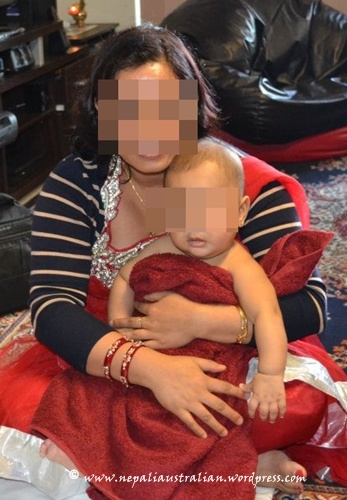
The ceremony begins at home. On the morning of Pasni, the baby will be showered and wrapped in a towel for the ceremony to begin. The Fufu (Babies dad’s sister) of the baby will hold the baby during this ceremony. Normally Fufu and other women in the family wear red sari.

Special Pasni dress

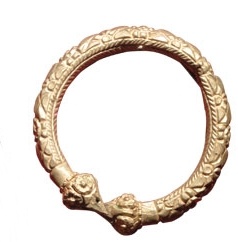
kalli

The place where the ceremony is to be held is cleaned and all the required ritual puja plate and food are arranged. Then the elder lady of the family will start the puja with the help of the priest. The first step is to put tika on the forehead of the baby, then the baby is given a special outfit, usually made of red velvet and embroidered with silver and golden threads. Gold and silver ornaments are also given to the baby, like heavy silver anklets (kalli) carved with dragon at both the ends to keep the bad omens away from the baby as well as gold bracelet.

Once it is handed over, the baby is dressed in this special outfit and the ornaments and further ritual starts. First the baby is given dubo ko mala (a garland of holy grass). Then it is followed by puja and symbolic feeding of kheer (rice pudding) or the first bite of solid food. The baby is then offered all kinds of foods to taste from Thaa bu (a plate which has eggs, yogurt, wine, fruits, Roti, meat, fish) .

Thaa Bu

Baby will be also offered a tray of stuffs like books symbolising learning, jewels symbolising wealth, a pen symbolising wisdom, clay symbolising property, food items symbolising a love for food (There can be anything symbolising a career. A friend of mine had stethoscope symbolising a doctor) and it is believed that depending on what the baby pickes, it will determine his/her future career. Family and friends have a great time cheering the little one while he makes his choice.

Baby trying to pick a object during pasni ceremony

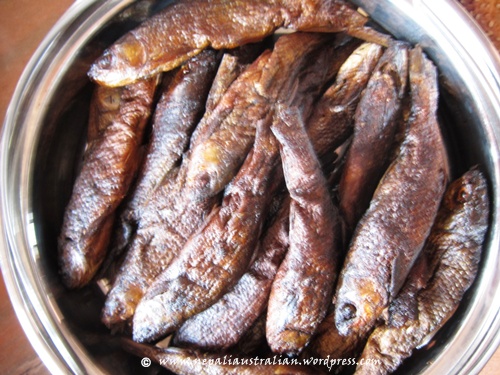
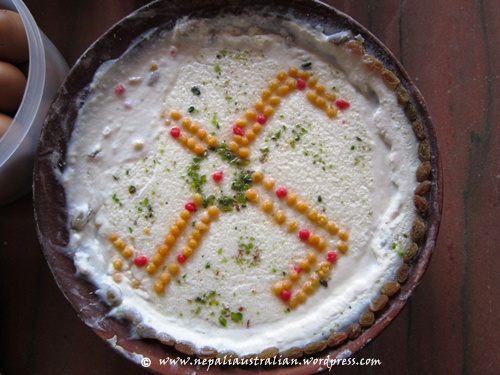
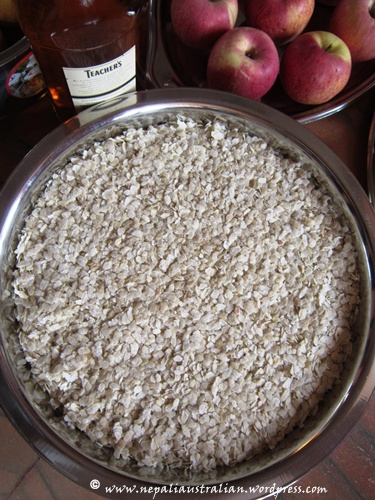
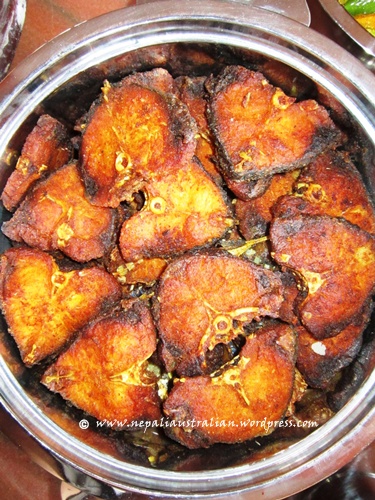
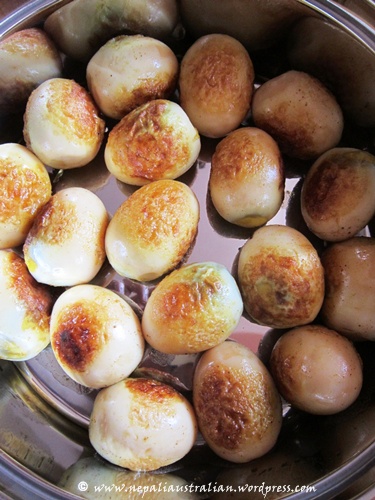
There are lots of food and gifts given to the child from his/her mother’s family. It will also include Sagun. Sagun typically consists of a boiled egg, smoked fish, a bara (pan-fried black lentil patties), haku chhoila (smoked buffalo meat) and aila (wine) and ends with dhau (yogurt). Also all the family and relatives bless the baby with gifts or money. It’s a beautiful and elaborate ritual.

Sagun

After that maternal uncle (mum’s brother) carries the baby to the nearest temple so the baby can get blessing from the gods. In front of the temple, the baby is fed with some Prasad (offerings) and this will conclude the ceremony.

It is an occasion for celebration, and family and friends are invited to attend. These days Pasni ceremonies in Kathmandu are very lavish and are held in party function rooms much like a wedding ceremony. The guests, numbering in their hundreds bring gifts for the child and party late into the night.

My Special Mother’s Day

As I mentioned on my previous post, this year was my first Mother’s Day after my wedding. In my culture, you have to make the event special as it will be the first time a married daughter brings food and gifts for her mother from her home (husband’s home). If I was in Nepal, I would need to do all the preparation and make sure my mum had a great day but as I am so far away, my mother in law made sure that the ritual was done properly.

I am so happy that my in laws, mostly my MIL, made such a great effort to make sure my mum’s day was special. She did all the shopping and all the preparations and my FIL helped her a lot. Then my two BILs went and presented the foods and gifts to my mother. They also took these photos for us to see. I am so grateful and thankful for my new family for taking care of this and making sure things went great.

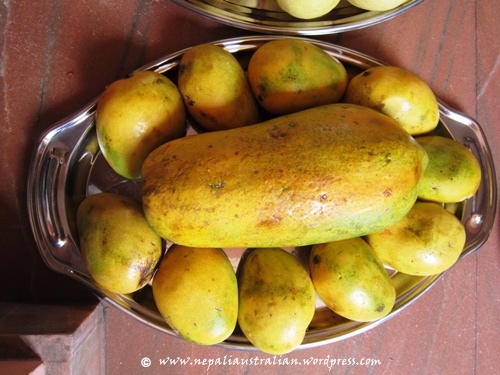
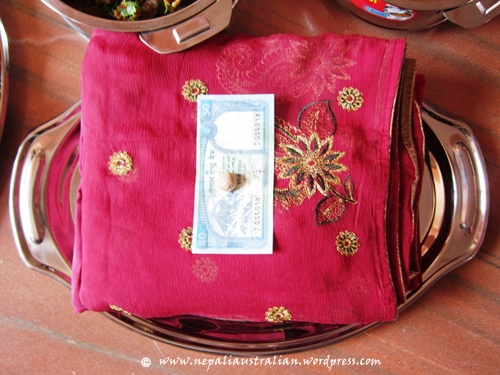
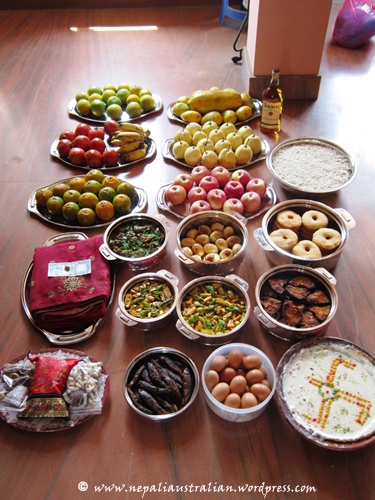
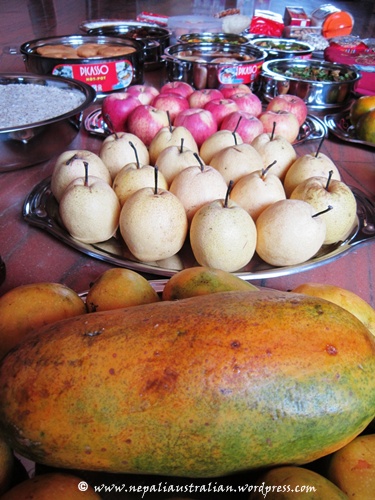
Have a look at the photos below and you can see traditional Newari Mother’s Day celebration. There are Sagun (egg, bara, whisky, fish, yoghurt and meat), also lots of fruits and rotis. It lookes so yummy. My mum also got a sari, a cake and masala. I really wish I could have been there to help prepare for it and to see the smile on my mum’s face.

Aama ko Mukh herne / Mata Tirtha Aunshi (Nepali Mother’s day)

As I have mentioned in many of my posts before,Nepal has a different calendar than the Gregorian calendar. So in Nepal people also celebrate Mother’s day on a different day than the western calendar. In Australia, Mother’s Day is the second Sunday of May every year but in Nepali calendar, it changes every year according to the positions of sun, moon and the planets. It falls on the last day of the dark fortnight of April or early May. This year, it happens to be on today,9 May 2013. It is commonly known as Aama ko Mukh here in Nepal. Aama ko Mukh here translates into seeing mother’s face.

When I was still in Nepal, I used to make a nice breakfast and buy my mum a small present which was the only thing that I could afford with my pocket money. My dad used to buy lots of sweets as well so that there were lots of delicacies for her to eat. Mum used to make Sagun (egg, bara) for my grandma(both dad’s mum and her mum) and we used to use the same for her as well.

In Nepal, if the children have left home/ married, they will come with presents and delicacies to spend time with their mother. The entire day is filled with festivities around the country.

Children whose mothers have already passed away visit the place called ‘Mata-Tirtha’ which is situated at about 15 km to the west of Kathmandu or some other holy place elsewhere in Nepal to make offerings to the souls of their departed mothers. Mata means mother; tirtha means a holy place. Thus, this name suggests the holy place for them to visit for making offerings to the deceased mothers once a year.

A religious festival is held at ‘Mata-Tirtha’ on the Mother’s day for a whole day. There is a legendary natural pond at ‘Mata-Tirtha’ where Nepali people pay homage to their deceased mothers. Thousands of people take a quick bath in the water flowing from the nearby stone spouts, and then they go to the holy pond to make offerings to their deceased mothers. They believe that the souls of their mothers come to this natural pond to accept their offerings on this day. Thereafter, they worship Shiva Linga located next to the holy pond.

A legend behind this day goes as follows. Shepherds used to quench their thirst with the cold water from the natural pond at the current day ‘Mata-Tirtha’ when they went to graze their cattle in a nearby forest. One day, one of the shepherds whose mother was already died happened to go to drink water from this pond she saw the image of her dead mother in the clear water of the pond. She was so excited by this that she went to every house in that village to tell them about how she had seen her mother’s image in the pond. Since then Nepali people have believed that they can see the image of their deceased mothers in the water of this holy spring. So, Nepali people from different parts of the country visit this pond on this day hoping to see the image of their departed mother. Thus, this place came to be a holy place for those who have lost their mothers. Also those who cannot go to Mata-Tirtha shower at home or take a quick dip in the water of a holy river early in the morning then offer a platter of sweets, fruits and money to a priest in the memory of their departed mother.

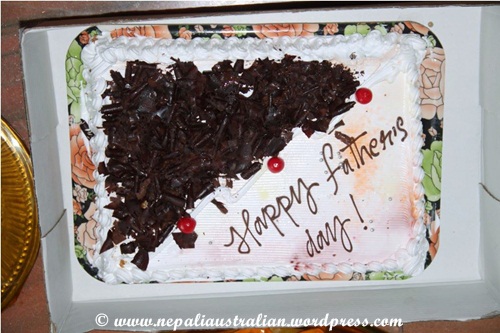
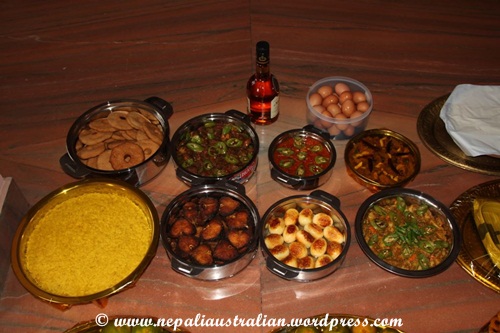
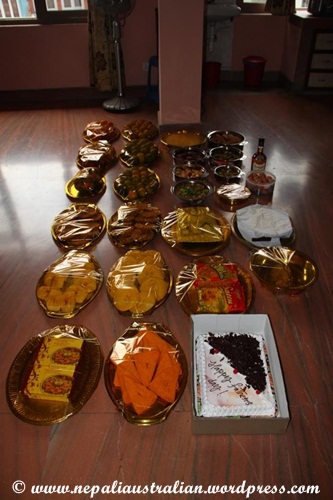
My MIL sent these gifts to my dad last Father’s day on my behalf

As I have describe in my previous post , in Nepal the first year of marriage is considered to be very important. So during every festival, there are things you are meant to do. This affects how you celebrate Dashain, Tihar, Father’s Day, Mother’s day and more. Last year, I had my first Father’s day after the wedding and my MIL made sure it was a special one for my dad. This year, it is my first Mother’s Day after the wedding so it will be really special for my mum. My MIL is doing everything that she can to make sure this day is memorable for my mum. I know a few details about what is going to happen but I will wait for things to happen today and will update in details about my special Mother’s day. Just so excited to Skype with my mum later and receive photos from Nepal afterwards.

So if you haven’t called you mum to wish her, do give her a call and make her smile. And to all the proud moms out there, Happy Mother’s day.