Category Archives: Nepali food

Loving Nepali Culture and traditions

This article was published in +977 (a Nepalese Lifestyle Magazine in Australia) in June 2013 issue.

plus977

I have lived in Australian for over a decade and I have to admit, I love Nepal, its culture and traditions more than the day I left her.

It is funny to remember how relived I was when I received the visa to come here. It was like; finally, I was going to be out of Nepal, far from all the stupid traditions and cultures to a new land where I could start all over again. Even though I was very sad leaving my family behind, I was really excited for the possible future. The preparation to leave the country was done with high spirit and positive attitude.

Finally the big day came. Before I left the house, in a traditional manner, my grand ma put a red tika on my forehead, and blessed me with sagun. I still remember the time I spent at the airport in Kathmandu. I was a bit teary eyed while bidding good bye to all the people who came to see me off. I realised that day that I had so many people around me who loved me. I had my parents, my brother, my relatives, my cousins, my school friends and my college friends, more than 30 people there wishing me well and saying their good byes.

Travelling in a plane to Sydney for the first time, I knew I was blessed with loved one but still at the back of my mind, I was happy about my decision about leaving Nepal and coming here.

The first few weeks in Sydney were really exciting as it was a new place, so much to see and explore. I got my first mobile phone and it surely felt like my dream country. But then reality hit me. For the first time in life, I needed to find a job. It was quite an effort to work, to cook meals and study at the same time. I was missing Nepal and home a lot. I convinced myself that the hardship was just temporary and once I got settled, things would change.

Things did change for the better after I got a job and started making friends but I still missed my family and Nepal a lot. I was surprised that I was missing my morning ritual in Nepal, going to the temples with my dad. I was missing my mum’s puja in the morning, the noise of the chaotic traffic of Kathmandu, the vegetables and fruits vendors’ calls selling their stuffs door to door, the sound of temple bells, and missing all the festivals. Being far from home, I realised and slowly started to value the culture and tradition of Nepal which I used not to like.

The first Dashain and Tihar away from home were really hard ones. Even though holidays were the best part of Dashain and Tihar in Nepal, I missed the tika and other religious aspects of these festivals. I also missed celebrating my birthday in a traditional way, tika with sagun in the morning and visiting many temples during the day.

As time passed by, I started embracing Nepali culture and tradition and started following it as much as possible. I started taking down notes of what happens in our culture and it was a joy to explain to people from other countries the different aspects of Nepali tradition. It felt so good to see their reaction when I explained what we do during our festivals, wedding, birth and death. I realise that our culture is so unique and old that it is worth all the effort to preserve it

I started celebrating Dashain and Tihar in full swing and having more family and friends here definitely helped to make it better. Even though I am from a Newar background, I joined my friends when they celebrate Teej and love every minute of it. Living abroad definitely has made me appreciate Nepal and its culture lot more than before.

I went to Nepal and had a very traditional wedding and I was happy to participate in a very elaborate ceremony over many days. Recently, my brother and sister in law were blessed with a baby boy and we made sure we followed all the traditional rituals here even though we are so far away from home. He had his Chhaithi and Nwaran here and we all went to Nepal to celebrate his Pasni with our loved ones.

These days instead of getting annoyed by the tradition and culture in Nepal, I feel inquisitive. I always want to know more why we do Ihi, Gufa , Bartamanda, Saradha, Pasni, Nwaran or any other ritual. I want to learn the legends behind our every festival and one day wish to pass this knowledge on to my kids. I want them to be proud of Nepal and Nepali culture. Even though I am not in Nepal, Nepal and its culture and tradition will always be in me and I hope to spread this love to the next generation so they can be proud of our heritage, tradition and culture.

Do you still follow your cultures and traditions?

Till next post, take care.

M from nepaliaustralia

XOXO

You may also like :

*Paragliding in Paradise 
*Forever Blackout 
*Bolne ko pitho bikchhare, nabolne ko ta chamal pani bikdaina
 

Pineko golbheda ko achar (tomato achar)

This recipe is inspired by my grand ma. I remember her making this almost every time we visited her and it used to be my favourite. It is an easy, quick and delicious achar.

Ingredients

  • 5 small tomatoes
  • 4 dry red chillies (use more or less according to taste)
  • 3 cloves of garlic peeled and halved
  • Salt to taste

Steps

  • Roast tomatoes over the fire until it is cooked.
  • achar (1)Roast red chill over fire but be careful not to burn it.
  • Take the black skin off the roasted tomatoes.
  • Grind salt, roasted chilli and fresh garlic cloves using mortar and pestel until you get a paste.

achar (2)achar (3)

  • Now add roasted tomatoes and grind them all as smooth as possible.

achar (4)

  • The achar is ready and can be served.

achar (5)

You may also like:

*Khandeko golbenda ko achar *Aloo ko achar (nepali style potato salad) *Gundruk Aloo Bhatmas Curry


Simple chicken curry

It has been a few days that my hubby wanted to eat typical daal bhaat, aachar and masu. Normally we don’t eat rice at home so yesterday I decided to make him the Nepali meal. So I cooked this simple chicken recipe.

Ingredients

  • Chicken, about 1.5 kg, cut into medium sized pieces
  • 2 large onions, finely chopped
  • 2 tomatoes diced
  • 2 fresh green chilies
  • 2 teaspoon ginger garlic paste
  • 8 teaspoon olive oil
  • 3  teaspoon cumin powder
  • 2  teaspoon coriander powder
  • 1 teaspoon turmeric power
  • A few curry leaves
  • Salt as per taste

Steps

  • Remove the skin from the chicken.(optional)
  • Season the pieces with 3 tablespoons of oil, salt, chilli, turmeric, coriander and cumin powder.

simple chicken curry (1)

  • Set aside for at least an half hour.
  • Heat rest oil in a frying pan. Add the chicken pieces and cook until brown on all sides; usually 6–8 minutes. Remove from the pan and set aside on a plate.

simple chicken curry (2)

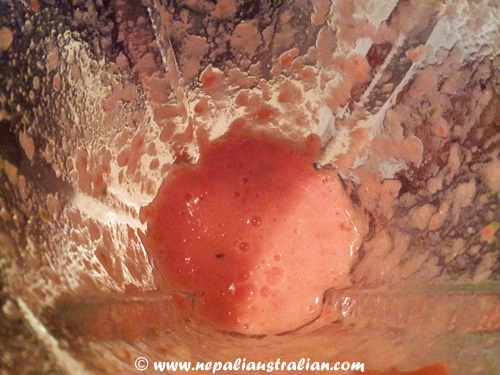
  • Dice the tomatoes and green chillies, make a puree, and set aside.

simple chicken curry (5)

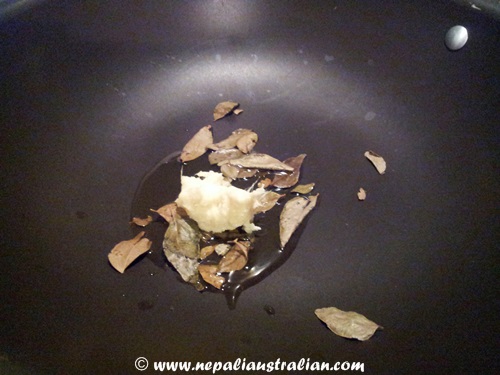
  • In a pan, add remaining oil, throw in the garlic ginger paste, and curry leaves.

simple chicken curry (3)

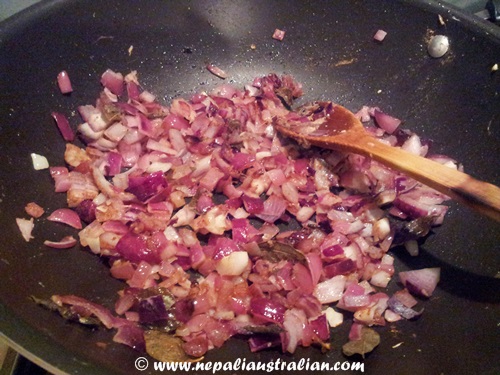
  • Then add the onions and fry for 15 minutes or until golden brown, stirring regularly.

simple chicken curry (4)

  • Once onion is cooked, pour the tomato puree and let it cook for 10 minutes stirring occasionally. If the sauce reduces significantly, add some water.

simple chicken curry (6)

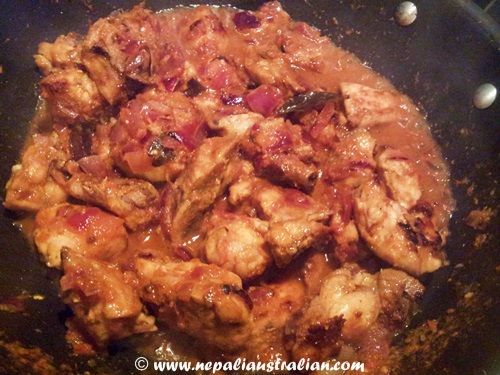
  • Mix well and add the chicken. Bring to the boil, then reduce the heat, cover and simmer for 5 minutes, or until tender.

simple chicken curry (7)

  • The delicious chicken curry is ready and it can be served with rice or roti.

simple chicken curry (8)

You may also like:

*Goat curry (using a pressure cooker) *Chicken Tikka Masala

*

Seviya kheer (vermicelli kheer)

Yesterday AS felt like having Seviya kheer out of the blue so I decided to make one. Seviya is fried vermicelli noodles. I bought a packet of fried Seviya from an Asian grocery store. This was the first time I tried it and I have to admit, it was very easy.

Seviya kheer  (2)

Seviya kheer  (3)

Ingredients

  • 200gm vermicelli
  • 800 ml milk
  • 3 tablespoons sugar (add more or less according to your taste)
  • 2 tablespoons ghee/clarified butter
  • 7-8 roasted or fried unsalted almonds, chopped

Instructions

  • Heat ghee in a pan and when it is melted add vermicelli and fry till they become golden brown.

Seviya kheer  (4)

  • Pour the milk and let it come to a boil.

Seviya kheer  (5)

  • Add sugar and mix well.
  • Lower the flame and let the milk simmer for 5-7 minutes till the vermicelli gets cooked.

Seviya kheer  (1)

  • Add chopped almonds.
  • Serve the kheer hot, warm or cold.

Seviya kheer

  • I prefer mine cold :). Enjoy!

Khandeko mula ko achar (Pickled radish)

Here is another pickle recipe I learned in Nepal.

Ingredients

  •     1 litre glass jar
  •     1/2 kg white radish cut into inch
  •     Garlic 50 gms chopped
  •     Ginger 20 gms chopped
  •     3 Green chilli chopped
  •     1.5 teaspoons Cumin powder
  •     1.5 teaspoons Coriander powder
  •     1.5 teaspoons Red chilli powder
  •     1.5 teaspoons Turmeric powder
  •     2 teaspoons Mustard seed powder
  •     2 teaspoons Salt
  •     2 teaspoons Mustard oil

I used a glass jar which came with 1kg honey estimating it’ll hold around 1 litre of water. The idea is to fill it with the ingredients with a bit of space to spare. The radish should fill about 80% of the jar and the ginger and garlic 10% with 10% empty. Chilli is to taste.

mula ko achar (1)

Process:

  • Cut the radish into 1/2 inch block and chop Garlic, Ginger and Green chillies and put them in a large bowl.

mula ko achar (2)

  • Add the spices as mentioned in the ingredients and mix them all together.

mula ko achar (3)

  • Fill the glass jar to around 90%.

mula ko achar (4)

  • Put a clean wrap or plastic bag on the month of the jar and close it tightly so no air can enter.

mula ko achar (5)

  • Leave the jar where it can get direct sunlight.
  • Every few days, open the jar and move the tomatoes around. Close the jar, tightly.

mula ko achar (6)

  • The pickle will be ready in 4-5 days. Enjoy!

You may also like :

*Khandeko golbenda ko achar *Aloo ko achar  *Aloo dum