Category Archives: Nepal

Everything about Nepal

Prabal Gurung : A Fashion designer from Nepal

It is always so good to see anyone from Nepal doing well in an international level and I am so glad to see Prabal Gurung in the international fashion arena.

I saw his designs on Michelle Obama, Demi Moore, Zoe Saldana and Oprah Winfrey. I just love him and his creations.

Here is the excerpt from his website introducing him.

 “Gurung was born in Singapore and raised in Kathmandu,Nepal. It was in New Delhi,India that his design career truly began. While studying at New Delhi’s National Institute of Fashion Technology, Gurung freelanced at several production and fashion houses and apprenticed with Manish Arora. His travels took him to Melbourne and London, where he assisted stylists for various fashion shows and editorials at international publications. In 1999, Gurung moved to New York City. He began his career in New York interning for Donna Karan while attending Parsons School of Design. In his first year, he was awarded the “Best Designer” title at the annual Parsons /FITdesign competition.

After Parsons, Gurung spent two years with Cynthia Rowley’s design and production team, which allowed him to gain even more invaluable experience within the fashion industry. Soon after, he was appointed design director at the iconic Bill Blass. After five successful years, Gurung left his post at Blass to launch his own collection, PRABAL GURUNG.”

Look at his collection from Spring 2012 collect here . They are so amazing and beautiful. No wonder so many celebrities loves his collection.


Sarah Jessica Parker  was in Australia recently and she wore Prabal Gurung. It was just beautiful.

 He is also the goodwill ambassador for Maiti Nepal .  This is what he told ekantipur about his association, “A society free from human trafficking is possible and we must realise that it is our responsibility to make this world a better place for all mankind. By simply stating our desire, we sow the seeds of great change,”

 Best wishes for all the good work.

 Sources

You may also like :

*Varsha Thapa: First international fashion model from Nepal *The magic of Prabal Gurung continues *Prabal Gurung: Designer in the Spotlight

Nepali Culture, Customs and Etiquette

Over the years I have noticed many cultures, customs and etiquettes of Nepal which are so different from what we find in western countries. I am sharing a few of them here. 

  • In Nepal, everyone is your Brother, Sister, Uncle or Aunt even if you are not related. 
  • It is normal to slurp tea or any drink when you are out and about. 
  • Superstition goes hand in hand with culture. For example if a cat crosses the road, you wait for someone else to cross that path before you cross it. 
  • You should not step over an idol of a god or goddess or anything that is used to worship them. This is seen as a disrespect to god to step over them. A lot of time if someone is coming up the steps with Puja items you are not allowed to go up of down the steps above them as this constitutes stepping over the Puja items. 
  • Sharing is caring in Nepal so if you have a Kit Kat bar, you still ask who ever is around you and break that bar into pieces to share. 
  • Fat is good in Nepal so if someone in Nepal said you look fat, don’t get offended. He/she is giving you a compliment on how healthy you look. 
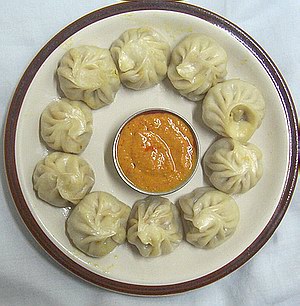
  • Momo is the best food in the world (according to every Nepali) 
  • PDA (Public displays of affection) is a big NO NO. 
  • As respect to the God and Goddess, one should always take off your shoes before entering a temple. 
  • In most Nepali homes you should not wear shoes in the rooms, they have to be taken off before entering any room. 
  • Ask for permission before entering a Hindu temple. In some temples, only Hindu’s are allowed. 
  • Taking photographs inside most temples is not allowed. 
  • You always walk around a temple in clockwise direction. 
  • You will notice lots of people touch their forehead with their fingers as they pass by the temples. It is acknowledgement of God and showing respect. 
  • Never enter anyone’s kitchen until they ask you to. 
  • Staring is ok (I know it is silly). 
  • It is normal to find people of the same sex walking together hand in hand (girl and girl or even boy and boy) but boy and girl can’t walk hand in hand without being stared at. 
  • People call each other Sir or Madam, like Mohan Sir or Rita Madam in the workplace. 
  • Bargaining is the first rule of shopping in Nepal. [I have paid twice the price of an item even when I bargain 😦 ] 
  • You will notice Nepali people shake their head a lot. If the head shakes (sways) from side to side it is YES an if it shakes from side to side (face turns from side to side) it’s a NO. 
  • When there is a visitor, they serve tea and egg. Noddles like Wai Wai and Maggie are served as lunch. 
  • If you are meeting someone and they didn’t come in time, don’t be surprise. It is called Nepali time which is to come a bit late to your appointment. 
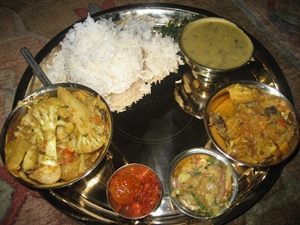
  • Dal Bhaat Tarkai can be breakfast , lunch and dinner. 
  • Nepali people don’t eat beef and until recently it was illegal to even sell beef. 
  • When woman has her period, normally they are considered impure and they are not allowed in the temple and kitchen for four days. 
  • There are no fines for littering in Nepal so you see people throwing things on the street even if the bins are just a few feet away. 
  • It is considered rude to touch any one’s head. 
  • In Nepal, you don’t eat and serve yourself. It is considered Jutho (impure) to touch the cooking pots while you are eating. 
  • Left hand is considered impure/Jutho so you never pass things around with your left hand. 
  • If someone dies in the family, the family will not celebrate any festivals or birthdays for a year and there will be no wedding or any other happy celebrations for that year. 
  • If someone touches their throat with their fingers then they blow on the fingers. Not blowing on it is believed to cause swollen glands in the throat. 
  • Footwear should not be left upside down as it will cause bad luck. 
  • You can see some vehicles in Nepal with a slipper hanging in the front (or rear). This is said to ward of evil (bad eye) so that accidents will not befall the vehicle. 
  • You should not say the word for Witch in Nepali, it is believed to bring you to the attention of a witch and she will harm you. 
  • If you find a mysterious bruise on the body, it is thought to be because a witch drank your blood. 
  • You should not pee on a Pipal tree as they are usually haunted by a witch and she will harm you for peeing on her home. 
  • You should not touch most stuff (that are not meant to be touched with the feet) with your feet, since everything is thought to have an essence of God and touching them with the feet is disrespecting God. Especially things for learning, as Saraswati is the goddess of learing and pillows as you normally put your head on it, etc. 

There are many other things but I will leave that for another post.

Different looks of Nepali people

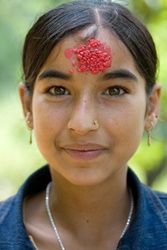
Newar girl

When people realise that I am from Nepal, they always tell me I don’t look anything like the last Nepali they met. I am from the Newar ethnic group but  I have Aryan features so even people from Nepal tell me that I don’t look like a Newar as I have bigger eyes than Newar people normally have.  This is because Newars are a community of mostly Tibeto-Burman and some Indo-Aryan ethnicities and my family seems to lean towards the Indo-Aryan side of the community in our features.

The other day I met a friend of my friend (Gurung) who was from Italy and she told me that I looked just like one of her Italian cousins. She was surprised that I and my friend (Gurung) look so different even though we both are from the same country. There are times when I meet Indian people and they think I look like an Indian.

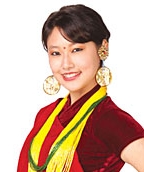
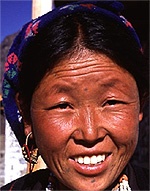
Gurung girl

The main reason for Nepalese people having such a diverse features is due to the geography and the climatic in Nepal.

Don’t worry if you get confused after reading this post because even Nepali people sometimes can’t say for sure if someone is from Nepal or some other countries as our features match people from so many other countries. I also can’t tell for sure as well.

Brahmin man

Here is one of the funny incident. A friend of mine  was traveling in a train when a group of Nepali guys came and sat on the seat in front of her. She is from the Rai ethnic group so she looks more Asian. The guys did not think that she was a Nepali so they start talking in Nepali about anything and everything. And there were some things you normally won’t say in front of women. Anyway, my friend was very uncomfortable in hearing this but she tried to pretend that she didn’t understand the language. She couldn’t wait to get off the train.

Chherti girl

At next stop, her cousin caught the same train and saw her sitting there. So she came and joined her and started speaking in Nepali. Then the guys realised that she was Nepali. They were very embarrassed by their activity so they changed the carriage. It happened a lot to my friends when people mistake them to be from India, Sri Lanka, China, Indonesian, Brazil, Korea, Italy etc.

When me and AS were on our holiday in Vietnam, a few people came and talked to us in different languages because they thought we were either Thai, Vietnamese or Pilipino so I am not surprised if you are confused by the Nepali look.

Thakali women

Nepal is a country of four castes and thirty six sub castes and they are a mix of Aryan and Mongolian people. Aryan normally have fair or dark skin, long pointed nose, big eyes, broad chest and shoulders while Mongolians are normally white or fair skin with small eyes and medium built. Brahmin and Chhetri looks Aryan where as Rai, Gurungs, Tamang, Magar looks Mongolians. I find Newar are a mix of both.

Of course it is just a guideline as there are so many inter-caste marriages, it is getting even harder to tell people’s ethnicity apart just by their looks.

 Still confused? I thought so  🙂

Value of Electricity

It is getting really hot in Sydney these days. It was 34-37 C the day before. After a very hot day I went home thinking it will be a cool evening with the AC on and I can relax but to my annoyance the electricity went off. 

I couldn’t believe how much our lives depend on having electricity here. The lift in the building stopped working so we could hear fire exit doors opening and closing all the time. The building in front of us had people stuck in the lift so there were two fire trucks and police car to rescue them. 

People couldn’t go inside the car park as the roller doors are electric so there were long queues of cars waiting in the street. 

Inside our apartment, AS and I didn’t know what to do. Our internet didn’t work, no TV, the laptop battery was on 35%, no light so nothing to do. Luckily we have a gas stove which was the only thing working. But still we didn’t cook anything as it was too dark so we ordered takeaway. I remember my cousin K, mentioning power outage in June for hours when I was in Nepal, and as they have electric stove, they had to go out and eat. 

I have been in Nepal when they had 18 hours of load shedding. Luckily my house has an inverter so we had some light during those times. But I can’t imagine how everyone in Nepal live everyday more than 9 months a year without electricity. It is good that my parents are not dependent on the fridge as they cook fresh meal everyday. Also they buy their milk every morning and meat on the day, they are cooking. They always buy fresh fruits and veggies every other day so they can have fresh supply of most essential things. I can’t imagine people here living without a fridge and a microwave. We wouldn’t know what to do.

 Most of the houses in Nepal don’t have air conditioning and lift so you are not stuck when load shedding happens.

Sometimes I forget how much better facilities we have than people in Nepal. I was complaining that power was out for a few hours but then I remembered for people living in Nepal that is a part and parcel of their life. I see Facebook and Twitter updates from my friends and family in Nepal like

 “ No power cut for last 24 hours 🙂 🙂 🙂 “

 “ Load shedding is reduced to 10 hours a day :)”.

 “ Felt so lucky to wait only 15 minutes in line for petrol’.

No water for last two days 😦

Nepal bandh again today, walking to work” (Nepal closed/no vehicles on road due to strikes)

 I promise from now on I will appreciate how good I have it here and stop complaining about small things that I don’t have.

Widows in Nepal

I want to start this post by saying; whatever I am going to write in this post is solely my opinion and understanding and hold no disrespect for any culture or tradition. 

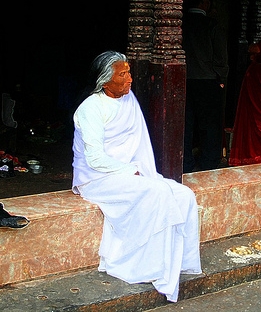
In Nepal, if a Hindu woman loses her husband, she has to wear a white sari for a whole year. She also has to give up all signs of marriage like pote, glass chura and sindoor. 

After one year, she is allowed to wear clothes with colours other than red or shades of red or other bright colours and she still can’t wear pote, glass chura and sindoor. They are also forbidden from remarrying. It is believed if a widow marries another man; her deceased husband’s soul goes to hell. I know it sounds ridiculous but that is what the widows are led to believe. 

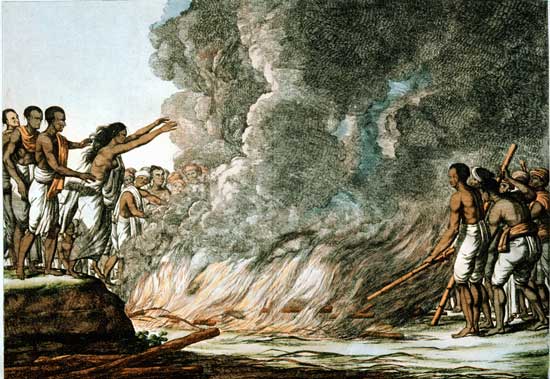
In ancient times, there used to be ‘Sati’ practice in which if a married man died, the widow is coerced to join her husband in his funeral pyre. My grandma used to tell me the stories about how she knew people who she lost due to this practice. This was outlawed only around 70 years ago. 

I don’t know why the husband is never made to undergo such cruel customs on the death of his wife. And men can remarry if they want. 

My paternal grandmother was widowed when she was quite young. Her youngest child was only 2 years old at that time. I know she suffered a lot as a widow in a conservative Nepali society. She was not invited for many religious ceremonies and considered an outcast for lots of Pujas. My grandma is a survivor and she managed to ignore all the brutal treatment from the society and brought up all 7 kids all by herself. She made sure that all the kids went to school and were well-educated despite the fact that she was uneducated and alone. All the kids grew up to be successful in their lives and all the credit goes to my grandma. 

I never saw my grandma wearing any bright colour saris even after 50 years of the death of my grandfather nor did she wear any glass chura. She used to have a few golden bangles and that was it. She told me lot of stories where she felt like an outcast from the society after her husband passed away. 

I know an aunt who lost a husband in a freak accident after just 3 years of marriage. At that time she had a year old baby boy and she was only 26 years old. I really thought it was cruel that she couldn’t enjoy her life just because her husband had passed away. Her MIL blamed her for her son’s death and made her life into hell. I am sure she missed her husband terribly and on top of that she had to deal with the cold behaviour from relatives and the society. I strongly believed that she should have been allowed to remarry and live the rest of her life happily but I was just a kid and my opinion would have brought an outburst among my relatives. 

Recently, I read news that the Nepali government are giving RS 50,000 (AUD 600) to the couple if a man married a widow. I find this wrong in so many levels. A widow is a woman and not some broken furniture which you pay the removalist to discard. No one should be given monetary incentive to marry; it should be purely out of love. I also read lots of news later that people were marrying only for the money and it was not helping the problem of widows in Nepal. 

I know there are so many human rights organisations that are fighting for this cause and I salute them but this problem is not going anywhere until we are able to educate people and make them understand that death is a natural process so no woman should suffer her whole life just because her husband died. 

I know things are changing slowly but still the majority of Nepalese people do not accept widows as a normal woman. I want them to think what they will do if the window is their own daughter or sister. I am sure they want them to be treated as equal to any normal woman and allowed to remarry if they wish to and live their life happily.