Category Archives: Nepal

Prabal Gurung for Target: Ruffle Dress in Sulphur

I couldn’t wait till spring to wear my Prabal Gurung dresses so today I wore the Ruffle Dress in Sulphur to work. (It’s autumn here now so it would be a long wait till spring 🙂 )

IMG_6655

I noticed that the dress is a bit brighter than I expected. As my skin is brown, it tends to make me look a shade darker.  I am very happy with the quality of the dress though. It is super lightweight and very fluid. For a target dress, it is just very good. The length of the dress is a bit longer than my normal dresses but that may be because I am not very tall. Absolutely no see through issues.

IMG_6644 IMG_6645

I wore the dress with a black blazer and was very happy to see it go so well.

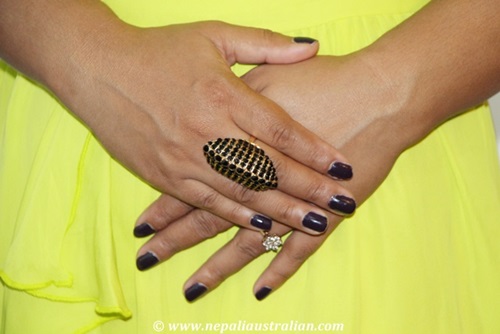
I wore my black max shoes and big black ring.

IMG_6657 IMG_6659

I am sure I can wear this dress more this season with a black belt, black stocking and black boots.

Can’t wait to style my other Prabal Gurung collections.

DSC_0428

Till next post, take care!

M from nepaliaustralia

 XOXO

You may also like :

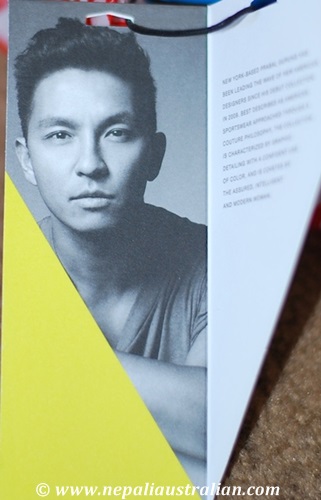
*Over the moon to get the Prabal Gurung parcel *Prabal Gurung : A Fashion designer from Nepal

*Aastha Pokharel representing Nepal on Asia’s Next Top Model

Childhood dream leads climber up Everest — twice in one week

Many climbers dream of reaching the peak of the world’s highest mountain at least once in their lifetime.

Chhurim Sherpa has done it twice — in one week.

Guinness World Records formally recognized the 29-year-old’s achievement , though it’s been almost one year since she completed her historic double climb.

“People have set different kinds of climbing records in Everest,” said Chhurim, sitting on her living room couch directly beneath a string of certificates hung on the wall — the Guinness plaque included. “But no one has climbed twice within a week. So I just climbed with the sole motive of making a world record.”

Chhurim made her initial ascent on May 12 and then, after a two-day rest on her return to base camp, reached the peak again on May 19, 2012.

Since Tenzing Norgay Sherpa and Sir Edmund Hillary broke barriers by stepping afoot the 8,848-meter peak in 1953, many benchmarks have been set. But for Chhurim, it was Pasang Lhamu Sherpa — the first Nepalese woman to climb Everest (she died during her descent) — who inspired the then fifth grader to sketch a future plan that most girls the same age couldn’t conceive of.

Growing up in Taplejung district in north-eastern Nepal, Chhurim’s early romance with mountaineering blossomed when she saw tourists trekking through her village. She wanted to do the same.

“I wanted to carry a backpack and climb the peak [Mt. Kanchanjunga] I saw from my village,” she said.

But her eyes were set on Everest. She expected herself to achieve the extraordinary.

When she came to Kathmandu to visit her sister in 2010, Chhurim enrolled in a basic mountaineering training course run by the Nepal Mountaineering Association. She said it helped her get the “psychological, physical, and technical training” required to prepare for her the mission.

For the next two years, Chhurim honed her skills in rock climbing and first aid and climbed the Yala Peak (5,520m) — also considered a trekking peak — in Nepal’s Langtang region.

Concerned about the risks and dangers, Chhurim’s parents, however, were wary of her planned Everest ascent.

“She was determined,” said Dandu Sherpa, her proud father. “She was on a quest to do something extraordinary — it was difficult for us to stop her.”

I didn’t really think of anyone during the climb, not even myself.Chhurim Sherpa, mountaineer

While parents and family members kept track of Chhurim throughout her journey, the climber said she detached herself from any emotions.

“The only thing on my mind was to successfully set the record,” Chhurim said. She looked across the couch to her parents, and laughed, “I didn’t really think of anyone during the climb, not even myself.”

On May 12, when she reached 8,848m for the first time with a group of four other climbers, she stood amazed above the “layer of tiny mountain peaks blanketed by circular cloud patterns.” During the 15 minutes she spent on top of the world, Chhurim said she took a moment to thank God, her parents, and then reminded herself that she had to do it all again.

After returning to base camp two days later and resting for another two days, Chhurim made the ascent again on May 17. But this time, she only had Tshering Dhendup, her aid, for company.

It was 33-year-old Dhendup’s third trip to Everest. He recalled the two-day climb with Chhurim as a “memorable experience.”

“She’s fit and firm,” he said, adding that he takes pride in being a part of Chhurim’s record-setting expedition.But for Chhurim, “Everest was exhausting.”

En route to the world’s highest peak, she also traversed the Khumbu Icefall at 5,486m as well as the steepest climb after Camp 3 (7,470m), all while carrying 15 kilograms of her expedition gear that she said seemed to weigh more like 50.

“But I did it — I reached the summit on May 19, stood there for a little longer this time, about 25 minutes, and then headed to base camp in a day and a half,” Chhurim said, describing the journey with such ease as if it were a trek for amateurs.

To date, the total number of people who have successfully climbed Everest from the Nepalese side, according to the Expedition Department at the Ministry of Tourism, stands at 3,842. Of them only 219 are women, out of whom a mere 21 are Nepalese.

“I really want other Nepalese women to get involved in mountaineering,” Chhurim said. “We should have a can-do attitude so that we can move forward and not be left behind simply because we’re women.”

Though soft-spoken and shy, Chhurim was assertive when she talked about the involvement of women in the country’s tourism sector. To her, it’s also of utmost importance for women to become educated.

Though successful in her own right, Chhurim still laments not being able to continue school after eighth grade. There was no high school in her village and her family did not have the money to move to Kathmandu, or the closest town with a school.

“But it isn’t too late,” Chhurim said.

Currently, she is studying English at a local language institute in Kathmandu. She believes that the “international language” will further empower women to move forward in the tourism sector.

It certainly is helping her to work as a tour guide, she added.

With only two peaks — Mera Peak (6,476m) and Island Peak (6,189m) — to her credit before Everest, she’s since gone on to conquer Mt. Ama Dablam (6,812m) and Kun peak (7,135m) in India.

But she’s not finished with Everest. Chhurim wants to climb the summit again from the Chinese side, as well as ascend Mt. Kanchanjunga, and also the highest peak on every continent.

Her father said he “couldn’t be happier or more proud” to see one of his eight children achieve something no one else has.

For Chhurim, it’s the world record that matters — it’s a testament of her determination to succeed in her mission.

As she held her framed world record certificate to pose for a photograph, Chhurim said, “I have created a name for myself and I have raised my country’s profile. If you’re really determined, you can definitely take yourself to new heights, and that’s what I’ve done.”

Source : cnn.com
Cheers to Nepali New Year 2070

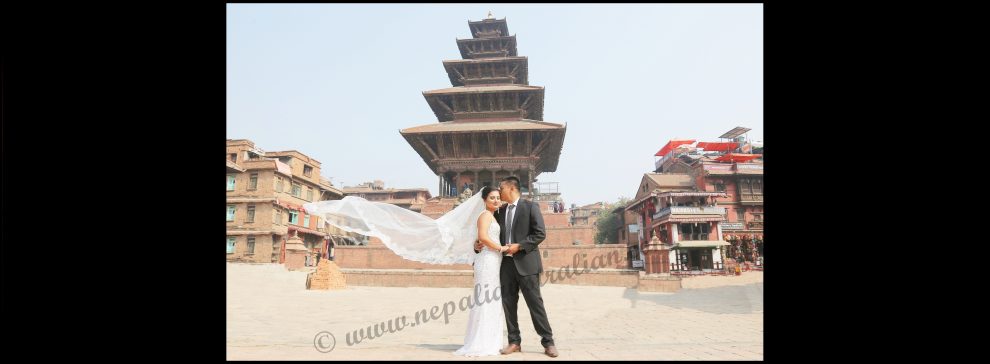
As I have mentioned before, Nepal follows a different calendar than the Gregorian calendar so Nepali New Year falls on mid-April instead of 1st of January. Bikram Sambat or Nepali Calendar or Nepali patro is approximately 56 years and 8½ months ahead of the Gregorian calendar. Unlike Gregorian months, the lengths of Nepali months are not predetermined, and change from year to year, varying from 29 days to 32 days. The year 2070 started yesterday as 1st of Baishak, 2070.

In Nepal, people celebrate Nepali New Year in many different ways. Please read this post to learn more about celebration of Nepali New Year in Nepal.

For us, in Australia, this year had been great as the New Year Eve fell on Saturday and New Year on Sunday. First of all I can’t believe its year 2070 as the last Nepali year I remember writing would be year 2056 in Nepal.

New Year (6) New Year (7) New Year (8) New Year (2)

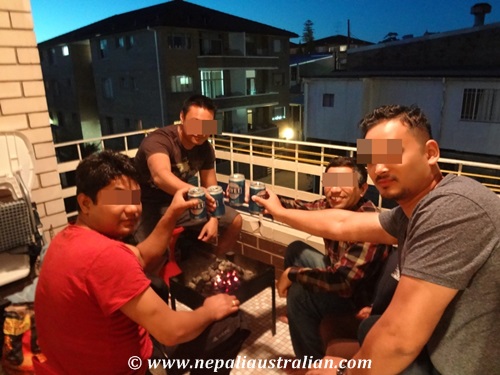
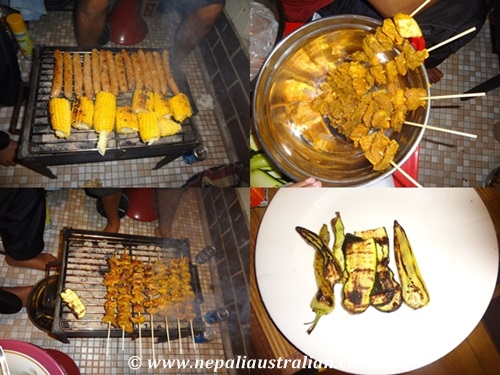
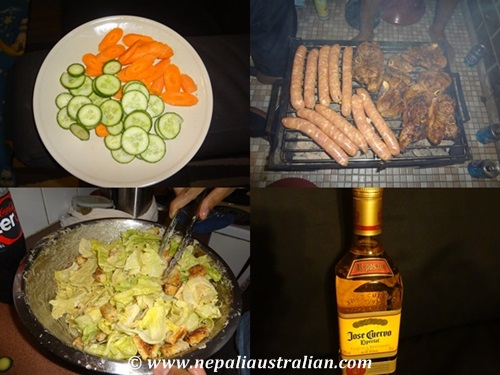
Anyway, we had a great time with my cousins and brothers BBQing and drinking over the weekend. It was a good way to remember Nepal and enjoy ourselves on New Year’s Eve.

New Year (9) New Year (10) New Year (1)

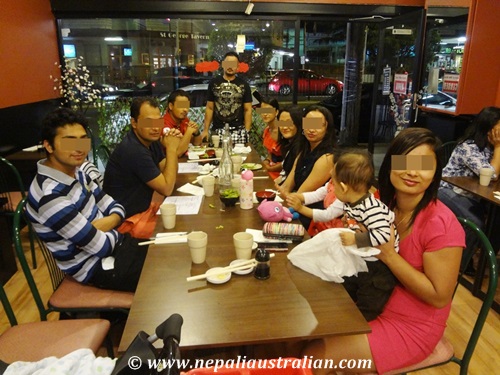
Then yesterday, we went out with our friends for dinner. Have to say it is great to get together and celebrate Nepali New Year even though we are not in Nepal.

New Year (4) New Year (3) New Year (5)

I’m wishing every single one of you a year full of joy, good health, love, success and prosperity.

Thank you from the bottom of my heart for riding along this journey with me. I appreciate all the love and support you guys have given me throughout the year and I hope you continue to do so this year too.

Till next time, take care

XOXO

M from nepaliaustralian

Manakamana Temple: Nepal

Manakamana is the temple of Goddess Durga (Hindu Goddess), situated in Gorkha District of Nepal. Manakamana means the “Wishes from the heart”. It is believed that Goddess Manakaman fulfils the wishes of the ones who worship her with a pure heart.

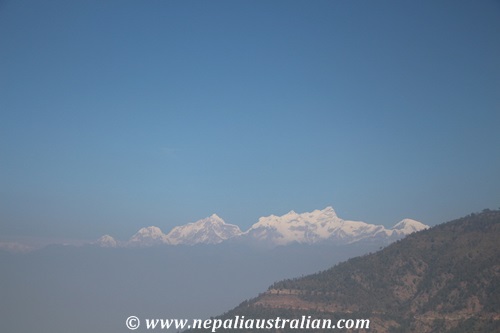
The Manakamana temple lies 12 Km south of the town of Gorkha. The temple is located on a distinguished ridge 1302 meters above sea level and overlooks the river valleys of Trisuli in the south and Marsyangdi in the west. The spectacular views of the Manaslu- Himachali and Annapurna ranges can be seen to the north of the temple. The temple is approximately a 104 Km drive from Kathmandu.

Manakamana (11)

Initially we were planning to visit the temple on our way back from Pokhara so that we would get lots of time to spend there but while my FIL was reading the paper in the car, he came across a notice that the day we were planning to visit the temple, cable car to the temple would be closed for maintenance so we made the decision to visit the temple on the way to Pokhara. I hadn’t been there for over 7 years so it was nice to visit the temple. I was with AS, MIL and FIL.

Manakamana (1)

Once we parked the car, we bought the cable car ticket and joined the queue. The queue was not too long so we got our turn in a cable car quite quickly. We had the car to ourselves.

Manakamana Cable Car has 31 passenger Gondolas and 3 freight carriers. The time of travel from the station below at Kurintar to the top station situated at Manakamana is only 10 minutes. The Cable Car can hold 6 adults or 480 Kg and has doors that close and open automatically and the system is one of the most modern and is totally computerized.

Manakamana (15)

Once we got off the cable car, we have to walk for a while before we reached the temple. On the way there various vendors were trying to sell their products to us. They used the same dialogue “It is the best.” Or “It is the cheapest you can find”.  My MIL bought Puja stuffs from one of the vendors and we went to the temple.

Manakamana (2)-tile

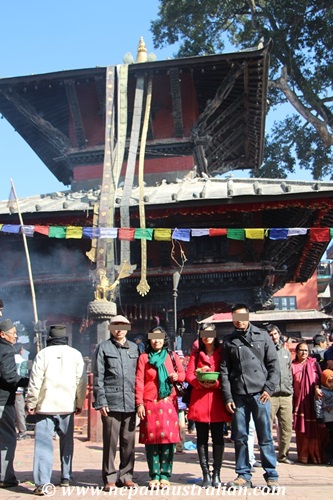
Manakamana is a Hindu Goddess so she is worshiped with offerings of flower, sound, scent, dress, make-ups and colours. There is a tradition of sacrificing animals at the temple. Devotees stand in line for even 5-10 hours during festivals. The line starts from the temple gate is longer than a few kilometres sometimes, especially during festivals. People can be seen standing in line with pooja samagri (worship materials) in hand and some of them carrying duck, cock or goat with them. People seem to enjoy standing in the line without food, some even with no water.

Manakamana (12) Manakamana (8)

 The legend of Manakamana Goddess dates back to the reign of the Gorkha king Ram Shah during the 17th century. It is said that his queen possessed divine powers, which only her devotee Lakhan Thapa knew about. One day, the king witnessed his queen in Goddess incarnation, and Lakhan Thapa in the form of a lion. Upon mentioning the revelation to his queen, a mysterious death befell the king. As per the custom of that time, the queen committed sati (ritual immolation) on her husband’s funeral pyre. Before, her sati the queen had assured Lakhan Thapa that she would reappear in the near future. Six months later, a farmer while ploughing his fields cleaved a stone. From the stone he saw a stream of blood and milk flow. When Lakhan heard an account of this event, he immediately started performing Hindu tantric rituals at the site where the stone had been discovered thus ceasing the flow of blood and milk. The site became the foundation of the present shrine. According to tradition, the priest at the temple must be a descendent of Lakhan Thapa

Manakamana (10) Manakamana (5) Manakamana (6)

The day we were there, there was not a long queue but it may still have taken us an hour to reach the front door of the temple.

Manakamana (14)

As we were on our way to Pokhara and short of time, we decided  not to stand in line and just prayed from the outside. My MIL did some puja and lit some diyo too.

Manakamana (13)

As the cable car was going to shut down for lunch we didn’t want to get stuck at the top for an hour so we decided to go back down and have our lunch in the restaurant there.

Manakamana (16)

The ride down was equally spectacular and I really enjoyed it. Down by the river, in the restaurant we had typical Nepali lunch with dal (lentil), bhat (rice), tarkari (vegies), achar (pickle) and masu (meat). It was really yummy.

Manakamana (18)

After lunch we made our way to Pokhara.

Manakamana (19)

You may also like :

*Paragliding in paradise *Zoo visit in Nepal *Swayambhunath: Kathmandu, Nepal

Khandeko mula ko achar (Pickled radish)

Here is another pickle recipe I learned in Nepal.

Ingredients

  •     1 litre glass jar
  •     1/2 kg white radish cut into inch
  •     Garlic 50 gms chopped
  •     Ginger 20 gms chopped
  •     3 Green chilli chopped
  •     1.5 teaspoons Cumin powder
  •     1.5 teaspoons Coriander powder
  •     1.5 teaspoons Red chilli powder
  •     1.5 teaspoons Turmeric powder
  •     2 teaspoons Mustard seed powder
  •     2 teaspoons Salt
  •     2 teaspoons Mustard oil

I used a glass jar which came with 1kg honey estimating it’ll hold around 1 litre of water. The idea is to fill it with the ingredients with a bit of space to spare. The radish should fill about 80% of the jar and the ginger and garlic 10% with 10% empty. Chilli is to taste.

mula ko achar (1)

Process:

  • Cut the radish into 1/2 inch block and chop Garlic, Ginger and Green chillies and put them in a large bowl.

mula ko achar (2)

  • Add the spices as mentioned in the ingredients and mix them all together.

mula ko achar (3)

  • Fill the glass jar to around 90%.

mula ko achar (4)

  • Put a clean wrap or plastic bag on the month of the jar and close it tightly so no air can enter.

mula ko achar (5)

  • Leave the jar where it can get direct sunlight.
  • Every few days, open the jar and move the tomatoes around. Close the jar, tightly.

mula ko achar (6)

  • The pickle will be ready in 4-5 days. Enjoy!

You may also like :

*Khandeko golbenda ko achar *Aloo ko achar  *Aloo dum