Category Archives: Nepali Culture

Griha pravesh and rudri puja

As Hindus, we do a puja and blessing for everything in life so when we move to our new place, we need to perform a puja too. Before entering a new house, a ceremony known as Griha Pravesh ceremony is performed.

Griha means house and pravesh means entry in Sanskrit so this puja is house-entry puja. Generally, in Nepal once the house is ready to be moved into, the family moves in on an auspicious day that is determined by the astrological charts by a priest. But for us, we had to move into our new place according to our contract so we decided to do it on the first day when we were going to spend the night there.

We had a priest who is a friend of my cousin and he offered to do our Griha pravesh puja.

DSC07869It was a very simple puja. The priest put two pitchers on either side of the main door then he put the idol of lord Ganesh on the doorway.

DSC07890He said some mantras blessing us and the house and then we just offered Sindoor, rice and flower first to the Lord Ganesh and then to the pitchers.

DSC07886Also we offered some coins and then lit some tea light candles. After that he went through all the rooms and sprinkled some water all around and blessed each room of our place.

DSC07889After that we established the idols we had brought from our old apartment and lit a candle for the gods.

As a part of moving into a new place,  we needed to turn on the stove and cook something. As we hadn’t unpacked properly, we didn’t have anything to cook so we just boiled water and made coffee and offered to all present.

Rudri Puja is an ancient practice followed by Hindus to bless the house once you move in. Rudri is also done on many other occasions like beginning new things like business , marriage, job etc.

‘Rudri’ means ‘Shiva – the Benevolent’, ‘ the Destroyer of Evil’ and ‘Puja’ means that which is born out of fullness. Through this Puja one can aim for inner peace and fulfilment. In this Puja, Lord Shiva is worshipped in his Rudra form. The reason Rudri puja is done because the world is a play of energy: negative and positive. When we pray to Shiva – the Lord of transformation – the entire negative energy around us in form of disease, depression, and unhappiness gets transformed into peace, prosperity and joy. Then peace surrounds us in body, mind and soul.

For the puja, the priest gave me a list. Here is the list if anyone wants to do the puja.There are still few stuffs missing but most of them are in the list.

Puja saman for rudriThere were many things to be bought but we are lucky that we have Nepali stores here so I went there and bought most of the stuff from there.

rudri puja (8)So on the day of the puja, I woke up early and had a shower, wore my fresh Sari and went straight to prepare for the puja. I made sure everything the priest asked were in order so when he comes in , the puja can be started straight away. AS also had a shower to cleansed himself as he would be sitting for the puja. Neither AS or I were to eat or drink before the puja.

rudri puja (7)Then I made apungo ,halwas and Kheer for Prasad . In the meantime, the priest came and started making different mandpas on the floor.

rudri puja (9)He told us that it would take 3-4 hours for the puja and AS would be sitting on the puja with him the whole time while I would be be called as required, which was a good things as I had so much to do in the kitchen.
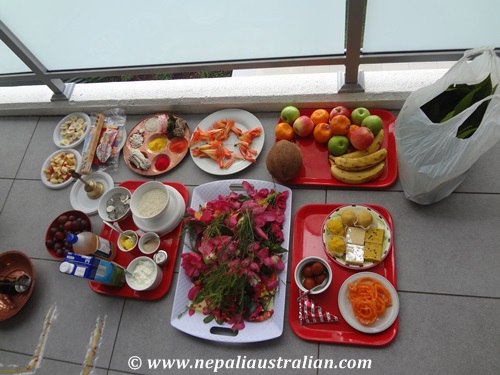
rudri puja (10)So while they were doing puja, I tried to prepare other stuffs like cuts the fruits for puja and make the mango leaf garland to put on the door.

rudri puja (2)Each ancient mantra that is chanted gets absorbed in materials like curd, milk, ghee, honey etc. which are used as offerings in the Puja.

rudri puja (14)It is then offered to Lord Shiva with reverence, love and gratitude. The chanting of the mantras is so pure and meditative that it takes one to a different place. This puja was performed with a Shiva ‘linga’ that we had brought from Pashupatinath temple from Kathmandu.

rudri puja (1)I am sure lots of things were done in the puja which I missed but here are some of the pictures of the day.

rudri puja (11) rudri puja (12) rudri puja (13) rudri puja (15) rudri puja (16)I was called twice during the puja to do some praying and blessing.

rudri puja (17) rudri puja (18)In the meantime, with the help of my cousin and my friend we cooked food for the guests. I had around 25 people invited to share the day with us.

rudri puja (6)The food for the day had to be pure vegetarian with no meat, no onion, no garlic and no tomatoes. So we cooked Chana (chick peas), aloo tama, aloo ko achar, cauli aloo . Then we had Kheer, sweets (lal mohan and rash bhari) and yogurt for dessert. It was not an easy task to cook without onion, garlic or tomatoes but it was accomplished and if I say so myself, it was quite tasty. Therefore, by the time the puja was over, the food was ready.

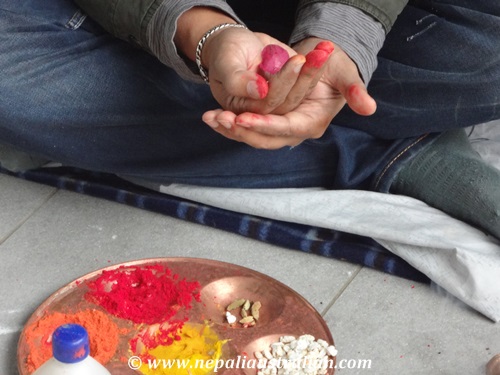
rudri puja (20)Once the puja was over, the priest put tika on the foreheads of everyone present then AS put tika on the the small kids.

rudri puja (3)As my parents were not here, my brother and sister in law prepared sagun for us and brought some fruits and clothes.

Rudri (5)-tileThen AS hung the mango-leaf garland on the door.

rudri puja (4)After the initial process, it was pass mid-day. AS and I had been fasting since the morning so when the puja finished, we were allowed to eat. Everyone including us enjoyed the food and the puja was concluded. We had visitors coming throughout the day from morning to evening but we are just happy that there were so many people here for us to share our happiness with.

rudri puja (5)In addition, I am happy that we were able to perform the puja and get blessing even though we are so far from the Nepal. Both our parents are really glad that we could follow our tradition and culture with our new place too.

Happy weekend everyone and Happy 4th of July to everyone in US.

Take care

XOXO

M from nepaliaustralian

You may also like :

*Packing and moving *Tit-bits *Snowy Mountains: Australia

Loving Nepali Culture and traditions

This article was published in +977 (a Nepalese Lifestyle Magazine in Australia) in June 2013 issue.

plus977

I have lived in Australian for over a decade and I have to admit, I love Nepal, its culture and traditions more than the day I left her.

It is funny to remember how relived I was when I received the visa to come here. It was like; finally, I was going to be out of Nepal, far from all the stupid traditions and cultures to a new land where I could start all over again. Even though I was very sad leaving my family behind, I was really excited for the possible future. The preparation to leave the country was done with high spirit and positive attitude.

Finally the big day came. Before I left the house, in a traditional manner, my grand ma put a red tika on my forehead, and blessed me with sagun. I still remember the time I spent at the airport in Kathmandu. I was a bit teary eyed while bidding good bye to all the people who came to see me off. I realised that day that I had so many people around me who loved me. I had my parents, my brother, my relatives, my cousins, my school friends and my college friends, more than 30 people there wishing me well and saying their good byes.

Travelling in a plane to Sydney for the first time, I knew I was blessed with loved one but still at the back of my mind, I was happy about my decision about leaving Nepal and coming here.

The first few weeks in Sydney were really exciting as it was a new place, so much to see and explore. I got my first mobile phone and it surely felt like my dream country. But then reality hit me. For the first time in life, I needed to find a job. It was quite an effort to work, to cook meals and study at the same time. I was missing Nepal and home a lot. I convinced myself that the hardship was just temporary and once I got settled, things would change.

Things did change for the better after I got a job and started making friends but I still missed my family and Nepal a lot. I was surprised that I was missing my morning ritual in Nepal, going to the temples with my dad. I was missing my mum’s puja in the morning, the noise of the chaotic traffic of Kathmandu, the vegetables and fruits vendors’ calls selling their stuffs door to door, the sound of temple bells, and missing all the festivals. Being far from home, I realised and slowly started to value the culture and tradition of Nepal which I used not to like.

The first Dashain and Tihar away from home were really hard ones. Even though holidays were the best part of Dashain and Tihar in Nepal, I missed the tika and other religious aspects of these festivals. I also missed celebrating my birthday in a traditional way, tika with sagun in the morning and visiting many temples during the day.

As time passed by, I started embracing Nepali culture and tradition and started following it as much as possible. I started taking down notes of what happens in our culture and it was a joy to explain to people from other countries the different aspects of Nepali tradition. It felt so good to see their reaction when I explained what we do during our festivals, wedding, birth and death. I realise that our culture is so unique and old that it is worth all the effort to preserve it

I started celebrating Dashain and Tihar in full swing and having more family and friends here definitely helped to make it better. Even though I am from a Newar background, I joined my friends when they celebrate Teej and love every minute of it. Living abroad definitely has made me appreciate Nepal and its culture lot more than before.

I went to Nepal and had a very traditional wedding and I was happy to participate in a very elaborate ceremony over many days. Recently, my brother and sister in law were blessed with a baby boy and we made sure we followed all the traditional rituals here even though we are so far away from home. He had his Chhaithi and Nwaran here and we all went to Nepal to celebrate his Pasni with our loved ones.

These days instead of getting annoyed by the tradition and culture in Nepal, I feel inquisitive. I always want to know more why we do Ihi, Gufa , Bartamanda, Saradha, Pasni, Nwaran or any other ritual. I want to learn the legends behind our every festival and one day wish to pass this knowledge on to my kids. I want them to be proud of Nepal and Nepali culture. Even though I am not in Nepal, Nepal and its culture and tradition will always be in me and I hope to spread this love to the next generation so they can be proud of our heritage, tradition and culture.

Do you still follow your cultures and traditions?

Till next post, take care.

M from nepaliaustralia

XOXO

You may also like :

*Paragliding in Paradise 
*Forever Blackout 
*Bolne ko pitho bikchhare, nabolne ko ta chamal pani bikdaina
 

Bokshi’s bites

Bokshi means witch or a woman who practices black magic.

I have never believed in those stuffs but it is funny how things come up.

I have been sick the last few days and for the last few weeks, I am having nightmares. I really can’t remember them much but I know they were bad dreams as I remember running or falling and waking up in the middle of the night, panicked. I tried everything to get a better sleep but with no success.

I think I am having bad dream because I am stressed out. So much is happening around me that some nights, I am half sleep and I feel that someone is talking to me. Then the other day I saw this bruise on my thigh. It was oval shaped and dark blue in colour. I couldn’t remember bumping into anything but I have a bruise and it hurts.

bokshi biteSo, when I showed that to AS, he said it looks like something they call Bokshi’s bite in Nepal.

In Nepal, people believe that a bokshi sucks blood of other women to harm them. People still hold to the myth that such blue patches are marks after the bokshi has bitten and sucked their blood. Accordingly, the patches seem like a bite, kind of like a hikey. The mark of upper and lower teeth remains for a couple of days and it hurts as well.

I am sure it is nothing like that but hearing those things, we are always reminded of myths like that. I wonder how these things come to exist but doing further research, this is what I found.

According to a doctor, blue patches are frequent amongst women who are anemic. Accordingly, such patches develop often if there is any kind of deficiency in blood components or the person’s blood itself – for instance, in anemia. Generally, women in their fertility period get the patches. Such condition is known as bruises, bluish discoloration of skin, or ecchymosis.

A woman’s body is in need of blood as there is a heavy loss of it during menstruation. Thus, the blood capillaries burst in specific areas, causing bleeding under the skin. Besides, such bluish bruises also occur in women who have had their menopause, or are in that phase, as changes occur in the blood-clotting factor, which also affects the colouring factor of blood. And similar is the case in girls who have just reached their puberty. In the meantime, if there is deficiency of Vitamin C, then such bruises occur frequently.

As an early treatment, the doctor suggests taking iron capsules since it boosts hemoglobin. However, if this does not help, it is wise to have a blood test.

Furthermore, the doctor explains, the second layer of body skin has the most blood veins among the three layers. So if there is any kind of pressure on the capillaries, then bleeding can occur in the second layer of skin. But there can be no superficial bleeding. Blue patches appear more often if it is aplastic anemia. Usually, in this type of anemia, there is superficial bleeding and a continuous one, such as from the ears and nose.

Bluish discoloration of the skin can be related to many diseases. For instance, liver disease, scurvy, abnormal functioning of the kidneys, eye diseases, hormonal disorder, problems in circulatory functions, and lack of blood platelet, which helps in blood-clotting.

Unlike women, men don’t lose blood from their bodies so such patches are rare in them. If it appears then it’s serious. The patches might develop on men with liver cirrhosis or hormonal disorder. Men with hemophilia, a genetic disorder, also get such patches.

Explaining the shape of the patch which appears like a bite mark, the doctor says, It’s hypnotism. Because everyone has been repeating the same thing, we also feel that it’s a tooth mark. But actually, it’s the path of blood vessels, which can vary.

So here is the explanation for Bokshi’s bite on my leg. I don’t believe in black magic and divine power. If a person possesses divine power then why don’t they use it to make their life better than selling it to other for money? I really think there are so many things we can’t explain in this universe and that is why we give them different names.

I believe that everyone has a darker side, some darker than others. Therefore, when someone calls a person bokshi (witch), it is just a stage when that person has a personality disorder or a mental illness. So we need to help these people get proper medical treatment to make them better.

Do you believe in black magic? If you have any interesting story please share.

You may also like:

*Widows in Nepal *Cheers to new year 2070 *Zoo visit in Nepal

Cheers to Nepali New Year 2070

As I have mentioned before, Nepal follows a different calendar than the Gregorian calendar so Nepali New Year falls on mid-April instead of 1st of January. Bikram Sambat or Nepali Calendar or Nepali patro is approximately 56 years and 8½ months ahead of the Gregorian calendar. Unlike Gregorian months, the lengths of Nepali months are not predetermined, and change from year to year, varying from 29 days to 32 days. The year 2070 started yesterday as 1st of Baishak, 2070.

In Nepal, people celebrate Nepali New Year in many different ways. Please read this post to learn more about celebration of Nepali New Year in Nepal.

For us, in Australia, this year had been great as the New Year Eve fell on Saturday and New Year on Sunday. First of all I can’t believe its year 2070 as the last Nepali year I remember writing would be year 2056 in Nepal.

New Year (6) New Year (7) New Year (8) New Year (2)

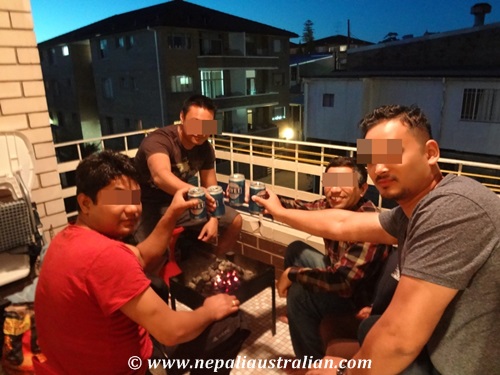
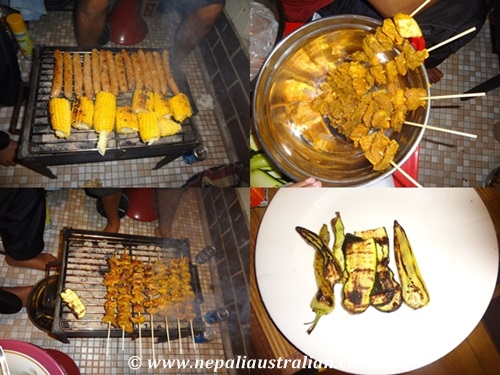
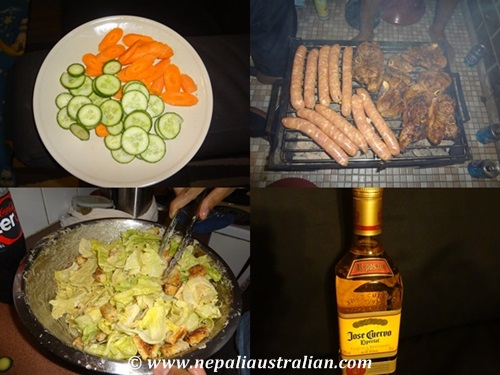
Anyway, we had a great time with my cousins and brothers BBQing and drinking over the weekend. It was a good way to remember Nepal and enjoy ourselves on New Year’s Eve.

New Year (9) New Year (10) New Year (1)

Then yesterday, we went out with our friends for dinner. Have to say it is great to get together and celebrate Nepali New Year even though we are not in Nepal.

New Year (4) New Year (3) New Year (5)

I’m wishing every single one of you a year full of joy, good health, love, success and prosperity.

Thank you from the bottom of my heart for riding along this journey with me. I appreciate all the love and support you guys have given me throughout the year and I hope you continue to do so this year too.

Till next time, take care

XOXO

M from nepaliaustralian

Manakamana Temple: Nepal

Manakamana is the temple of Goddess Durga (Hindu Goddess), situated in Gorkha District of Nepal. Manakamana means the “Wishes from the heart”. It is believed that Goddess Manakaman fulfils the wishes of the ones who worship her with a pure heart.

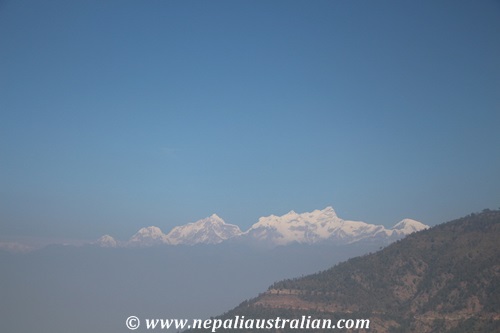
The Manakamana temple lies 12 Km south of the town of Gorkha. The temple is located on a distinguished ridge 1302 meters above sea level and overlooks the river valleys of Trisuli in the south and Marsyangdi in the west. The spectacular views of the Manaslu- Himachali and Annapurna ranges can be seen to the north of the temple. The temple is approximately a 104 Km drive from Kathmandu.

Manakamana (11)

Initially we were planning to visit the temple on our way back from Pokhara so that we would get lots of time to spend there but while my FIL was reading the paper in the car, he came across a notice that the day we were planning to visit the temple, cable car to the temple would be closed for maintenance so we made the decision to visit the temple on the way to Pokhara. I hadn’t been there for over 7 years so it was nice to visit the temple. I was with AS, MIL and FIL.

Manakamana (1)

Once we parked the car, we bought the cable car ticket and joined the queue. The queue was not too long so we got our turn in a cable car quite quickly. We had the car to ourselves.

Manakamana Cable Car has 31 passenger Gondolas and 3 freight carriers. The time of travel from the station below at Kurintar to the top station situated at Manakamana is only 10 minutes. The Cable Car can hold 6 adults or 480 Kg and has doors that close and open automatically and the system is one of the most modern and is totally computerized.

Manakamana (15)

Once we got off the cable car, we have to walk for a while before we reached the temple. On the way there various vendors were trying to sell their products to us. They used the same dialogue “It is the best.” Or “It is the cheapest you can find”.  My MIL bought Puja stuffs from one of the vendors and we went to the temple.

Manakamana (2)-tile

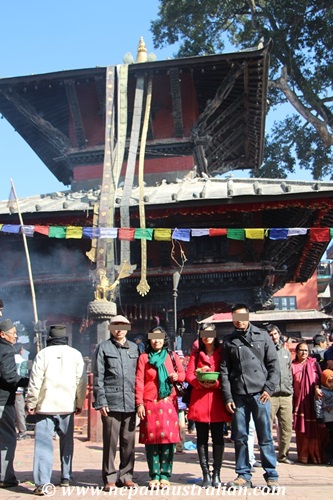
Manakamana is a Hindu Goddess so she is worshiped with offerings of flower, sound, scent, dress, make-ups and colours. There is a tradition of sacrificing animals at the temple. Devotees stand in line for even 5-10 hours during festivals. The line starts from the temple gate is longer than a few kilometres sometimes, especially during festivals. People can be seen standing in line with pooja samagri (worship materials) in hand and some of them carrying duck, cock or goat with them. People seem to enjoy standing in the line without food, some even with no water.

Manakamana (12) Manakamana (8)

 The legend of Manakamana Goddess dates back to the reign of the Gorkha king Ram Shah during the 17th century. It is said that his queen possessed divine powers, which only her devotee Lakhan Thapa knew about. One day, the king witnessed his queen in Goddess incarnation, and Lakhan Thapa in the form of a lion. Upon mentioning the revelation to his queen, a mysterious death befell the king. As per the custom of that time, the queen committed sati (ritual immolation) on her husband’s funeral pyre. Before, her sati the queen had assured Lakhan Thapa that she would reappear in the near future. Six months later, a farmer while ploughing his fields cleaved a stone. From the stone he saw a stream of blood and milk flow. When Lakhan heard an account of this event, he immediately started performing Hindu tantric rituals at the site where the stone had been discovered thus ceasing the flow of blood and milk. The site became the foundation of the present shrine. According to tradition, the priest at the temple must be a descendent of Lakhan Thapa

Manakamana (10) Manakamana (5) Manakamana (6)

The day we were there, there was not a long queue but it may still have taken us an hour to reach the front door of the temple.

Manakamana (14)

As we were on our way to Pokhara and short of time, we decided  not to stand in line and just prayed from the outside. My MIL did some puja and lit some diyo too.

Manakamana (13)

As the cable car was going to shut down for lunch we didn’t want to get stuck at the top for an hour so we decided to go back down and have our lunch in the restaurant there.

Manakamana (16)

The ride down was equally spectacular and I really enjoyed it. Down by the river, in the restaurant we had typical Nepali lunch with dal (lentil), bhat (rice), tarkari (vegies), achar (pickle) and masu (meat). It was really yummy.

Manakamana (18)

After lunch we made our way to Pokhara.

Manakamana (19)

You may also like :

*Paragliding in paradise *Zoo visit in Nepal *Swayambhunath: Kathmandu, Nepal